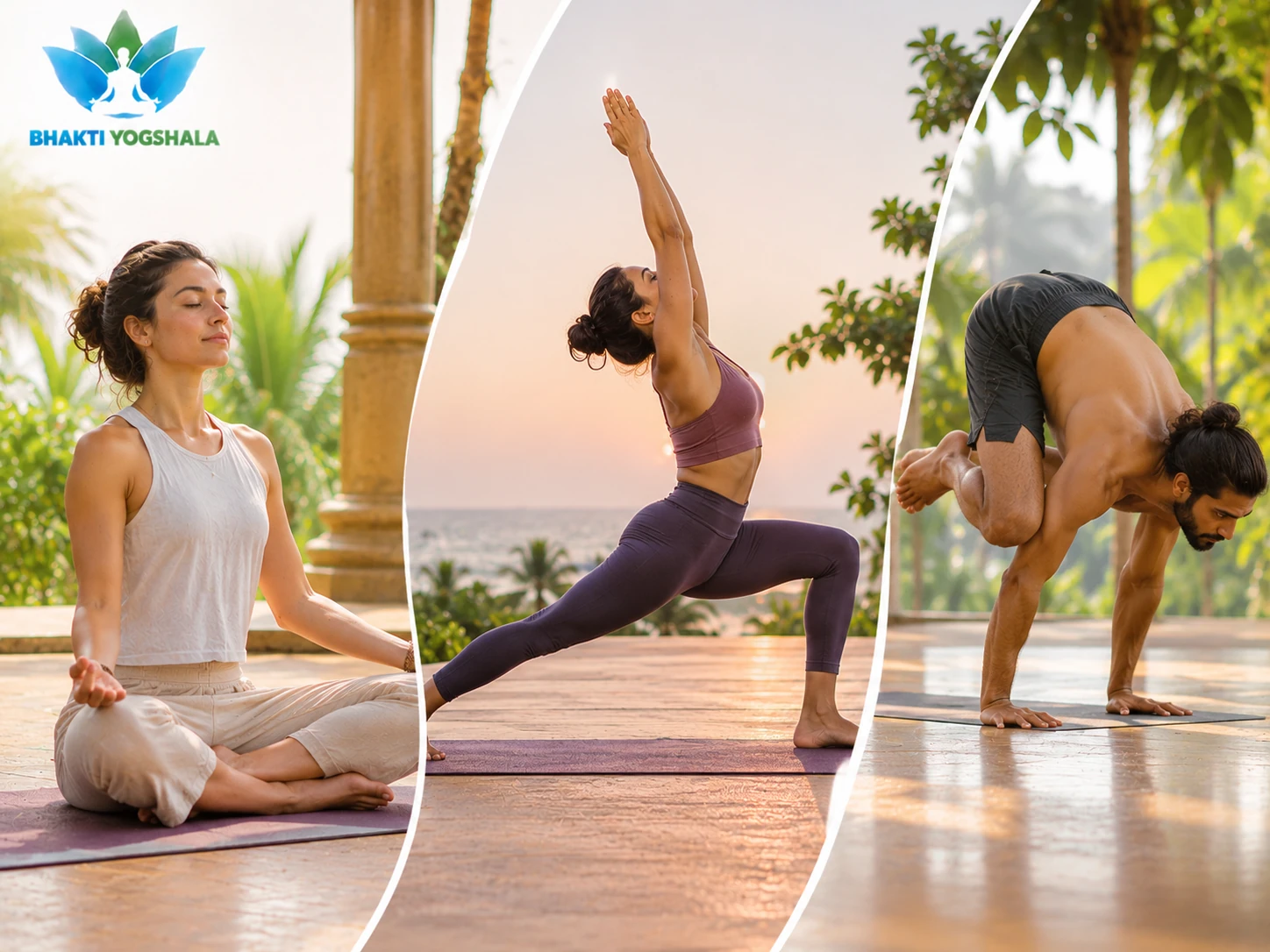
Many people begin thinking about yoga teacher training after attending classes for months or years. They enjoy practising, want to understand yoga more deeply and may eventually see themselves teaching others. At that stage, one question often comes up: how do you build a personal practice that prepares you for the next step?
Start with a routine you can repeat. You do not need to master advanced postures or practise for several hours every day. A useful personal practice gives you time to understand movement, notice your breathing, work with your current abilities and reflect on what you learn.
If you are considering a 200-hour multi-style yoga teacher training course, developing these habits beforehand can help you approach the programme with greater familiarity and curiosity.
What Does Having a Personal Yoga Practice Mean?
A personal yoga practice is the time you set aside to explore yoga independently. You may practise postures you have learned in class, work on your breathing, sit quietly or study a concept from yoga philosophy.
It is personal because you pay attention to your own needs and learning. You begin to notice which movements feel familiar, where you need guidance and what questions you want to ask your teacher.
Your practice does not have to look like another student’s routine. One person may enjoy a slow Hatha sequence, while another may prefer a more dynamic Vinyasa session. Someone else may need a shorter session with gentle movement and meditation.
The aim is to become familiar with your own practice. That understanding can be useful when you later learn how to guide other people.
Start With a Routine You Can Maintain
Consistency is easier when your routine fits your actual day. If you have a busy schedule, begin with a short session instead of planning an hour-long practice that you struggle to complete.
Choose a time when you can practise without rushing. Morning may suit some people, while others prefer the evening. The most useful time is the one you can maintain.
Start with your current level
If you are new to independent practice, begin with postures and movements already introduced by a qualified instructor. You can include:
- Gentle warm-up movements.
- Basic standing postures.
- Comfortable seated postures.
- Simple balance exercises.
- Resting postures.
- A short period of relaxation.
Pay attention to how you enter and leave each posture. Notice your breathing and whether you can maintain a comfortable position without forcing the movement.
Do not make advanced asanas the measure of your progress. Learning the foundations well gives you more to work with when you begin studying alignment and teaching methodology.
Build a realistic weekly habit
A starting routine might involve three or four practice days each week, with shorter sessions on other days if they suit your schedule.
For example:
- Monday: Basic asana practice.
- Tuesday: Breath awareness and a short meditation.
- Wednesday: Rest or gentle movement.
- Thursday: Hatha-based practice.
- Friday: A short practice followed by reflection.
- Saturday: Attend a guided yoga class.
- Sunday: Rest and review what you have learned.
This is only a sample. Adjust the frequency and duration according to your experience, energy and personal circumstances.
Build Your Practice Around More Than Asana
Yoga includes more than physical postures. If your goal is to become a teacher, begin exploring the different parts of practice that appear in teacher training.
Asana: Learn how postures work
Asana practice gives you an opportunity to observe movement, balance, stability and alignment.
Instead of rushing through a long sequence, choose a few familiar postures and study them carefully. Notice:
- How your body enters the posture.
- Where you feel stable.
- Whether you can breathe comfortably.
- Which movements need modification.
- How you transition to the next posture.
You can also keep a list of postures that you find difficult to understand. Bring those questions to your instructor.
Breath awareness: Notice your natural breathing
Begin by observing your natural breath while sitting or lying comfortably. Notice its rhythm without trying to control it.
Once you have learned basic breathing techniques from a qualified teacher, you can practise the techniques that are appropriate for your experience.
Do not experiment with forceful breathing, prolonged breath retention or unfamiliar cleansing practices without direct instruction. Some techniques are not suitable for everyone.
Meditation: Spend a few minutes in stillness
Meditation does not require you to stop every thought. Start by sitting comfortably and observing your breathing for a few minutes.
When your attention moves elsewhere, gently bring it back. You may also use a guided meditation if sitting quietly without instruction feels difficult.
The NHS beginner meditation guide offers a simple approach to setting aside time, finding a comfortable position and returning attention to the breath.
Yoga philosophy: Read and reflect
Begin learning about the ideas behind yoga. You might start with introductory material on the Yoga Sutras of Patanjali, the eight limbs of yoga or the Bhagavad Gita.
Do not feel that you must understand every Sanskrit term immediately. Read a short passage, write down what you understand and note any questions.
This makes philosophy part of your learning routine instead of something you encounter for the first time during teacher training.
Learn to Practise Different Yoga Styles
If you are interested in multi-style yoga teacher training, it helps to experience how different styles organise movement and attention.
You do not need to become an expert in every style before enrolling. Begin by learning their basic characteristics through guided classes.
Hatha Yoga
Hatha classes often give students time to explore individual postures, alignment and breathing. A guided Hatha practice can help you become familiar with foundational asanas and transitions.
Ashtanga Vinyasa
Ashtanga Vinyasa follows a structured sequence and coordinates movement with breathing. If you are new to the style, learn the sequence under an instructor’s guidance. Do not push yourself to complete advanced postures.
Vinyasa Flow
Vinyasa links movement and breath through a flowing sequence. Pay attention to transitions and how the instructor builds a class from one posture to another.
Yin Yoga
Yin Yoga uses longer-held, generally passive postures. Learn how to approach the positions comfortably and follow the teacher’s instructions about appropriate support and modifications.
These styles offer different ways to study movement and attention. Exploring them can help you understand what interests you before choosing a training programme.
Understand Your Body and Respect Your Limits
A personal practice gives you time to observe how you respond to movement. Some days you may feel ready for a longer session. On other days, a gentle practice or rest may be more appropriate.
Avoid treating pain as evidence that a posture is working. Reduce the intensity or stop if a movement causes pain, dizziness or unusual discomfort.
If you have an injury, a medical condition, are pregnant or have another health concern, seek appropriate professional advice and tell your yoga instructor before practising. Ask for suitable modifications.
The US National Center for Complementary and Integrative Health advises beginners to learn under appropriate instruction and avoid extreme practices, particularly when they are new to yoga.
Learning to recognise your limits is relevant to future teaching. Students will have different bodies, experiences and needs. A teacher must be able to explain options and encourage safe practice.
Begin Studying Yoga Beyond Physical Postures
Aspiring teachers sometimes spend most of their preparation time practising asanas. Physical practice matters, but teacher training also involves learning how to explain yoga.
You can begin preparing by observing the language instructors use in class.
For example:
- How does the teacher introduce a posture?
- What instructions help you understand alignment?
- How are beginners offered modifications?
- How does the instructor guide transitions?
- When does the class include rest?
- How does the teacher respond to questions?
You can also practise explaining a familiar posture in simple language. Keep the explanation short and clear. This is an exercise in observation and communication, not a substitute for formal teaching practice.
Remember that understanding a posture in your own body and knowing how to teach it to another person are different skills. A teacher-training programme helps you study that difference through teaching methodology and supervised practice.
Keep a Yoga Practice Journal
A practice journal can help you notice patterns that you might otherwise forget. You do not need to write a long entry after every session.
Record a few details:
Journal prompt | What to write |
Date and duration | When you practised and for how long |
Practice | The styles or postures you explored |
Breathing | What you noticed about your natural breath |
Questions | Movements or concepts you want to understand |
Modifications | Changes that made the practice more comfortable |
Reflection | One thing you learned during the session |
After a few weeks, review your notes. You may notice that certain postures need more guidance, that you enjoy a particular style or that your routine works better at a different time of day.
Bring relevant questions to your yoga instructor. This turns independent practice into a continuing learning process.
A Simple Weekly Yoga Self-Practice Plan
Here is a sample plan for someone who already knows a few basic postures and wants to develop a more organised routine.
Day | Practice focus | Suggested approach |
Monday | Hatha foundations | Warm-up, familiar postures and relaxation |
Tuesday | Breath awareness | Comfortable breathing observation and short meditation |
Wednesday | Rest or gentle movement | A walk or easy mobility, according to your needs |
Thursday | Vinyasa introduction | A guided beginner sequence with attention to transitions |
Friday | Asana study | Explore a few familiar postures and note questions |
Saturday | Guided class | Learn from an instructor and observe teaching cues |
Sunday | Reflection | Review your journal, read a short philosophy passage or rest |
You can shorten or rearrange the sessions. If you are new to yoga, begin with guided beginner classes and build independent practice gradually.
The purpose of this plan is to create a habit, not to prepare your body for an intensive course through extra physical effort.
How Personal Practice Helps During Yoga Teacher Training
A regular personal practice can make parts of teacher training more familiar. You may recognise common postures, understand basic class instructions and have questions ready when you study a subject in greater detail.
At Bhakti Yogshala, the published 200-hour Goa programme includes Hatha Yoga, Ashtanga Vinyasa, Vinyasa Flow and Yin Yoga. The course information also lists pranayama, meditation, yoga philosophy, anatomy and teaching methodology.
Its published daily schedule includes an early self-practice session, asana classes, theory, an asana clinic and practicum. Students therefore encounter both personal practice and the study of how yoga is taught.
Before enrolling, review the current 200-hour yoga teacher training course in Goa and ask the school about the latest timetable and course requirements.
Developing Your Practice at Bhakti Yogshala
Bhakti Yogshala is located on Main Agonda Beach Road, Canacona, Agonda, Goa. Its multi-style 200-hour programme is designed for people interested in deepening their personal yoga practice as well as those preparing to study yoga teaching.
The published curriculum covers several styles and includes subjects beyond asana, such as anatomy, philosophy, pranayama, meditation and teaching methodology.
If you are considering the programme, take time to review the syllabus and understand the daily schedule. You can also explore the school’s teacher profiles to learn about the instructors and their listed teaching subjects.
A personal practice will continue to change as you learn. You may become interested in a different style, ask more detailed questions about alignment or spend more time studying philosophy. That is a normal part of developing as a student.
To enquire about the next 200-hour multi-style yoga teacher training batch, contact Bhakti Yogshala directly.
Bhakti Yogshala
Main Agonda Beach Road, Canacona, Agonda, Goa 403702
Phone: +91 98973 55995
Email: bhaktiyogshala@gmail.com
Website: https://bhaktiyogshala.com/
Build a routine that suits your current level, learn under qualified guidance and give yourself time to understand the practice before taking the next step towards teaching.
FAQs
- How do I develop a personal yoga practice before becoming a yoga teacher?
Start with familiar postures, gentle movement and breath awareness. Practise consistently at a manageable level, attend guided classes and gradually explore meditation and yoga philosophy.
- How often should I practise yoga before joining teacher training?
Choose a frequency you can maintain. Beginners may start with two or three guided or independent sessions each week and gradually adjust according to their experience and comfort.
- Do I need to master advanced yoga poses before becoming a yoga teacher?
No. Understanding foundational postures, alignment, breathing and appropriate modifications is more useful than trying to master advanced poses before training.
- Can beginners join a 200-hour multi-style yoga teacher training course?
Bhakti Yogshala states that its 200-hour Goa programme starts with foundational learning and welcomes people interested in developing their practice or becoming yoga teachers. Confirm the current admission requirements with the school.
- What should I include in my daily yoga self-practice?
Depending on your experience, include a gentle warm-up, familiar asanas, comfortable breath awareness and a short relaxation or meditation session.
- Should I practise Hatha, Ashtanga and Vinyasa before joining multi-style yoga teacher training?
It can help to attend introductory classes in different styles. This gives you an idea of their pace, structure and approach. You do not need to master every style before enrolling.
- How can I improve my understanding of yoga beyond asanas?
Read introductory yoga philosophy, observe your breathing, explore meditation and learn about anatomy and teaching methodology. Discuss questions with an experienced instructor.
- Is flexibility necessary before starting yoga teacher training?
No particular level of flexibility should be treated as a measure of readiness. Focus on learning postures safely, understanding modifications and practising within your comfortable range.
- How can a yoga journal help develop my personal practice?
A journal helps you record the sessions you complete, movements you find challenging, questions for your teacher and observations about your learning.
- How does personal practice help during a 200-hour yoga teacher training course?
It gives you familiarity with basic postures, class routines and self-observation. This can help you engage with the practical and theoretical subjects covered during training.