Preparing for a 200-hour yoga teacher training involves more than packing your yoga clothes and booking a flight. You are preparing for a new routine, regular physical practice, classroom learning and time spent studying yoga in greater depth.
If you are planning to join an intensive 200 hours yoga teacher training in Goa, the weeks before arrival are a good time to build a few useful habits. You do not need to master advanced postures or completely change your lifestyle. A consistent, manageable routine is a better starting point.
At Bhakti Yogshala in Agonda, the published 200-hour programme includes Hatha Yoga, Ashtanga Vinyasa, Vinyasa Flow, Yin Yoga, pranayama, meditation, anatomy, yoga philosophy and teaching methodology. Its timetable begins at 6:30 AM and continues through the day with practical and theoretical sessions.
Understanding this schedule beforehand can help you prepare realistically.
- Understand what you are preparing for
A residential yoga teacher-training course is different from attending a regular yoga class.
During a typical training day, you may practise asanas, study breathing techniques, attend theory lessons, learn anatomy and participate in teaching exercises. There is also time for meals, rest and independent study.
At Bhakti Yogshala, the published schedule includes:
- Early-morning self-practice, warm-up, pranayama and meditation
- A morning asana class
- Yoga philosophy, theory and Ayurveda
- Asana clinic, adjustments and practicum
- Anatomy and additional theory
- A second asana class
- Evening meditation, kirtan or group discussion
The timetable gives you an idea of the commitment involved. It is worth reviewing the current schedule with the school before travelling, as timings and programme arrangements can change.
Start by asking yourself how comfortable you are with a structured day. If you currently practise yoga only once or twice a week, you may need time to adjust to a more regular routine.
- Start building a regular yoga routine
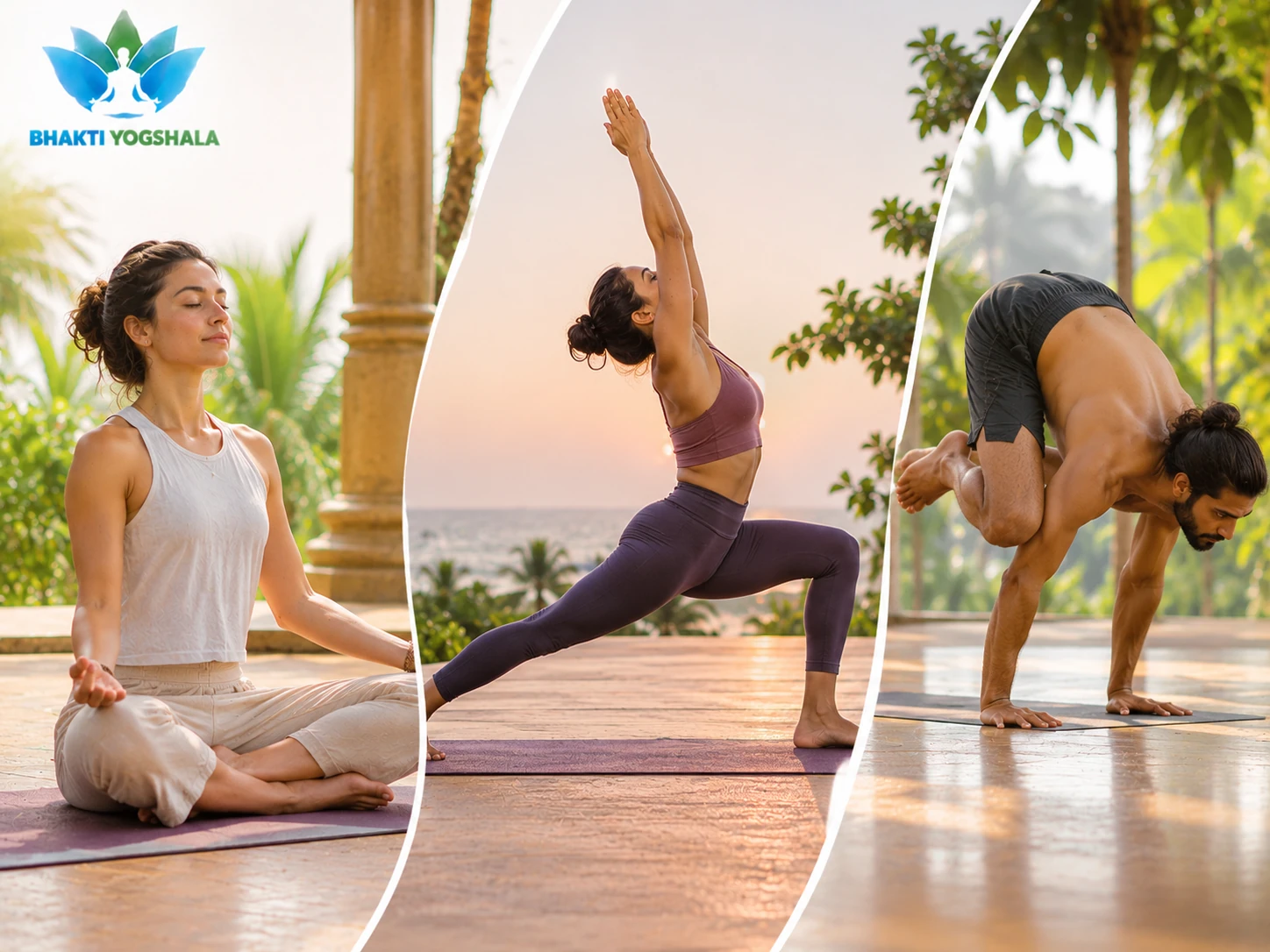
You do not need to perform difficult poses before joining teacher training. What helps is becoming familiar with regular practice.
If you already attend yoga classes, try to maintain a consistent schedule rather than suddenly increasing the intensity. If you are new to yoga, begin with accessible beginner-level sessions guided by a qualified instructor.
Before travelling, you can work on:
- Becoming familiar with basic standing and seated postures
- Learning simple transitions between poses
- Paying attention to breathing during practice
- Following verbal instructions
- Practising basic warm-up movements
- Becoming comfortable with a short period of quiet sitting
You can also explore different styles through introductory classes. Bhakti Yogshala’s published programme includes Hatha, Ashtanga Vinyasa, Vinyasa Flow and Yin Yoga. Knowing a little about these approaches may make the terminology less unfamiliar when the course begins.
Do not treat preparation as a test of flexibility. You are joining the programme to learn, so there is no need to arrive performing advanced asanas.
- Prepare your body without overtraining
One mistake people sometimes make before an intensive course is trying to become much fitter in a very short time. They increase their practice hours, attempt difficult postures or push through discomfort because they want to be ready.
That approach is unnecessary.
A gradual routine is more sensible. Give yourself time to become comfortable with movement, basic postures and the pace of a guided class.
You can prepare through ordinary habits:
Stay consistent with movement. Choose a manageable practice schedule that fits your current ability. Avoid suddenly adding several demanding sessions to your week.
Pay attention to alignment. Learn how your body responds to common movements. Ask your instructor for guidance rather than forcing yourself into a posture.
Allow time for rest. Recovery is part of maintaining a regular practice. If you feel unusually tired or uncomfortable, reduce the intensity rather than trying to catch up.
Maintain your usual balanced meals. Avoid extreme diets or sudden food restrictions in preparation for training.
Stay hydrated. Make drinking water part of your daily routine, particularly if you are practising in warm weather.
Your aim is to arrive with a familiar routine, not with an exhausted body.
- Get comfortable with early mornings
The published Bhakti Yogshala schedule begins at 6:30 AM with self-practice, warm-up, pranayama and meditation.
If you usually wake up much later, an early start may take some adjustment.
You can begin by gradually shifting your bedtime and waking time towards the schedule you expect during training. There is no need to make a sudden change overnight.
A few practical habits can help:
- Keep a reasonably consistent sleep and wake time.
- Prepare your clothes and essentials the previous evening.
- Avoid leaving travel and packing arrangements until the last minute.
- Give yourself enough time in the morning instead of rushing.
- Avoid filling your evenings with activities that leave you tired the next day.
You do not have to copy the exact course timetable before arrival. The goal is simply to become more comfortable with a structured morning.
- Make space for mental preparation
An intensive yoga teacher-training programme involves concentration as well as physical practice. You may need to listen carefully, remember new terminology, discuss philosophical ideas and practise teaching in front of other students.
It can feel unfamiliar at first.
Mental preparation does not require complicated techniques. Start with small habits that help you become more comfortable with focused attention.
Set a clear reason for joining
Think about why you want to attend the course.
Perhaps you want to teach yoga in the future. Maybe you want to understand your personal practice more deeply, study yoga philosophy or explore different styles.
Your reason does not have to be the same as another student’s. Having a clear idea of what you hope to learn can help you stay focused when the schedule becomes demanding.
Get used to sitting quietly
If meditation is unfamiliar, start with a short period of quiet sitting or simple breath awareness. You do not need to force your mind to become completely still.
The aim is to become familiar with taking a few minutes away from constant activity.
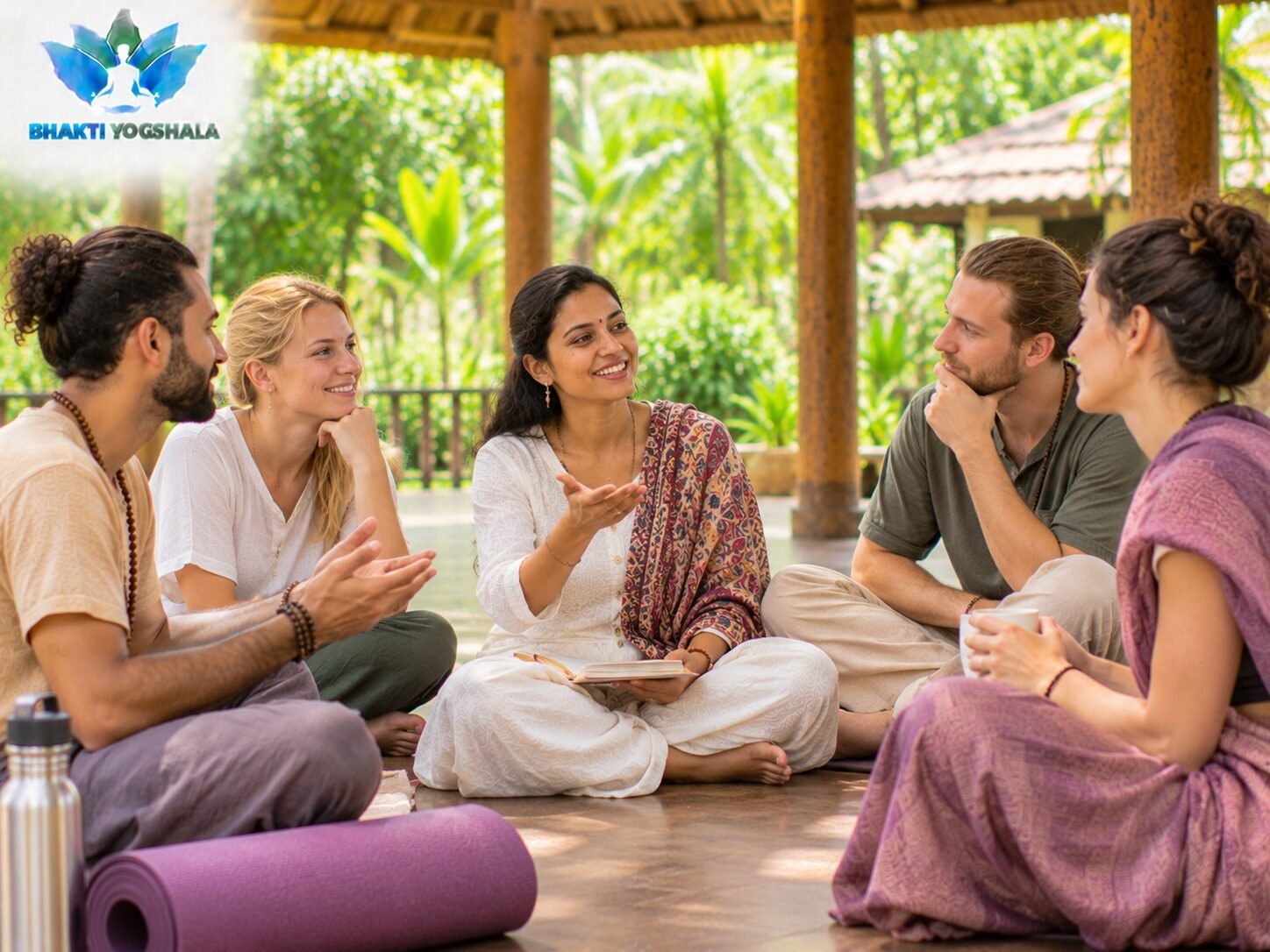
Be comfortable asking questions
Teacher training introduces concepts that you may not understand immediately. You might encounter unfamiliar Sanskrit terms, anatomy topics or teaching methods.
Make a habit of asking questions when something is unclear. There is no advantage in pretending to understand a lesson when you need further explanation.
Allow yourself to be a student
Some participants arrive with years of practice, while others are still learning the foundations. You may find certain subjects easy and others challenging.
Try not to compare your progress with the people around you. Focus on understanding the lesson and applying the feedback you receive.
- Prepare for the academic side of yoga
Yoga teacher training is not limited to asana practice. There is also a study component.
Bhakti Yogshala’s published course information includes yoga philosophy, anatomy, pranayama, meditation and teaching methodology. The curriculum also refers to topics such as the Yoga Sutras, the Eight Limbs of Yoga, alignment, demonstration and classroom management.
You can make the academic side easier by developing a few simple habits before travelling.
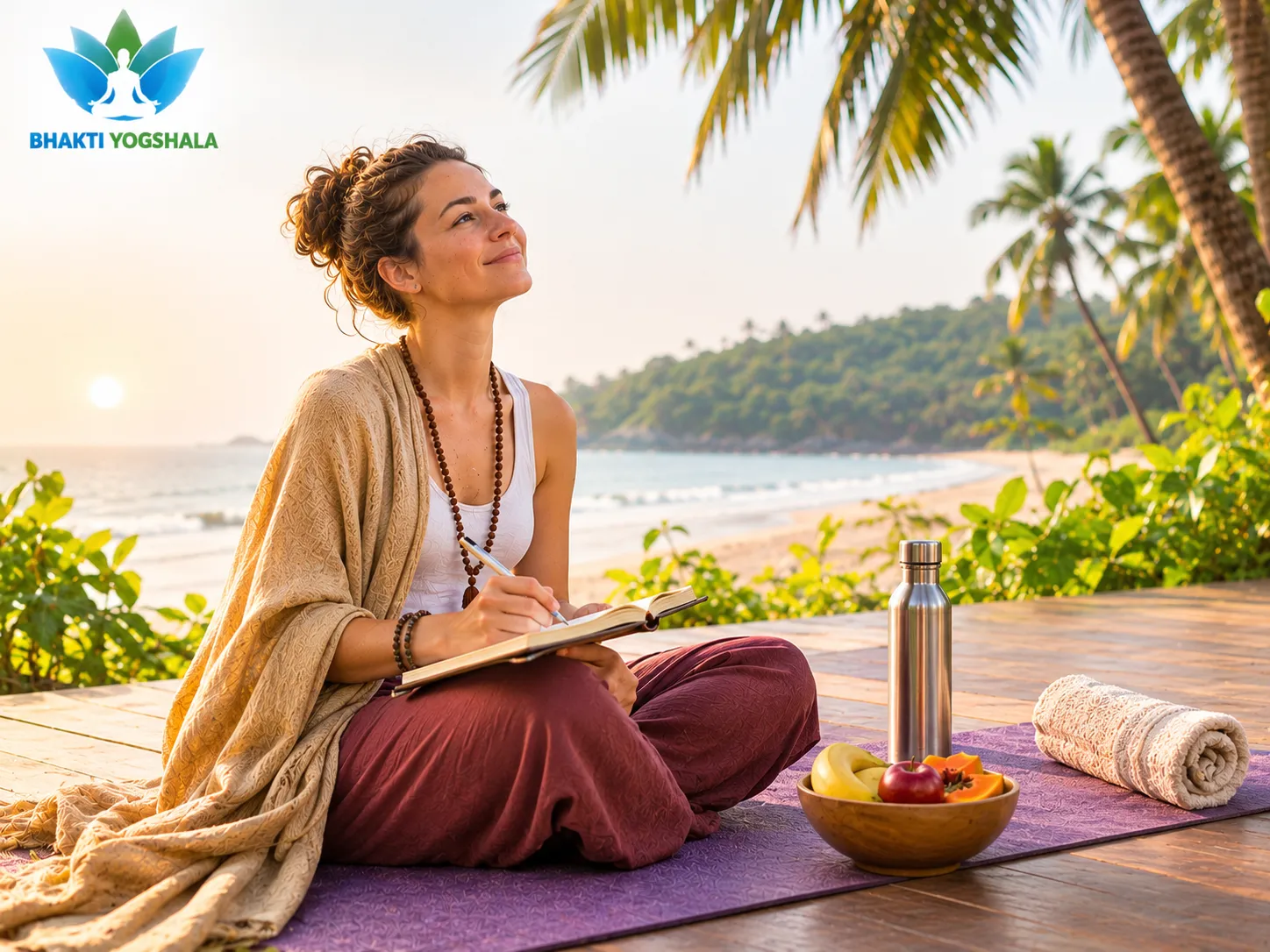
Get comfortable taking notes. Keep a notebook for questions, important ideas and observations from classes.
Read introductory material. If you are interested, you can begin reading about basic yoga terminology, the history of yoga or introductory anatomy. You do not need to complete an entire reading list before joining.
Practise listening carefully. Theory classes may require you to concentrate for longer than a regular yoga session.
Review what you learn. Set aside some time after a class or study session to revisit your notes.
Keep an open mind. Different subjects may challenge what you previously understood about yoga. Give yourself time to learn before forming conclusions.
If the school provides a recommended reading list or preparation material, follow that rather than relying on unrelated online resources.
- Organize your travel and packing
Practical arrangements can affect your first few days at a residential programme. Sorting them out before departure leaves you with fewer things to worry about after reaching Goa.
Bhakti Yogshala lists its main location on Agonda Beach Road, Agonda, Canacona, Goa.
Before travelling, confirm your arrival date, accommodation arrangements and the transport options available to reach the school.
What to pack for yoga teacher training
Your exact packing list will depend on the school’s arrangements and your personal needs. These items are useful to consider:
- Comfortable yoga clothing
- Light everyday clothes
- Toiletries and personal care items
- A refillable water bottle
- Notebook and pens
- Personal medication, if required
- Comfortable footwear
- Any essential travel documents
- A small bag for carrying daily items
Ask the school whether yoga mats, blocks, straps and other practice equipment are supplied. Avoid carrying bulky items that are already available at the venue.
Confirm the practical details
Before leaving, check:
- Your course start and end dates
- Accommodation and room category
- Arrival and departure arrangements
- Whether airport or railway transfers are included
- Meal arrangements
- Any additional costs
- Payment and booking conditions
Bhakti Yogshala’s published terms state that students are responsible for arranging travel to and from the programme unless transport is specifically included in their booking. The terms also explain that date changes are subject to approval and availability.
Read the current terms before paying or finalising travel.
- Understand your personal limits before joining
Yoga teacher training involves physical activity. Your participation should take account of your current ability and any limitations that may affect practice.
If you have an existing injury, physical limitation, pregnancy or another health-related condition, inform the school before joining. Its published participation policy specifically asks students to share this information with the team.
If you are unsure whether the programme is suitable for you, speak with an appropriate healthcare professional before beginning intensive physical activity.
During practice, do not force a movement because another student can perform it. Tell the instructor if you feel uncomfortable or cannot safely complete an exercise. Bhakti Yogshala’s terms also advise students to stop or modify a practice and inform the teacher if they feel unwell or unable to perform it safely.
Preparing well includes knowing when to ask for guidance.
- What to expect at Bhakti Yogshala in Goa
Bhakti Yogshala offers a multi-style 200-hour yoga teacher-training programme in Agonda, South Goa.
Its published course curriculum includes:
- Hatha Yoga
- Ashtanga Vinyasa
- Vinyasa Flow
- Yin Yoga
- Pranayama
- Meditation
- Yoga philosophy
- Anatomy
- Teaching methodology
- Practical teaching exercises
The school also lists residential accommodation, vegetarian meals, Wi-Fi and weekend sightseeing trips among the programme inclusions. Its course page states that class sizes are limited to a maximum of 15 students.
The published daily schedule shows that students should expect a full day of practice and study rather than a single yoga class.
Before booking, ask the team to confirm the current course dates, schedule, accommodation, meal arrangements, fees and certificate details for your selected batch.
You can explore the 200-Hour Yoga Teacher Training in Goa at Bhakti Yogshala for the programme information.
Contact Bhakti Yogshala
- Address: Main Agonda Beach Road, Agonda, Canacona, Goa 403702
- Phone: +91 98973 55995
- Email: bhaktiyogshala@gmail.com
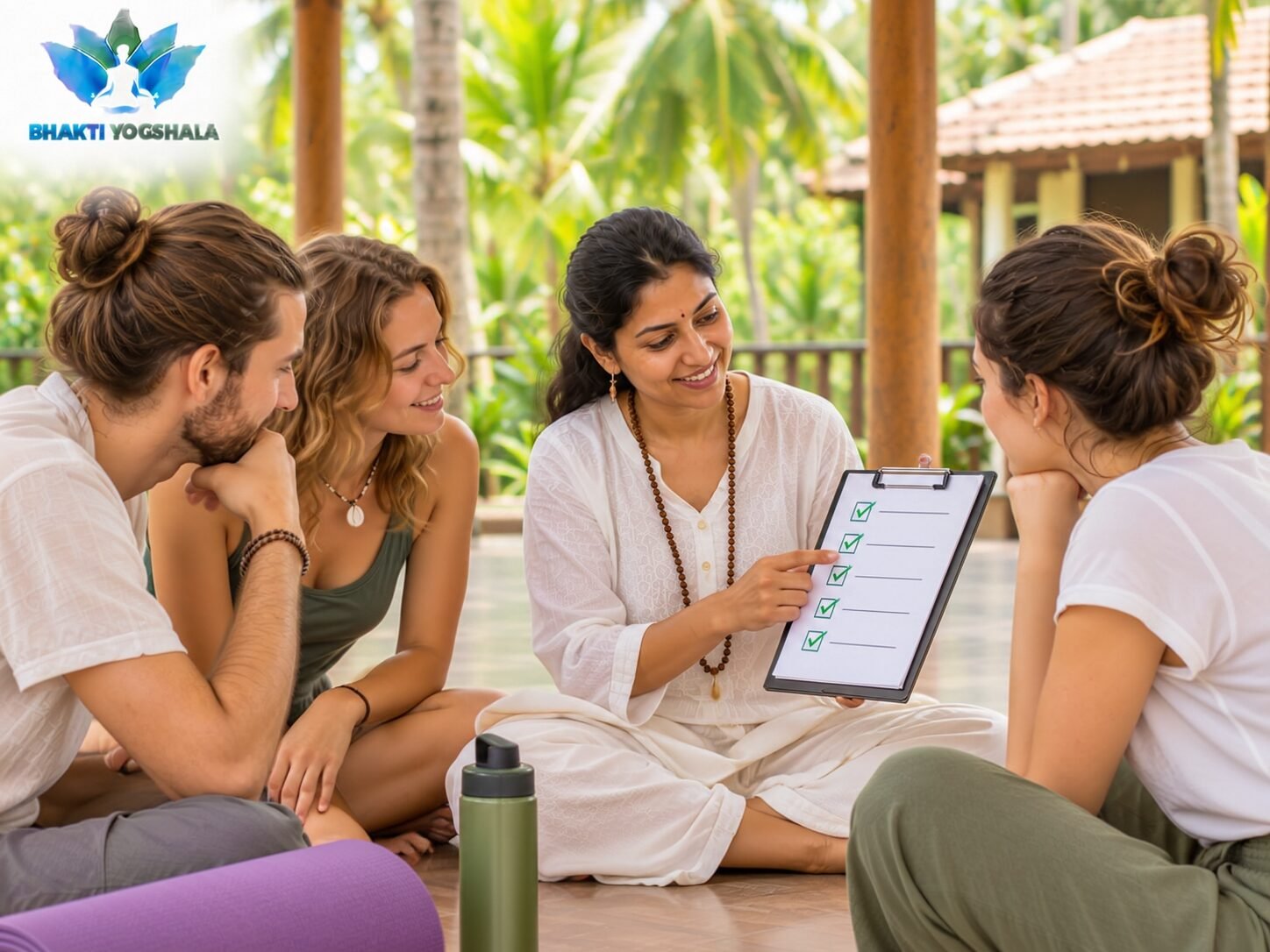
- Your final preparation checklist
Before travelling to Goa, take a moment to check the following:
- I understand the course schedule and daily commitment.
- I have a manageable yoga practice routine.
- I am familiar with basic yoga class instructions.
- I have made time for adequate rest.
- I understand that the course includes theory and practical teaching.
- I have informed the school about any relevant health concerns.
- I have confirmed accommodation and meal arrangements.
- I have organized my travel documents and transport.
- I have read the payment and cancellation terms.
- I know how to contact the school if I need clarification.
Preparing for your 200-hour yoga teacher training
You do not need to arrive in Goa as an advanced yoga practitioner. What matters is understanding the commitment, developing a regular routine and being ready to learn.
Give yourself time to adjust before the course starts. Practise within your ability, organize your travel and approach the training with realistic expectations.
If you are considering the 200-hour programme at Bhakti Yogshala, review the current course details and contact the team with questions before confirming your place.
FAQs
- How should I prepare my body before a 200-hour yoga teacher training?
Build a manageable yoga routine, become familiar with basic postures and transitions, allow time for rest and avoid suddenly increasing practice intensity. Prepare according to your current ability.
- How can I prepare mentally for intensive yoga teacher training?
Set a clear learning goal, practise focused attention, become comfortable asking questions and understand that some subjects may take time to learn. Avoid comparing your progress with other students.
- Should I practise yoga every day before joining YTT?
You do not need to force a daily routine if you are not accustomed to one. Begin with a schedule you can maintain comfortably and gradually build consistency.
- Do I need to know advanced yoga poses before joining?
Advanced postures are not a sensible preparation requirement for a foundational programme. Focus on basic practice, body awareness and learning how to follow instructions.
- How do I prepare for the early-morning schedule?
Gradually adjust your sleep and waking times before travelling. The published Bhakti Yogshala schedule begins at 6:30 AM.
- What should I bring to yoga teacher training in Goa?
Consider comfortable practice clothes, toiletries, personal medication, a refillable water bottle, notebook, pens and travel documents. Confirm whether the school supplies yoga mats and other equipment.
- Should I inform the school about an injury before joining?
Yes. Bhakti Yogshala’s published terms ask students to disclose injuries, physical limitations, pregnancy or other health-related conditions that may affect participation.
- Does Bhakti Yogshala provide accommodation and meals?
Its published 200-hour course page lists accommodation and vegetarian meals among the inclusions. Confirm the exact room category, meal arrangements and package details for your batch.
- What time does the 200-hour yoga teacher training day start at Bhakti Yogshala?
The published timetable begins at 6:30 AM with self-practice, warm-up, pranayama and meditation. Confirm the current timetable with the school before arrival.
- How can I contact Bhakti Yogshala before travelling?
You can contact the school at +91 98973 55995 or bhaktiyogshala@gmail.com. Its listed address is Main Agonda Beach Road, Agonda, Canacona, Goa 403702.