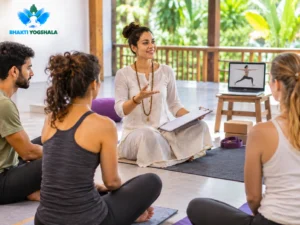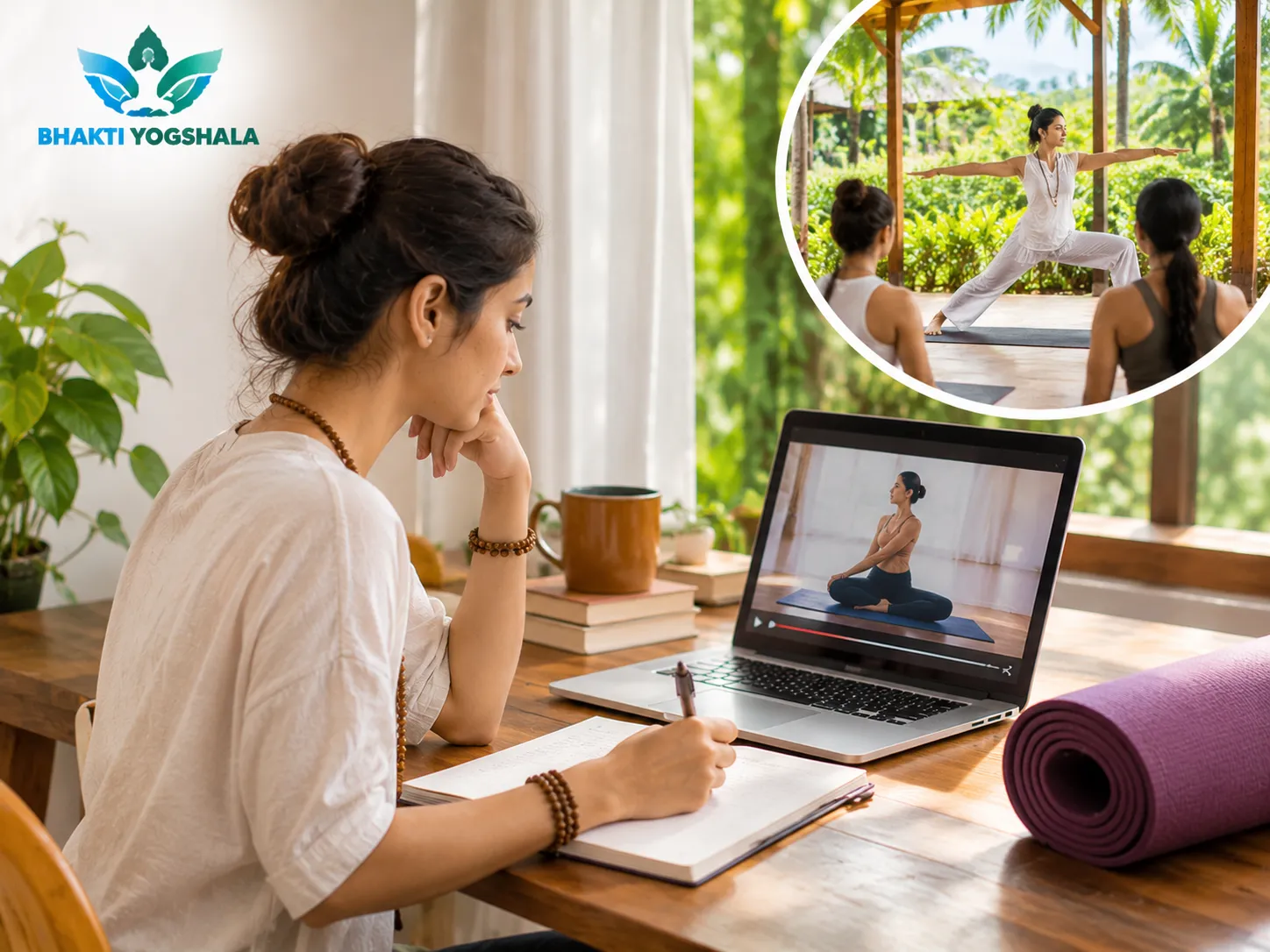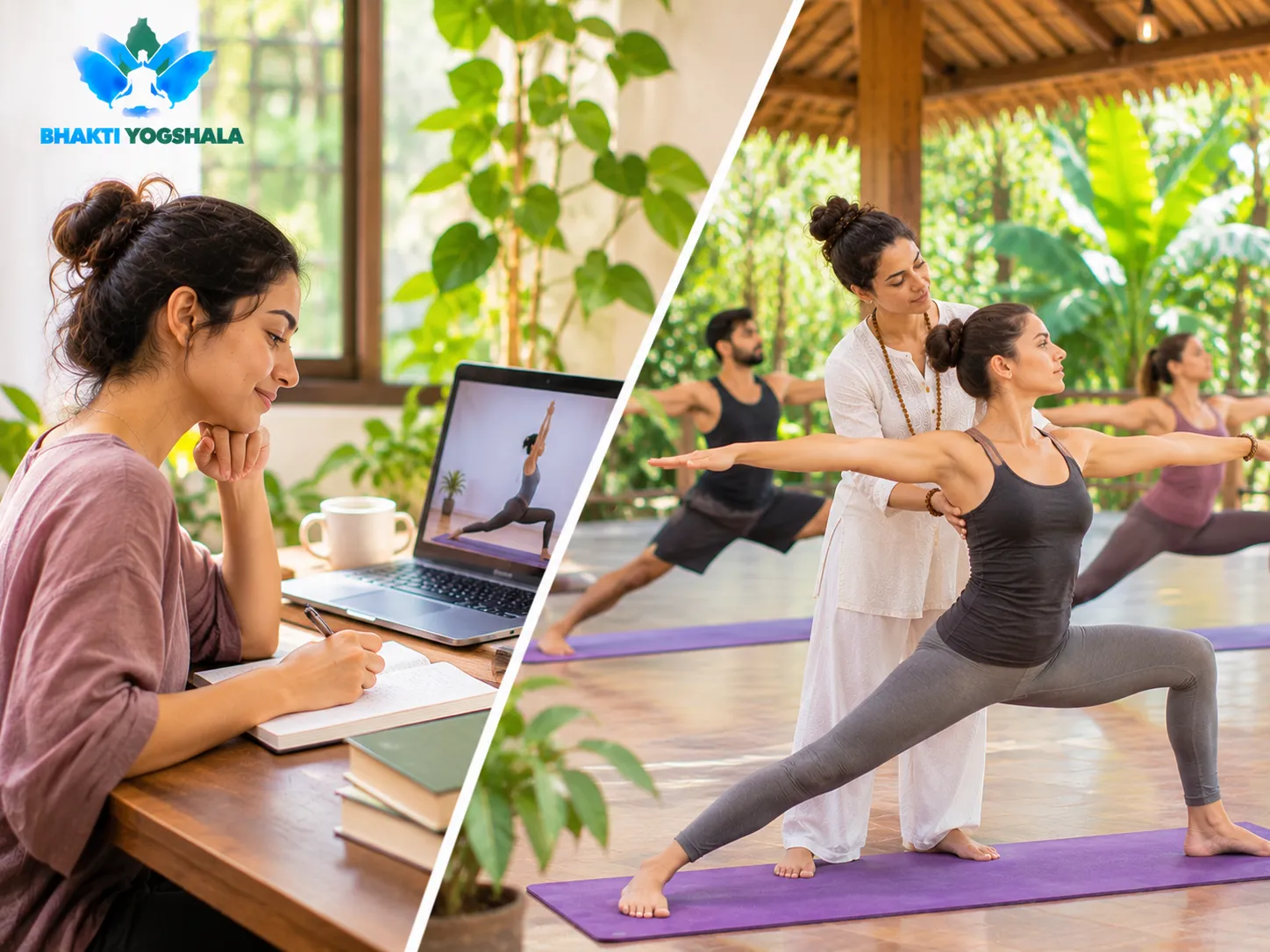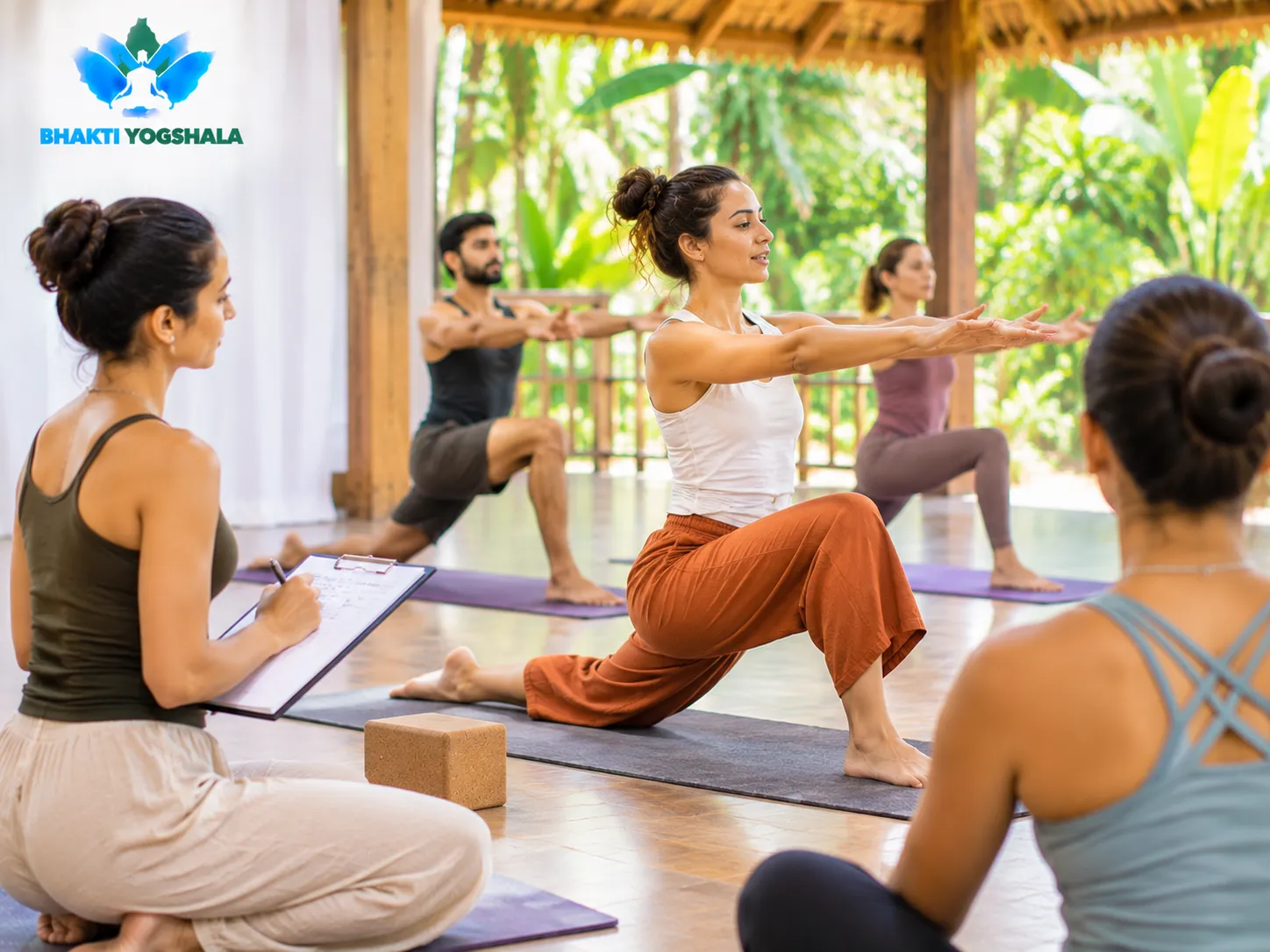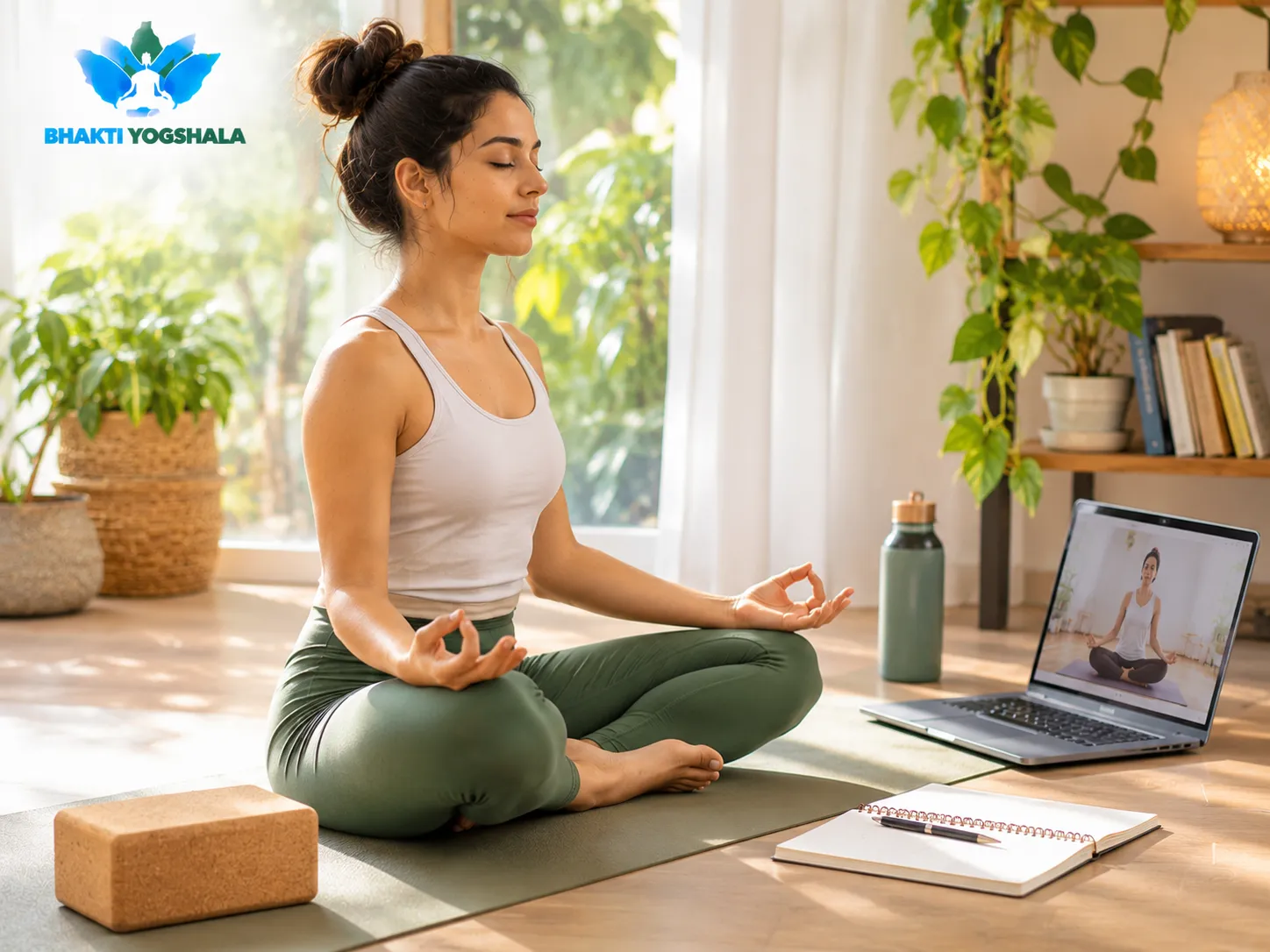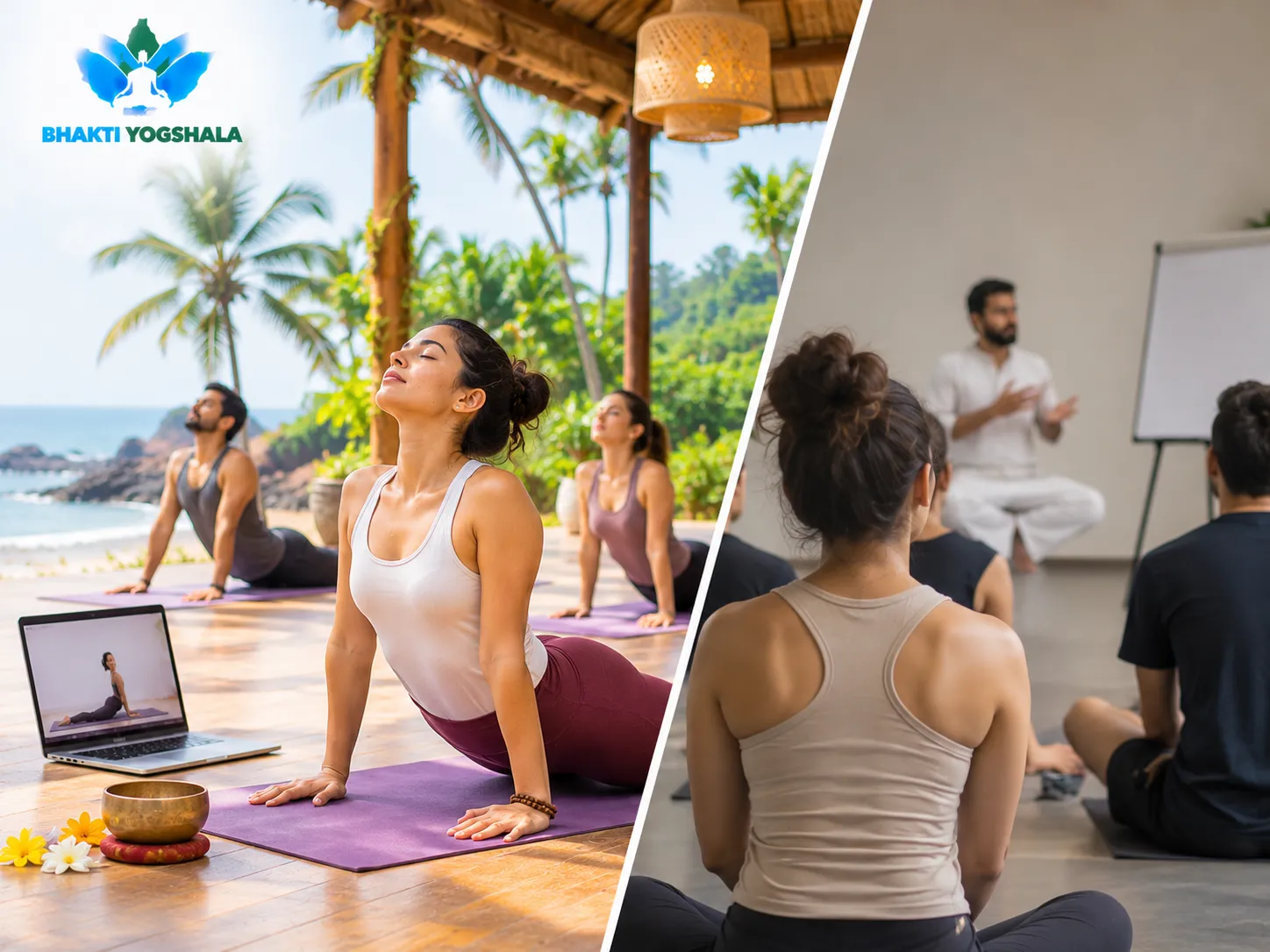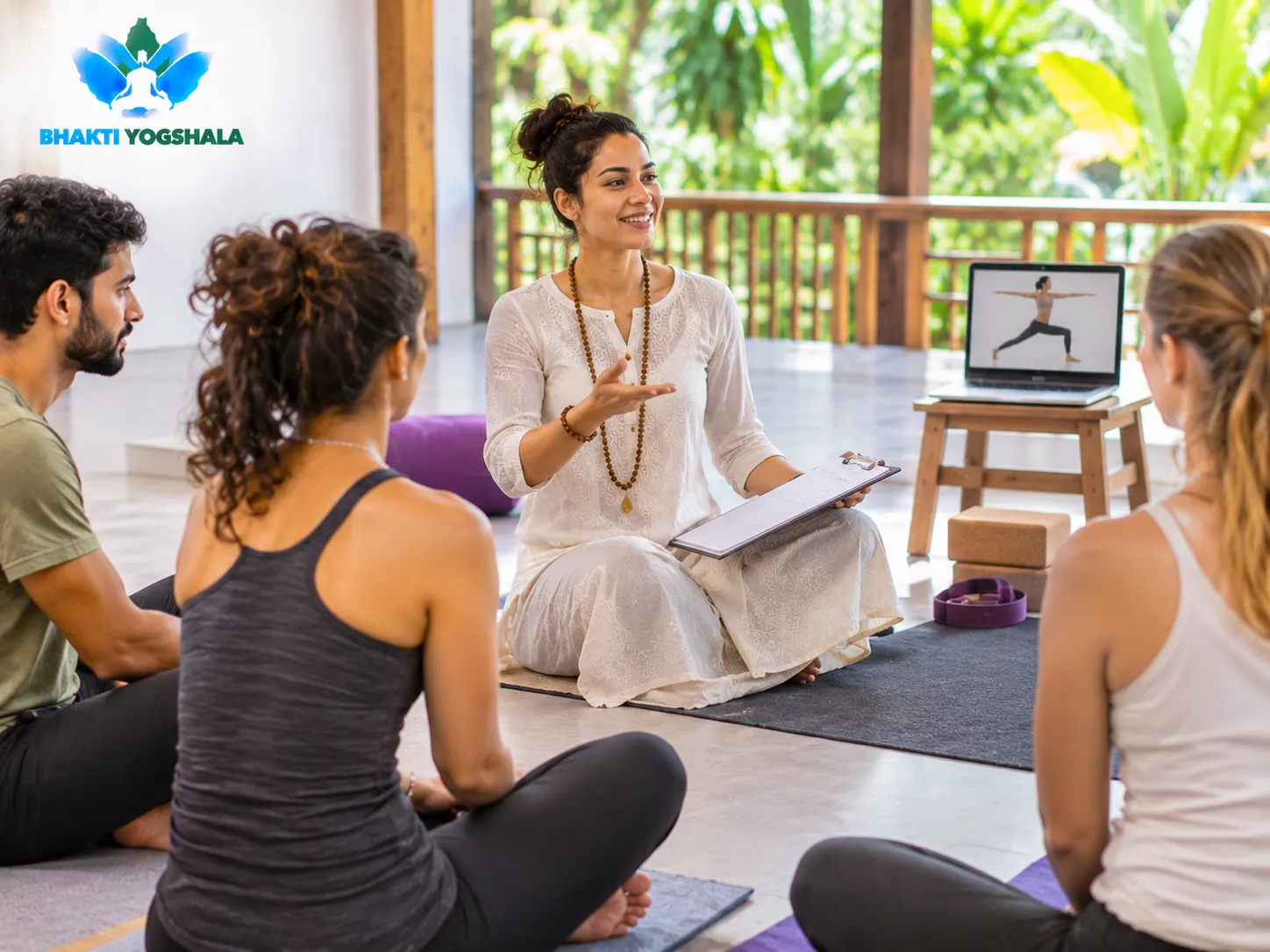
Completing yoga teacher training online gives you time to study theory, review recorded lessons and practise at your own pace. Your first in-person teaching practicum brings a different challenge: you have to guide other people through a class while observing what is happening in the room.
You may already understand an asana and know how to demonstrate it. Teaching requires another set of skills. You need to explain the movement clearly, decide what comes next, manage the class timing and notice when a student needs an alternative.
The best preparation is to practise teaching before the assessment. Review your training materials, create a manageable class plan and rehearse your instructions aloud. You do not need to make your first class complicated. You need to understand what you are teaching and be ready to respond to the students in front of you.
Understand What Happens During a Yoga Teaching Practicum
A yoga teaching practicum is a practical learning activity in which trainees demonstrate their ability to lead a yoga class or part of a class. Depending on the school’s assessment process, it may involve teaching fellow trainees, demonstrating a sequence, observing another student or receiving feedback from an instructor.
The exact format varies between training programmes. Before attending, ask your course provider:
- How long will I teach?
- Will I teach fellow trainees or other participants?
- Which yoga style should I prepare?
- Will I be given a topic or can I choose the sequence?
- Will an instructor observe the session?
- How will my teaching be evaluated?
- Can I use notes during the class?
Bhakti Yogshala’s published 200-hour Goa curriculum includes teaching methodology, classroom management, principles of observation, demonstrations, assisting, alignment and practicum classes. Its online course information also describes a theory examination and practical anatomy presentation. These are published course details; confirm the exact requirements for your own assessment with the school.
Review Your Online Training Before the Practical Session
Before planning a class, revisit the lessons that relate directly to teaching. Watching every recorded module again may take more time than necessary. Focus on subjects you will use during the practicum.
Check your understanding of asanas
Choose the postures you are comfortable teaching and review their key instructions.
For each posture, ask yourself:
- What is the starting position?
- How should students enter the pose?
- What should they pay attention to?
- What common difficulties might occur?
- Is there a simpler variation?
- How should they leave the pose?
You should be able to explain the posture in your own words. If you can only repeat a memorised instruction, revisit the lesson until you understand the movement.
Review alignment and modifications
Students may have different levels of mobility, balance and experience. Your class plan should allow for reasonable variations.
For example, a student who finds a standing balance difficult may need to practise near a wall or use a more stable variation. Someone who finds a seated position uncomfortable may need a support under the hips.
Do not assume that every student should achieve the same shape. Your instructions should leave room for individual differences.
Revisit anatomy and breathing concepts
Review the basic anatomy and breathing principles relevant to your planned sequence. You should understand the purpose of the movements and avoid making claims about treating injuries or medical conditions.
If a student describes pain, dizziness or unusual discomfort, ask them to stop the movement. Do not try to diagnose the problem or provide treatment outside your training.
Prepare a Simple Yoga Class Plan
A clear lesson plan helps you stay organised when you begin teaching. For your first practicum, choose a class that matches the instructions given by your training school.
Do not select advanced postures just to make the session look impressive. A sequence of familiar postures that you can explain properly is a better starting point.
1. Choose one class intention
Decide what the class is designed to practise. It could focus on foundational standing postures, gentle mobility, a basic Hatha sequence or breath awareness.
A clear intention makes it easier to select appropriate movements and avoid adding unrelated postures.
2. Organise the class sequence
Use a logical progression. A simple class plan might include:
Class stage | What to prepare |
Opening | Welcome students, introduce the class and allow time to settle |
Preparation | Gentle warm-up and movement appropriate to the sequence |
Main practice | Introduce the planned asanas in a sensible order |
Peak or focus section | Teach the main posture or movement theme |
Closing | Gradually reduce activity and allow time for relaxation |
This is a planning framework, not a compulsory class duration or fixed sequence. Follow the time limit and instructions provided by your trainer.
3. Write down your transitions
Trainees often spend most of their preparation time selecting poses and forget to plan how students will move between them.
Write down the transition after each posture. Think about where students place their hands and feet, when they should inhale or exhale and how they move into the next position.
Practise these transitions so you do not have to invent instructions while teaching.
4. Keep your plan manageable
For a first practicum, avoid filling every minute with new postures. Allow enough time to explain movements and observe the students.
Your plan should give you room to slow down if the group needs more guidance.
Practise Giving Clear Yoga Instructions
Knowing a posture does not automatically mean you can explain it well. Students need instructions they can understand while they are moving.
Use short, specific cues
Instead of giving several instructions in one sentence, explain the next movement in a manageable way.
For example:
- “Place your feet firmly on the mat.”
- “Bend your front knee gently.”
- “Keep your shoulders relaxed.”
- “Move only as far as feels comfortable.”
These are examples of basic teaching language. Adapt the wording to the posture and the students’ needs.
Give students time to respond
Avoid speaking continuously throughout the class. After giving an instruction, allow students time to follow it.
Watch the room before moving to the next cue. If several people appear confused, explain the movement again using simpler language.
Practise speaking aloud
Reading a class plan silently will not show you whether the instructions are easy to deliver.
Stand on your mat and teach the sequence aloud. Pay attention to your pace, volume and the time needed for each instruction.
You can record a rehearsal to review whether your cues are clear. Use the recording to identify instructions that are too long or difficult to follow.
Prepare for Teaching Real Students
Your practicum may involve students who move differently from you. Some may follow your instructions immediately, while others may need another explanation or a modification.
Practise looking at the room instead of concentrating only on your own demonstration.
Observe before correcting
Watch how students enter and hold a posture. Notice whether someone seems unsure, loses balance or struggles to follow the sequence.
You do not need to correct every small difference. Focus on instructions that help students understand the movement and practise within a comfortable range.
Offer variations
Prepare at least one simpler option for the postures in your sequence.
For example, you may offer a supported standing balance or suggest that a student reduce the range of movement. Explain that students can choose the version that suits their current ability.
Avoid pushing students into a posture or making physical adjustments without appropriate training and explicit consent.
Be ready to adapt
A class may not follow your plan exactly. A transition may take longer than expected, or a student may ask you to repeat an instruction.
If this happens, pause and explain the movement again. You can leave out a planned posture if the class needs more time. Keep track of the overall sequence without rushing students.
Rehearse Before Your Practicum
A rehearsal helps you identify gaps in your lesson plan before you teach in front of an instructor or group.
Try this preparation routine:
First rehearsal: Teach the sequence alone.
Follow your class plan from beginning to end. Check whether the transitions make sense and whether your instructions are easy to say.
Second rehearsal: Teach a friend or fellow trainee.
Ask the person to follow your instructions without relying on your demonstration. Notice where they become confused.
Third rehearsal: Ask for feedback.
Ask your practice partner which instructions were clear and where they needed more explanation. Make changes to the plan instead of trying to memorise every sentence.
You can also practise with a timer if your assessment has a fixed duration. Leave enough time for the opening and closing sections.
What to Bring on the Day
Check the school’s instructions first. Your requirements may differ depending on the assessment location and the equipment provided.
Items that may be useful include:
- Comfortable clothing suitable for demonstrating and moving
- A notebook with your class plan
- A pen
- A water bottle
- Any course notes you are permitted to use
- Personal items required for your stay or travel
If the school provides mats and props, you may not need to carry your own. Confirm this before travelling.
Arrive with enough time to understand the room arrangement and prepare your teaching space. Check where students will place their mats and make sure there is enough room for movement.
How to Manage Nerves During Your First Teaching Practicum
Feeling nervous before teaching is common, especially when you have mainly studied online. You may be used to practising alone or watching demonstrations, so guiding a group can feel unfamiliar.
A few practical steps can help:
Know your opening instructions. Prepare how you will welcome students and introduce the class. Starting clearly can help you settle into the session.
Keep your notes nearby if permitted. A short sequence outline can help you remember what comes next. You do not need to memorise every word.
Slow down. When people feel nervous, they sometimes speak quickly or rush through postures. Pause between instructions and give students time to move.
Return to your plan. If you forget an instruction, take a moment to check your notes or move to the next planned step. A brief pause is better than rushing.
Your first practicum is an opportunity to apply what you have studied. You are still learning how to teach, and feedback is part of that process.
How to Use Feedback After Teaching
After the practicum, listen to your instructor’s comments and write down the points you want to work on.
Separate feedback into areas such as:
- Class structure and sequencing
- Clarity of verbal instructions
- Demonstration and observation
- Timing and transitions
- Student comfort and modifications
Choose one or two areas to practise in your next teaching session. Trying to change everything at once can make it difficult to identify what has improved.
If you do not understand a comment, ask the instructor for a specific example. For instance, ask which transition felt rushed or which instruction could have been clearer.
Keep your lesson plan and feedback notes together. They can help you see how your teaching develops across later practice sessions.
Explore Yoga Teacher Training at Bhakti Yogshala
Bhakti Yogshala’s published 200-hour yoga teacher training curriculum in Goa includes teaching methodology, classroom management, observation, demonstrations, assisting, alignment and practicum classes.
The school also publishes a separate 200-hour online yoga teacher training programme that combines recorded lessons with live interactive sessions. Its online course information describes theory and practical coursework, including an anatomy presentation.
If you are considering online study or residential training, review the course structure and ask how practical teaching is organised, what assessments are required and whether any in-person practicum is included in your chosen programme.
Explore the 200-hour Yoga Teacher Training in Goa or the 200-hour Online Yoga Teacher Training Course.
Bhakti Yogshala
Main Agonda Beach Road, Agonda, Goa – 403702
Phone: +91 9897355995
Email: bhaktiyogshala@gmail.com
Frequently Asked Questions
How do I prepare for my first yoga teaching practicum?
Review your asana and teaching methodology lessons, prepare a simple class sequence, practise your instructions aloud and rehearse the session before the assessment. Check your school’s instructions so you understand the format and time limit.
Do I need to memorise my entire yoga class?
Not necessarily. If your assessment permits notes, use a short outline with the sequence and key instructions. Focus on understanding what you are teaching instead of memorising every sentence.
How long should my first yoga teaching practicum be?
The duration depends on your training school’s assessment requirements. Ask your instructor for the time limit before planning the sequence.
What should I include in my first yoga class plan?
Follow the format required by your school. A basic plan may include an opening, warm-up, main asana practice, a closing section and relaxation. Select postures that you can explain and adapt appropriately.
What if I forget a yoga instruction while teaching?
Pause, check your notes if permitted and continue when you are ready. You can also simplify the instruction or move to the next part of your planned sequence. Avoid rushing to hide a mistake.
How can I become more confident before teaching in person?
Practise aloud, teach a friend or fellow trainee and ask for specific feedback. Rehearsing the opening and transitions can also make the class easier to lead.
Does Bhakti Yogshala include practicum in its 200-hour yoga teacher training?
Bhakti Yogshala’s published Goa course curriculum lists practicum classes under teaching methodology. The school also publishes an online programme with practical coursework. Confirm the exact assessment format and any in-person requirements for the course you plan to join.
Can I complete yoga teacher training online and teach in person afterwards?
Online study can provide theoretical and practical learning, but your readiness to teach depends on the training, assessment and practical experience you receive. Check the course’s teaching requirements and seek supervised practice where appropriate.