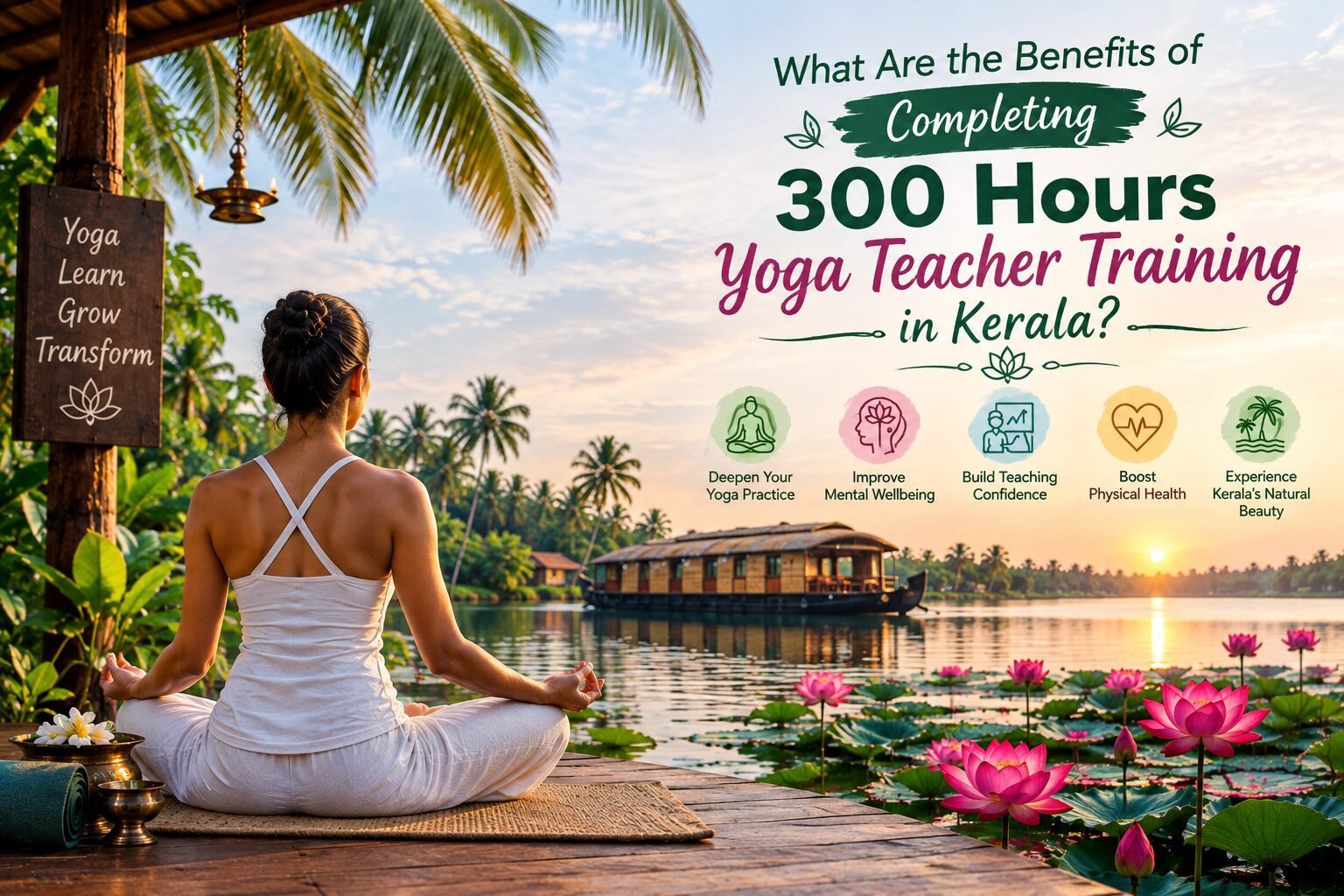
Yoga is more than a physical practice. With deeper study, it can become a path toward greater awareness, discipline, and professional development. A 300 hours yoga teacher training Kerala program is designed for practitioners who already have foundational knowledge and want to explore yoga at a more advanced level. It provides additional time to refine teaching skills, study traditional yogic philosophy, understand the human body, and develop a more confident personal practice.
Kerala is a popular destination for yoga education because of its peaceful surroundings, wellness traditions, and connection with India’s spiritual heritage. Completing advanced training in such an environment can provide both professional knowledge and a meaningful personal experience.
What Is 300 Hours Yoga Teacher Training Kerala?
A 300-hour yoga teacher training course generally builds upon the knowledge gained through foundational teacher training. Instead of simply repeating beginner-level concepts, the curriculum usually provides opportunities for deeper exploration of asana, pranayama, meditation, anatomy, sequencing, teaching methodology, and yoga philosophy.
A 300 hours yoga teacher training Kerala program may also introduce specialized practices, therapeutic applications, adjustments, subtle body concepts, and advanced approaches to teaching different groups of students.
The exact curriculum differs between yoga schools, so prospective students should carefully review the course structure before enrolling. A well-designed program should balance theory, practical sessions, self-study, observation, and teaching practice.
Who Should Consider a 300-Hour Yoga Teacher Training?
This level of training is generally better suited to practitioners who already have a solid foundation in yoga. It can be valuable for teachers who want to expand their knowledge rather than start from the beginning.
You may consider advanced training if you want to:
- Deepen your personal yoga practice and understanding of traditional teachings.
- Improve your ability to design safe and purposeful yoga sequences.
- Develop stronger communication and classroom management skills.
- Explore meditation, pranayama, anatomy, or yoga philosophy in greater detail.
- Expand your teaching options and work with students with different needs.
Previous teaching experience can be helpful, but the eligibility requirements depend on the individual yoga school’s admission policy.
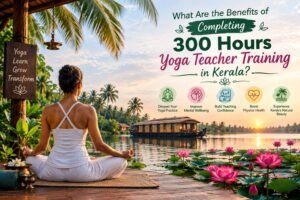
Key Benefits of Completing 300 Hours Yoga Teacher Training Kerala
The biggest advantage of extended training is the opportunity to move beyond basic instruction. More classroom and practice hours allow students to revisit important concepts while gradually developing greater depth and confidence.
1. Deeper Understanding of Yoga
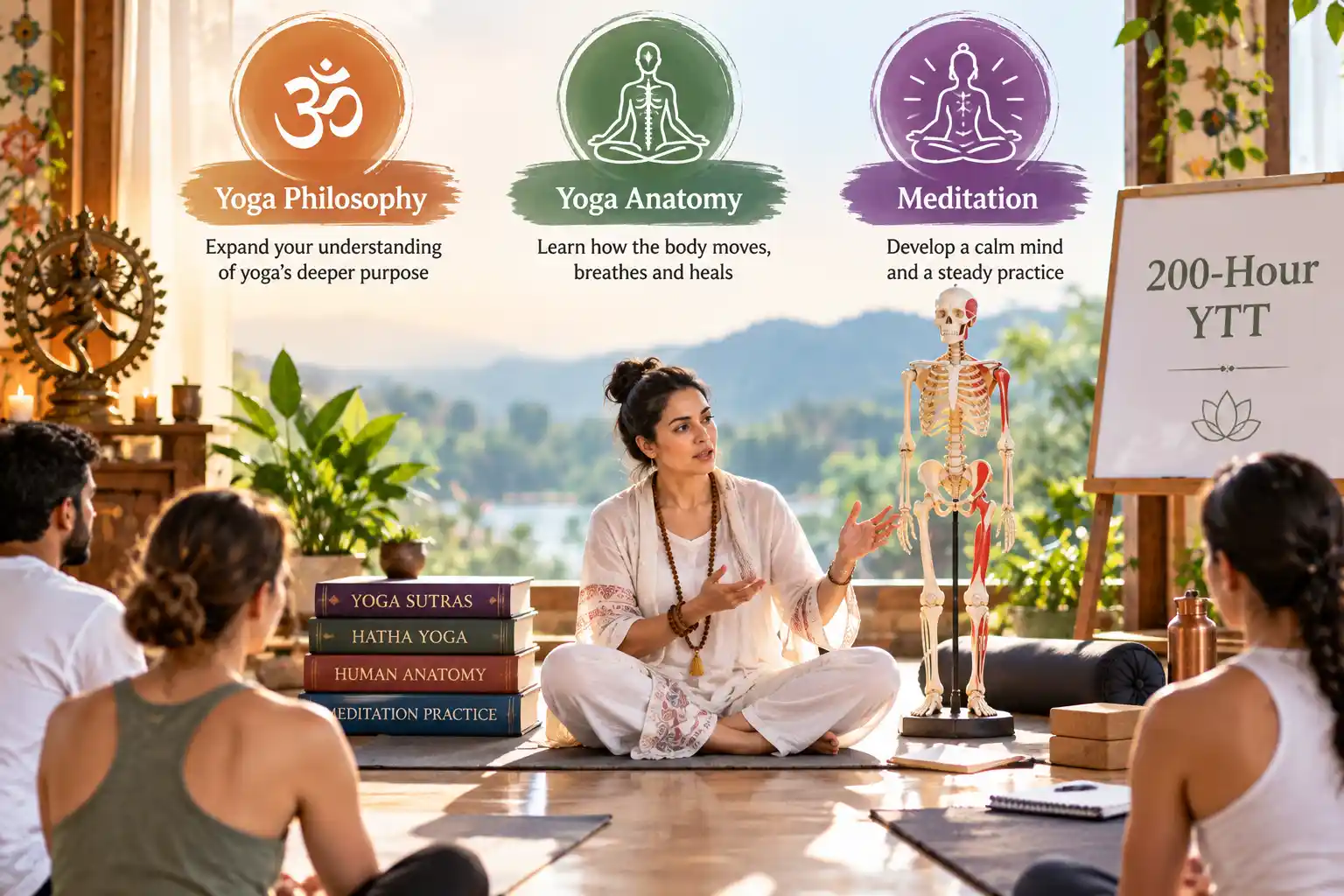
A longer course gives you more time to study yoga as a holistic discipline. Instead of focusing only on physical postures, you can explore how asana, pranayama, meditation, philosophy, and mindfulness work together.
You may study classical texts such as the Yoga Sutras and Bhagavad Gita while examining concepts such as the eight limbs of yoga, dharana, dhyana, ahimsa, and self-discipline.
This broader perspective can help you teach yoga with greater purpose rather than treating each class simply as a sequence of exercises.
2. More Advanced Teaching Skills
Teaching yoga effectively requires more than knowing how to perform a posture. A teacher needs to observe students, explain movements clearly, create appropriate sequences, and adapt practices when necessary.
An advanced yoga teacher training Kerala course can provide additional opportunities to practice these skills. Students may receive feedback from experienced instructors and learn how to refine their verbal cues, demonstrations, pacing, and class structure.
With repeated practice, teaching can become more natural and responsive.
3. Improved Knowledge of Anatomy and Alignment
A deeper study of anatomy can help teachers understand how the musculoskeletal system responds to different movements. This knowledge is particularly useful when working with students who have different mobility levels, body structures, or movement limitations.
Training may cover joint actions, muscle engagement, alignment principles, biomechanics, injury prevention, and appropriate modifications.
Rather than forcing every student into the same version of a pose, you learn to approach asana with greater awareness and adaptability.
4. Stronger Personal Practice
Teacher training is also an opportunity for self-development. A consistent routine involving asana, meditation, pranayama, and reflection can help practitioners understand their own habits and limitations.
A 300-hour program provides more time for experimentation and observation. You may discover which practices support your strength, mobility, concentration, relaxation, and overall sense of balance.
This personal experience can eventually influence how you teach because instructors often communicate concepts more effectively when they have explored them through their own practice.
5. Greater Confidence as a Yoga Teacher
Confidence develops through knowledge and practical experience. The additional hours in an extended teacher training program can give you more opportunities to teach, observe others, receive constructive feedback, and correct mistakes.
You may practice teaching different class formats, adjusting sequences for different abilities, and responding to common challenges that arise during group sessions.
This repeated exposure can make it easier to stand in front of a class and teach with clarity instead of relying entirely on memorized sequences.
How Kerala Enhances the Learning Experience
Kerala provides a distinctive setting for yoga education. Its natural surroundings, traditional wellness culture, and association with Ayurveda and holistic living can complement a dedicated period of study.
Students attending 300 hours yoga teacher training Kerala programs may find that living away from their usual routine makes it easier to focus on practice and learning. Time spent in a dedicated training environment can encourage healthier daily habits and greater self-reflection.
Kerala’s connection with traditional Indian wellness systems can also make the experience culturally enriching. However, the quality of a course ultimately depends on its curriculum, instructors, teaching methodology, facilities, and student support—not simply its location.
Opportunities to Explore Different Teaching Approaches
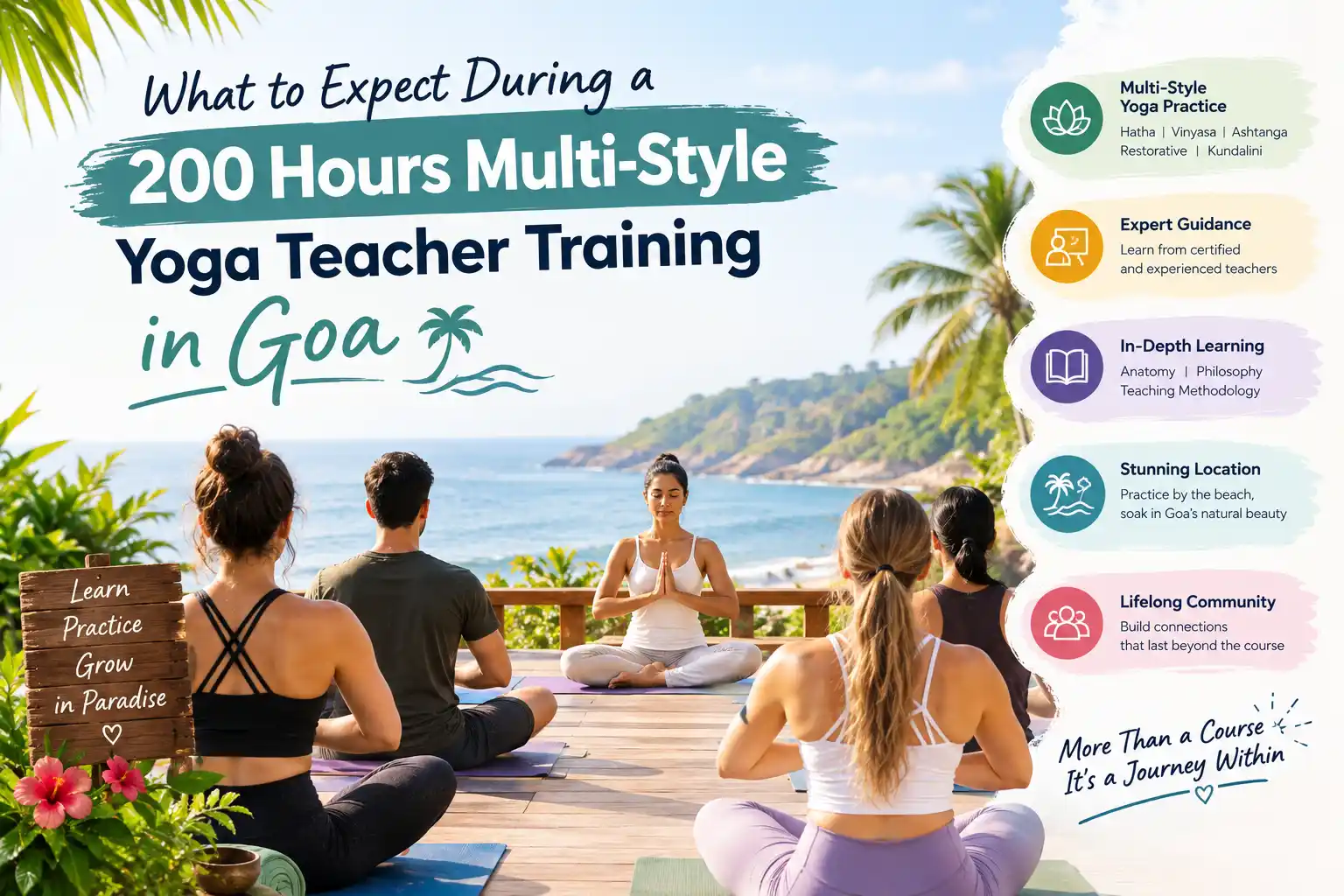
Advanced training can expose students to different methods of sequencing and instruction. Depending on the school, students may study Hatha Yoga, Vinyasa, Ashtanga-inspired practices, Yin Yoga, restorative yoga, meditation, pranayama, or specialized approaches.
This wider exposure can help teachers understand that there is no single sequence or teaching style suitable for everyone.
A certified yoga teacher training Kerala program with a broad and well-structured curriculum can be particularly useful for teachers who want to develop a flexible teaching approach. Instead of teaching every class in the same way, you can learn to consider the students, purpose, intensity, and environment before creating a session.
Professional and Personal Growth
Completing advanced training can also support long-term development within the yoga and wellness field. Teachers may become interested in workshops, retreats, private sessions, specialized classes, or further academic study.
However, certification should not be viewed as an automatic guarantee of employment. Teaching opportunities depend on your skills, experience, credentials, local requirements, and professional network.
The best 300 hour yoga teacher training Kerala option should therefore be selected based on educational quality rather than certification alone. Check the course syllabus, faculty experience, practical teaching components, assessment process, and certification details before making a decision.
What to Look for in an Advanced Yoga Program
Choosing the right course is important because 300 hours represents a substantial investment of time and effort. Look beyond attractive photographs or location-based marketing and examine what you will actually learn.
Before enrolling, consider:
- Whether the curriculum clearly explains advanced subjects and learning outcomes.
- How much practical teaching experience is included.
- Whether anatomy, philosophy, meditation, and pranayama receive adequate attention.
- The qualifications and teaching experience of the faculty.
- Class size and opportunities for individual feedback.
- Accommodation, daily schedule, meals, and student support if residential.
- Certification details and eligibility requirements.
- Reviews and experiences shared by previous students.
A strong advanced yoga teacher training Kerala experience should challenge you while still providing appropriate guidance and opportunities to ask questions.
Is 300 Hours Training Worth It?
For a practitioner who wants deeper knowledge and professional growth, extended teacher training can be a valuable investment. The additional hours allow concepts to be explored rather than rushed, and practical teaching can be repeated until students become more comfortable.
It can also help bridge the gap between completing foundational training and becoming a more experienced instructor. The course itself is only one part of that journey. Continued self-practice, teaching experience, workshops, observation, and lifelong learning remain important.
Bhakti Yogshala offers an environment where students can pursue deeper learning while developing their understanding of yoga through structured practice and study.
Final Thoughts
Completing a 300 hours yoga teacher training Kerala program can provide a deeper understanding of yoga, stronger teaching abilities, improved anatomy knowledge, greater confidence, and valuable personal growth. Kerala’s traditional and peaceful environment can further support an immersive learning experience.
When choosing a program, focus on the quality of education, experienced teachers, practical training, curriculum depth, and opportunities for feedback. The right course should help you become not only a more knowledgeable instructor but also a more observant and responsible practitioner. With consistent practice and continued learning, advanced teacher training can become an important foundation for a long-term journey in yoga.
Frequently Asked Questions
1. Who can join a 300-hour yoga teacher training course?
It is generally intended for practitioners or teachers who already have foundational yoga knowledge, although eligibility varies by school.
2. What is taught in a 300-hour yoga course?
Courses may cover advanced asana, anatomy, pranayama, meditation, philosophy, sequencing, teaching methodology, and specialized yoga practices.
3. Is Kerala good for advanced yoga teacher training?
Yes. Kerala offers a peaceful learning environment and has strong connections with traditional Indian wellness practices.
4. Can beginners join a 300-hour course?
Some schools may accept beginners, but most advanced programs are more suitable for students with previous yoga experience.
5. How is 300-hour training different from 200-hour training?
A 300-hour program generally builds on foundational training and provides more advanced study, practical teaching, specialization, and deeper exploration of yoga.