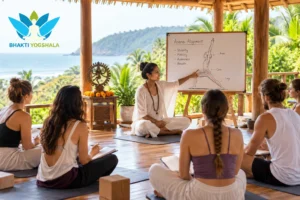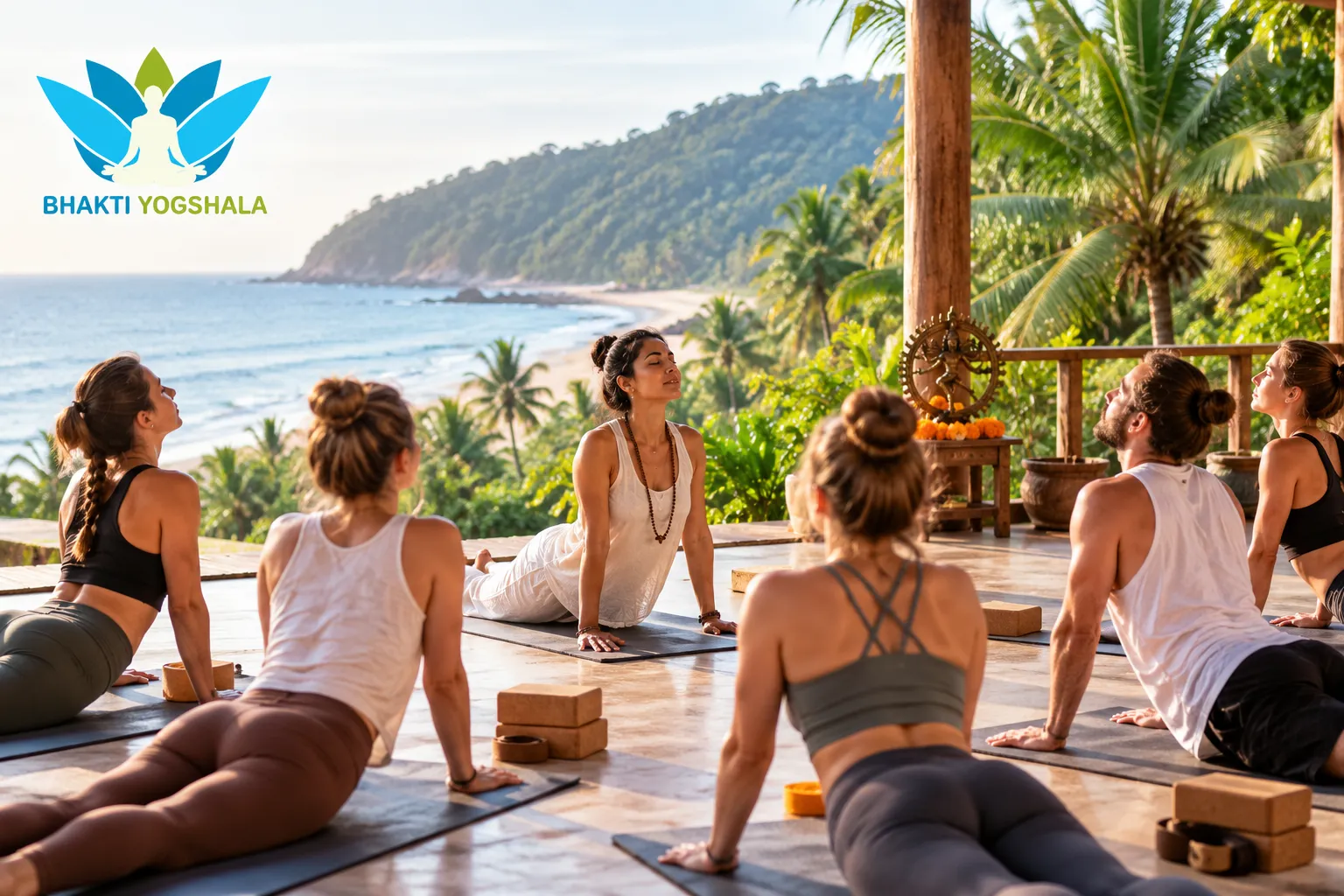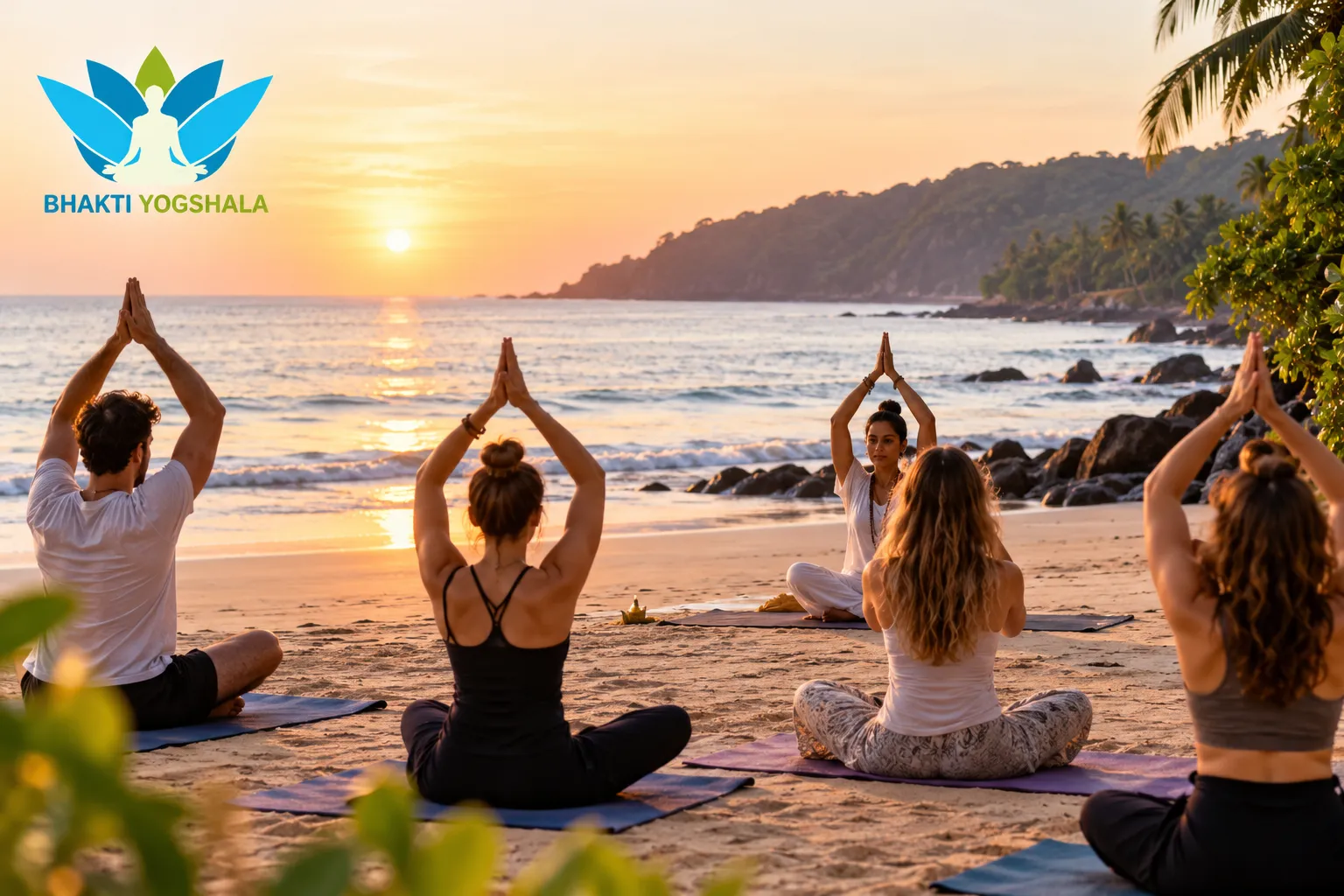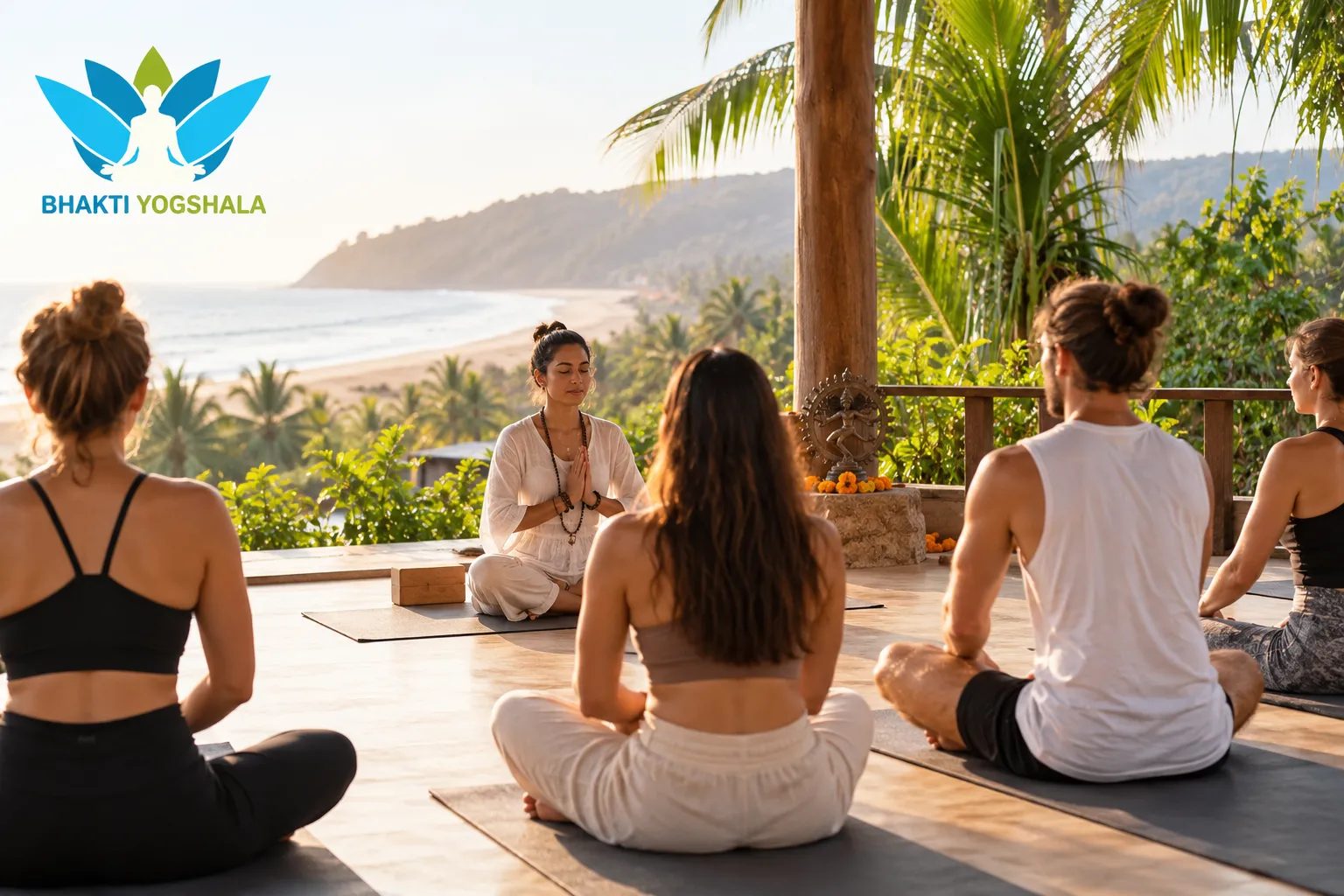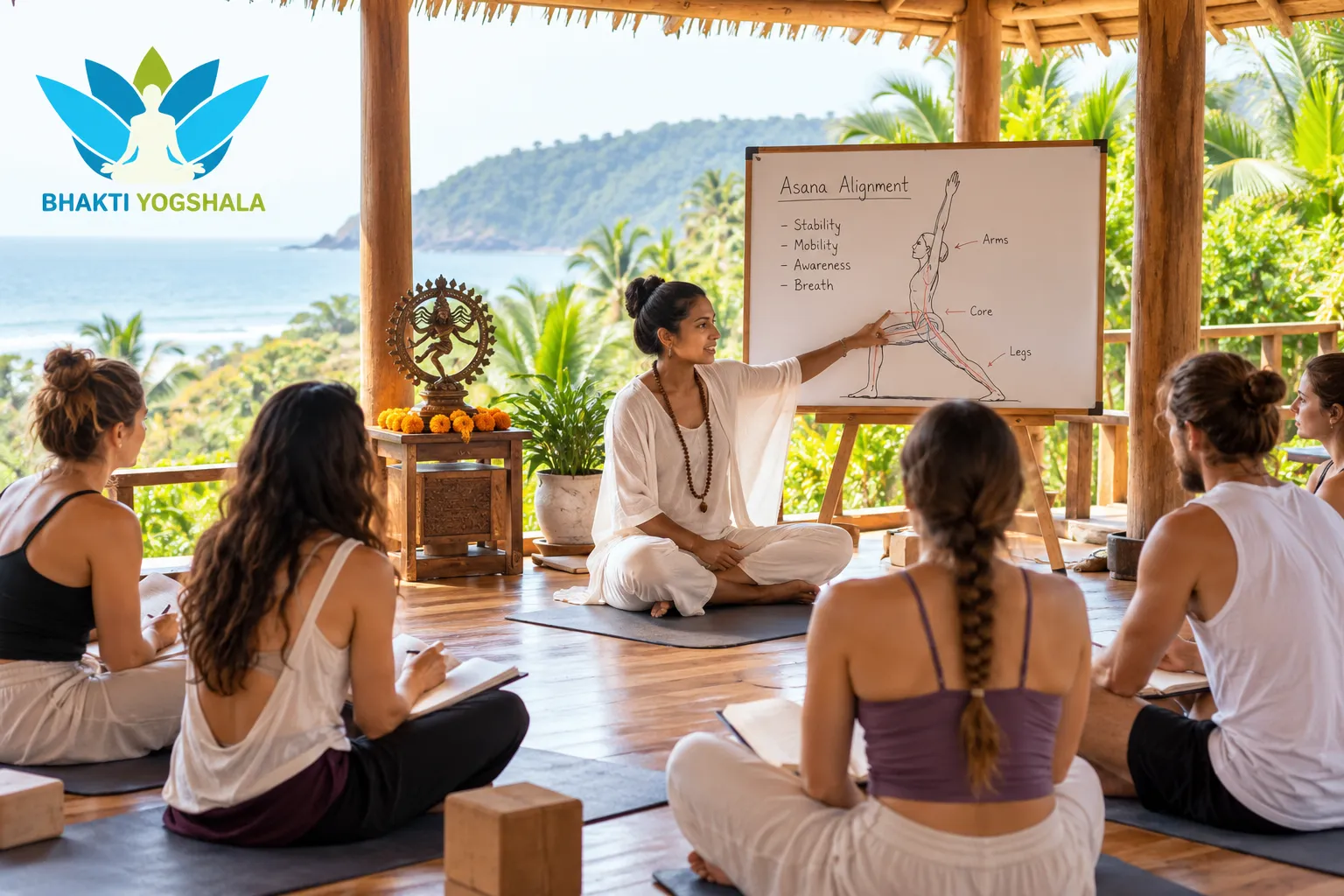
Choosing a yoga school in Goa is a decision that deserves more attention than comparing course prices or looking at photographs of the location. The teachers, curriculum, teaching methods and student facilities will all influence what you learn during the programme.
Goa attracts students from India and overseas who want to study yoga in a coastal setting. Within the state, schools offer different styles of training, course structures and accommodation arrangements. Some programmes introduce several yoga traditions, while others concentrate on a particular approach.
If you are planning to enrol in a yoga teacher training programme, take time to understand what the school actually offers. The following ten points can help you compare options and decide whether a yoga school in Goa matches your learning goals.
Why Choosing the Right Yoga School Matters
Yoga teacher training involves more than attending daily asana classes. Depending on the programme, students may study pranayama, meditation, yoga philosophy, anatomy, teaching methodology and practical instruction.
A school’s teaching team and curriculum determine how these subjects are introduced and connected. The learning environment also matters, particularly if you are travelling to Goa for several weeks.
Your reason for joining should guide your decision. You might want to improve your personal practice, learn about traditional yoga, develop teaching skills or build a foundation for further study.
Before booking, look for clear information about the programme and ask questions whenever something is unclear. A school should be able to explain its teaching approach, course requirements, fees and student arrangements without relying on broad promises.
- Check the Teachers and Their Qualifications
The teachers will have a direct influence on your training. Their knowledge, experience and ability to explain yoga concepts can affect how confidently you develop your practice.
Start by reviewing the school’s teacher profiles. Look for information about:
- Yoga education and relevant qualifications.
- Teaching experience and areas of specialisation.
- Personal practice and training background.
- Subjects each teacher is responsible for.
- Experience teaching beginner and advanced students.
- Experience guiding yoga teacher training programmes.
A school may have different instructors for different subjects. One teacher might lead Hatha Yoga or Ashtanga Vinyasa sessions, while another teaches pranayama, meditation, alignment or yoga philosophy.
It is also worth asking who will teach your selected batch. A teacher listed on a website may not necessarily be assigned to every course or training date.
Bhakti Yogshala publishes a teacher section describing instructors and their areas of teaching. Review the profiles and ask the school to confirm the faculty for your chosen programme.
- Understand the Teaching Approach and Yoga Tradition
Yoga schools do not all teach in the same way. Some follow a multi-style approach, while others concentrate on a particular tradition or practice.
Before selecting a yoga school in Goa, understand how its teaching approach fits your interests.
Consider asking:
- Which yoga styles are included in the programme?
- How much time is devoted to practical classes?
- Are pranayama and meditation included?
- Does the course cover yoga philosophy?
- How are traditional practices explained?
- Is the teaching approach suitable for my experience level?
For example, Hatha Yoga generally places attention on postures, breathing and alignment. Ashtanga Vinyasa follows a structured sequence, while Vinyasa Flow connects movement with breath. Yin Yoga uses longer-held, generally passive postures.
A multi-style programme can introduce students to different approaches. However, the number of styles listed in a course description does not tell you how deeply each one is taught.
Ask for a timetable or subject breakdown. It will help you understand how the school divides its teaching hours.
- Review the Curriculum Before Enrolling
Do not judge a programme only by its course name or advertised duration. Two schools may offer courses with the same number of hours but organise their lessons differently.
Request the detailed curriculum and check whether it explains both the subjects and the learning activities.
For a foundational yoga teacher training programme, areas worth reviewing include:
- Yoga techniques and practice: Asana, pranayama, meditation and related practices.
- Anatomy and physiology: Basic knowledge of the body, movement, breathing and safe practice.
- Yoga humanities: Yoga history, philosophy, traditional texts, ethics and lifestyle.
- Professional essentials: Teaching methodology, sequencing, communication and practical teaching.
Yoga Alliance uses these four educational categories in its RYS 200 standards. They provide a useful reference when comparing foundational teacher training programmes. Students should still review the actual syllabus and confirm the school’s current registration details independently.
You can read the Yoga Alliance standards for Registered Yoga Schools for further information.
A detailed curriculum should help you understand what you will study, how the subjects are taught and what is expected before graduation.
- Verify the Certification and Registration Details
Certification is an important consideration if you plan to use your training as part of a teaching career.
However, the words “international certification” or “Yoga Alliance certified” do not tell you everything about a programme. Find out which organisation issues the credential and what the school is registered to offer.
Before enrolling, ask:
- Who issues the certificate?
- What is the exact registration category?
- Is the school’s registration currently active?
- Does the registration cover the programme you want to join?
- What attendance and assessment requirements must you complete?
- Can you verify the details through the organisation’s official website?
If the school refers to Yoga Alliance, check its current Registered Yoga School listing through the organisation’s official resources. Match the school’s name and registration category rather than relying only on a logo displayed on a website.
Also consider where you intend to teach after completing the programme. A course certificate or school registration does not automatically guarantee employment or legal permission to teach in every country. Local professional, business and insurance requirements may differ.
A reliable school should explain exactly what its certificate represents.
- Look for Practical Teaching Experience
Learning yoga for personal development and learning how to teach a class are different objectives.
If you want to become a yoga instructor, find out how much practical teaching is included in the programme. Students need opportunities to practise giving instructions, demonstrating postures, planning sequences and communicating with a class.
Check whether the course includes:
- Asana demonstrations.
- Verbal instruction and cueing.
- Class sequencing and planning.
- Alignment and adjustment principles.
- Practice teaching sessions.
- Feedback from instructors.
- Student assessment and evaluation.
Ask how often students practise teaching and whether instructors provide individual feedback.
A course that explains teaching methodology only in theory may offer fewer opportunities to develop classroom confidence. Before paying a deposit, understand how practical instruction fits into the timetable.
- Understand Accommodation, Food and Student Facilities
If you are travelling to Goa for a residential programme, your accommodation and daily arrangements will form part of the experience.
Do not assume that every course package at a school includes the same facilities. Room options, meals and other arrangements may vary by programme or batch.
Ask the school about:
- Private, double-sharing or dormitory room options.
- Bathroom and hot-water facilities.
- Drinking water availability.
- Meal timings and dietary options.
- Wi-Fi access.
- Laundry arrangements.
- Distance from shops and essential services.
- Whether accommodation is included in the course fee.
- Additional charges that may apply.
Request recent photographs of the actual rooms, practice areas and dining facilities. If you have dietary requirements, confirm whether the school can accommodate them before booking.
Bhakti Yogshala’s 200-hour course page lists accommodation, vegetarian meals and Wi-Fi among its programme information. Confirm the current facilities, room category, meal arrangements and inclusions directly with the school before making payment.
- Consider the Location and Learning Environment
The location of a yoga school can influence your daily routine, travel arrangements and time outside class.
Agonda, in South Goa, is a coastal location that may suit students who prefer a quieter setting for their studies. However, do not choose a school based only on the destination name. Check its exact address and understand what the surrounding area offers.
Useful points to check include:
- The school’s complete address.
- Distance from the nearest airport or railway station.
- Travel arrangements from your arrival point.
- Availability of local transport.
- Nearby shops, pharmacies and essential services.
- The suitability of the practice space.
- Noise levels and the surrounding environment.
If you are travelling from another country, plan your arrival carefully. Allow enough time to reach the school, check in and settle before your training begins.
Bhakti Yogshala lists its Goa location at Main Agonda Beach Road, Canacona, Agonda, Goa 403702. Contact the school for directions and current arrival guidance.
- Read Student Reviews and Look for Genuine Experiences
Reviews can help you understand what previous students experienced during their training. They are useful when comparing schools, but ratings alone should not determine your choice.
Look for reviews that explain specific aspects of the programme, such as:
- Teaching quality and instructor communication.
- The balance between theory and practical classes.
- Clarity of lessons and feedback.
- Accommodation and meal arrangements.
- Communication before arrival.
- How the school handled student questions.
- The particular course and location attended.
Pay attention to when the review was written. A review from several years ago may describe a different teaching team, facility or course structure.
You can also ask the school whether it can share recent student experiences. Photographs and videos of actual classes may help you understand the learning environment.
Compare reviews with the school’s published course information. If a review mentions a facility or service that is not included in the current programme, ask the school to clarify.
- Compare Fees, Inclusions and Cancellation Policies
The advertised course price is only one part of the total cost. Before comparing schools, find out exactly what the fee covers.
Request a written breakdown that identifies:
- Tuition fees.
- Accommodation charges.
- Meals.
- Study materials.
- Certification-related charges, if applicable.
- Airport transfers, if offered.
- Additional activities.
- Taxes or other applicable charges.
- Payment deadlines.
You should also read the cancellation, refund and rescheduling policies before making a payment.
Find out what happens if you need to change your travel dates, cancel your booking or cannot attend the selected batch. Ask whether the deposit is refundable and whether any administrative charges apply.
Keep written confirmation of the course selected, dates, amount paid and agreed terms. Avoid relying on informal promises when making a financial commitment.
A clear fee breakdown makes it easier to compare the actual cost of different yoga schools in Goa.
- Ask These Questions Before Joining a Yoga School
Before confirming your place, contact the school and request answers to the questions that matter to you.
Here is a useful list:
- Which teachers will conduct my selected batch?
- Can I receive the complete course curriculum?
- Which yoga styles and subjects are included?
- How much practical teaching experience will I receive?
- What certificate will I receive after completing the course?
- How can I verify the school’s registration or accreditation?
- What accommodation and meal arrangements are included?
- Are there additional costs beyond the advertised fee?
- What are the attendance and assessment requirements?
- What is the cancellation and refund policy?
- What should international students arrange before travelling?
- How can I confirm the current course dates and availability?
The way a school responds can tell you a lot about its communication and booking process. Look for specific answers and written information rather than general assurances.
Why Consider Bhakti Yogshala in Agonda, Goa?
Bhakti Yogshala offers yoga teacher training programmes in Goa, with its listed location on Main Agonda Beach Road in South Goa.
Its website describes a multi-style approach to yoga education. The 200-hour programme page lists subjects such as Hatha Yoga, Ashtanga Vinyasa, Vinyasa Flow, pranayama, meditation, yoga philosophy, anatomy and teaching methodology.
The school also publishes information about its teaching team, course arrangements and student facilities. Reviewing these details can help prospective students prepare questions before making an enquiry.
Bhakti Yogshala also lists a 300-hour Yoga Teacher Training in Goa. Its course page describes a 28-day programme for students with a foundational understanding of yoga who want to continue developing their practice and teaching knowledge.
Before selecting a programme, confirm the latest course dates, fees, teacher allocation, certification details, accommodation and other inclusions directly with the school.
You can explore the following pages:
- About Bhakti Yogshala
- Meet the Yoga Teachers
- 200-Hour Yoga Teacher Training in Goa
- 300-Hour Yoga Teacher Training in Goa
Final Checklist Before Choosing a Yoga School in Goa
Before paying for your course, check that you have:
- Reviewed the teachers and their relevant qualifications.
- Understood the school’s teaching approach.
- Received and read the detailed curriculum.
- Checked the practical teaching requirements.
- Verified the certificate and registration details.
- Confirmed accommodation and meal inclusions.
- Checked the school’s exact location.
- Read relevant student reviews.
- Understood the complete fee and payment terms.
- Read the cancellation and refund policy.
- Confirmed the course dates and availability.
- Received written answers to your questions.
How to Choose the Right Yoga School in Goa: 10 Things to Check takes a little research, especially if you are travelling from overseas. Compare the teaching team, curriculum, certification, practical sessions and student arrangements before making your decision.
If you are considering training in Agonda, South Goa, explore the programmes at Bhakti Yogshala and contact the school to discuss your learning goals and the arrangements for your preferred batch.
Contact Bhakti Yogshala
Address: Main Agonda Beach Road, Canacona, Agonda, Goa 403702
Phone: +91 9897355995
Email: bhaktiyogshala@gmail.com
Website: https://bhaktiyogshala.com/
Contact the team to enquire about yoga teacher training programmes in Goa and confirm the latest course information.
Frequently Asked Questions
- How do I choose the right yoga school in Goa?
Compare the school’s teachers, curriculum, teaching approach, certification details, practical teaching opportunities, facilities and policies. Request written course information and check that the programme suits your learning goals before enrolling.
- What should I check about yoga teachers before joining a school?
Review their yoga education, relevant qualifications, teaching experience and subject specialisations. Ask which teachers will conduct your selected batch and whether their profiles are available for review.
- How can I verify whether a yoga school is registered with Yoga Alliance?
Use Yoga Alliance’s official resources to check the school’s current Registered Yoga School details. Confirm the exact school name and registration category. Do not rely only on a logo or statement on a promotional page.
- What should a good yoga teacher training curriculum include?
Review subjects such as yoga techniques, asana practice, pranayama, meditation, anatomy, yoga philosophy, ethics and teaching methodology. Ask for the detailed syllabus so you can understand how these subjects are covered.
- Are practical teaching sessions important in yoga teacher training?
Yes. Practical sessions give students opportunities to practise demonstrating postures, giving instructions, planning classes and communicating with students. Ask how the school organises teaching practice and instructor feedback.
- What should international students check before travelling to a yoga school in Goa?
Confirm the school’s address, course dates, payment terms, accommodation, meals and transport arrangements. International students should also check the applicable Indian visa requirements through official government resources before travelling.
- Should accommodation and meals be included in a yoga school package?
Not necessarily. Some programmes include accommodation and meals, while others charge separately. Request a written list of inclusions, room options, meal arrangements and additional costs before booking.
- How can I check whether online reviews of a yoga school are reliable?
Look for detailed reviews that mention the course, location and approximate date of study. Compare student feedback with the school’s current programme information and, where possible, ask for recent student experiences.
- What questions should I ask before paying a yoga school deposit?
Ask for the curriculum, teacher details, certification information, course dates, total fee, accommodation inclusions and cancellation policy. Keep written records of the answers and payment terms.
- Where is Bhakti Yogshala located in Goa?
Bhakti Yogshala lists its Goa location as Main Agonda Beach Road, Canacona, Agonda, Goa 403702. Contact the school to confirm directions and current arrival arrangements.