You can have strong legs, a stable core and an active fitness routine and still wobble in Tree Pose. That does not automatically mean you are weak or doing yoga incorrectly. Balance poses ask your body to coordinate strength, body awareness, foot and ankle control, vision, attention and breathing at the same time.
When you stand on one leg, your base of support becomes smaller. Your body responds with continuous, subtle adjustments to help keep you upright. A small shift in weight, a moving gaze or unnecessary tension can make a pose feel less stable.
The goal is not to eliminate every wobble. It is to learn how to respond to movement, choose a manageable variation and practise with control.
Why Strength Alone Does Not Guarantee Better Balance
Strength supports balance, but balance is also a coordination skill. Your nervous system uses information from your feet and joints, your eyes and your inner-ear balance system to help you understand where your body is in space. The information is then used to make small corrections.
1. Your feet and ankles are your foundation
In a standing balance, the supporting foot has to respond to tiny shifts in body weight. If you collapse into the arch, grip the toes excessively or rush into the pose, it may be harder to make controlled adjustments.
Try this: Stand with both feet on the floor and knees relaxed. Notice how your weight is distributed. Then shift gently from one foot to the other, keeping the movement small. Practise near a wall or sturdy chair.
2. Proprioception helps you sense your body position
Proprioception is your awareness of where your body parts are and how they are moving without needing to look at them constantly. During a balance pose, this sense helps you notice when your body begins to drift and make a correction.
General strength training may not fully prepare you for the specific control required by a one-legged yoga posture. Practising appropriately scaled balance movements gives you a chance to develop that skill over time.
3. Core strength is only one part of the pose
Your trunk muscles help you control your torso, but your hips, standing leg, ankle and foot must also work together. A strong plank does not necessarily mean Warrior III will feel easy: Warrior III asks you to organise your body while balancing on one leg and extending the other leg behind you.
Instead of tightening every muscle as hard as possible, aim for active engagement that lets you breathe and make small adjustments.
4. Your gaze can influence steadiness
Many yoga teachers use the term drishti for a focused gaze. Looking at one stationary point can help reduce distractions while you balance. Repeatedly looking around the room or checking other practitioners may make it harder to keep your attention steady.
Choose a comfortable, unmoving point in front of you. Keep your neck relaxed and your eyes open, especially when you are learning a pose.
5. Holding your breath can increase unnecessary tension
When a pose feels challenging, you may unconsciously hold your breath, clench your jaw or lift your shoulders. This can make the practice feel more effortful and interfere with smooth adjustments.
Keep your breathing natural. If you cannot breathe comfortably, make the pose easier, use support or come out of it.
6. Alignment and the size of the movement matter
Trying to lift the raised leg too high, lean too far forward or force the full expression of a pose can shift your weight beyond what you can currently control. A smaller, well-organised variation is a useful place to start.
In balance work, steady control is more useful than achieving a particular shape at any cost.
What Helps You Stay Balanced in Yoga?
Build a stable base: place the supporting foot deliberately and avoid gripping the floor with excessive tension.
Keep the standing knee responsive: avoid forcing it backward or locking it rigidly.
Move slowly into and out of the pose: transitions can be as challenging as the hold.
Choose a steady gaze point: use drishti when it helps you focus.
Breathe comfortably: reduce the difficulty if your breath becomes strained or held.
Use support: a wall, sturdy chair or block can make a pose more manageable.
Progress gradually: increase the challenge only when you can maintain control.
Consistency matters more than a long hold on one attempt. A short, steady hold can be a better practice than staying in a pose while straining.
Why Common Yoga Balance Poses Feel Difficult
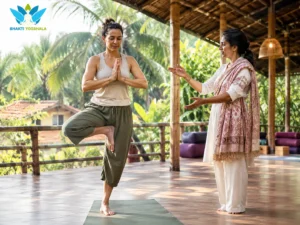
Tree Pose (Vrksasana)
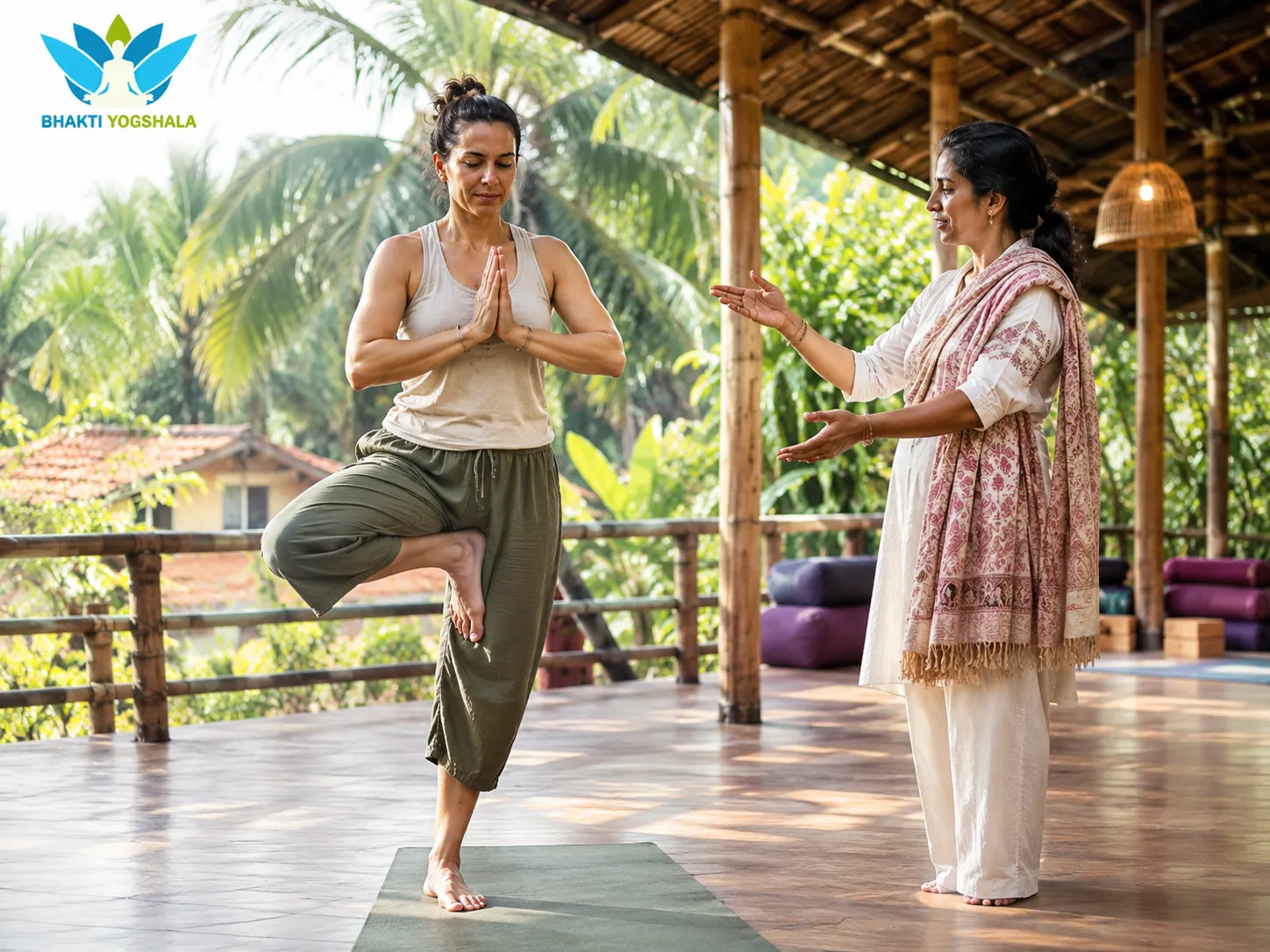
Tree Pose asks you to stand on one leg while placing the other foot against the standing leg at a comfortable height. Wobbling may happen if your weight shifts quickly, your gaze moves or you choose a variation that is too difficult for your current level.
Make it easier: Keep the toes of the raised foot on the floor, or place the sole against the inner calf or thigh—never directly against the knee joint. Use a wall or chair for light support if needed.
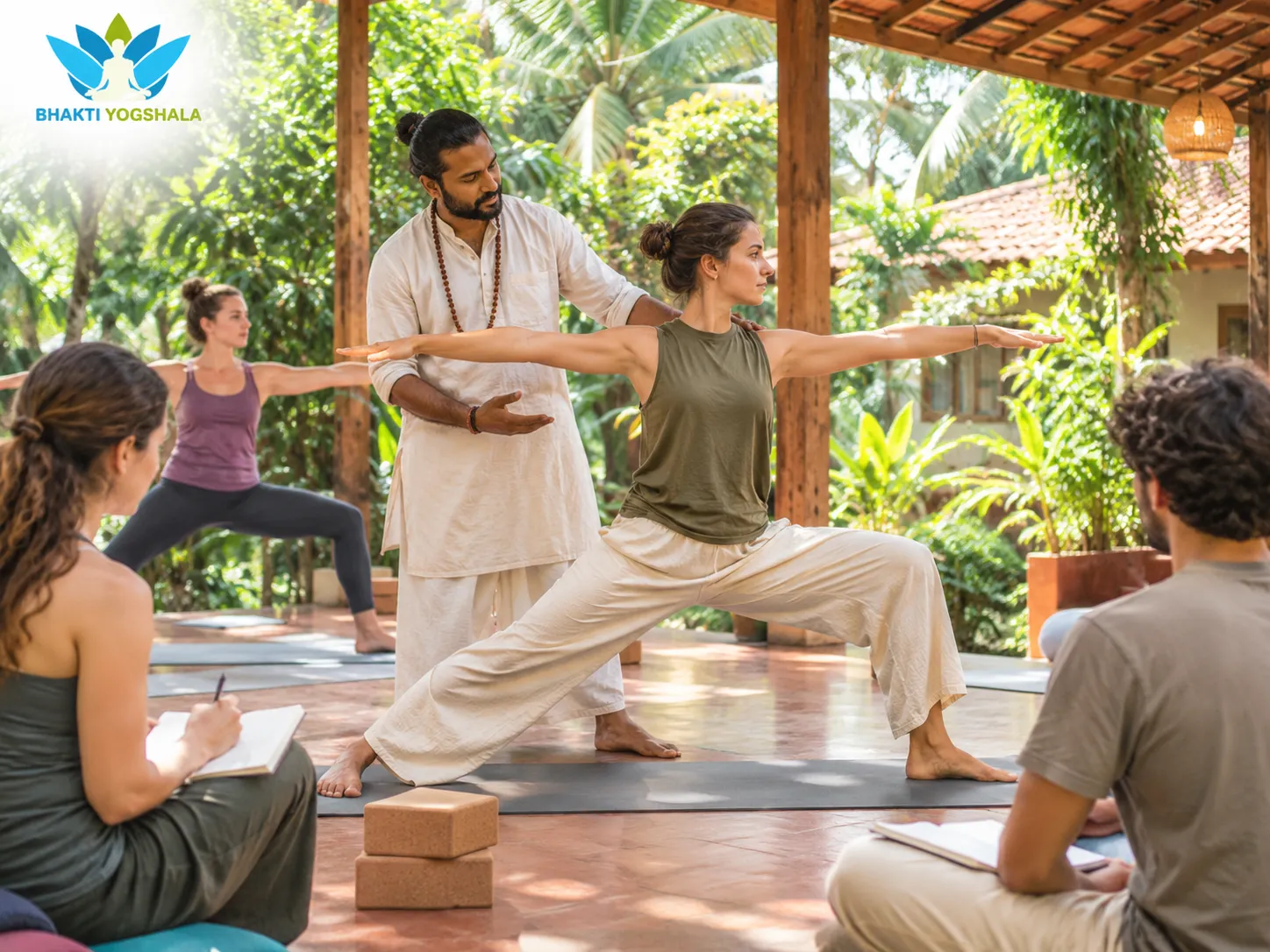
Warrior III (Virabhadrasana III)
Warrior III combines a forward hinge of the torso with the extension of one leg behind you. Your standing foot, hip control, trunk and lifted leg all need to coordinate. Raising the back leg higher than you can control may cause the pelvis and torso to shift.
Make it easier: Place your hands on a wall or sturdy support. Keep the back leg lower and focus on a long, comfortable line through the torso rather than trying to make the body parallel to the floor.
Standing on One Leg
Even a simple one-legged stand challenges your ability to stay stable over a smaller base of support. It is a useful starting point because you can adjust the difficulty in small steps.
Make it easier: Stand beside a wall or chair, keep your eyes open and begin with a brief hold. Lower your foot whenever you need to regain control.
A Simple Progression to Practise Balance
Establish a comfortable standing position. Stand with feet at a natural width, knees relaxed and weight distributed comfortably.
Practise gentle weight shifts. Move your weight slowly from one foot to the other while keeping a stable support nearby.
Try supported single-leg standing. Keep your fingertips on a wall or chair and lift the opposite heel or foot only as far as feels manageable.
Add a supported Tree Pose. Use a steady gaze and continue breathing naturally.
Progress one change at a time. Reduce support, increase the hold or choose a more challenging variation gradually—not all at once.
Keep the surrounding floor clear and practise near a stable support. Stop if you feel dizzy, faint or unsafe. If you have an injury, a medical condition affecting balance or a history of falls, ask an appropriate healthcare professional about safe modifications before attempting challenging poses.
Common Mistakes That Can Make Balance Poses Harder
Trying to hold the pose for too long: fatigue can make control more difficult. Start with a manageable hold.
Forcing the full pose: a deeper or more advanced shape is not automatically better.
Tensing every muscle: aim for controlled engagement rather than rigidity.
Ignoring the supporting foot: pay attention to foot placement and weight distribution.
Comparing yourself with other practitioners: people have different movement histories, anatomy and experience.
Avoiding props: a wall or chair is a useful practice tool, not a failure.
Moving too quickly: enter and leave the pose with control.
When Should You Seek Professional Advice?
Occasional wobbling during a challenging yoga pose is common. However, new or persistent balance difficulties outside yoga should not automatically be blamed on weak muscles.
Consider seeking medical advice if you experience recurring dizziness, unexplained loss of balance, frequent falls or difficulty walking steadily. Sudden severe loss of balance—particularly with weakness, trouble speaking, vision changes or a severe headache—requires urgent medical assessment.
This article is for general yoga education and is not a diagnosis or a substitute for individual assessment.
Explore Yoga Practice at Bhakti Yogshala
Developing a yoga practice involves more than achieving a particular pose. Learning about alignment, movement, breath, anatomy and teaching methodology can help practitioners understand how different elements of practice work together.
Bhakti Yogshala in Agonda, Goa, publishes a multi-style 200-hour yoga teacher-training curriculum that includes Hatha Yoga, Ashtanga Vinyasa, Vinyasa Flow, Yin Yoga, pranayama, meditation, anatomy, yoga philosophy and teaching methodology.
If you are interested in studying yoga in greater depth, review the 200-Hour Yoga Teacher Training in Goa programme and contact the school directly to confirm current dates, fees, eligibility and course arrangements.
Bhakti Yogshala | Main Agonda Beach Road, Canacona, Agonda, Goa 403702 | +91 9897355995 | bhaktiyogshala@gmail.com | https://bhaktiyogshala.com/
FAQs About Yoga Balance Poses
Why do I struggle with yoga balance poses even though I am strong?
Strength is only one part of balance. Body awareness, foot and ankle control, gaze, coordination and comfortable breathing also matter. You may need to practise balance skills specifically.
Does core strength improve balance in yoga?
Core strength can help you control your trunk, but it does not guarantee balance. The feet, ankles, hips and sensory systems also contribute to stability.
How can beginners improve their balance in yoga?
Begin with gentle weight shifts, supported single-leg standing and modified poses. Keep a stable support nearby, breathe naturally and increase the challenge gradually.
Why do I wobble in Tree Pose?
Tree Pose requires you to balance on one leg while responding to small shifts in body weight. Foot placement, gaze, fatigue and the chosen variation can all affect steadiness.
Should I close my eyes to improve balance?
Not when you are first learning. Closing your eyes removes an important source of balance information and can make a pose more difficult. Practise with your eyes open and use support when needed.
How long should I hold a yoga balance pose?
There is no single duration for everyone. Begin with a short hold that allows you to breathe naturally and stay in control. Increase it gradually if the pose remains comfortable.
Can yoga help improve balance?
Practising suitable balance poses may help you develop balance skills over time. Progress depends on the person, the practice and any factors that affect balance.
When should I be concerned about balance problems?
Seek medical advice for persistent or unexplained balance difficulties, recurring dizziness or frequent falls. Sudden severe balance loss with neurological symptoms requires urgent medical assessment.
Does Bhakti Yogshala offer yoga teacher training in Goa?
Bhakti Yogshala publishes a 200-hour multi-style yoga teacher-training programme in Agonda, Goa. Check the official course page and contact the school to confirm current details