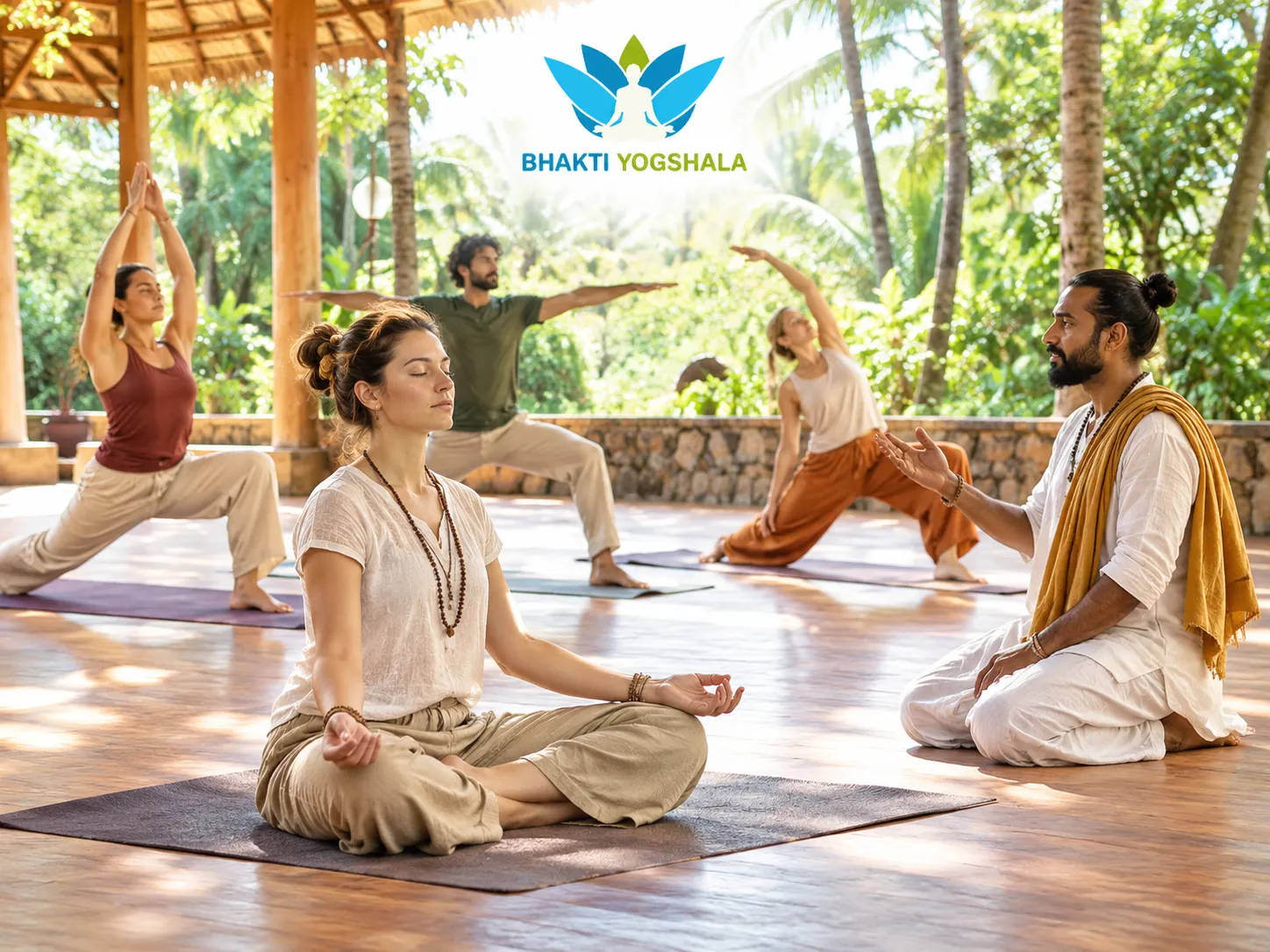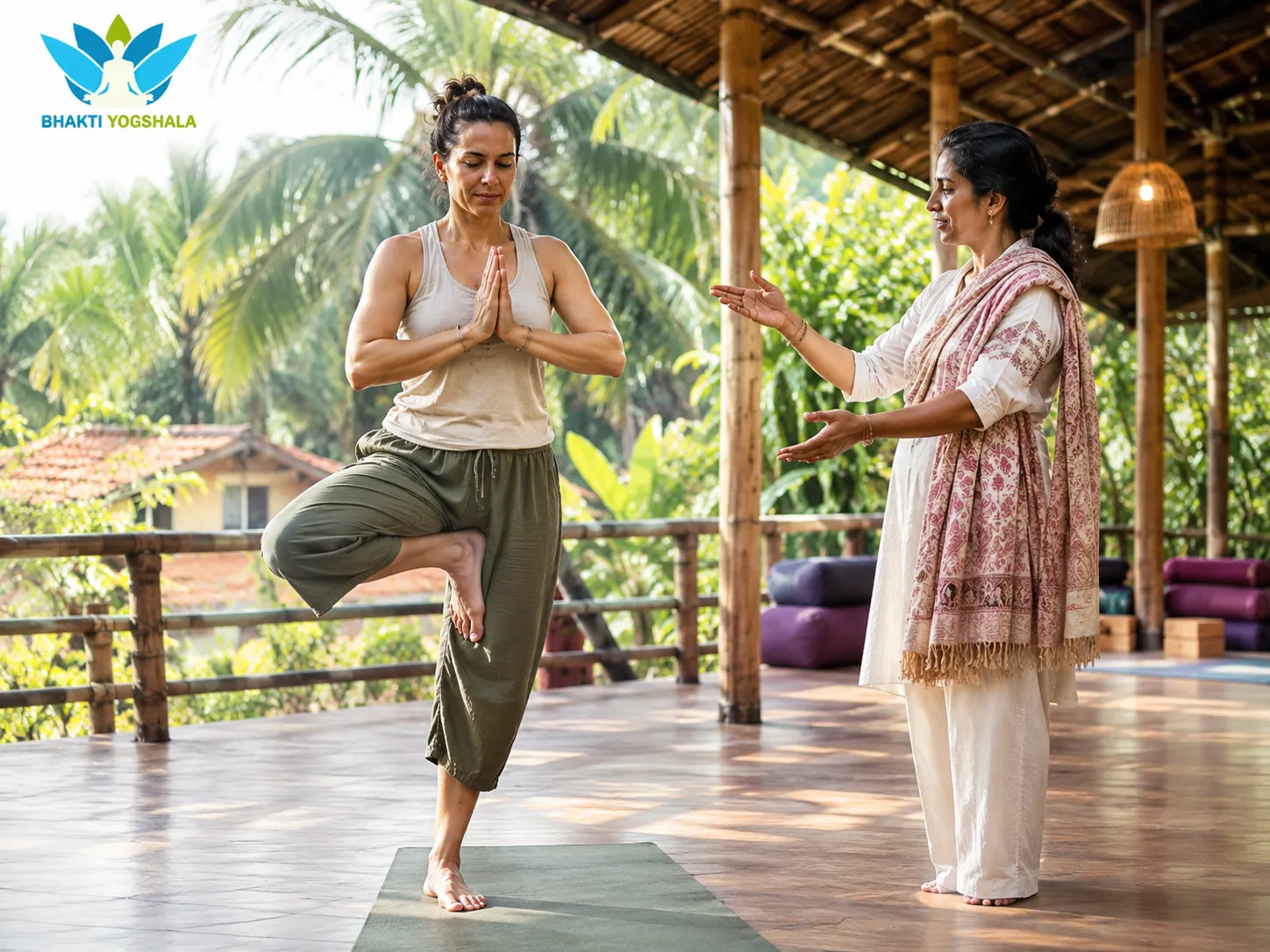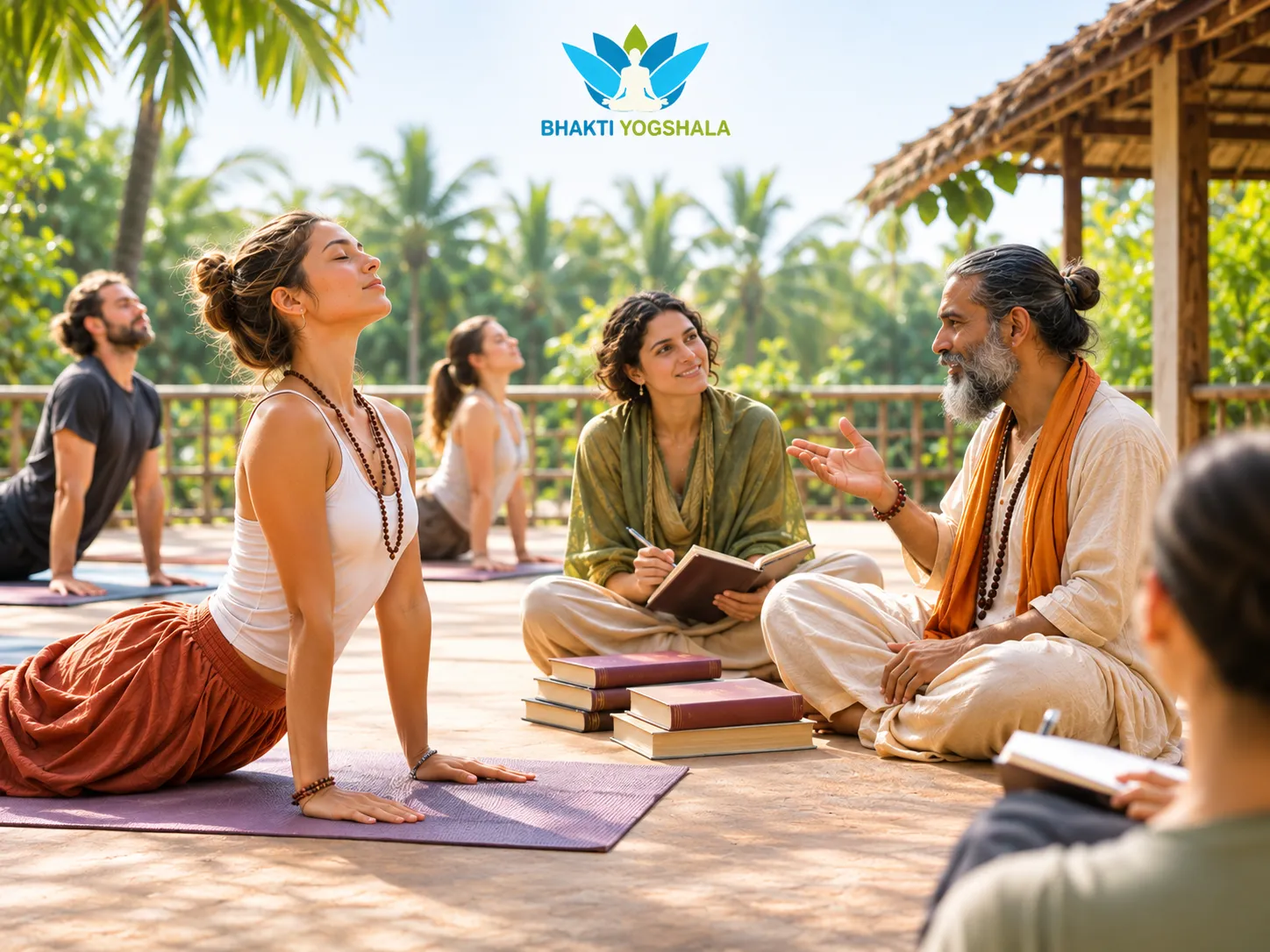
Many people first encounter yoga through physical postures, breathing exercises or a guided class. Over time, they may notice that yoga also includes ideas about attention, self-discipline, ethical choices and the way we relate to ourselves and others.
Practising yoga and studying yoga philosophy are connected, but they are not exactly the same. Physical practice develops familiarity with techniques such as asana, pranayama and meditation. Yoga philosophy explores the ideas, principles and texts that explain how yoga has been understood within different traditions.
You can practise yoga without studying philosophical texts in depth, and you can begin studying yoga philosophy without being able to perform advanced postures. Exploring both can offer a broader understanding of yoga.
What Does Practising Yoga Mean?
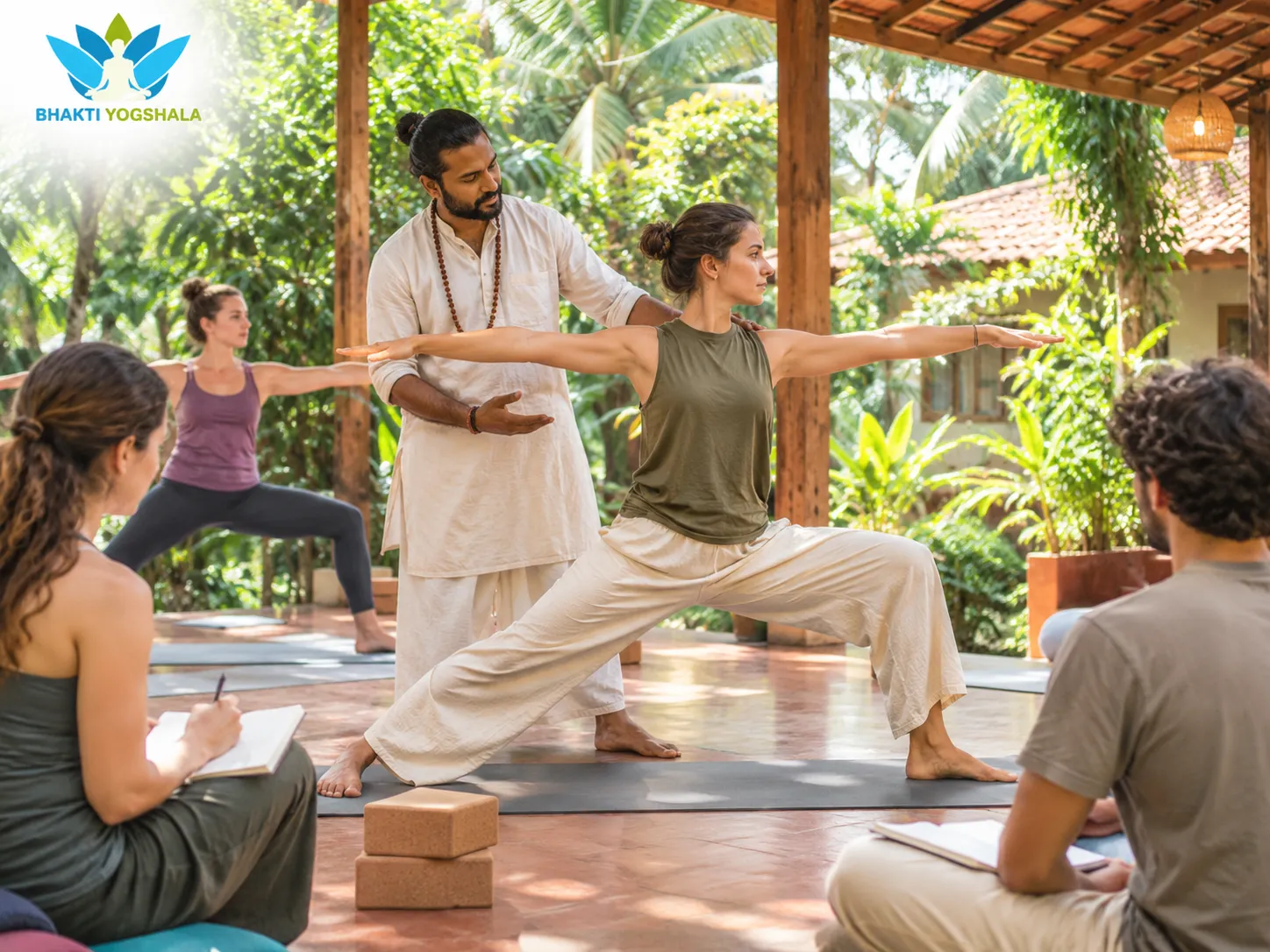
In everyday settings, yoga practice often refers to physical postures, or asanas. A class may include standing and seated poses, balance work, movement sequences, breathing techniques and relaxation. Some classes also include meditation or concentration practices.
The experience varies by style and teacher. Hatha classes may place emphasis on posture, alignment and steady breathing. Ashtanga follows a more structured sequence, while Vinyasa commonly links movement with breath. The specific content of a class depends on the instructor and the tradition being taught.
For beginners, practice is often hands-on: learning how to enter and leave a posture, breathe comfortably, use props or adapt a movement to suit their current ability. Physical practice is one important way to engage with yoga, but it is not the whole subject.
What Is Yoga Philosophy?
Yoga philosophy examines the concepts, texts and principles associated with yoga traditions. It explores questions about the mind, awareness, discipline, conduct, suffering, meditation and the purpose of practice.
One influential source is Patanjali’s Yoga Sutras. Students may explore its discussion of the mind and the eight-limbed path of yoga. The eight limbs are yama, niyama, asana, pranayama, pratyahara, dharana, dhyana and samadhi. They are traditionally presented as interconnected aspects of a path, rather than simply a list of physical exercises.
Philosophical study can also introduce the yamas and niyamas: ethical and personal disciplines often discussed in yoga education. The precise interpretation of a text or concept can differ between teachers and traditions, so context matters.
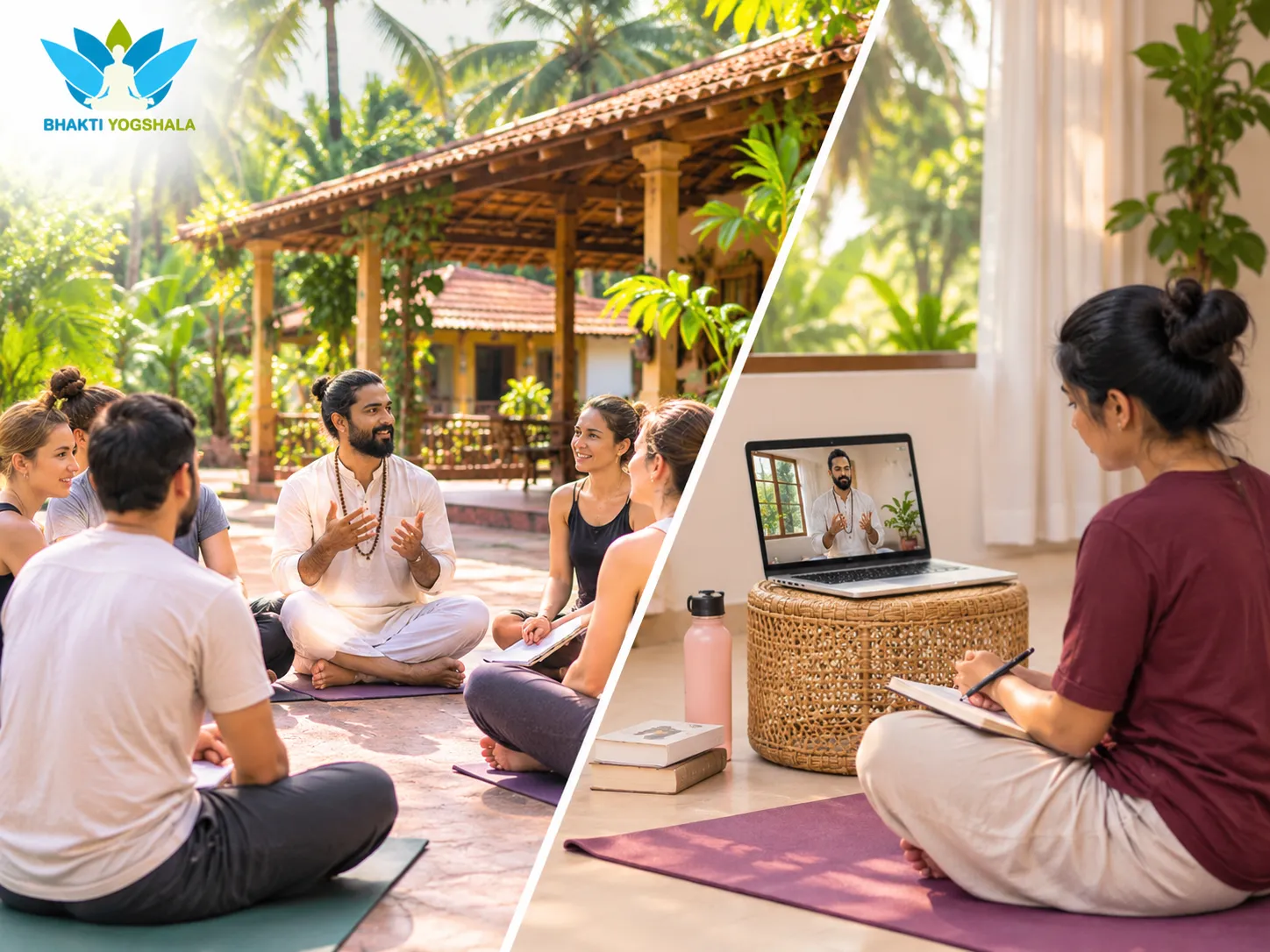
Studying philosophy is more than memorising Sanskrit words. It can involve reading translations, comparing explanations, asking questions, discussing ideas with a teacher and reflecting on how a teaching is understood in its original context. Advanced physical ability is not a prerequisite.
Yoga Practice vs Yoga Philosophy: Key Differences
| Aspect | Yoga practice | Yoga philosophy |
|---|---|---|
| Main focus | Experiencing and learning yoga techniques | Understanding yoga’s ideas, principles and texts |
| Typical activities | Asana, movement, breathwork and sometimes meditation | Reading, discussion, reflection and interpretation |
| Main question | How do I practise or adapt this technique? | What does this teaching mean in its tradition? |
| How learning develops | Through instruction, repetition and direct experience | Through study, questioning, context and reflection |
| Physical ability required | Depends on the type of class; adaptations may be available | Advanced postures are not required to begin studying |
| How they connect | Can offer direct experience of techniques | Can provide context for why particular practices are taught |
The two approaches can overlap. A practical class may include a discussion of a philosophical principle, while a philosophy lesson may refer to the experience of breath, concentration or meditation. Neither is automatically more valuable; the right balance depends on your goals.
How Yoga Philosophy Can Inform Everyday Practice
Philosophical concepts are easier to explore when they are considered carefully and in context. The following examples show how some commonly discussed terms may relate to practice; they are illustrations, not the only possible interpretations.
Ahimsa: Practising Non-Harming
Ahimsa is commonly translated as non-violence or non-harming. During practice, a student might use this idea as a reminder not to force a posture simply to match another person’s range of movement. It can also prompt reflection on how we treat others. This reflection does not replace appropriate instruction or medical advice where needed.
Svadhyaya: Self-Study
Svadhyaya is often translated as self-study. In a practical setting, it may involve noticing recurring reactions: frustration when a posture feels difficult, comparison with other students, or impatience with gradual progress. Reflection can help a learner recognise these patterns without turning the exercise into self-criticism.
The Eight Limbs: A Broader Framework
Patanjali’s eight-limbed framework includes ethical principles, personal disciplines, posture, breath regulation, withdrawal of the senses, concentration, meditation and samadhi. Studying the framework can help readers understand why many yoga traditions discuss more than physical flexibility or strength. Interpretations and teaching approaches vary, so learners should consider the source and context.
Can You Study Yoga Philosophy Without Becoming a Yoga Teacher?
Yes. People may explore yoga philosophy because they are curious about yoga’s history, interested in meditation or want to understand concepts mentioned in class. Reading introductory material, joining a discussion or learning from a knowledgeable teacher can be a starting point.
Teacher training is one structured way to study philosophy alongside other areas of yoga education, but it is not the only route. If you are comparing programmes, review the actual syllabus rather than assuming all courses cover the same texts or topics. Ask what is taught, how discussions are facilitated and whether students have opportunities to ask questions.
Bhakti Yogshala includes yoga philosophy in its published yoga teacher-training curriculum. If you are considering a structured programme, review the details of its [200-hour yoga teacher training in Goa](https://bhaktiyogshala.com/200-hour-yoga-teacher-training-goa/) and decide whether the curriculum, schedule and learning format fit your aims.
How to Start Learning Yoga Philosophy
Begin with one subject. The Eight Limbs of Yoga or the meaning of ahimsa can provide an accessible starting point.
Use reliable introductions and translations. Compare explanations when a concept is presented differently.
Read with context. Classical texts come from particular historical and cultural settings; avoid assuming that one modern explanation represents every tradition.
Ask questions. If a teacher introduces a philosophical idea, ask which text or tradition it comes from and how it is interpreted.
Take time to reflect. Personal experience can prompt useful questions, but it is not a substitute for studying a text carefully.
The aim is not to collect Sanskrit terms. It is to build a more informed understanding of the ideas being studied.
Exploring Yoga Beyond Physical Postures
Yoga practice and yoga philosophy offer different but related ways to engage with yoga. Practice gives you direct experience of techniques such as posture and breathwork. Philosophy helps you examine the ideas and principles associated with those practices.
You can begin with either. If you already attend classes, philosophy may help you understand concepts introduced by your teacher. If you are more interested in yoga’s ideas and history, you can start with reading and discussion without first mastering advanced postures.
Bhakti Yogshala includes yoga philosophy as part of its wider yoga education. Explore the published course information to see whether structured teacher training aligns with your interests and learning goals.
Frequently Asked Questions
Is yoga philosophy different from yoga practice?
Yes. Yoga practice commonly involves techniques such as asana, pranayama and meditation. Yoga philosophy examines ideas, principles and texts associated with yoga. The two can complement each other, but they are not identical.
Can I learn yoga philosophy without practising yoga?
Yes. You can read philosophical texts, attend discussions and study yoga concepts without performing physical postures. Practical experience may help you relate to some ideas, but advanced physical ability is not required to begin.
What are the Eight Limbs of Yoga?
The eight limbs described in Patanjali’s Yoga Sutras are yama, niyama, asana, pranayama, pratyahara, dharana, dhyana and samadhi. They are traditionally understood as interconnected aspects of a path of yoga.
Do I need to know Sanskrit to study yoga philosophy?
No. Beginners can start with reliable translations and explanations. Learning Sanskrit terms can be useful, but understanding the meaning and context of a teaching matters more than memorising terminology alone.
Is yoga philosophy included in yoga teacher training?
Many teacher-training programmes include philosophy, but syllabuses differ. Check the specific course curriculum to confirm which texts, principles and topics are covered.
Do I need to perform advanced yoga poses to study philosophy?
No. Philosophical study primarily involves reading, discussion and reflection. A course may include physical practice as well, but advanced postures are not a requirement for beginning philosophical study.