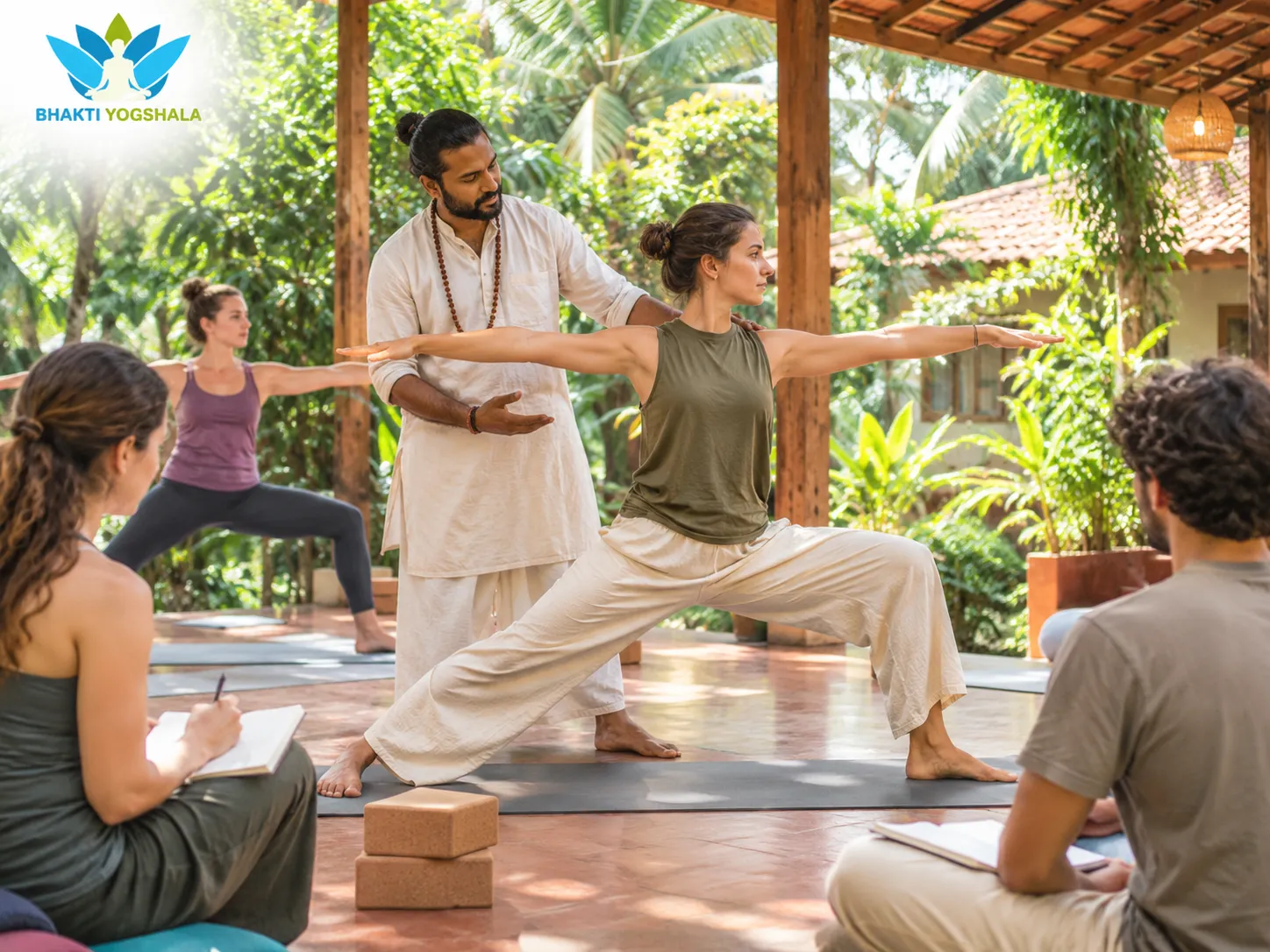
Choosing between a 200-hour and 300-hour yoga teacher training course depends on your current experience, learning goals and plans for the future.
A 200-hour yoga teacher training course is generally the starting point for students who want to develop foundational yoga knowledge and learn teaching skills. A 300-hour yoga teacher training course is advanced training designed to build on previous teacher education.
If you have not completed foundational teacher training, a 200-hour programme is usually the appropriate place to begin. If you already have a suitable 200-hour qualification and want to refine your teaching methodology or deepen your understanding of yoga, a 300-hour programme may be the next step.
Bhakti Yogshala offers both 200-hour and 300-hour yoga teacher training programmes in Goa. Understanding the differences can help you select a course that matches your experience and expectations.
What Is the Difference Between 200-Hour and 300-Hour Yoga Teacher Training?
The main difference is the level of study and the learning progression each programme is intended to provide.
A 200-hour course introduces foundational yoga practice, theory and teaching methodology. A 300-hour course builds on that foundation and provides further opportunities to develop your knowledge and teaching skills.
200-Hour vs 300-Hour Yoga Teacher Training: Comparison Table
Comparison Factor | 200-Hour Training | 300-Hour Training |
|---|---|---|
Learning level | Foundational | Advanced |
Best suited for | Aspiring teachers and practitioners beginning formal teacher training | Practitioners with previous teacher training |
Main purpose | Build core yoga knowledge and teaching skills | Deepen knowledge and refine teaching skills |
Curriculum | Foundational practice, theory and teaching methodology | More advanced study based on the programme syllabus |
Teaching development | Learn to plan and guide classes | Develop teaching skills further through advanced study and practice |
Entry requirements | Depend on the school | Usually requires foundational training; confirm the school’s prerequisites |
Next step | Begin developing teaching experience or continue personal study | Continue professional development or pursue a relevant advanced credential |
Main consideration | Quality of the foundation and supervised practice | Curriculum depth, eligibility and relevance to your goals |
These are general distinctions. Course duration, eligibility, curriculum and credential requirements vary by school. Always check the current programme details before enrolling.
What Do You Learn in a 200-Hour Yoga Teacher Training Course?
A 200-hour yoga teacher training course provides a structured introduction to the practice, philosophy and teaching of yoga.
Depending on the school, subjects may include:
Asana Practice: Learn postures, alignment principles and appropriate modifications.
Pranayama: Study breathing practices and their place in yoga.
Meditation: Explore techniques that support concentration and awareness.
Yoga Philosophy: Develop an understanding of the principles and traditions behind yoga.
Anatomy and Physiology: Learn relevant concepts about the body and safe movement.
Teaching Methodology: Practise instruction, class planning, sequencing and communication.
Teaching Practice: Develop confidence by practising how to guide a class and receiving feedback.
A good foundational programme should help you understand more than how to perform postures. It should also give you opportunities to learn how to communicate instructions, plan a class and respond appropriately to students.
Who Should Choose a 200-Hour Course?
A 200-hour programme may suit you if:
You want to begin formal yoga teacher training.
You want to understand yoga beyond your regular personal practice.
You want to learn the foundations of class planning and instruction.
You want to explore whether teaching yoga aligns with your goals.
You are comparing your first teacher training programmes.
Even if you have practised yoga for several years, formal teaching education can introduce skills that regular classes may not cover.
Before enrolling, review the syllabus, entry requirements and opportunities for supervised teaching practice.
What Do You Learn in a 300-Hour Yoga Teacher Training Course?
A 300-hour yoga teacher training course is designed to build on foundational training rather than simply repeat introductory material.
Depending on the programme, advanced study may explore areas such as:
More Detailed Asana Practice and Alignment
Advanced Teaching Methodology and Sequencing
Deeper Study of Pranayama and Meditation
Further Exploration of Yoga Philosophy
Applied Anatomy and Movement Principles
Teaching Practice, Observation and Feedback
The actual subjects and amount of practical teaching vary between schools. Review the published syllabus to understand what the programme offers and whether it addresses the skills you want to develop.
Who Should Choose a 300-Hour Course?
A 300-hour programme may be appropriate if:
You have already completed suitable foundational yoga teacher training.
You want to deepen your understanding of yoga practice and philosophy.
You want to refine your teaching methodology.
You want to explore advanced topics relevant to your teaching interests.
You are planning the next stage of your yoga education.
Before applying, confirm the entry requirements with the school. Do not assume that every programme accepts the same qualifications or prior experience.
Which Course Should You Choose Based on Your Goals?
The best choice depends on what you want to achieve, not simply the number of training hours.
Goal 1: You Want to Start Teaching Yoga
If you have not completed foundational teacher training, start by comparing 200-hour programmes.
Look for a clear syllabus, practical teaching opportunities, experienced instructors and constructive feedback. These elements can help you develop the knowledge and communication skills required to begin teaching.
Goal 2: You Want to Deepen Your Personal Yoga Practice
Both training levels can support further learning, but your current background matters.
A 200-hour course may provide a more structured introduction to yoga practice and theory. A 300-hour course may be more relevant if you already have foundational training and want to explore advanced material.
Goal 3: You Already Have a 200-Hour Qualification
Consider a 300-hour programme if you want to continue developing your teaching skills and expand your knowledge.
Review the curriculum carefully. Identify the areas you want to improve and check whether the programme offers meaningful study and practice in those areas.
Goal 4: You Want to Work Towards an RYT 500 Credential
Yoga Alliance’s RYT 500 pathway has specific training and teaching-experience requirements. It can involve completing a qualifying 500-hour programme or combining qualifying 200-hour and 300-hour training, subject to the applicable registration requirements.
Completing a 300-hour course alone does not automatically make someone an RYT 500. Verify the school’s current registration and the relevant requirements directly with Yoga Alliance before enrolling.
Official reference: https://yogaalliance.org/explore-credentialing-options/
Can You Take a 300-Hour Course Without Completing 200-Hour Training?
Do not assume that you can enrol in a 300-hour programme without previous teacher training.
A 300-hour course is generally intended for students who have already established a foundation through earlier teacher education. Individual schools may have different admission requirements, so confirm eligibility with the programme provider.
If you have only practised yoga and have not completed formal teacher training, ask the school whether its 200-hour programme is the more appropriate starting point.
Is a 300-Hour Yoga Teacher Training Course Harder?
A 300-hour course generally involves more advanced study, but difficulty depends on the curriculum, teaching approach and your previous experience.
The programme may expect you to apply knowledge you have already acquired, reflect critically on your teaching and engage with more detailed subject matter.
Before enrolling, consider your current preparation, the course schedule and how much time you can dedicate to study and practice.
Should You Complete Both Courses Back to Back?
Completing both courses consecutively may be possible when the school offers compatible dates and you meet the entry requirements for the advanced programme.
However, it is not automatically the best option for everyone. Some students may benefit from gaining teaching experience between courses so they can identify areas for further development.
Before making a decision, check:
Whether the course dates align.
Whether you meet the 300-hour entry requirements.
Whether the schedule is manageable.
Whether additional teaching experience would help you achieve your goals.
Whether both programmes fit your budget and learning plans.
Choose the progression that supports your learning rather than rushing to complete a higher number of training hours.
What Should You Check Before Enrolling in Yoga Teacher Training in Goa?
Comparing programmes carefully can help you make a more informed decision.
1. Curriculum and Teaching Styles
Review the subjects covered, the teaching approach and the balance between practical and theoretical learning.
2. Teaching Practice
Ask how much practical teaching is included, whether students receive feedback and how their teaching skills are assessed.
3. Course Duration and Schedule
Check the confirmed dates, daily timetable and total duration of the programme you intend to attend.
4. Eligibility and Certification
Confirm admission requirements, the certificate awarded and any external registration requirements relevant to your plans.
5. Fees and Inclusions
Ask for a breakdown of tuition, accommodation, meals and any additional charges. Review the payment and cancellation policies before paying a deposit.
6. Learning Environment
Consider the location, class size, accommodation arrangements and teaching support. Choose an environment that suits your learning preferences.
A longer programme is not automatically the better option. The right choice is the one that matches your current level and gives you the learning experience you need.
Explore Yoga Teacher Training at Bhakti Yogshala, Goa
Bhakti Yogshala offers 200-hour and 300-hour yoga teacher training programmes in Goa.
Its published 300-hour programme is described as intermediate-to-advanced training, with subjects including asana practice, pranayama, meditation, yoga philosophy, anatomy and teaching methodology.
If you are deciding between the two levels, review the individual course pages and confirm the entry requirements, curriculum, dates and fees before booking.
Explore the programmes:
200-Hour Yoga Teacher Training in Goa
300-Hour Yoga Teacher Training in Goa
Contact Bhakti Yogshala to discuss which programme is appropriate for your previous training and learning goals.
Contact Details
Location: Main, Agonda Beach Road, Canacona, Agonda, Goa 403702
Phone/WhatsApp: +91 9897355995
Email: bhaktiyogshala@gmail.com
Confirm current course availability, contact details, fees and certification arrangements with the school before publishing this information.
Frequently Asked Questions
1. What Is the Main Difference Between 200-Hour and 300-Hour Yoga Teacher Training?
A 200-hour programme provides foundational yoga education and teaching skills. A 300-hour programme builds on previous training and supports further development through advanced study.
2. Should I Complete a 200-Hour Course Before a 300-Hour Course?
A 300-hour programme is generally designed for students with foundational teacher training. Check the specific school’s admission requirements before applying.
3. Is a 200-Hour Yoga Teacher Training Course Enough to Start Teaching?
A 200-hour course is a common foundational route into yoga teaching. Your eligibility and professional opportunities depend on the programme, applicable credential requirements and the expectations of the places where you intend to teach.
4. Does Completing a 300-Hour Course Automatically Make Me an RYT 500?
No. The RYT 500 credential has specific training, registration and teaching-experience requirements. Confirm the current requirements directly with Yoga Alliance.
5. Can Beginners Enrol in a 200-Hour Yoga Teacher Training Course?
Many 200-hour programmes are designed for aspiring teachers who are new to formal teacher training. However, entry expectations vary by school, so check the course requirements.
6. How Long Does a 200-Hour or 300-Hour Yoga Teacher Training Course Take?
Duration depends on the school and programme format. Bhakti Yogshala’s published 300-hour programme lists a 28-day intensive format. Confirm the dates and duration of the specific batch before booking.
7. How Much Does Yoga Teacher Training in Goa Cost?
Fees vary according to the programme, accommodation, meals and other inclusions. Check the school’s current fee information and request a full breakdown before enrolling.
8. How Do I Choose the Right Yoga Teacher Training Course?
Start with your previous training, learning goals, preferred teaching approach and budget. Compare the syllabus, eligibility requirements, practical teaching opportunities and certification details before making your decision.