Food is part of the daily routine in many yoga traditions. Alongside asana, pranayama and meditation, yogic philosophy discusses how eating habits relate to a person’s lifestyle and state of mind.
One concept you may encounter during yoga teacher training in Goa is sattvic food. It is traditionally associated with freshness, nourishment, simplicity and balance. The idea comes from the Indian philosophical concept of sattva, one of three qualities used to describe different states of nature and human experience.
If you are travelling to Goa for yoga teacher training, you may have questions about vegetarian meals, traditional Indian dishes and the food available at residential yoga schools. Understanding sattvic food can help you explore these ideas and make practical choices during your stay.
This guide explains the traditional meaning of sattvic food, common meal examples, eating around yoga practice and the food arrangements published by Bhakti Yogshala in Agonda, South Goa.
What Is Sattvic Food?
Sattvic food is a concept found in traditional Indian philosophy and yogic discussions. The word sattva is associated with qualities such as clarity, harmony and balance.
In this context, sattvic food is generally described as fresh, wholesome, nourishing and agreeable. The idea is discussed in Chapter 17 of the Bhagavad Gita, particularly verse 17.8, which describes foods valued by people associated with sattva as nourishing, satisfying and pleasant.
The interpretation of sattvic food can differ between yoga traditions, spiritual practices and households. There is no single modern food list that every tradition follows.
Common examples of foods associated with a sattvic-style approach include:
- Fresh seasonal fruits.
- Cooked vegetables.
- Rice and other grains.
- Lentils and pulses.
- Simply prepared vegetable dishes.
- Nuts and seeds.
- Freshly prepared meals.
- Milk and other dairy products in traditions that include them.
The emphasis is generally on the quality of the ingredients, freshness and the way food is prepared.
Sattvic food belongs to a traditional philosophical framework. It should not be treated as a medical diet or a guaranteed method of improving health, concentration or physical performance.
The Three Food Categories in Yogic Philosophy
Traditional yogic discussions describe food through three qualities, known as the gunas: sattva, rajas and tamas.
These categories appear in the Bhagavad Gita’s discussion of faith and food in Chapter 17. They offer a philosophical way of understanding food and its qualities. They are not a universal nutritional classification.
- Sattvic Food
Sattvic food is associated with nourishment, freshness and qualities considered agreeable or balanced.
Examples commonly included in sattvic-style meals are:
- Seasonal fruits.
- Freshly cooked vegetables.
- Rice.
- Moong dal and other pulses.
- Simple khichdi.
- Nuts and seeds.
- Mildly seasoned vegetable preparations.
- Dairy products in traditions that include them.
The specific ingredients can vary. Some practitioners follow a dairy-inclusive vegetarian approach, while others prefer a vegan interpretation.
- Rajasic Food
Rajasic food is traditionally associated with stimulation, activity and restlessness.
Some interpretations include foods that are excessively spicy, sour, salty or stimulating. Very strongly seasoned preparations and certain stimulants may also be discussed in this category.
The classification depends on the tradition being followed. It does not mean that spicy food is automatically unhealthy or unsuitable for every person.
- Tamasic Food
Tamasic food is traditionally associated with heaviness, dullness or inertia.
In discussions of the Bhagavad Gita, this category includes food described as stale, tasteless, deteriorated or unsuitable for consumption.
Examples may include:
- Spoiled food.
- Food that has been stored unsafely.
- Meals prepared with deteriorated ingredients.
- Food that is no longer fresh or safe to eat.
Food safety should always take priority. Proper storage, clean preparation and safe handling matter regardless of the philosophical category used to describe a meal.
Common Foods Traditionally Considered Sattvic
Sattvic-style meals can be prepared using familiar ingredients. They do not require complicated recipes or expensive imported products.
Fruits and Vegetables
Fresh fruits and vegetables are common parts of sattvic-style meals.
In Goa, students may find ingredients such as:
- Bananas.
- Papaya.
- Watermelon.
- Cucumber.
- Pumpkin.
- Carrots.
- Beans.
- Leafy vegetables.
- Gourds.
These can be served fresh, lightly cooked or included in simple vegetable preparations.
Grains and Rice
Rice is a familiar ingredient in many Indian meals. Other grains can also be included depending on the food tradition and personal preference.
Common options include:
- Steamed rice.
- Red rice.
- Oats.
- Wheat-based preparations.
- Millet dishes.
The choice of grain depends on availability, dietary requirements and individual preference.
Lentils and Pulses
Lentils and pulses are widely used in Indian vegetarian cooking. They can be prepared as dal, soups or simple curry dishes.
Examples include:
- Moong dal.
- Toor dal.
- Masoor dal.
- Chickpeas.
- Other locally available pulses.
They also provide protein in vegetarian meals.
Nuts and Seeds
Nuts and seeds can be included in suitable portions as part of a varied diet.
Almonds, cashews, sesame seeds and other commonly available ingredients are used in Indian food preparations.
Dairy and Plant-Based Alternatives
Some traditional sattvic practices include milk, yoghurt and ghee. Other practitioners follow a vegan interpretation.
If you avoid dairy, ask about plant-based alternatives. A vegetarian meal is not automatically vegan, as it may contain milk, butter, ghee, yoghurt or paneer.
What Does a Sattvic Meal Look Like?
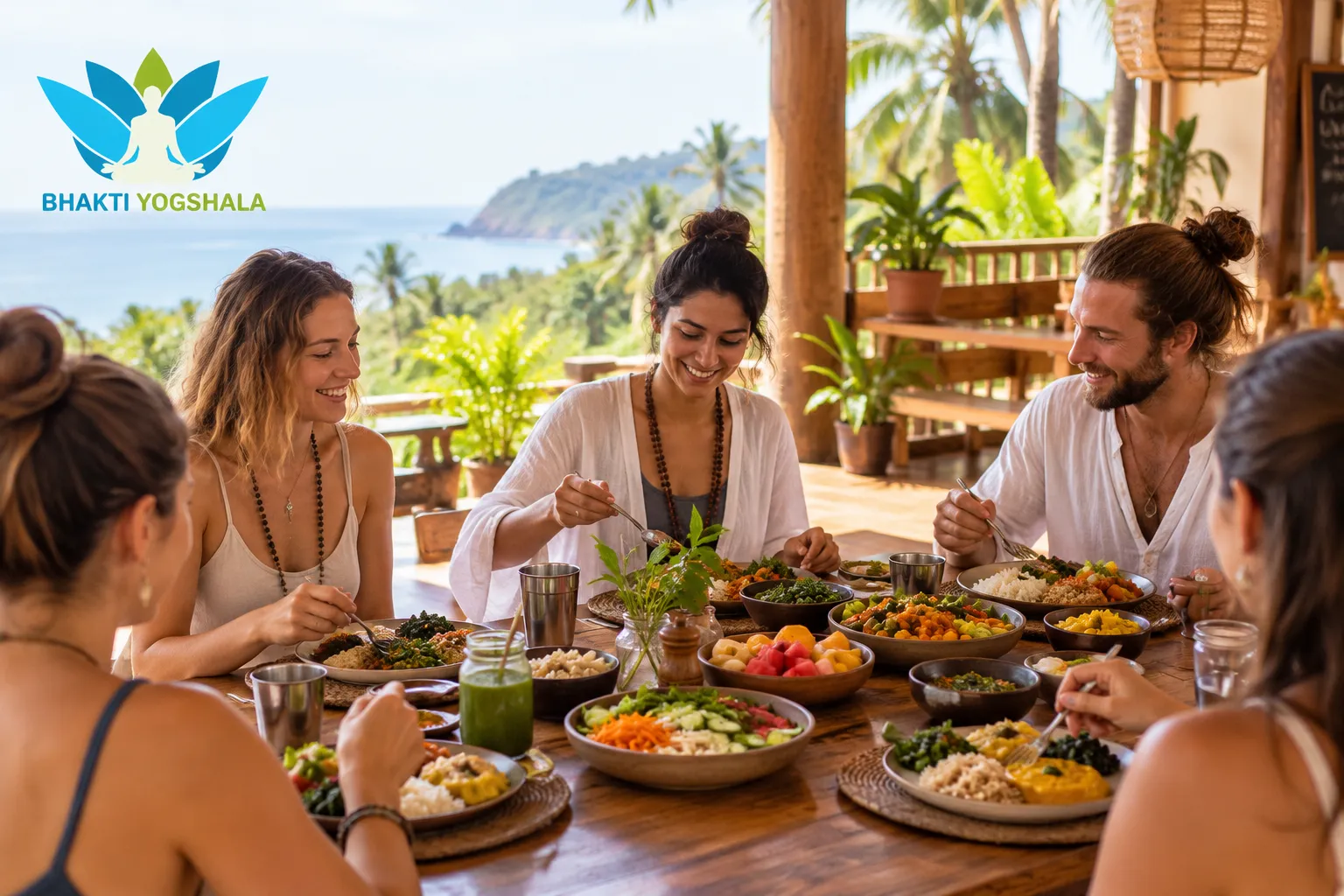
A simple meal can include a grain, a pulse or another protein source, vegetables and a suitable accompaniment.
Here are some everyday Indian meal ideas that can be adapted to a sattvic-style approach.
Breakfast Ideas
- Fresh fruit with nuts and seeds.
- Vegetable poha.
- Idli with a suitable accompaniment.
- Oats or porridge.
- Simple vegetable upma.
Lunch Ideas
- Rice with moong dal.
- Vegetable khichdi.
- Seasonal cooked vegetables with rice.
- Chapati with dal and vegetables.
- A simple vegetable curry with rice.
Dinner Ideas
- Light vegetable khichdi.
- Rice with a mild lentil preparation.
- Vegetable soup with a suitable grain.
- Cooked vegetables with chapati.
- A simple homemade meal using fresh ingredients.
These are meal suggestions, not a prescribed diet plan. Portion sizes and nutritional requirements differ between individuals.
What to Eat During Yoga Teacher Training in Goa
A residential yoga teacher training programme can involve early morning practice, theory lessons, pranayama, meditation and independent study.
Your meals should fit your timetable while providing enough nourishment for your daily activities. There is no single eating schedule that works for every yoga student.
Before Morning Practice
Some students feel comfortable practising before breakfast. Others prefer a small snack, especially before a physically demanding session.
A banana or another easily tolerated fruit may be suitable for someone who prefers a light snack. Your choice should depend on your appetite, practice intensity and personal comfort.
Avoid making sudden or restrictive changes to your eating habits simply because you have joined a yoga course.
After Morning Practice
After a morning session, a balanced breakfast can help you prepare for the rest of the day’s classes.
Possible options include:
- Idli or poha.
- Oats with fruit.
- A simple vegetable breakfast.
- Fruit with nuts and a suitable protein source.
Choose enough food to feel comfortably satisfied.
During Lunch
Lunch may be one of the main meals of the day, particularly when the timetable includes several hours of classes and practice.
Rice, dal, vegetables and other suitable accompaniments offer a practical combination. Students who follow vegan or other dietary patterns can ask about appropriate alternatives.
During the Evening
After afternoon or evening practice, have dinner according to your appetite and daily activity.
Some students prefer a lighter meal, while others may need a more substantial dinner. The aim is to eat sufficiently rather than follow a restrictive routine.
Intensive yoga training requires adequate nourishment. A traditional food philosophy should not become a reason to skip meals or ignore hunger.
Why Food Choices Matter During an Intensive Yoga Routine
A yoga teacher training programme can involve several activities throughout the day:
- Asana practice.
- Pranayama.
- Meditation.
- Yoga philosophy.
- Anatomy and theory classes.
- Teaching methodology.
- Independent study.
Meals form part of this routine. Regular eating habits can help students plan their day and avoid long gaps between meals when those gaps do not suit them.
It can also be useful to notice how different meals feel before and after practice. Some people prefer smaller meals before movement, while others need more substantial food to feel comfortable.
Food is only one part of the routine. Sleep, hydration, rest and the intensity of physical practice also matter.
There is no universal sattvic meal plan that guarantees better concentration, flexibility, recovery or health. Students should make food choices according to their individual requirements and seek qualified professional advice when necessary.
Sattvic Food and the Goan Setting
Goa has a variety of local produce, markets and vegetarian food options. Students staying in Agonda may come across fresh fruit, vegetables, rice-based meals, lentil preparations and familiar Indian dishes.
A traditional sattvic-style approach can be adapted to ingredients available locally. It does not require every meal to contain expensive or imported products.
For international students, eating in Goa can also be an opportunity to become familiar with Indian ingredients and cooking styles.
If you are not used to a particular spice or preparation, ask about the ingredients before ordering. Explain your dietary preferences clearly, especially if you avoid certain foods.
Remember that vegetarian, vegan and sattvic food are not identical categories. A vegetarian dish may contain ingredients that are not part of your preferred sattvic approach. Similarly, a sattvic-style meal may include dairy depending on the tradition being followed.
Can International Students Follow a Sattvic Diet in Goa?
Yes. Many everyday Indian vegetarian dishes can be adapted to different food preferences. However, students should communicate their requirements before arriving rather than assuming that every school or restaurant offers the same options.
Here are some points to consider.
Vegetarian students: Ask whether meals are prepared without meat, fish or eggs. Confirm what the school’s vegetarian policy includes.
Vegan students: Check whether meals contain milk, yoghurt, ghee, butter, paneer or other animal-derived ingredients. Ask whether plant-based alternatives are available.
Gluten-free students: Confirm the ingredients used in breads, sauces, spice mixes and packaged products. Rice and some lentil dishes may be suitable, but preparation methods and cross-contact also matter.
Students with food allergies: Inform the school in advance and identify the specific allergen. Ask how meals are prepared and whether cross-contact can be managed. Do not assume that a vegetarian or healthy meal is automatically safe for an allergy.
Students with specific nutritional requirements: If you follow a medically necessary diet or have a condition that affects food choices, consult an appropriately qualified healthcare or nutrition professional before travelling.
The earlier you communicate your dietary needs, the easier it is for the school to explain what it can accommodate.
What Food Is Available at Bhakti Yogshala?
Bhakti Yogshala’s published 200-hour Yoga Teacher Training in Goa page describes a vegetarian meal arrangement for students.
The food information on the course page mentions Indian vegetable curries, khichri, flavoured rice, pulses and lentils, along with fresh fruits and vegetables. It also mentions herbal tea and Indian masala chai.
The page states that vegan and gluten-free meal options are available. Students with these requirements should contact the school before booking to confirm the current menu, ingredients and preparation arrangements.
The course page also describes accommodation and meals among its programme inclusions. Confirm the exact arrangements for your selected course and batch, as facilities and inclusions can change.
Students interested in the philosophical side of food can also ask about the Ayurveda topics in Bhakti Yogshala’s 300-hour course. Its published programme information refers to sattvic, rajasic and tamasic food within its Ayurveda section. Check the current syllabus if this subject is important to your learning goals.
You can explore the 200-hour Yoga Teacher Training in Goa page for the school’s published course and meal information.
Practical Tips for Eating Mindfully During Yoga Training
You do not need a complicated food routine to become more aware of your eating habits. A few practical steps can help during your stay in Goa.
- Eat regularly: Plan meals around your training timetable and personal appetite.
- Include a variety of foods: Choose suitable sources of carbohydrates, protein, fats, fruits and vegetables.
- Stay hydrated: Drink water regularly, especially in Goa’s warm and humid conditions.
- Ask about ingredients: Check how meals are prepared if you have dietary preferences or restrictions.
- Avoid unnecessary restriction: Do not use a sattvic approach as a reason to skip meals or ignore hunger.
- Eat at a comfortable pace: Give yourself enough time to enjoy meals without rushing.
- Communicate early: Inform the school about allergies, vegan requirements or other important dietary needs before arrival.
Mindful eating is not about judging every ingredient as good or bad. It involves paying attention to what you eat, why you choose it and whether it suits your needs.
Final Thoughts
Sattvic food offers a traditional way of understanding the relationship between food and yogic philosophy. Its emphasis on freshness, nourishment and thoughtful preparation gives students a perspective on everyday eating habits during their studies.
If you are attending yoga teacher training in Goa- Sattvic Food During Yoga Teacher Training in Goa: What to Eat and Why It Matters Blog helps you to understand more things, practical food arrangements matter too. Your meals should suit your dietary requirements, fit your daily schedule and provide enough nourishment for regular practice.
If you are planning to study in Agonda, South Goa, explore Bhakti Yogshala’s programme details and ask the team about its current vegetarian meals, dietary options and accommodation inclusions before booking.
Contact Bhakti Yogshala
Address: Main Agonda Beach Road, Agonda, Goa – 403702
Phone: +91 9897355995
Email: bhaktiyogshala@gmail.com
Website: https://bhaktiyogshala.com/
Explore the 200-hour Yoga Teacher Training in Goa programme or contact Bhakti Yogshala to ask about course and meal arrangements.
Frequently Asked Questions
- What is sattvic food in yoga?
Sattvic food is a traditional yogic concept associated with freshness, nourishment, simplicity and balance. It commonly includes fruits, vegetables, grains, lentils and simply prepared meals. Interpretations can differ between yoga traditions.
- What foods are included in a sattvic diet?
Common examples include seasonal fruits, cooked vegetables, rice, lentils, pulses, nuts and seeds. Some traditions also include milk, yoghurt and ghee. The exact choices depend on the tradition and individual dietary preferences.
- Is sattvic food always vegetarian?
Sattvic diets are generally associated with vegetarian food in many yoga traditions. However, individual interpretations differ. Vegetarian food is not automatically sattvic, as freshness, preparation and ingredients also influence how a meal is classified.
- What is the difference between sattvic, rajasic and tamasic food?
In traditional yogic philosophy, sattvic food is associated with clarity and balance, rajasic food with stimulation and activity, and tamasic food with heaviness and inertia. These are philosophical classifications rather than universal nutritional categories.
- What should I eat before yoga practice?
Choose food according to your appetite, the intensity of practice and your personal comfort. Some people prefer practising before breakfast, while others benefit from a light snack such as fruit. There is no single approach that suits everyone.
- What is a good breakfast for yoga students?
Simple options include idli, poha, oats, porridge, fruit and nuts, or a vegetable-based breakfast. The best choice depends on your nutritional requirements and the timing of your morning practice.
- Can I follow a sattvic diet during yoga teacher training in Goa?
Many traditional sattvic-style food choices can be prepared using ingredients commonly available in Goa, such as rice, lentils, vegetables and seasonal fruits. If you are staying at a yoga school, confirm its actual menu and dietary arrangements before booking.
- Does Bhakti Yogshala provide vegetarian food during yoga teacher training in Goa?
Bhakti Yogshala’s published 200-hour Goa course page describes vegetarian meals, including vegetable curries, khichri, rice, pulses, lentils, fruits and vegetables. Contact the school to confirm the current menu and inclusions for your batch.
- Does Bhakti Yogshala offer vegan or gluten-free meals?
The 200-hour Goa course page mentions vegan and gluten-free meal options. Students should contact the school in advance to confirm availability, ingredients and preparation arrangements for their selected batch.
- Can international students follow a sattvic diet in Goa?
Yes. Many Indian vegetarian dishes use familiar ingredients such as rice, vegetables, lentils and fruit. International students should explain their dietary preferences and any allergies clearly to the school or restaurant before eating.
- Does sattvic food mean avoiding all spices?
Not necessarily. Interpretations differ between traditions. Some sattvic approaches favour mild seasoning, while others use selected herbs and spices. There is no universal ban on every strongly flavoured ingredient.
- Is a sattvic diet suitable for everyone?
Not necessarily in the same form. Nutritional requirements vary with age, activity, health conditions, allergies and personal needs. Anyone with specific dietary or medical requirements should seek qualified professional guidance before making significant changes to their diet.