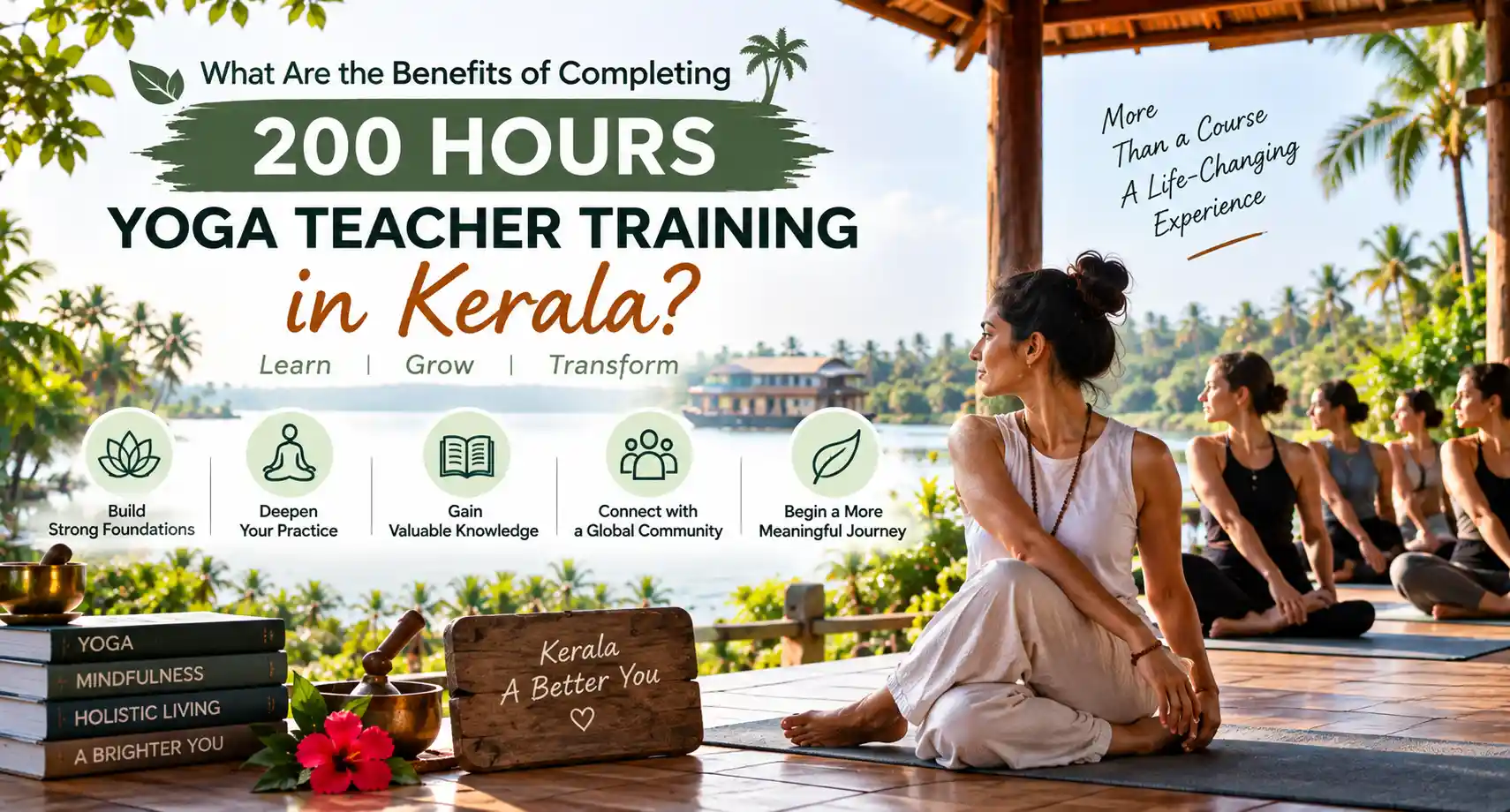
Choosing the right yoga teacher training can influence both your personal practice and your future teaching journey. 200 hours yoga teacher training Kerala offers a structured foundation in asana, pranayama, meditation, anatomy, teaching methodology, and yoga philosophy. Kerala’s peaceful surroundings and traditional wellness culture can further support an immersive environment where students can practice, learn, reflect, and gradually build confidence as yoga teachers.
What Is 200 Hours Yoga Teacher Training Kerala Designed to Teach?
A 200-hour yoga teacher training program is generally designed to provide a well-rounded foundation in yoga practice and teaching. Instead of concentrating only on physical postures, a comprehensive course introduces students to different aspects of yoga and shows how these areas connect within a practical teaching environment.
The curriculum commonly covers Hatha Yoga, Vinyasa, pranayama, meditation, anatomy, alignment, sequencing, teaching methodology, and yogic philosophy. Students can also learn how to demonstrate postures, provide clear verbal instructions, observe practitioners, and modify practices according to individual needs.
One of the key benefits of structured training is consistency. Independent practice can be valuable, but it may leave gaps in understanding. A teacher training program creates a systematic learning path in which students study concepts, practice techniques, discuss their experiences, and revisit important principles.
Kerala adds another dimension to the learning experience. The state is associated with Ayurveda, meditation, traditional wellness practices, and spiritual learning. Although yoga and Ayurveda are separate disciplines, their shared focus on holistic well-being can make Kerala an attractive destination for students looking for a focused and meaningful educational experience.
1. Builds a Strong Foundation in Yoga
One of the main benefits of a 200-hour course is developing a deeper understanding of foundational yoga practices. Students learn more than the names and physical shapes of different postures. They explore alignment, breathing, movement patterns, transitions, and the purpose behind various practices.
A strong foundation is particularly valuable for future teachers because effective instruction requires a clear understanding of what is being taught. When you understand the principles behind a posture, you can explain it more effectively and suggest appropriate modifications rather than simply asking students to copy your movements.
2. Develops Practical Teaching Skills
Practicing yoga personally and teaching it to others require different skill sets. Teacher training helps bridge this gap through practice teaching, demonstrations, sequencing exercises, peer feedback, and classroom observation.
Students gradually learn how to organize a class from beginning to end. They may practice creating warm-ups, developing a central sequence, incorporating breathwork, and guiding students toward relaxation.
Communication is another essential teaching skill. An effective instructor needs clear cues, suitable pacing, confident demonstrations, and the ability to recognize whether students understand the instructions. Repeated teaching practice and constructive feedback can help students improve these abilities.
3. Deepens Knowledge of Yoga Philosophy
Yoga extends beyond physical exercise. Traditional teachings include ideas related to self-discipline, awareness, ethics, concentration, meditation, and self-study.
Studying philosophy during teacher training helps students understand the broader context of yoga. Concepts from texts such as the Yoga Sutras and Bhagavad Gita can encourage students to consider how yogic principles can be applied in everyday life.
This understanding can also influence a teacher’s approach. Rather than treating every class simply as a physical workout, instructors can create practices that encourage mindfulness, presence, awareness, and intentional movement.
4. Improves Understanding of Anatomy and Safe Practice
Basic anatomy is an important part of responsible yoga instruction. Teachers need an understanding of joints, muscles, movement patterns, and body mechanics in relation to common yoga postures.
Anatomy education also helps instructors recognize that every student has a different body. Two people may perform the same posture differently because of mobility, body proportions, previous physical activity, or individual limitations.
This knowledge can support safer cueing and more appropriate modifications. It also helps teachers avoid presenting one visual version of a posture as the only correct way to practice it.
5. Creates a Consistent Personal Practice
Teacher training can strengthen personal discipline by providing a structured daily routine. Students may have dedicated time for asana practice, pranayama, meditation, study, and reflection.
This consistency can be especially helpful for people who find it difficult to maintain a regular practice at home. An immersive learning environment reduces everyday distractions and gives participants dedicated time for yoga-related activities.
A stronger personal practice can also improve teaching. When instructors continue learning through their own experiences, they may develop greater empathy for students who experience challenges with flexibility, concentration, balance, or motivation.
What Are the Career Benefits of 200 Hours Yoga Teacher Training Kerala?
Completing 200 hours yoga teacher training Kerala can provide a foundation for beginning a professional journey in yoga. Depending on the student’s goals and the recognition or credentials associated with the particular school, graduates may explore opportunities in yoga studios, wellness centers, retreats, fitness facilities, private sessions, or online teaching.
However, completing a course alone does not automatically make someone an excellent yoga teacher. Professional development also comes from continued practice, observation, education, and real teaching experience.
For students comparing the best 200 hour yoga teacher training Kerala programs, it is important to assess the curriculum instead of selecting a course based only on price or location. Faculty experience, practical teaching opportunities, class size, accommodation, daily schedule, assessment methods, and post-course support can all influence the overall learning experience.
6. Encourages Confidence and Self-Discipline
Teaching a group can initially feel challenging, particularly for new instructors. Teacher training gives students an opportunity to practice teaching in a supportive environment where they can receive feedback, make mistakes, and improve.
With regular practice, students can become more comfortable giving instructions, demonstrating postures, managing transitions, and answering questions.
The discipline developed during intensive training may also continue after the course. Regular practice, study, and self-reflection can become lasting habits that support long-term personal and professional development.
7. Offers an Immersive Learning Environment
The location of a teacher training program can influence the overall experience. Kerala offers natural landscapes, greenery, coastal surroundings, and a strong wellness culture that can create a calm setting for focused study.
For many students, stepping away from their usual routine makes it easier to concentrate on learning. Instead of attending occasional classes, participants can dedicate their days to practice, education, rest, and reflection.
An immersive environment can also help students build connections with fellow practitioners. Learning alongside people from different backgrounds creates opportunities to exchange experiences and gain new perspectives on yoga.
8. Helps Develop a Professional Teaching Approach
A successful yoga teacher needs more than technical knowledge. Professional teaching also involves punctuality, communication, appropriate boundaries, respect for students, preparation, and awareness of individual needs.
A quality teacher training program introduces these areas alongside practical instruction. Students begin learning how to create welcoming classes and communicate in a way that does not make practitioners feel judged or pressured.
This professional foundation can be valuable when students transition from being yoga practitioners to instructors. Training programs such as Bhakti Yogshala can provide a structured setting where students can work on both their practice and teaching approach.
9. Provides Opportunities for Continued Learning
A 200-hour qualification should generally be viewed as a foundation rather than the final stage of yoga education. After completing foundational training, teachers can continue exploring areas such as restorative yoga, prenatal yoga, meditation, pranayama, yoga therapy, anatomy, or advanced sequencing.
The experience can therefore create a longer path of personal and professional development. Teachers can identify their interests and gradually develop expertise in areas that match their teaching goals.
How to Choose the Right Training Program
When comparing an affordable 200 hour yoga teacher training Kerala option with a more expensive course, consider what is included rather than focusing only on tuition fees. Accommodation, meals, course materials, practical sessions, assessments, and student support can all influence the overall value.
Before enrolling, consider:
- Curriculum depth and daily schedule.
- Teacher qualifications and practical experience.
- Class size and opportunities for individual feedback.
- Accommodation, meals, location, and included facilities.
- Certification details and applicable registration or recognition.
- Reviews, student experiences, and post-training support.
An affordable 200 hour yoga teacher training Kerala program can be a practical choice when it balances cost with educational quality. The cheapest course is not necessarily the best value, just as a higher-priced program is not automatically better.
Who Can Benefit Most From 200-Hour Training?
A 200-hour course can be suitable for beginners looking for a structured introduction as well as regular practitioners who want to develop a deeper understanding of yoga. Some students enroll mainly for personal growth, while others plan to pursue teaching professionally.
The key consideration is whether the program matches your current experience and goals. Beginners may benefit from clear foundational instruction, while experienced practitioners may prefer a curriculum that provides greater depth and opportunities to refine existing knowledge.
Before enrolling, consider what you want to achieve from the training. Having a clear objective can make it easier to select a school, schedule, teaching style, and learning environment that suit your needs.
Final Thoughts
Completing 200 hours yoga teacher training Kerala can be a meaningful step for anyone who wants to deepen their yoga knowledge while developing practical teaching skills. The experience can strengthen personal discipline, expand understanding of anatomy and philosophy, improve confidence, and create a foundation for future professional development.
Kerala’s peaceful surroundings and wellness traditions can make the training experience particularly immersive. However, the quality of the program should remain a primary consideration. Look for experienced instructors, a structured curriculum, meaningful teaching practice, and an environment that encourages learning, curiosity, and self-reflection.
With the right approach, a 200-hour course can offer more than a qualification. It can provide the knowledge, discipline, and perspective needed to continue developing as a practitioner and responsible yoga teacher.
FAQs
- Is 200-hour yoga teacher training suitable for beginners?
Yes. A well-structured 200-hour program can provide beginners with a systematic foundation in yoga practice, philosophy, anatomy, and teaching. - What subjects are covered in a 200-hour course?
Common subjects include asana, pranayama, meditation, anatomy, alignment, sequencing, teaching methodology, and yoga philosophy. - Why choose Kerala for yoga teacher training?
Kerala provides a peaceful learning environment along with a strong connection to traditional wellness, yoga, meditation, and Ayurveda. - Can I teach yoga after completing 200 hours?
A 200-hour course can provide foundational teacher training, but becoming a skilled professional teacher also requires continued practice, experience, and responsible development. - How should I choose a 200-hour yoga teacher training program?
Compare the curriculum, instructors, practical teaching opportunities, class size, accommodation, certification, schedule, student feedback, and overall value.