Experienced yoga teachers often reach a point where a foundational course no longer answers the questions they are asking. You may already understand asana, pranayama, meditation, sequencing, and classroom instruction, but want greater depth, sharper teaching skills, and a stronger personal practice. For such practitioners, 300 hours yoga teacher training in GOA can be a meaningful next step, especially when the goal is specialization rather than simply another certificate.
Why Choose 300 hours yoga teacher training in GOA After Teaching Experience?
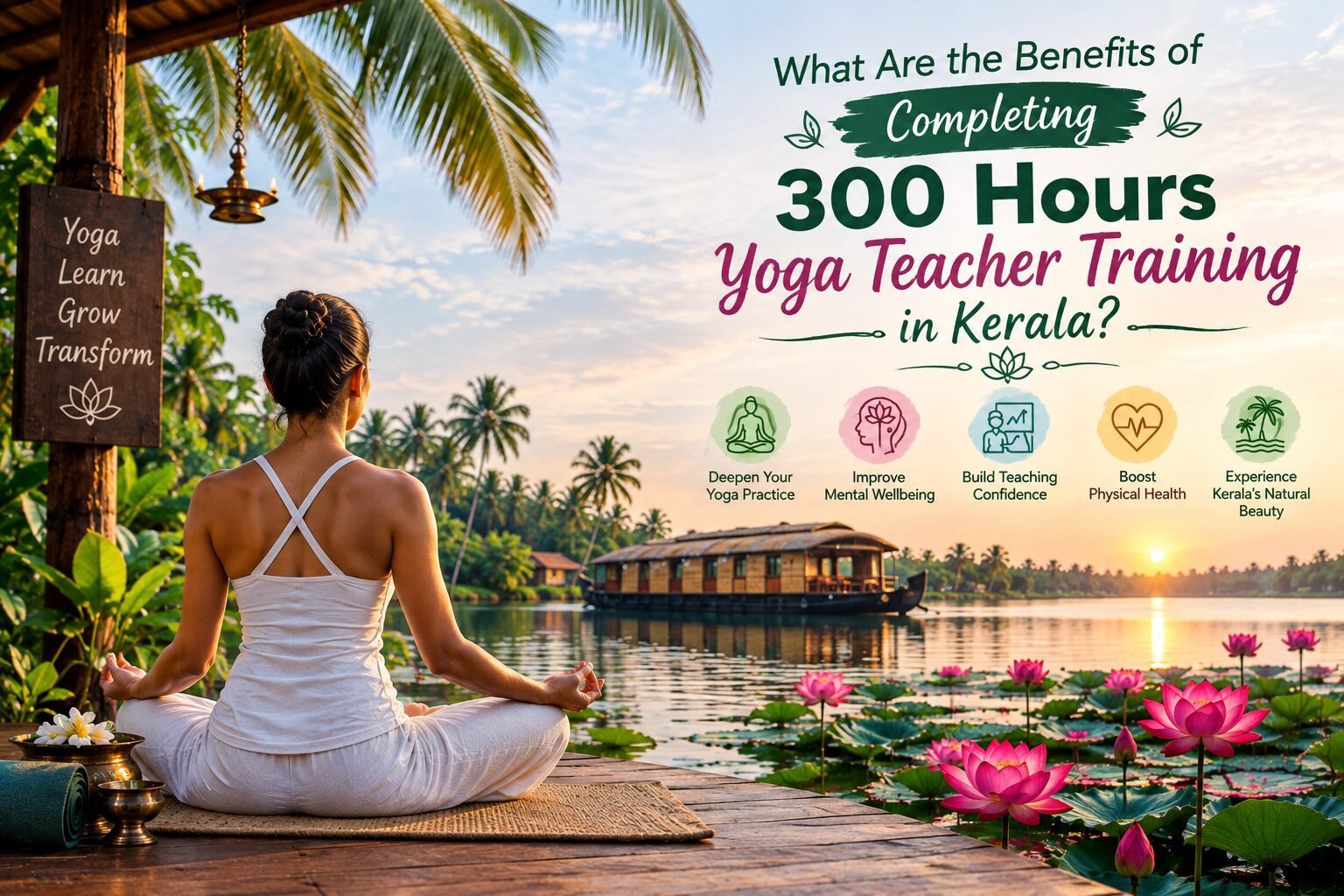
A 300-hour program is generally designed for teachers who already have a foundation in yoga education. Instead of spending most of the course introducing basic postures and teaching principles, advanced training can explore subtle alignment, intelligent sequencing, anatomy, philosophy, meditation, pranayama, teaching methodology, and the relationship between these areas.
The biggest advantage for an experienced teacher is depth. You are not only learning what to teach; you are examining why a practice works, how it can be adapted, and how different students may respond to it. This shift can make your classes more intentional and responsive.
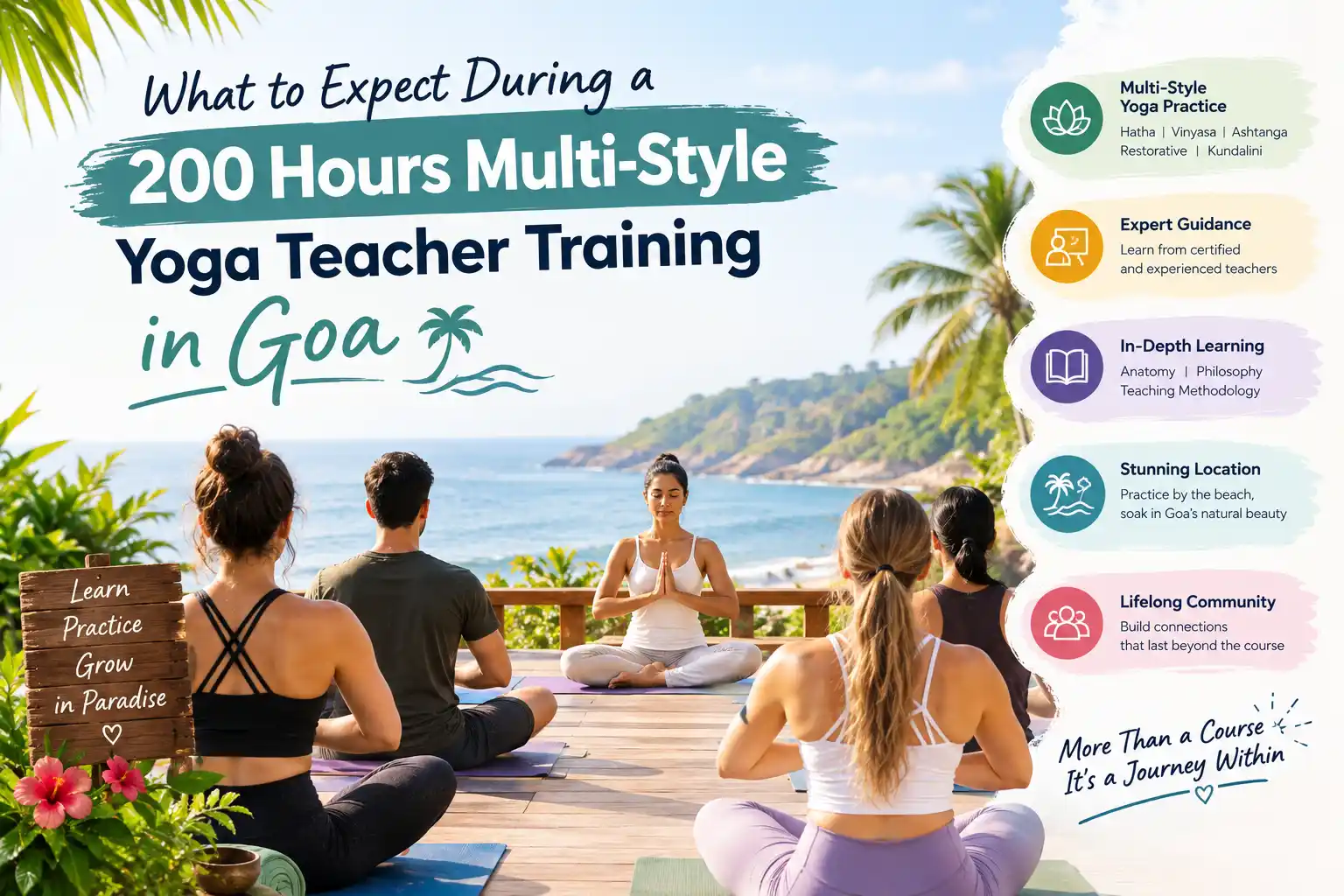
Goa also offers a setting that can support immersive learning. A quieter daily rhythm, access to nature, and a strong yoga community can create space for reflection between sessions. The environment does not replace quality teaching, but it can make it easier to step away from routine and focus on professional development.
What Can You Expect From an Advanced Training?
A strong advanced program should build on your existing knowledge rather than repeat an introductory syllabus. The exact curriculum varies by school, but experienced teachers may encounter deeper work in areas such as:
- Advanced asana and alignment, including modifications, progressions, and safe use of props.
- Pranayama, meditation, subtle-body concepts, and methods for developing a more integrated practice.
- Functional anatomy and biomechanics that help teachers understand movement instead of relying only on visual form.
- Advanced sequencing, class planning, observation, adjustments, and communication.
- Yoga philosophy, ethics, self-inquiry, and the practical application of yogic principles in daily life.
The value comes from how these subjects connect. For example, anatomy becomes more useful when it informs sequencing, while philosophy becomes more relevant when it influences how you teach, communicate, and create a supportive learning environment.
Is 300 hours yoga teacher training in GOA Right for Experienced Teachers?
The answer depends less on the number of years you have taught and more on what you want to develop next. If you feel confident teaching regular classes but want greater specialization, a 300-hour course may be appropriate. It can also suit teachers who want to refine their voice, work with different student needs, or move toward mentoring and advanced instruction.
However, advanced training is not automatically the right choice for everyone. If your current foundation has significant gaps, repeating or strengthening core training may provide more value than immediately moving into an advanced program. A course should challenge you without making you feel that essential concepts are being skipped.
Consider your motivation before enrolling. Are you looking for a deeper personal practice, stronger teaching methodology, a specialty such as therapeutic or restorative yoga, or a broader understanding of yoga philosophy? Clear goals will help you evaluate programs more effectively.
Signs You May Be Ready
Experienced teachers often benefit most when they enter advanced study with curiosity rather than the assumption that they already know everything. You may be ready if:
- You have regular teaching experience and understand basic class structure.
- You can demonstrate and explain foundational practices clearly.
- You want to improve observation, sequencing, cueing, or student support.
- You are interested in studying philosophy, meditation, anatomy, or advanced practice in greater depth.
- You are willing to question your habits and receive feedback on your teaching.
Readiness is also about attitude. Advanced yoga education involves self-study, disciplined practice, discussion, reflection, and constructive critique. The ability to listen and reassess your approach can be more valuable than simply having taught for a certain number of months or years.
How to Compare Advanced Yoga Teacher Training Programs
Not every course marketed as advanced will offer the same learning experience. Look beyond the number of hours and examine what happens during those hours. Review the curriculum, teacher backgrounds, class size, practice schedule, assessment process, accommodation details, and what kind of support students receive.
A school such as Bhakti Yogshala can be considered alongside other options when comparing curriculum depth, teaching approach, and the overall learning environment. The important point is to choose based on educational fit rather than a course title alone.
When comparing the best 300 hour yoga teacher training Goa options, ask whether the syllabus genuinely advances your current skills. Look for experienced faculty, practical teaching opportunities, supervised practice, and time for questions. A program that offers plenty of contact hours but little feedback may not be as useful as one that creates meaningful interaction.
Also consider whether the course has a clear progression. Advanced subjects should build logically instead of appearing as a collection of unrelated workshops. A well-designed program should help you connect theory, personal practice, teaching skills, and professional development.
Is an Affordable Course Always the Better Choice?
Cost matters, particularly when tuition, travel, accommodation, meals, and time away from work are added together. However, the lowest price should not be the only deciding factor. An affordable course can be valuable when it provides a strong curriculum, qualified teachers, reasonable student support, and transparent inclusions.
When looking at affordable 300 hour yoga teacher training Goa programs, compare the total value rather than tuition alone. Check what the fee includes, whether learning materials are provided, how many guided practice hours are included, and whether assessments or mentoring are part of the experience.
An inexpensive program may become costly if important services are excluded. Conversely, a higher-priced program may offer features that genuinely improve your learning. The goal is to find a balance between budget, educational quality, location, schedule, and personal goals.
What Professional Growth Can a 300-Hour Course Support?
Advanced training can help experienced teachers refine skills that are difficult to develop through teaching alone. Regular feedback can reveal habits in cueing, pacing, demonstrations, sequencing, and classroom management. Studying with other teachers can also expose you to different approaches and encourage professional reflection.
For some practitioners, the next step is specialization. They may become more interested in restorative practices, meditation, pranayama, yoga philosophy, anatomy, or teaching specific populations. For others, the goal is not a new specialty but greater confidence and consistency.
A 300-hour course can also support a stronger professional identity. Teaching yoga is not simply demonstrating postures. It involves observation, communication, responsible adaptation, boundaries, ethics, and the ability to create an environment where students can practice safely. Advanced study can encourage teachers to think more carefully about all of these responsibilities.
How to Get the Most From Your Training
Before arriving in Goa, review your existing teaching habits and identify two or three areas you genuinely want to improve. Keep a practice and teaching journal during the course. Record useful cues, sequencing ideas, questions, feedback, and reflections. This turns the training into an ongoing reference rather than something you finish and leave behind.
Avoid comparing yourself constantly with other participants. Experienced teachers enter training with different backgrounds, strengths, and weaknesses. One person may have excellent anatomy knowledge while another has stronger meditation experience or classroom communication. Use the group environment as an opportunity to learn rather than compete.
After completing the program, give yourself time to integrate what you learned. Choose a few methods or concepts to bring into your classes gradually. Notice how students respond, review your teaching, and continue studying where you find gaps.
200 Hours vs 300 Hours: Which Path Makes Sense?
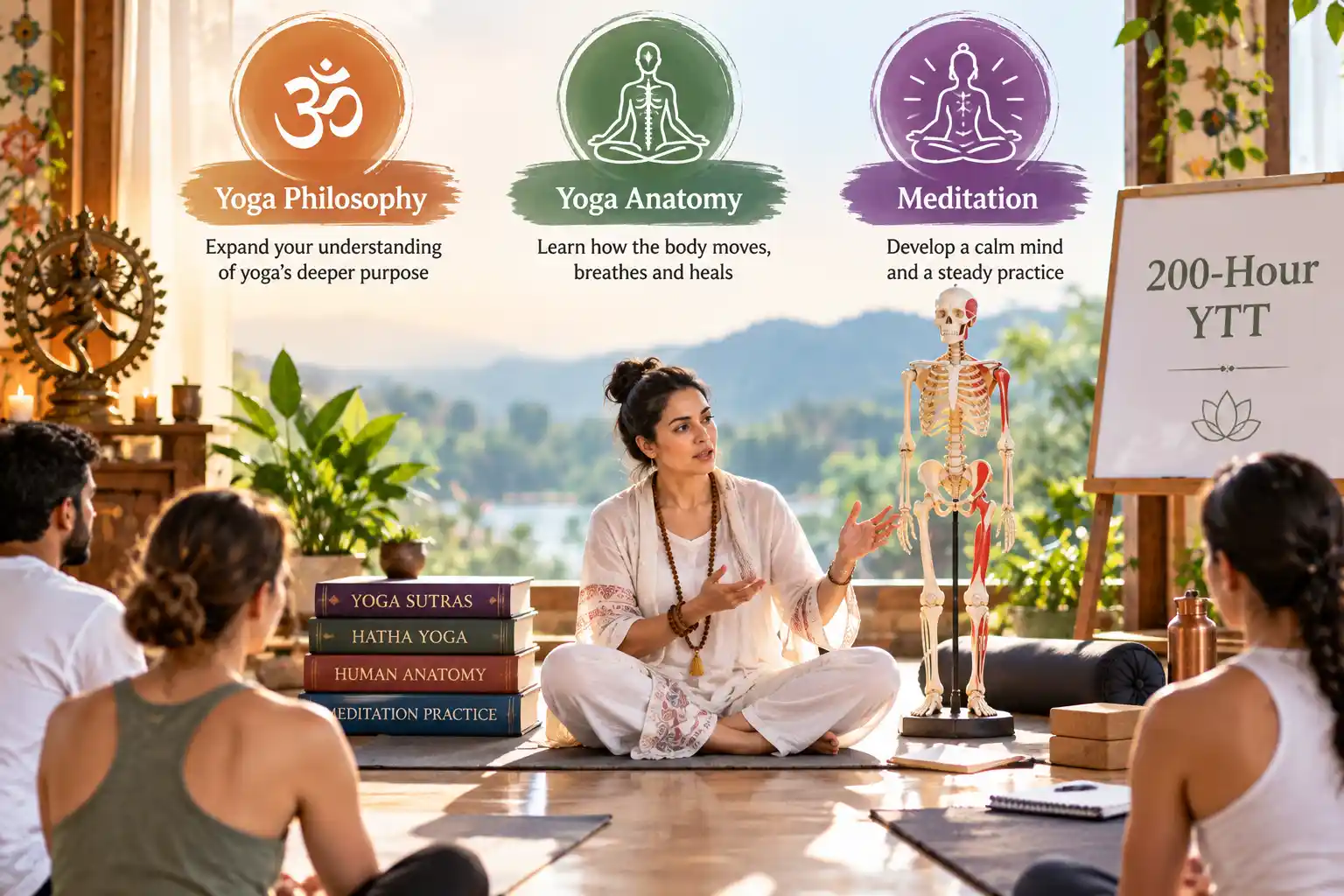
A 200-hour course is generally intended to establish a foundational teaching framework. It can be suitable for someone beginning professional yoga education or building core knowledge. A 300-hour course, by contrast, is usually better suited to teachers who want to go beyond that foundation.
The difference is therefore not simply “more hours.” It is about the level, purpose, and depth of study. If you are already teaching confidently and want to refine your approach, advanced education may provide the challenge you need. If you still feel uncertain about fundamental anatomy, sequencing, or teaching principles, strengthening those areas first may be wiser.
Your decision should also account for your current workload and learning style. An immersive program requires energy and attention. Give yourself enough space to practice, study, rest, and reflect rather than treating the course as a quick credential.
Final Thoughts
For experienced teachers, 300 hours yoga teacher training in GOA can be worthwhile when it matches a clear learning goal. The strongest reason to enroll is not simply to collect another certificate, but to deepen your practice, sharpen your teaching, and develop a more thoughtful understanding of yoga.
Before choosing a program, compare its curriculum, faculty, practical teaching opportunities, student support, schedule, and overall value. Consider whether the learning environment will challenge you while still building on what you already know.
If your foundation is solid and you are ready for deeper study, an advanced course in Goa can become an important stage in your development as a yoga teacher. The right program should leave you not only with more knowledge, but with better judgment, greater self-awareness, and practical skills you can carry into every class.
FAQs
- Who should take a 300-hour yoga teacher training?
Experienced yoga teachers who want deeper study, specialization, or advanced teaching skills may benefit most. - Is a 300-hour course harder than a 200-hour course?
It is usually more advanced and expects participants to already understand foundational yoga concepts. - What should I check before choosing a program?
Review the curriculum, faculty experience, practical teaching sessions, student support, schedule, and total cost. - Is Goa a good place for advanced yoga study?
Goa can provide an immersive environment with a strong yoga community and opportunities for focused practice. - Does an advanced course guarantee better teaching?
No. Improvement depends on the quality of training and how consistently you apply, practice, and reflect on what you learn.