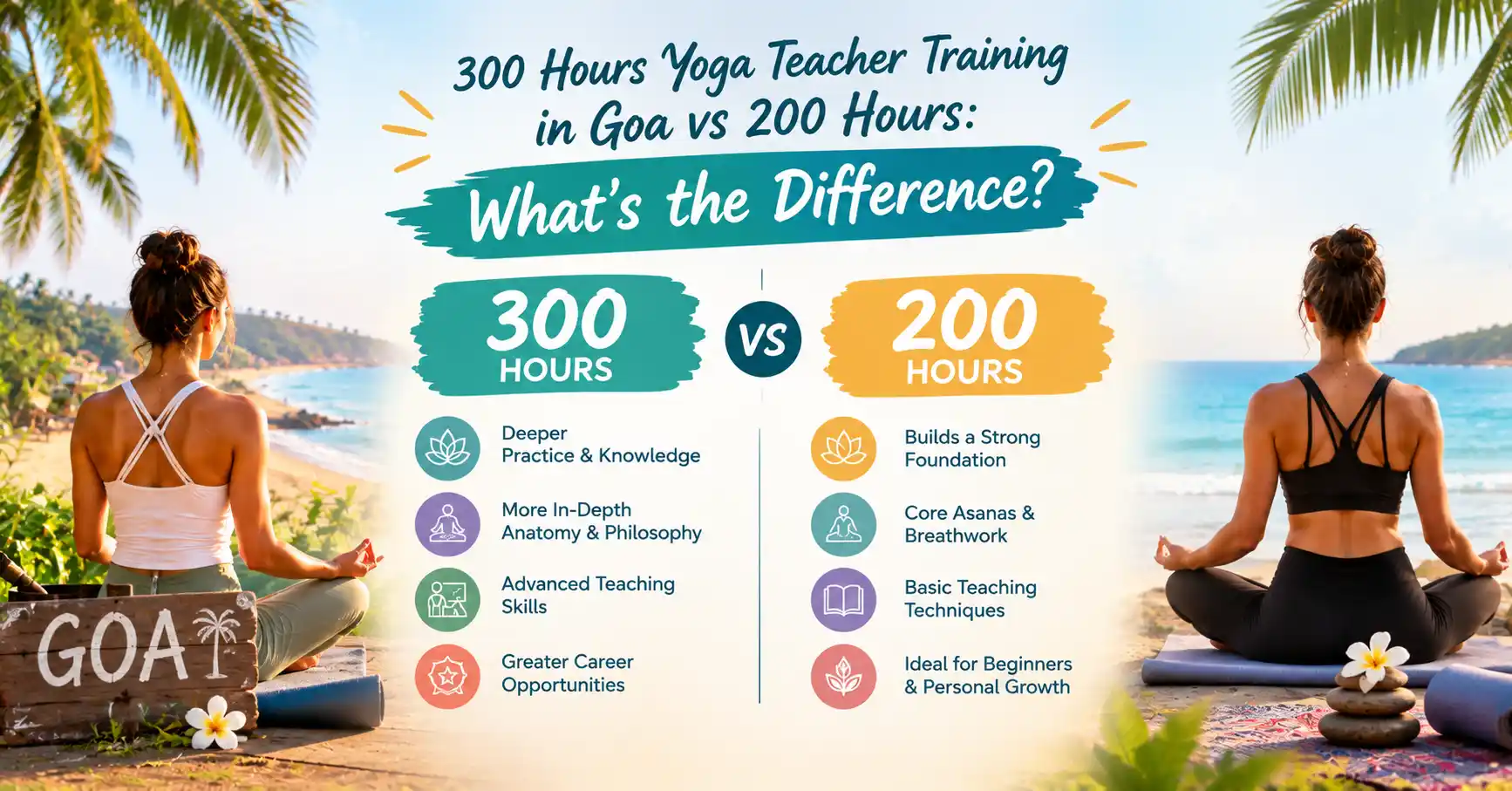
Choosing between a 200-hour and 300 hours yoga teacher training in GOA can feel challenging, especially when both programs offer opportunities to improve your yoga knowledge, teaching skills, and personal practice. The main difference lies in the depth and level of study. A 200-hour course generally builds the foundation, while a 300-hour program takes experienced practitioners deeper into advanced concepts and teaching methods.
Understanding how these programs differ can help you choose the right option based on your current experience, career goals, budget, and long-term plans.
What Is the Difference Between 200-Hour and 300 Hours Yoga Teacher Training in GOA?
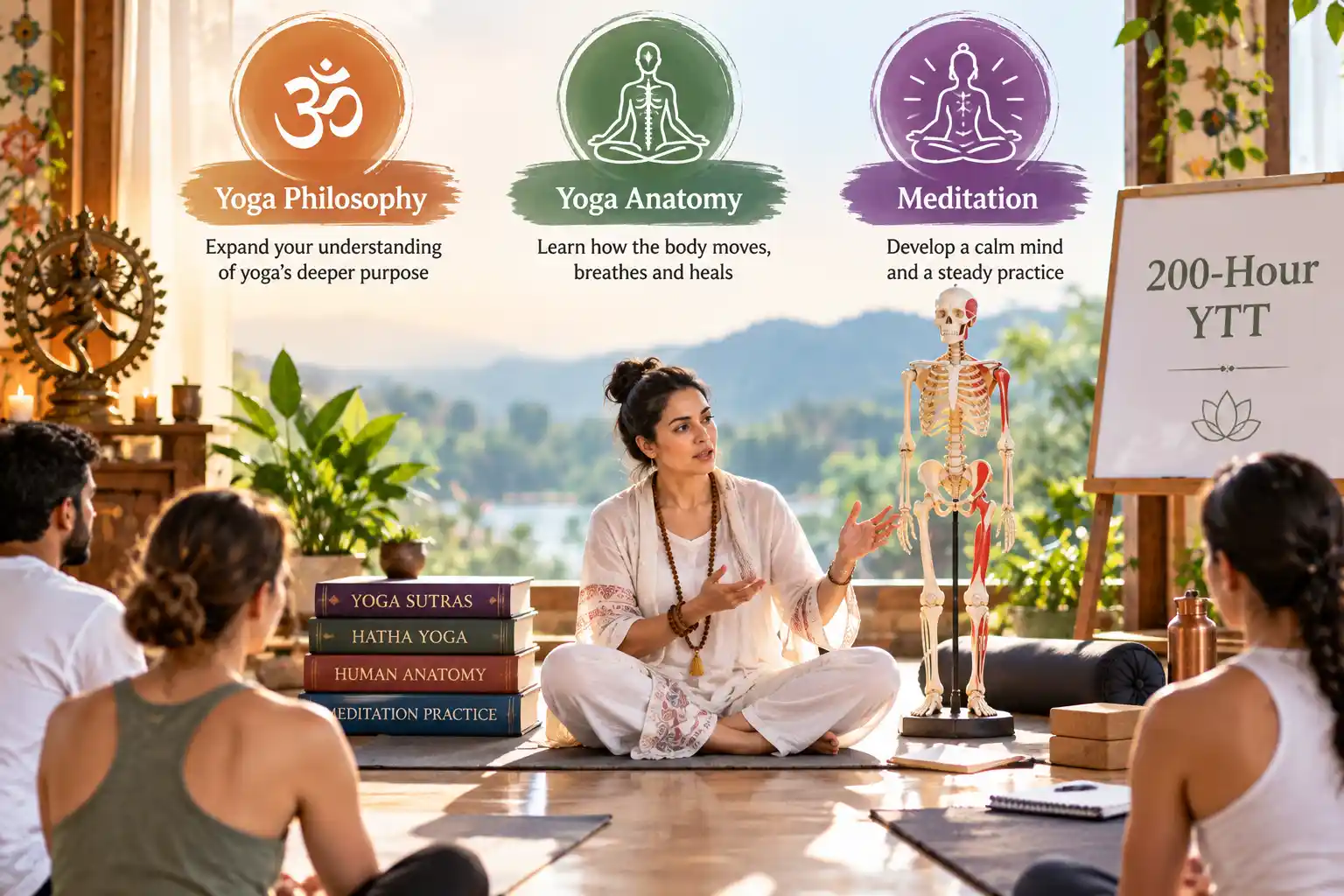
The biggest difference between these programs is the level and depth of learning. A 200-hour yoga teacher training program is generally designed as foundational education. It introduces students to important areas such as asana practice, alignment, anatomy, yoga philosophy, meditation, pranayama, teaching methodology, and class sequencing.
A 300-hour program usually builds upon this existing knowledge. It is more appropriate for students who already have a solid understanding of yoga and want to develop advanced skills, explore specialized practices, and become more confident and thoughtful teachers.
Simply put, a 200-hour course can teach you how to begin teaching yoga, while advanced training can help you understand how to teach with greater depth, awareness, and confidence.
200-Hour Training: Building a Strong Foundation
A 200-hour program is often the first formal step for aspiring yoga teachers. It introduces students to fundamental postures, alignment principles, breathing practices, meditation, philosophy, basic anatomy, sequencing, and teaching methodology.
Practical teaching is also an important part of the learning process. Students may create sequences, demonstrate postures, teach short classes, and receive feedback from experienced instructors.
This type of training can be suitable for students who want to move from personal yoga practice toward teaching others.
300-Hour Training: Developing Advanced Skills
A 300-hour program generally assumes that students already understand the basics of yoga. Instead of focusing mainly on introductory concepts, the course provides greater opportunities to explore advanced practices and refine existing skills.
Students may study advanced sequencing, subtle alignment principles, meditation, pranayama, philosophy, anatomy, teaching methodology, and specialized yoga approaches. Depending on the school, the curriculum may also include restorative practices, therapeutic applications, leadership skills, or methods for developing an individual teaching style.
Since every school structures its program differently, students should carefully review the curriculum before enrolling.
Who Should Choose 200-Hour Yoga Teacher Training?
A 200-hour course may be the most suitable choice if you are new to formal yoga education or have not completed a teacher-training program before.
It can help you develop a structured understanding of yoga while giving you opportunities to practice teaching in a supportive environment. You do not necessarily have to be an advanced practitioner to begin, although having a consistent personal practice can make the learning process easier.
A foundational course may be a good choice if you want to:
- Build a strong understanding of fundamental yoga practices
- Learn basic teaching methodology and class sequencing
- Develop confidence in guiding beginner-level classes
- Understand yoga anatomy, philosophy, and breathwork
- Discover whether professional yoga teaching is right for you
The purpose of teacher training should not simply be to complete a certain number of hours and receive a certificate. The quality of education and your ability to apply what you learn are equally important.
Who Should Choose 300 Hours Yoga Teacher Training?
300 hours yoga teacher training in GOA is generally more appropriate for students who already have foundational teacher-training knowledge and want to take their professional development further.
It can be particularly useful for yoga instructors who have already taught classes and understand the basic responsibilities involved in teaching. Practical teaching experience can also help students recognize the areas where they need additional training.
A 300-hour course may be suitable if you want to:
- Refine your teaching methodology and communication skills
- Explore advanced yoga philosophy and practices
- Improve class sequencing and lesson planning
- Develop a distinctive and authentic teaching approach
- Study specialized areas of yoga in greater depth
- Build greater confidence as an experienced instructor
Advanced education can also encourage teachers to become more reflective. Rather than simply asking whether a posture looks correct, students can learn to consider why a technique is being taught, who it may be appropriate for, and how it can be adapted to different students.
How Does the Learning Experience Differ?
The classroom experience can vary because students typically enter each program with different levels of knowledge and experience.
In a 200-hour course, teachers generally spend more time explaining foundational concepts, terminology, anatomy, basic alignment, sequencing, and teaching principles. Students gradually develop the knowledge and confidence needed to guide classes.
In a 300-hour program, discussions can become more analytical and detailed. Students may be expected to observe teaching critically, develop more complex lesson plans, question established ideas, and connect different areas of yogic knowledge.
This makes advanced training less about simply collecting more information and more about understanding how different concepts connect and influence teaching.
Comparing the Best 300 Hour Yoga Teacher Training Goa Options
If you are searching for the best 300 hour yoga teacher training Goa, do not make your decision based only on course duration, location, or promotional claims.
A quality program should clearly explain its curriculum, faculty qualifications, teaching methods, practical requirements, admission criteria, and certification process. You should also determine whether previous teacher training is required before enrollment.
When comparing options such as programs offered by Bhakti Yogshala, look for meaningful interaction with teachers, practical teaching sessions, constructive feedback, and opportunities to develop your skills rather than relying mainly on prerecorded or self-directed learning.
Goa can provide an immersive environment for yoga education because of its established yoga community, natural surroundings, and residential training culture. However, the location should complement the quality of education rather than become the primary reason for choosing a course.
Course Structure and Practical Teaching
Practical teaching is one of the most important elements to consider when comparing advanced teacher-training programs. Reading about sequencing or watching an instructor demonstrate a class can provide useful knowledge, but actually teaching requires another level of skill.
Students should have opportunities to lead classes, receive constructive feedback, observe other teachers, and refine their teaching style.
Advanced training can become especially valuable when instructors provide detailed feedback on voice, pacing, transitions, demonstrations, student observation, alignment, and modifications.
These experiences can help experienced teachers identify habits that may have developed during their earlier teaching years.
Is an Affordable Program a Good Choice?
Searching for an affordable 300 hour yoga teacher training Goa option is reasonable, particularly if you have a specific budget. However, affordability should always be considered alongside educational quality and overall value.
The total cost may include tuition, accommodation, meals, study materials, assessments, and certification. Two courses with similar advertised prices can provide very different levels of support and different inclusions.
An affordable 300 hour yoga teacher training Goa course can still be valuable when it provides experienced faculty, meaningful practical sessions, strong teaching standards, and appropriate student support.
Instead of asking only, “Which course costs less?” consider asking, “What am I receiving for my overall investment?”
200 Hours vs 300 Hours: Which One Is Better for You?
There is no single program that is better for everyone. Your ideal choice depends on your current experience, learning needs, and professional goals.
| Factor | 200-Hour Training | 300-Hour Training |
| Experience | Suitable for foundational learners | Better for experienced practitioners or teachers |
| Main purpose | Build teaching foundations | Deepen and refine existing skills |
| Curriculum | Fundamental concepts | Advanced and specialized study |
| Teaching practice | Introduction to teaching | Greater refinement and feedback |
| Career stage | Starting point | Professional development |
| Learning depth | Foundational | Advanced |
| Commitment | Lower | Greater |
If you have never completed formal teacher training, beginning with a 200-hour program may be the more logical option. If you already have foundational certification and teaching experience, a 300-hour program may provide the additional depth you need.
Why Continued Education Matters for Yoga Teachers
Yoga teaching does not have to end with one certification. Experienced instructors can continue developing their skills through workshops, advanced courses, mentorship, personal practice, reading, observation, and self-study.
Further education can help teachers understand different bodies, learning styles, traditions, and teaching environments. It can also encourage them to think more carefully about safety, alignment, modifications, and individual student needs.
A teacher’s personal practice remains important as well. Regular asana practice, meditation, pranayama, self-study, and reflection can influence how effectively a teacher communicates yoga to students.
For this reason, advanced training should ideally be chosen because of a genuine interest in deeper learning and professional growth rather than simply the desire to collect another certificate.
Final Thoughts
Choosing between a 200-hour course and 300 hours yoga teacher training in GOA ultimately depends on your experience, goals, and stage of development as a yoga practitioner or teacher. A 200-hour program can establish the foundation needed to begin teaching, while a 300-hour program can help experienced practitioners deepen their knowledge, refine their teaching skills, and explore more advanced areas of yoga.
If you are beginning your teaching journey, focus on developing strong fundamentals and practical teaching confidence. If you already have a solid foundation and want to progress further, advanced training may be the more appropriate next step.
The best program is the one that matches your learning level, professional ambitions, teaching interests, budget, and commitment to continued growth.
Frequently Asked Questions
1. Is 300-hour training better than 200-hour training?
Not necessarily. A 300-hour course is generally more advanced, while a 200-hour program is usually better suited to students who need foundational teacher training.
2. Can beginners join a 300-hour course?
Many 300-hour programs expect students to have previous yoga teacher training or substantial experience. Always check the individual school’s admission requirements before enrolling.
3. What does a 300-hour course cover?
A 300-hour program may cover advanced sequencing, anatomy, philosophy, meditation, pranayama, teaching methodology, and specialized yoga practices. The exact curriculum varies by school.
4. Is 200-hour training enough to start teaching?
For many students, a quality 200-hour foundational program can provide the knowledge and practical experience needed to begin teaching general or beginner-level yoga classes.
5. How should I choose a 300-hour program in Goa?
Compare the curriculum, faculty experience, practical teaching opportunities, certification, student feedback, facilities, admission requirements, and total cost before making your decision.