Choosing a yoga teacher training program is a major step for anyone who wants to deepen their practice or become a confident yoga instructor. A 200 hours multistyle yoga teacher training GOA program offers a structured learning experience that combines traditional yoga wisdom with different physical and therapeutic approaches. From daily asana practice to meditation, anatomy, teaching methodology, and yogic philosophy, students experience yoga as a complete discipline rather than simply a form of exercise.
Goa is especially appealing for yoga students because of its peaceful coastal environment, relaxed atmosphere, and strong wellness culture. The combination of focused study and a natural setting can make the training both challenging and transformative.
What Is a 200 Hours Multi-Style Yoga Teacher Training in Goa?
A 200-hour course is generally considered a foundational level of professional yoga teacher education. Instead of focusing on only one style, a multi-style program introduces students to several approaches, helping them understand how different methods can be used for different bodies, abilities, and teaching goals.
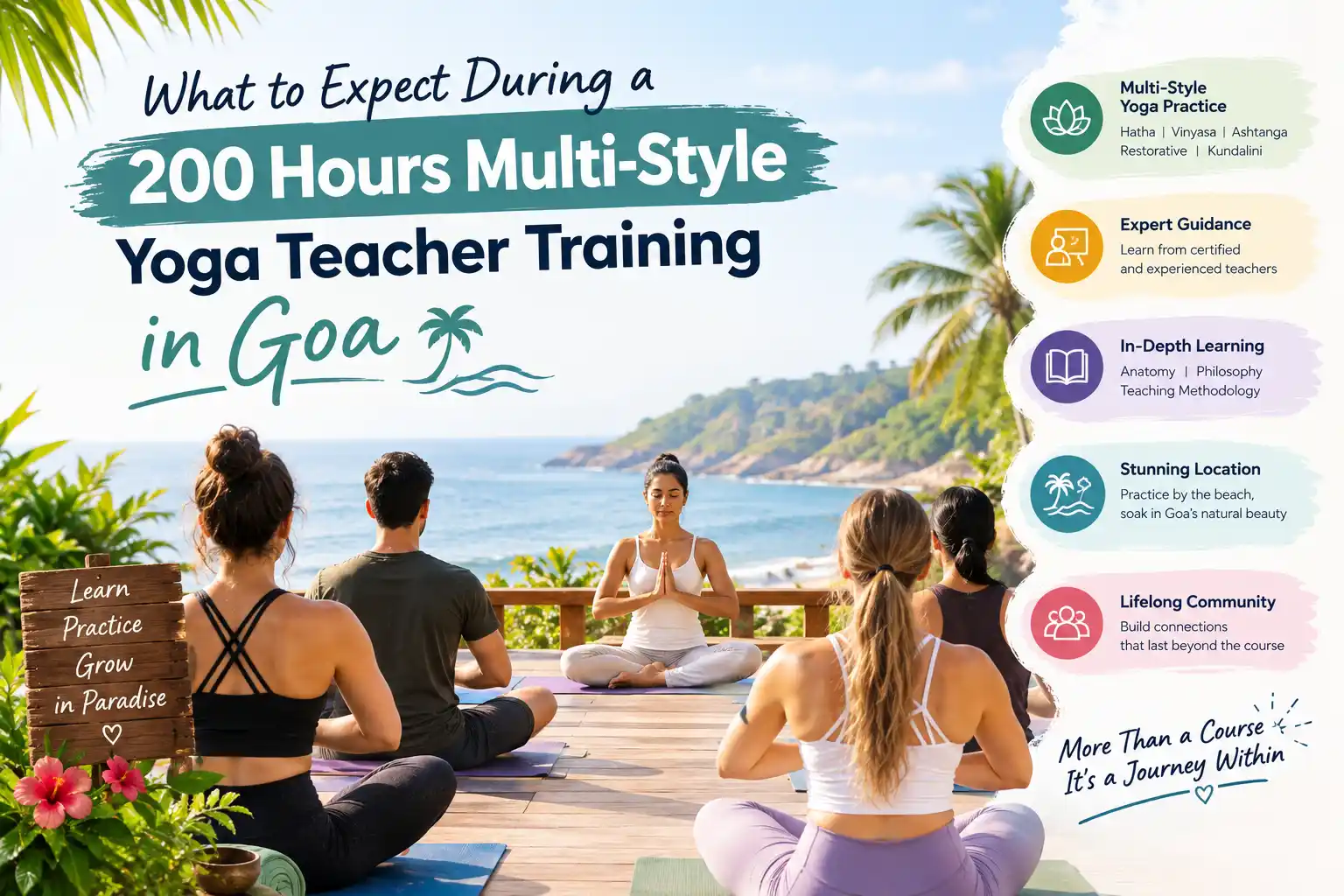
A 200 hours multistyle yoga teacher training GOA course may include practices such as Hatha Yoga, Ashtanga Yoga, Vinyasa Flow, Yin Yoga, meditation, pranayama, and other traditional yogic techniques. The exact curriculum varies between schools, but the overall objective is to develop both personal practice and teaching skills.
Students do not simply memorize yoga poses. They learn how to understand alignment, breathing, sequencing, modifications, class planning, and the principles behind the practices. This broad foundation can be useful for students who want flexibility in their future teaching approach.
What to Expect From a 200 Hours Multi-Style Yoga Teacher Training in Goa
Before joining a course, it is helpful to understand what everyday training actually looks like. A 200 hours multistyle yoga teacher training GOA program usually requires consistent attendance, physical participation, independent study, and active involvement in classroom discussions.
The schedule can feel intensive because students are learning several subjects at the same time. However, the variety also keeps the experience engaging. One session may focus on physical practice, while another explores anatomy, philosophy, breathing techniques, or teaching methodology.
1. Daily Yoga Practice
Daily asana sessions are usually one of the central parts of a teacher training course. You can expect to practice different yoga styles while learning how each approach affects the body and mind.
Hatha classes may emphasize stability, alignment, and mindful transitions, while Vinyasa can introduce breath-connected movement and creative sequencing. Ashtanga-based practices may develop discipline and strength, whereas Yin Yoga often focuses on slower, longer-held postures.
The purpose is not to perform advanced poses immediately. Instead, students gradually develop body awareness, mobility, strength, balance, and confidence.
2. Pranayama and Breathwork
Breathing practices are another important component of yoga education. Students learn how conscious breathing can influence concentration, relaxation, energy, and meditation.
Training may introduce techniques such as alternate nostril breathing, diaphragmatic breathing, and other traditional pranayama methods. Students also learn when and how particular techniques should be practiced safely.
Understanding breathwork is valuable for future teachers because breathing often becomes the bridge between physical movement and mental awareness.
3. Yoga Philosophy and Traditional Knowledge
Yoga teacher training goes beyond physical postures. Students are introduced to philosophical concepts that provide context for the practice.
Topics may include the Yoga Sutras, the Eight Limbs of Yoga, meditation, mindfulness, ethical principles, and concepts such as ahimsa and self-discipline. These lessons encourage students to consider how yoga can influence everyday choices, relationships, awareness, and personal growth.
For many students, philosophy becomes one of the most unexpected and meaningful parts of the course because it connects the physical practice with a broader way of living.
4. Anatomy and Physiology
Understanding the human body is essential for responsible yoga teaching. Anatomy lessons help students learn about muscles, joints, movement patterns, posture, and basic biomechanics.
You may explore how common yoga poses affect different parts of the body and why alignment matters. Teachers also discuss modifications and contraindications so students can learn how to approach practices more thoughtfully.
This knowledge helps future instructors avoid treating every student the same. A posture that feels comfortable for one person may require modification for another.
5. Teaching Methodology
One of the biggest changes during teacher training is moving from being a student to thinking like an instructor. Teaching methodology classes help you understand how to structure and communicate a yoga session.
You may learn how to demonstrate postures, provide verbal instructions, offer modifications, use appropriate sequencing, manage timing, and create a supportive classroom environment.
Expect practical teaching sessions where you lead short sequences for your classmates. These exercises can initially feel uncomfortable, but they are important for developing confidence and communication skills.
6. Meditation and Mindfulness
Meditation provides balance to the more physically demanding parts of training. Students may practice seated meditation, mindfulness exercises, guided relaxation, or other contemplative techniques.
Regular meditation can help develop concentration and self-awareness. It can also teach future instructors how to introduce moments of stillness into their own classes.
Because teacher training can involve long days and substantial information, meditation may also become a useful tool for managing mental fatigue.
What Makes Multi-Style Training Different?
A major advantage of multi-style education is exposure to different teaching philosophies and movement systems. Rather than becoming familiar with only one approach, students can compare styles and understand where each may be appropriate.
For example, a dynamic Vinyasa class may suit students looking for movement and flow, while restorative or Yin practices may be more appropriate when relaxation and recovery are priorities.
A best 200 hour yoga teacher training Goa program should therefore provide a balanced curriculum instead of simply including multiple style names. Look for qualified teachers, practical teaching opportunities, anatomy education, philosophy, meditation, and a clear progression from beginner learning to teaching practice.
How a Typical Training Day May Look
The exact schedule differs from one school to another, but most intensive programs follow a fairly structured routine. Early mornings are often dedicated to meditation, pranayama, or asana practice, followed by breakfast and theory classes.
Afternoon sessions may include anatomy, philosophy, teaching methodology, or additional practical work. Some programs also include evening meditation, workshops, assignments, or self-study.
Students should expect limited free time during intensive courses. Rest, hydration, nutritious meals, and adequate sleep become important because the body and mind need time to recover and absorb new information.
Here are two practical habits that can make the experience easier:
- Prepare physically: Practice basic yoga regularly before the course, especially standing poses, mobility work, and breath awareness.
- Prepare mentally: Be ready to receive feedback, make mistakes, ask questions, and learn from classmates with different experience levels.
Why Goa Is a Popular Setting for Yoga Teacher Training
Goa offers an environment that naturally complements a yoga-focused lifestyle. Its beaches, tropical surroundings, wellness communities, and slower pace can create space for reflection outside classroom hours.
A yoga teacher training Goa experience can also expose students to an international learning environment. Many programs welcome participants from different countries and backgrounds, creating opportunities to exchange perspectives about yoga and wellness.
However, the location alone does not determine the quality of education. Students should assess the curriculum, teaching faculty, accommodation, schedule, practical sessions, and overall learning approach before enrolling.
How to Choose the Right Multi-Style Yoga Course
When comparing programs, consider whether the course matches your current ability and long-term goals. Someone interested in teaching group classes may prioritize teaching methodology, while another student may be more interested in personal transformation, meditation, or deeper philosophical study.
A quality multistyle yoga teacher training Goa program should give students enough practical experience to understand how to teach safely and confidently. It should also provide a learning environment where questions are encouraged and individual progress is respected.
Consider these factors before making your decision:
- Curriculum depth and balance
- Teacher qualifications and experience
- Daily schedule and practice intensity
- Anatomy and safety education
- Teaching practice and feedback
- Accommodation and learning environment
- Certification or accreditation details
- Student reviews and overall reputation
Bhakti Yogshala can be considered by students looking for a structured environment where traditional practices and multiple yoga approaches are explored as part of teacher education.
What You May Gain by the End of the Course
Completing a 200 hours multistyle yoga teacher training GOA course can leave you with more than a certificate. You may develop greater awareness of your own body, a deeper understanding of yogic principles, and improved confidence in guiding others.
You will also begin to understand that teaching yoga is not about performing the most difficult posture. Good teaching requires observation, empathy, clear communication, appropriate modifications, and respect for individual differences.
The experience can also encourage personal discipline. Following a regular schedule of practice, study, meditation, and reflection often challenges students to become more consistent and self-aware.
Final Thoughts
A 200 hours multistyle yoga teacher training GOA program can be an immersive introduction to yoga teaching that combines physical practice, philosophy, anatomy, breathwork, meditation, and teaching methodology. Goa’s peaceful surroundings can further support the process of learning, reflection, and personal development.
Before enrolling, focus on the quality of the curriculum and teachers rather than choosing a course based only on location or price. The best 200 hour yoga teacher training Goa option is one that gives you strong foundational knowledge, practical teaching experience, and a deeper appreciation of yoga as a holistic discipline. With the right preparation and an open mindset, the training can become an important step toward teaching yoga with confidence and awareness.
Frequently Asked Questions
1. Is a 200-hour yoga teacher training suitable for beginners?
Yes. Many foundational programs are designed for students with different levels of yoga experience, although regular practice before joining can be helpful.
2. What styles are taught in multi-style yoga training?
Programs may include Hatha, Ashtanga, Vinyasa, Yin, meditation, pranayama, and other traditional practices depending on the curriculum.
3. How long does a 200-hour course take?
Intensive residential programs commonly run for several weeks, although the exact duration depends on the school’s schedule.
4. Do I need to be flexible to join?
No. Advanced flexibility is not usually a requirement. Consistency, willingness to learn, and respect for your body’s limitations are more important.
5. Can I teach yoga after completing the course?
A qualifying 200-hour program can provide foundational teacher training, but certification and teaching eligibility depend on the school’s accreditation and the requirements applicable to where you intend to teach.