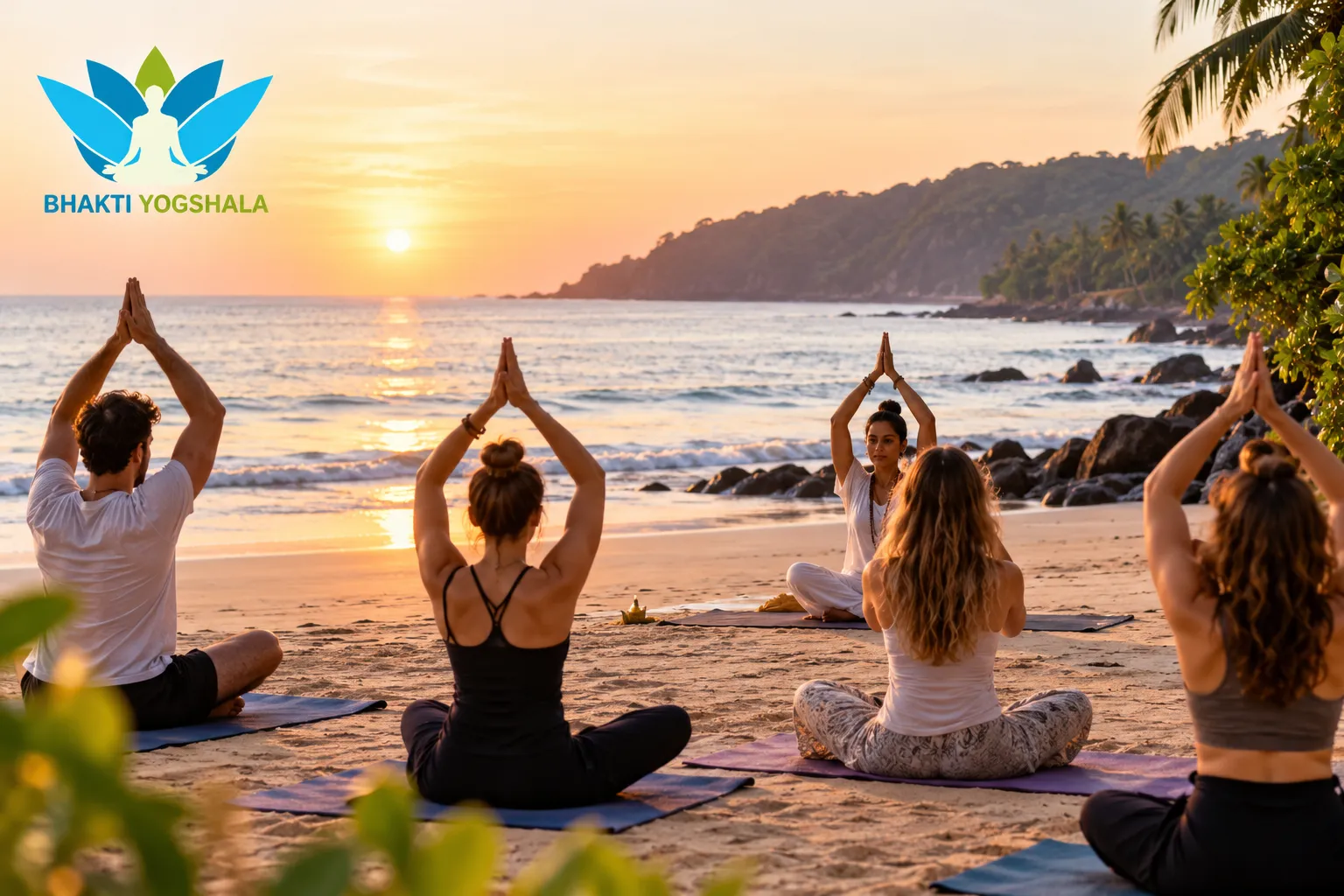
Choosing when to attend yoga teacher training in Goa can affect your daily routine, travel arrangements and overall comfort during the course. Temperature, humidity and rainfall vary throughout the year, so it is worth checking the season before confirming your dates.
For most students, November to February is a comfortable period for yoga teacher training in Goa. These months generally have less rainfall and more pleasant evenings. October and March can also work, although October may still bring rain and March is warmer.
If you are considering a residential programme at Bhakti Yogshala in Agonda, South Goa, the local weather is one factor to include in your planning. Your course dates, preferred temperature and plans outside the classroom also matter.
This guide covers Goa’s seasons month by month, what to expect during training and how to prepare for your stay.
What Is the Best Time for Yoga Teacher Training in Goa?
November to February is generally the most suitable period for students who prefer dry weather and outdoor activities alongside their yoga classes.
During these months, Goa receives relatively little rainfall. Days remain warm, while evenings are usually more comfortable than during the summer months. Students can generally plan beach walks and local sightseeing without having to work around frequent monsoon showers.
The best month still depends on your preferences and the training schedule.
Period | Typical seasonal conditions | What students can expect |
October–November | Post-monsoon transition | Gradually decreasing rainfall and greener surroundings |
December–February | Winter and dry season | Warm days and relatively comfortable evenings |
March–April | Pre-monsoon summer | Increasing heat and humidity |
May | Hottest part of the year | High temperatures and humid conditions |
June–September | Southwest monsoon | Frequent rainfall and wet outdoor conditions |
The Government of Goa identifies June to September as the main southwest monsoon period. Its climate information also describes winter as a shorter season from approximately mid-December to February.
For a residential yoga course, look at the weather throughout the programme rather than only on your arrival date.
Understanding Goa’s Weather and Seasons
Goa is on India’s western coast, beside the Arabian Sea. It has a tropical climate, with warm and humid conditions for much of the year.
The weather changes mainly according to the monsoon cycle.
Post-monsoon: October to November
Rainfall begins to decrease after the southwest monsoon. October can still have occasional showers, while November is generally drier.
Winter: December to February
These are Goa’s cooler and drier months. The Government of Goa describes typical winter daytime temperatures of around 29°C and nighttime temperatures of around 20°C.
Summer and pre-monsoon: March to May
Temperatures and humidity increase as the monsoon approaches. May is usually the hottest month, and daytime temperatures can exceed 35°C.
Monsoon: June to September
Southwest monsoon rainfall brings frequent showers and wet conditions. The landscape becomes greener, but outdoor activities may need to be adjusted.
For official climate information, refer to the Government of Goa’s climate guide.
Best Time to Visit Goa Month by Month
October – November: Post-Monsoon Season
October and November mark the transition from the rainy season to Goa’s drier months.
October may still have occasional rainfall, particularly during the early part of the month. By November, conditions are generally more suitable for outdoor activities and beach visits.
For yoga students, this period can be a reasonable choice if you want to avoid the busiest part of the winter holiday season.
What to expect:
- Some rainfall may continue in October.
- The surrounding landscape retains monsoon greenery.
- Outdoor activities become easier to plan as the weather settles.
- November generally offers drier conditions than October.
- Beach walks and local sightseeing become more convenient.
Who may prefer this period?
Students with flexible arrival dates who want to visit after the main monsoon period but before the busy December holiday season.
December – February: Winter and Peak Travel Season
December, January and February are generally the most comfortable months for visiting Goa.
According to the Government of Goa’s climate information, winter lasts approximately from mid-December to February. Typical daytime temperatures are around 29°C, with nights close to 20°C.
These conditions suit students who prefer to combine a structured yoga schedule with outdoor activities.
What to expect:
- Relatively low rainfall.
- Warm daytime temperatures.
- More comfortable evenings.
- Better opportunities for outdoor activities.
- Convenient conditions for exploring Agonda and nearby coastal areas.
January and February are particularly suitable for students who prefer drier weather.
December is also a popular holiday month. Flights, transport and accommodation can become busier, so arrange your travel and course reservation early.
Who may prefer this period?
First-time visitors, international students and practitioners who prefer relatively predictable weather during their residential stay.
March – April: Warmer Shoulder Season
March and April bring warmer conditions as Goa moves further into summer.
Afternoons can become hot and humid. Students who are comfortable with warmer weather may still find these months suitable, especially when outdoor activities are planned for early morning or evening.
If you are attending a yoga teacher training programme during this period, check the school’s daily timetable and indoor practice arrangements.
Things to consider:
- Carry a refillable water bottle.
- Choose breathable yoga clothing.
- Plan outdoor activities during cooler hours.
- Allow enough time for rest between activities.
- Check ventilation at the training venue.
March and April can suit students who do not mind higher temperatures and can adjust their daily routines accordingly.
May: Hot and Humid Weather
May is generally one of the hottest months in Goa.
The Government of Goa reports that daytime temperatures can exceed 35°C, accompanied by high humidity. This can make physically demanding outdoor activities less comfortable, particularly during the afternoon.
If you are considering a May training batch, ask the school about its class schedule, indoor practice space and ventilation.
Practical suggestions:
- Prefer early-morning practice when possible.
- Wear lightweight clothing.
- Drink water regularly.
- Avoid unnecessary midday sun exposure.
- Allow adequate recovery time after physical sessions.
The actual course timetable matters, so confirm the arrangements with your school before booking.
June – September: Monsoon Season
Goa’s southwest monsoon generally runs from June through September.
Rainfall is frequent during these months, and outdoor plans can change at short notice. July and August are particularly wet periods in many parts of the state.
The monsoon also changes the appearance of the surrounding countryside. Students who enjoy rainy weather and quieter travel periods may appreciate this season.
What should students expect?
- Frequent rainfall.
- High humidity.
- Wet outdoor surfaces.
- Changes to beach and sightseeing plans.
- Greater reliance on indoor activities.
- Possible transport delays during heavy rain.
Monsoon weather does not automatically prevent yoga training. A programme can continue indoors if the school has suitable facilities and confirms that the batch is operating.
Bhakti Yogshala publishes training dates across different parts of the year. Students considering a monsoon batch should contact the school to check the actual dates, indoor practice arrangements and accommodation availability.
Who may prefer the monsoon season?
Students who enjoy rainy landscapes and are comfortable spending more of their free time indoors.
Best Season for Yoga Practice in Agonda, South Goa
Agonda is a coastal village in South Goa. Its location makes the surrounding environment an important consideration for students attending a residential yoga programme.
During the dry season, students can generally combine their classes with walks and outdoor activities more easily. The monsoon brings a different setting, but frequent rain may affect plans outside the training centre.
Before choosing your training dates in Agonda, consider:
- Your comfort with heat and humidity.
- Whether you prefer dry or rainy weather.
- The duration of your course.
- Accommodation availability.
- Local transport arrangements.
- The school’s confirmed training schedule.
- Your plans outside the classroom.
The most suitable month is the one that fits your course dates and personal comfort.
Does the Season Affect Yoga Teacher Training?
Weather can change the conditions in which you study and spend your free time. It does not necessarily change the academic structure of a yoga teacher training course.
Before enrolling, check the curriculum, training hours and daily timetable for your selected batch.
Bhakti Yogshala’s published 200-hour programme describes several yoga styles and complementary subjects.
Yoga Styles and Learning Areas
The published programme covers:
- Hatha Yoga.
- Ashtanga Vinyasa.
- Vinyasa Flow.
- Yin Yoga.
- Pranayama.
- Meditation.
- Yoga philosophy.
- Yoga anatomy.
- Teaching methodology.
- Ayurveda.
These subjects combine practical yoga sessions with theoretical learning.
Daily Practice and Weather Considerations
The season may affect the time you spend outside the classroom.
Season | Practical consideration |
Winter | Outdoor activities can generally be planned more easily |
Summer | Plan outdoor activities around cooler hours |
Monsoon | Check indoor facilities and rainy-day arrangements |
Ask the school whether the timetable, practice location or outdoor activities change during different seasons.
What to Pack for Yoga Teacher Training in Goa
Your packing list should reflect the month you plan to travel.
You do not need a completely different set of belongings for each season, but a few additional items can make your stay more comfortable.
Essential Items for Every Season
- Comfortable yoga clothing.
- Lightweight everyday clothes.
- Refillable water bottle.
- Personal toiletries.
- Notebook and pens.
- Comfortable footwear.
- Sunscreen.
- Personal medication, if required.
- Travel documents.
- Electronic chargers.
Additional Items for Winter
- Light evening clothing.
- A thin shawl or extra layer.
- Comfortable walking shoes.
Additional Items for Summer
- Breathable cotton clothing.
- Sun protection.
- A cap or hat.
- Lightweight footwear.
Additional Items for Monsoon
- Waterproof bag.
- Umbrella or raincoat.
- Quick-drying clothing.
- Waterproof footwear.
- Extra bags for wet clothes.
Bhakti Yogshala’s published 200-hour programme recommends comfortable yoga attire, a notebook and a refillable water bottle. Its course information also states that yoga mats and props are provided at the centre. Confirm these arrangements before travelling.
How to Plan Your Journey to Agonda, Goa
Once you have selected a suitable training period, organise your travel around the confirmed course dates.
Bhakti Yogshala is located at:
Main Agonda Beach Road, Agonda, Goa – 403702.
Keep these points in mind when planning your journey.
- Confirm Your Course Dates
Check the school’s current programme calendar before purchasing non-refundable travel tickets.
- Plan Your Arrival
Ask the school about the recommended arrival date, check-in arrangements and any available transfer assistance.
- Check Your Transport Options
Depending on where you are travelling from, you can arrange your journey using Goa’s airports, railway stations or road transport connections.
Check the onward journey to Agonda before finalising your arrival arrangements.
- Check Visa Requirements
International students should review the Indian visa conditions that apply to their nationality and travel circumstances.
Use the official Indian Visa Online portal for current information.
- Review Accommodation Arrangements
Confirm your room category, number of nights, meals and any additional expenses before departure.
- Check the Weather Forecast
Seasonal averages are useful for planning, but actual weather conditions can vary. Check the forecast closer to your travel date, especially if you are arriving during the monsoon.
Yoga Teacher Training at Bhakti Yogshala, Goa
Bhakti Yogshala is a yoga teacher training school in Agonda, South Goa. Its programmes combine practical yoga sessions with subjects such as yoga philosophy, anatomy, pranayama and teaching methodology.
Students can explore its 200-hour and 300-hour yoga teacher training programmes.
200-Hour Multi-Style Yoga Teacher Training
The 200-hour programme is designed for students who want to develop their yoga practice and learn the foundations of teaching.
The published curriculum includes:
- Hatha Yoga.
- Ashtanga Vinyasa.
- Vinyasa Flow.
- Yin Yoga.
- Pranayama and meditation.
- Yoga philosophy.
- Yoga anatomy.
- Teaching methodology.
The programme page also describes accommodation and meal facilities.
The school publishes different training batches throughout the year. Contact Bhakti Yogshala to confirm the current dates and available places.
Explore: 200-Hour Yoga Teacher Training in Goa.
300-Hour Yoga Teacher Training
The 300-hour programme is intended for intermediate and advanced practitioners who want to continue their yoga education.
Bhakti Yogshala’s published programme describes a 28-day training structure. Its curriculum includes yoga styles, pranayama, meditation, philosophy, alignment and teaching methodology.
Students should confirm the entry requirements, current dates and accommodation arrangements before enrolling.
Explore: 300-Hour Yoga Teacher Training in Goa.
Choosing the Right Time for Your Training
If you prefer relatively dry weather and comfortable outdoor conditions, November to February is a sensible period to consider.
March and April may also work if you are comfortable with warmer weather. May requires more preparation for heat and humidity.
For monsoon-period training, confirm that your chosen batch is operating and ask about indoor practice arrangements.
The course duration also matters. If you are attending a programme lasting several weeks, consider the conditions throughout your stay rather than choosing dates based only on the first few days u have to plan according Best Time to Visit Goa for Yoga Teacher Training according to Weather, Seasons and Travel Tips.
Plan Your Yoga Teacher Training in Goa with Bhakti Yogshala
Planning your training dates early gives you time to arrange travel, accommodation and other details.
Bhakti Yogshala welcomes enquiries from students interested in its yoga teacher training programmes in Agonda, South Goa.
Before confirming your journey, contact the school to discuss your preferred month, programme duration, accommodation and available batch dates.
Contact Bhakti Yogshala
Website: https://bhaktiyogshala.com/
Phone: +91 9897355995
Email: bhaktiyogshala@gmail.com
Address: Main Agonda Beach Road, Agonda, Goa – 403702.
Contact Bhakti Yogshala to check the available training dates and choose a programme that fits your travel plans.
Frequently Asked Questions
- What is the best time for yoga teacher training in Goa?
November to February is generally the most comfortable period for yoga teacher training in Goa. Rainfall is relatively low, and temperatures are more suitable for outdoor activities. October and March may also be suitable depending on the weather and course availability.
- Which month is best for yoga teacher training in South Goa?
January and February are good choices for students who prefer warm days and relatively dry conditions. These months are suitable for combining a residential training schedule with outdoor activities around Agonda.
- Can I do yoga teacher training in Goa during the monsoon?
Yes, provided the school has a confirmed programme and suitable indoor practice facilities. June to September is the main monsoon period, so check training arrangements and travel conditions before booking.
- Is December a good time to visit Goa for yoga?
Yes. December generally has warm weather and relatively low rainfall. It is also a busy holiday month, so arrange accommodation and travel in advance.
- Is Goa too hot for yoga teacher training in May?
May can be particularly hot and humid, with daytime temperatures exceeding 35°C. Ask the school about its daily schedule, indoor practice facilities and ventilation before choosing a May batch.
- What is the weather like in Agonda, Goa, during winter?
Agonda generally experiences warm and relatively dry conditions during winter. December to February is a suitable period for students who want to combine yoga practice with beach walks and outdoor activities.
- Does Bhakti Yogshala offer yoga teacher training throughout the year?
Bhakti Yogshala publishes course dates across different months. However, availability can change between batches. Contact the school to confirm the latest 200-hour and 300-hour training schedules.
- What should I pack for yoga teacher training in Goa?
Pack comfortable yoga clothing, lightweight everyday outfits, a refillable water bottle, sunscreen, toiletries, travel documents and a notebook. During the monsoon, bring a raincoat, waterproof bag and quick-drying clothes.
- How many days should I plan for yoga teacher training in Goa?
Plan to stay for the complete course duration, along with sufficient time for arrival and departure. Bhakti Yogshala describes a 28-day structure for its 300-hour programme. Confirm the duration and arrival requirements of your selected course.
- Is Agonda a suitable location for yoga teacher training?
Agonda is a coastal village in South Goa. Students considering a residential programme can enjoy the local surroundings while attending their classes. Weather, transport and accommodation should all be considered when planning the stay.
- Can international students join yoga teacher training in Goa?
International students can enquire about Bhakti Yogshala’s programmes. They should check course eligibility, admission requirements and applicable Indian visa conditions before travelling.
- How can I book yoga teacher training at Bhakti Yogshala?
Visit the official Bhakti Yogshala website, explore the relevant course page and contact the school to confirm available dates, fees, accommodation and enrolment requirements.