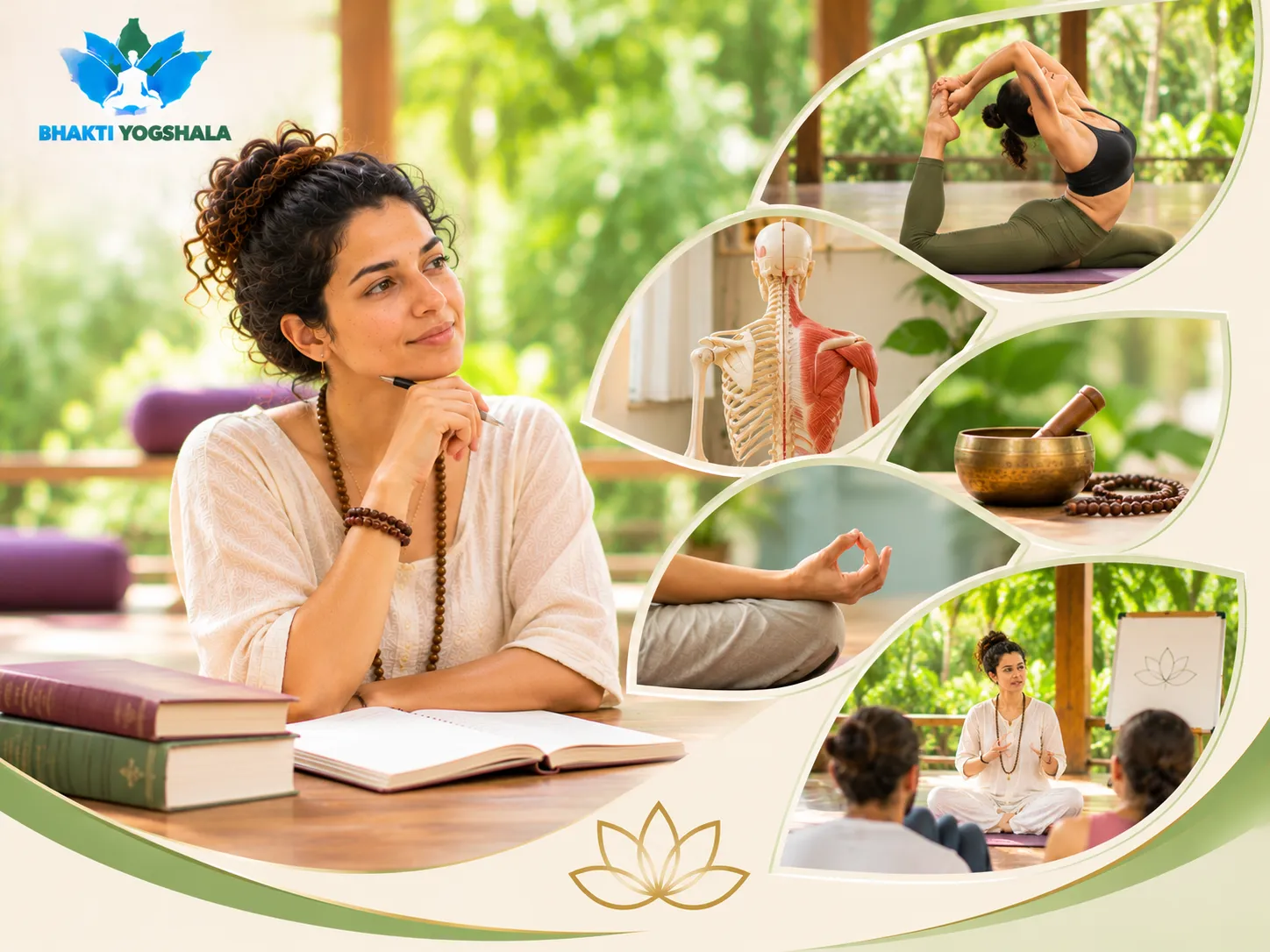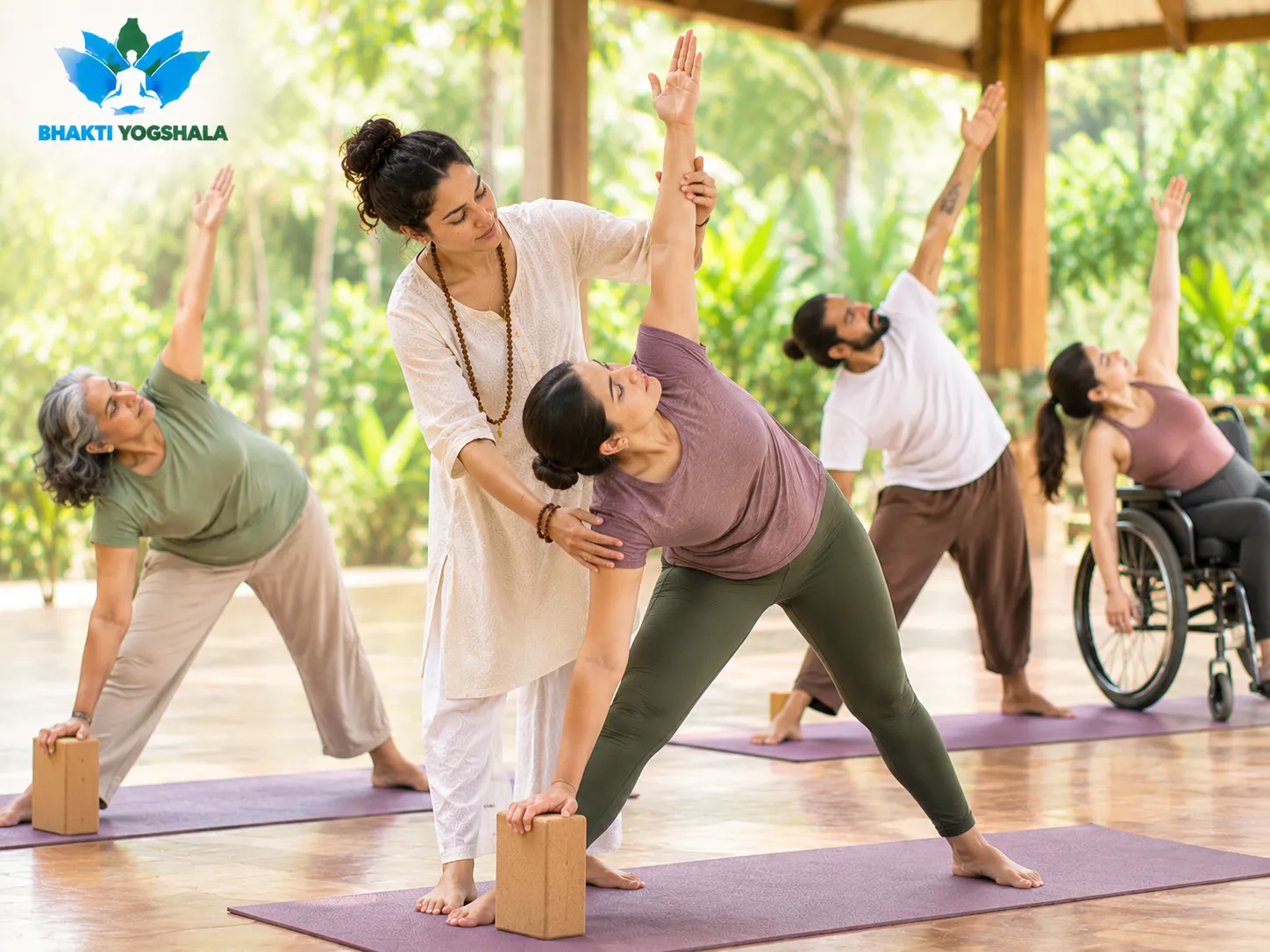
Completing a 200-hour yoga teacher training gives you a foundation in yoga practice, philosophy, anatomy and teaching methodology. After gaining some experience, you may begin looking for more detailed study, better teaching skills or a deeper understanding of the subjects you encountered during your first course.
A 300-hour yoga teacher training is one possible next step. However, not every programme has the same curriculum, teaching approach or recognition. Choosing a school simply because it offers an advanced certificate can leave important questions unanswered.
Before enrolling, examine the syllabus, trainer qualifications, teaching practice, assessment process, certification details, course schedule and overall learning environment. These factors will help you decide whether the programme supports your development as a yoga teacher.
Is a 300-Hour Yoga Teacher Training the Right Next Step After RYT 200?
A 300-hour yoga teacher training is designed to build on the knowledge developed during foundational teacher education. It gives teachers an opportunity to study selected areas in greater depth and develop their understanding of yoga practice and instruction.
It may be worth considering if you:
- Want to develop a more detailed understanding of asana and alignment.
- Need to improve your class planning and sequencing.
- Want to explore anatomy and movement in greater depth.
- Are interested in studying yoga philosophy beyond introductory concepts.
- Want more opportunities to practise teaching and receive feedback.
- Are ready to commit time to structured advanced study.
However, an additional qualification is not automatically the right decision for every teacher.
If you have recently completed your 200-hour training, you may first benefit from teaching regular classes, observing different students and identifying the areas where you need more knowledge. This experience can help you select a programme with a clear purpose.
Ask yourself one question before searching for schools:
What do I want to be able to understand or teach better after completing another 300 hours?
Your answer should guide the course selection process.
Understand What a 300-Hour Programme Should Include
The course title alone does not tell you how much you will learn. Two schools may both advertise a 300-hour programme while offering different subject combinations, teaching methods and practical experiences.
Start by reviewing the actual curriculum.
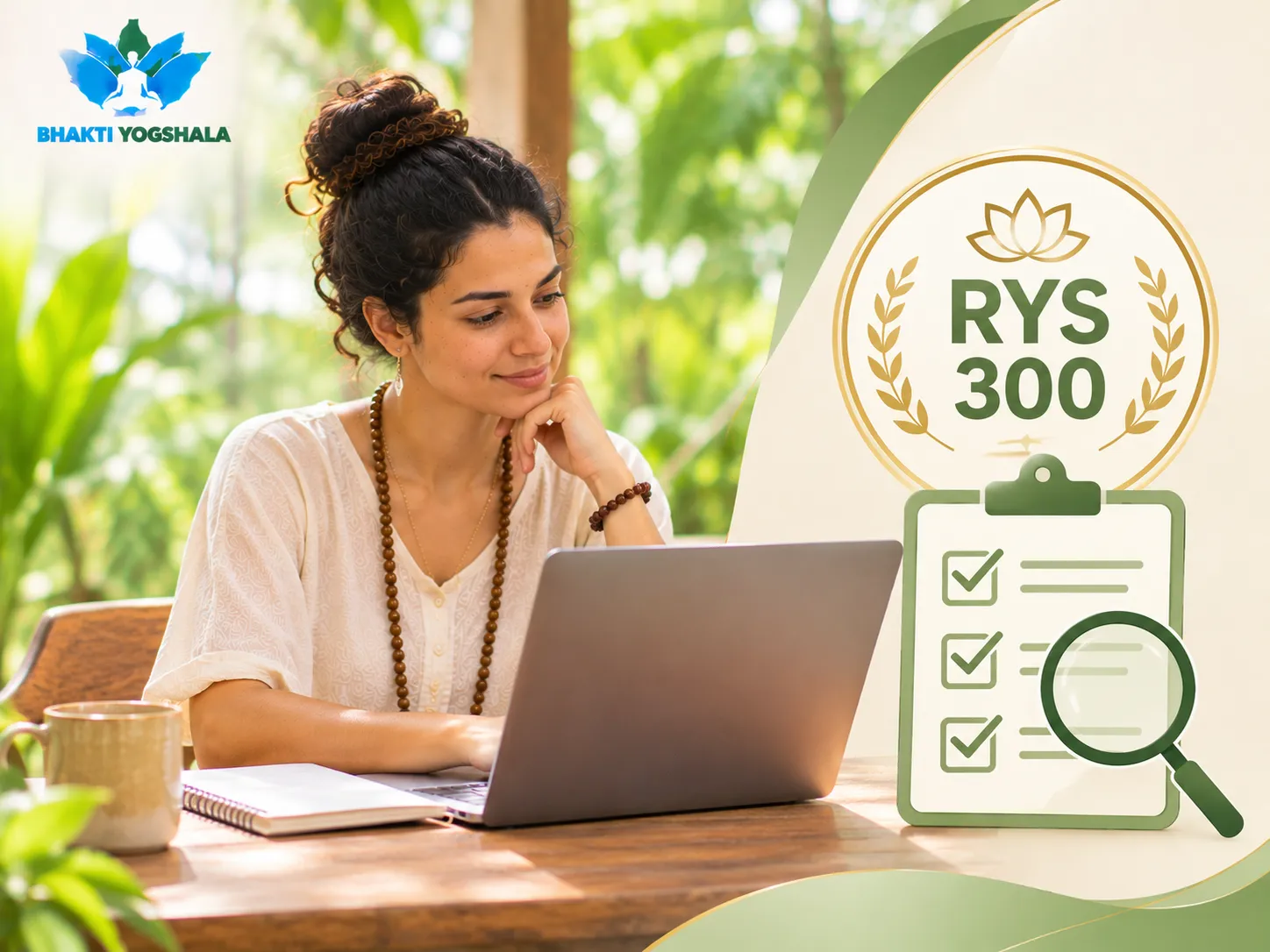
If you are comparing schools registered under Yoga Alliance, its RYS 300 framework identifies five educational categories:
- Techniques, Training and Practice.
- Teaching Methodology.
- Anatomy and Physiology.
- Yoga Philosophy, Lifestyle and Ethics for Yoga Teachers.
- Practicum.
The framework also expects schools to assess students’ knowledge, skills and experience before issuing a training certificate.
These categories provide a useful starting point when reviewing a programme. Ask how each subject is taught, how many hours are allocated and what you will be expected to demonstrate.
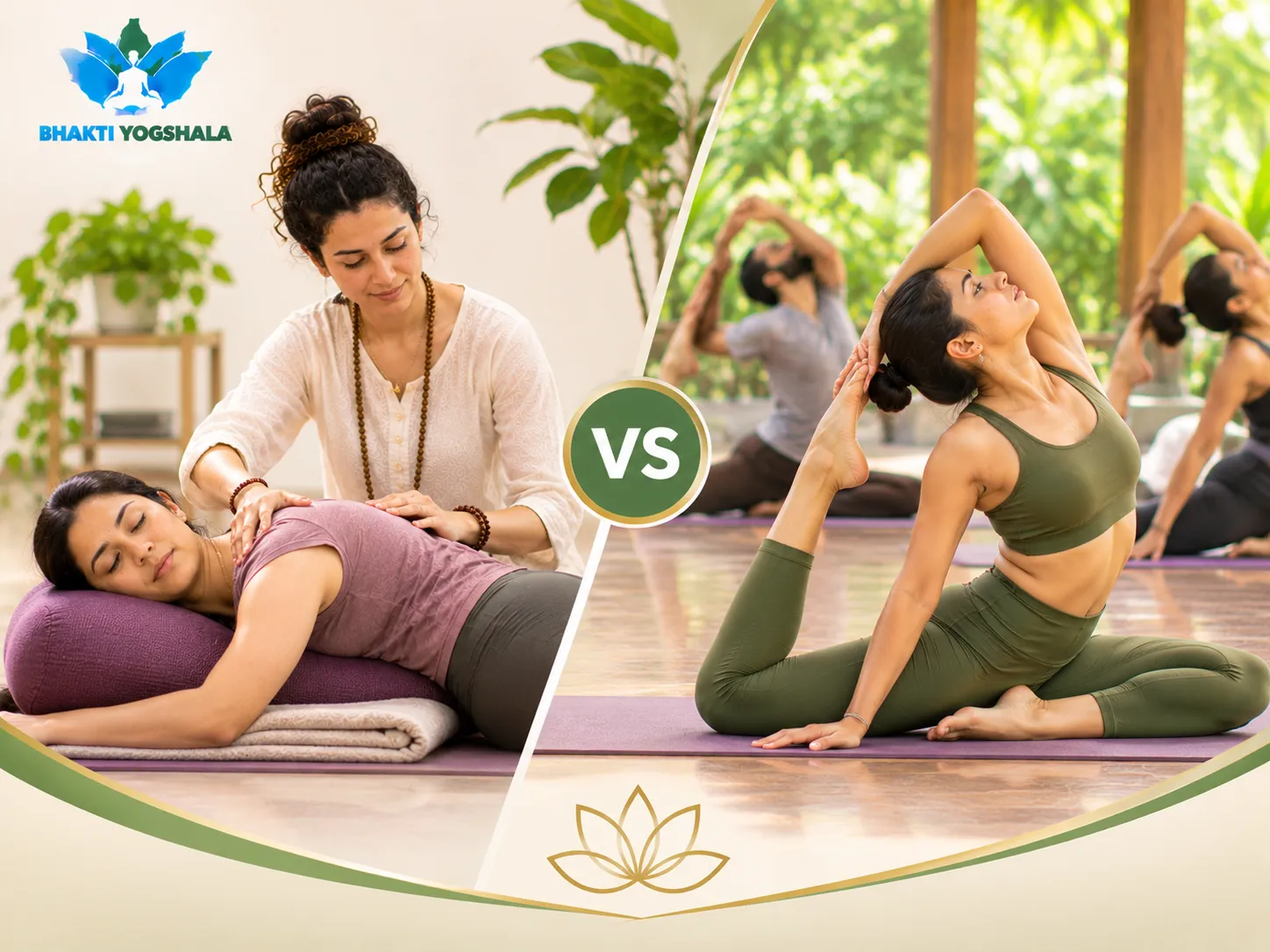
1. Advanced asana and yoga practice
Look beyond a list of advanced postures.
A useful programme should explain how different practices are approached, how postures are developed progressively and how teachers understand alignment.
Check whether the curriculum gives attention to:
- Asana technique and alignment.
- Progressive practice.
- Breathing coordination.
- Posture variations.
- Observation and demonstration.
- Understanding the purpose of different practices.
Do not assume that a course is more advanced simply because it includes difficult poses. The quality of instruction and the ability to apply what you learn are more meaningful considerations.
2. Teaching methodology and class sequencing
Your first teacher training may have introduced you to class planning and basic instruction. Advanced study should give you opportunities to examine these skills more carefully.
Look for subjects such as:
- Planning a balanced yoga class.
- Sequencing for different experience levels.
- Giving clear verbal instructions.
- Demonstrating postures.
- Observing students.
- Offering suitable variations.
- Managing a classroom.
- Understanding the responsibilities of a yoga teacher.
Ask whether students get to prepare and teach complete classes as part of their learning.
3. Anatomy and physiology
Anatomy is an important area to investigate when comparing advanced programmes.
A useful curriculum should help teachers understand how the body moves and how that knowledge informs asana instruction.
Check whether the course discusses:
- Major muscle groups and their functions.
- Joint movement and mobility.
- Movement patterns.
- Muscular engagement.
- Postural alignment.
- Breathing mechanics.
- Individual differences in movement.
Avoid choosing a programme based only on the number of anatomy topics listed. Ask how the subject connects with practical yoga teaching.
4. Yoga philosophy, lifestyle and ethics
Advanced yoga education should not be limited to physical practice.
Explore whether the programme offers meaningful study of traditional yoga philosophy, ethical responsibilities and the relationship between practice and everyday life.
Ask which texts and philosophical subjects are covered, how they are taught and whether students are encouraged to reflect on their application in teaching.
A school should be able to explain the subjects included rather than relying on broad phrases such as “deep spiritual transformation.”
5. Practicum and assessment
A practicum gives students an opportunity to demonstrate what they have learned.
When comparing programmes, ask:
- Will I teach a complete yoga class?
- Will an instructor observe my teaching?
- How is feedback provided?
- Are students assessed on instruction, sequencing and demonstration?
- Is there a written or practical examination?
- What happens if a student needs further practice?
A certificate is one part of teacher education. The learning process should also help you recognise your strengths and identify areas that need improvement.
Check the School’s Registration and Certification Details
Certification language can be confusing, particularly when different schools use terms such as RYT 200, RYT 500, RYS 300 and internationally recognised training.
Understand the difference before enrolling.
What is the difference between RYT 200, RYS 300 and RYT 500?
- RYT 200: A Registered Yoga Teacher credential associated with completion of a qualifying 200-hour training at a Registered Yoga School.
- RYS 300: A Registered Yoga School designation for a school offering an advanced 300-hour programme.
- RYT 500: A Registered Yoga Teacher credential associated with meeting the applicable 500-hour training and teaching requirements.
Under the Yoga Alliance pathway, the 500 training hours may be completed through one qualifying 500-hour programme or by combining a qualifying 200-hour programme with a separate qualifying 300-hour programme. Teaching-hour requirements also apply before registration at the 500-hour level.
Therefore, completing a 300-hour course does not automatically mean you have received RYT 500 registration.
Before paying a deposit, check:
- Whether the school has an active RYS 300 registration with the organisation whose credential you want.
- Whether the specific course is covered by that registration.
- What certificate the school issues after successful completion.
- Whether additional teaching hours or other requirements apply.
- Whether the registration details can be independently verified.
Do not rely only on a logo or a statement on a promotional page. Ask for the school’s registration details and verify them through the relevant organisation’s official directory.
If you are comparing different yoga organisations, remember that their registration systems and requirements may not be interchangeable.
Evaluate the Teachers and Their Subject Expertise
The person teaching a subject can influence how well you understand it.
A programme may cover anatomy, philosophy, pranayama and teaching methodology, but you should also know who is responsible for each area.
Review the school’s published instructor profiles.
Consider:
- What subjects does each instructor teach?
- Are their qualifications relevant to the subject?
- Do their profiles describe teaching experience?
- Who leads the main training sessions?
- Are guest instructors involved?
- Who observes and assesses student teaching?
For a school registered with Yoga Alliance, check the relevant lead-trainer requirements as well. Yoga Alliance states that a lead trainer at an RYS 300 must hold the E-RYT 500 designation.
Ask the school to clarify trainer responsibilities rather than assuming that every instructor teaches every subject.
Look Beyond the Syllabus: Teaching Practice and Assessment
A course can have an impressive subject list but still provide limited opportunities to apply the knowledge.
Teaching practice is particularly important for teachers who want to improve their classroom skills.
Before choosing a programme, find out whether students will:
- Plan their own yoga classes.
- Practise teaching fellow trainees.
- Receive instructor feedback.
- Demonstrate posture variations.
- Work on verbal cues and demonstrations.
- Reflect on their teaching performance.
- Complete practical or written assessments.
Also ask how the school manages student progress.
A useful assessment process should make clear what is expected, how performance is evaluated and whether students receive feedback before the course ends.
If the school cannot explain how students demonstrate their learning, request more information before making a decision.
Compare Course Duration, Fees and Accommodation
Course duration and total cost can affect your decision, especially if you are travelling to India.
Do not compare prices without checking what is included.
Course duration
Ask for the complete schedule, including:
- Training dates.
- Daily class timings.
- Practice sessions.
- Theory classes.
- Breaks and rest periods.
- Independent study.
- Examinations and assessment.
- Attendance requirements.
A shorter programme is not automatically better value. Consider whether the schedule gives you enough time to understand the subjects and participate in practical sessions.
Course fees
Ask the school for a written breakdown of the total fee.
Confirm whether it includes:
- Tuition.
- Accommodation.
- Meals.
- Study materials.
- Examination or assessment charges.
- Certificate charges.
- Airport transfers, if available.
- Any additional activities.
Ask about deposit requirements, cancellation terms, refund conditions and payment deadlines.
Do not rely on old blog posts or third-party listings for current prices. Course fees and inclusions can change between batches.
Accommodation and meals
If you are attending residential training, understand where you will stay and what daily arrangements are available.
Ask whether the accommodation is shared or private, whether meals are included, and what facilities are available.
Request current photographs and written confirmation of the arrangements rather than assuming that every batch has identical facilities.
Choose a Location That Supports Your Learning
Location is another factor when choosing a 300-hour yoga teacher training in Goa.
Goa attracts yoga students who want to combine structured study with time in a different environment. However, a beachside location should not be the main reason for selecting a school.
Consider the practical details:
- How far is the accommodation from the training space?
- What are the transport arrangements?
- How close is the nearest airport or railway station?
- Is the daily schedule manageable?
- Are meals and accommodation organised?
- Will you have sufficient time for study and rest?
- What should international students arrange before arrival?
Bhakti Yogshala’s published 300-hour course page identifies its training location as Agonda in South Goa, close to Agonda Beach.
If you are considering the programme, ask the school to confirm the current venue, accommodation arrangements and arrival instructions before booking travel.
Questions to Ask Before Enrolling in a 300-Hour Programme
Use this checklist when contacting a yoga school.
Area | Questions to ask |
Eligibility | Do I need to submit my 200-hour certificate before applying? |
Registration | What is your current RYS 300 registration status and registration ID? |
Curriculum | Can I receive the detailed subject-wise syllabus? |
Trainers | Who teaches each subject, and what are their relevant qualifications? |
Teaching practice | How many practical teaching sessions are included? |
Assessment | How are students assessed before graduation? |
Duration | What are the exact start and completion dates? |
Fees | What is included in the course fee? |
Accommodation | What room options are available? |
Meals | Are meals included throughout the programme? |
Certification | What certificate will I receive after successful completion? |
Refund policy | What are the cancellation and refund conditions? |
A school that provides clear answers makes it easier to compare programmes objectively.
Explore 300-Hour Yoga Teacher Training at Bhakti Yogshala, Goa
Bhakti Yogshala offers a published 300-hour yoga teacher training programme in Agonda, Goa.
Its course page describes a 28-day intermediate-to-advanced programme for practitioners who already have a foundation in yoga and want to deepen their practice and teaching knowledge.
The published curriculum includes:
- Asana practice.
- Pranayama.
- Guided meditation.
- Chanting.
- Yoga philosophy.
- Yoga anatomy.
- Adjustment and alignment methodology.
- Self-study and projects.
- Karma yoga.
- Examination and feedback.
The school also lists Hatha Yoga, Ashtanga Vinyasa, Vinyasa Flow, pranayama and philosophy among its teaching areas.
If you are comparing a 300-hour yoga teacher training in Goa, review the course details and ask Bhakti Yogshala for the latest syllabus, trainer information, registration details and current fee structure.
Before enrolling, confirm how the programme addresses your specific learning goals, particularly advanced teaching methodology, practical assessment and the development of classroom skills.
Explore the 300-hour yoga teacher training in Goa or contact Bhakti Yogshala to discuss the programme.
Bhakti Yogshala
Main Agonda Beach Road, Canacona, Agonda, Goa 403702
Phone: +91 9897355995
Email: bhaktiyogshala@gmail.com
Frequently Asked Questions
Can I join a 300-hour yoga teacher training after completing RYT 200?
A 300-hour advanced programme is generally intended for people with foundational yoga teacher training. However, individual schools may set their own admission requirements. Ask the school whether it requires an RYT 200 certificate or accepts an equivalent 200-hour qualification.
Does completing a 300-hour yoga teacher training automatically give me RYT 500?
No. Under the Yoga Alliance pathway, applicants must meet the applicable training and teaching requirements. Completing a qualifying 200-hour and 300-hour programme is part of the training pathway, but additional requirements, including teaching hours, apply.
What should a good 300-hour yoga teacher training include?
Look for a curriculum covering advanced practice, teaching methodology, anatomy and physiology, yoga philosophy, lifestyle and ethics, and practical teaching assessment. Check the actual syllabus rather than relying only on the course title.
How do I verify whether a yoga school is registered with Yoga Alliance?
Search the official Yoga Alliance school directory using the school’s name and location. Confirm the active registration designation and ask the school for its registration details. Do not assume that a general certification claim means the school holds an active RYS 300 designation.
Is teaching experience necessary before joining a 300-hour course?
Requirements vary between schools. Some may require only a qualifying 200-hour certificate, while others may prefer previous teaching experience. Ask the school about its eligibility criteria before applying.
How long does a 300-hour yoga teacher training take?
Duration depends on the school’s format and schedule. Bhakti Yogshala’s published course page currently describes a 28-day programme. Confirm the dates and current schedule directly with the school.
What is the difference between a 200-hour and a 300-hour yoga teacher training?
A 200-hour programme establishes foundational knowledge and teaching skills. A 300-hour advanced programme builds on that foundation through more detailed study of yoga practice, teaching methodology, anatomy, philosophy and practical teaching.
What should I check before paying for a 300-hour yoga teacher training?
Check the registration status, detailed syllabus, trainer credentials, assessment process, course dates, total fees, accommodation, meals, cancellation policy and certificate details. Request written confirmation of important arrangements.
Does Bhakti Yogshala offer a 300-hour yoga teacher training in Goa?
Yes. Bhakti Yogshala publishes a 300-hour yoga teacher training programme based in Agonda, Goa. Contact the school to confirm current dates, fees, eligibility, curriculum and registration details.
How can I contact Bhakti Yogshala about its 300-hour course?
You can contact Bhakti Yogshala by phone at +91 9897355995 or email bhaktiyogshala@gmail.com. The school lists its location as Main Agonda Beach Road, Canacona, Agonda, Goa 403702.