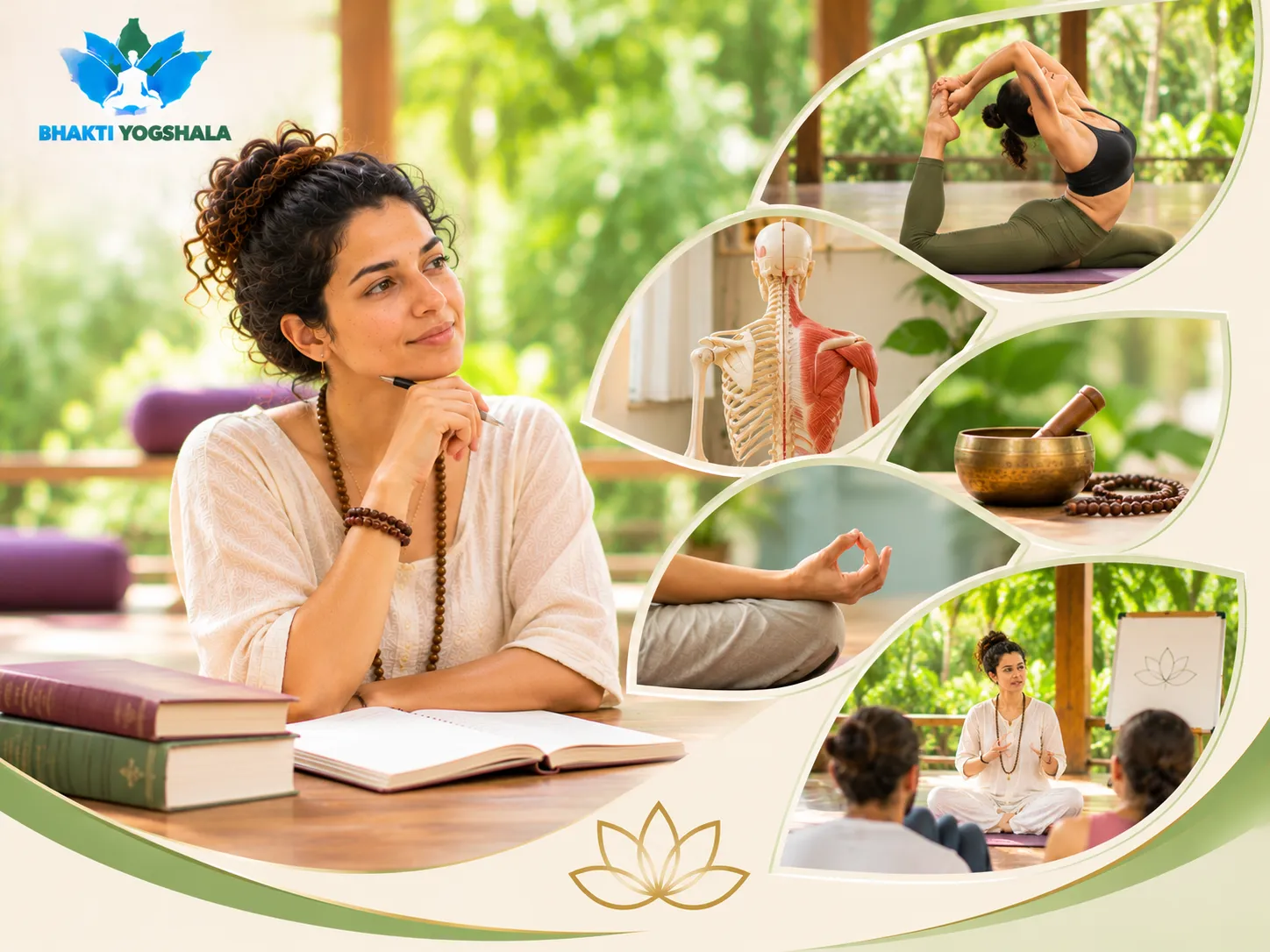

Choosing a 300-hour yoga teacher training course involves more than comparing course fees or the number of study hours. The way you learn matters too. Some yoga teachers prefer studying from home around their existing schedule. Others want to spend several weeks at a school, practise with classmates and receive direct guidance from instructors.
Both online and residential formats can offer structured advanced yoga education. The right choice depends on how you learn, how much time you can commit, the practical components included in the course and the registration status of the school.
If you are considering a 300 hour yoga teacher training in Goa, this comparison will help you understand the differences before you enrol.
An online 300-hour yoga teacher training programme is delivered through digital learning. Depending on the school, students may attend live online classes, watch recorded lessons, complete assignments and participate in virtual teaching practice.
A residential programme takes place at a physical yoga school. Students attend scheduled classes, practise with other trainees and interact directly with teachers throughout the course.
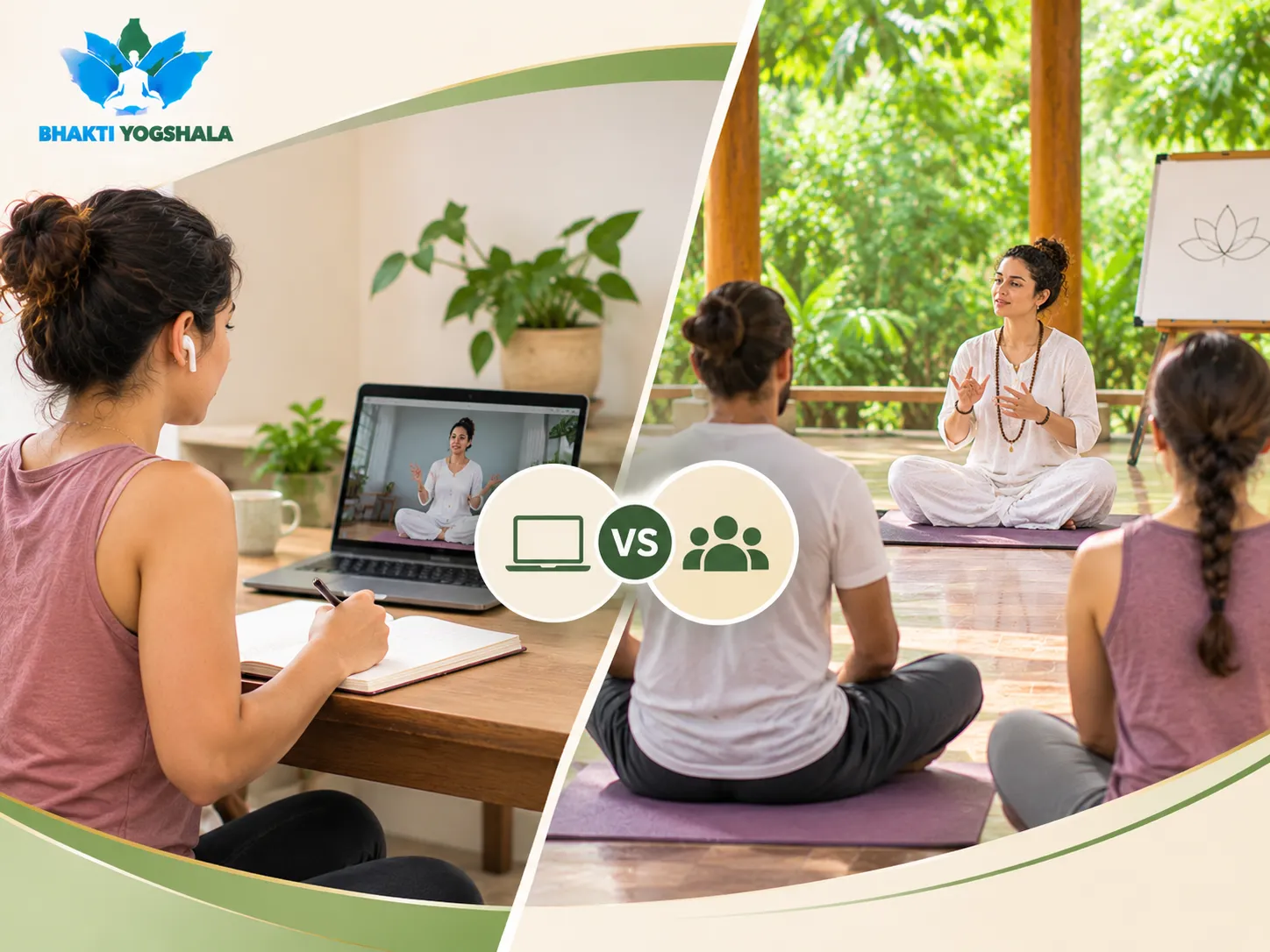
The main difference is the learning environment.
Learning factor | Online training | Residential training |
Location | Study from your chosen location | Attend the school in person |
Schedule | May offer flexible or scheduled sessions | Usually follows a fixed timetable |
Teacher interaction | Through live online classes and digital feedback | Direct, face-to-face interaction |
Practical observation | Depends on the course’s live practice arrangements | Teachers can observe students practising in person |
Peer learning | Online group sessions and discussions | Shared classes and group activities |
Travel | Usually no relocation required | Travel and accommodation may be needed |
Daily routine | Managed around your personal schedule | Organised around the school’s timetable |
Neither format automatically guarantees better teaching preparation. The curriculum, trainer involvement, feedback and opportunities to practise teaching should be examined before you make a decision.
Online training allows students to study without moving to another city or country. It can be useful for yoga teachers who have work, family or teaching commitments that make an extended stay away from home difficult.
A programme may include:
The exact structure varies by school. Before enrolling, ask how much of the course is live, how practical sessions are conducted and whether teachers provide individual feedback.
If you plan to use a Yoga Alliance Registered Yoga School programme towards a Yoga Alliance credential, check the current distance-learning standards.
Yoga Alliance states that registered schools can offer in-person, distance-learning or mixed-format programmes. Its published requirement for an RYS 300 distance-learning programme is a minimum of 45 synchronous hours, where students and teachers meet online in real time. Confirm the current requirements and the school’s registration status directly with Yoga Alliance before paying.
A course that provides recorded videos alone should not be assumed to meet every requirement for a registered 300-hour programme.
A residential course brings students and teachers together at the training location for a scheduled period. Instead of fitting every class around your home routine, you follow the school’s daily timetable.
For students who learn through observation and direct practice, this arrangement can be useful. You can ask questions during class, observe how teachers demonstrate techniques and receive feedback while practising.
A residential 300-hour course may include:
Students follow a regular practice schedule. Depending on the curriculum, this may include Hatha, Ashtanga, Vinyasa, pranayama, meditation and other subjects.
You can raise questions during lessons and receive in-person guidance. Ask the school how often trainers observe students and whether individual feedback is included.
Advanced training should give students opportunities to practise teaching, receive feedback and refine their instructions. Ask how teaching assessments are organised and how much supervised practice is included.
Living and studying alongside other trainees creates opportunities for discussion outside formal lessons. Students can exchange observations, practise together and learn from different teaching experiences.
Residential programmes usually follow a fixed schedule. This can help students give their training consistent attention, although it may be difficult for those who cannot take time away from work or family.
The following comparison can help you identify which format matches your current circumstances.
Yoga teaching involves more than remembering asanas. Teachers need to understand alignment, communicate instructions clearly, observe students and adapt their guidance.
Residential learning allows instructors to observe your practice in person. They can see how you demonstrate a posture and respond to your teaching. This direct observation can be useful when refining adjustments, alignment cues and teaching methods.
Online courses can also include practical work, but the method needs to be clear. Ask whether you will teach live sessions, submit recorded demonstrations or receive individual feedback. Find out how the school assesses your practical skills.
Online training may suit students who need to continue working or teaching while studying. Recorded lessons can offer flexibility, although live classes and assignment deadlines may still require fixed availability.
Residential training requires you to commit to the school’s dates and daily schedule. You may need to arrange leave, travel and accommodation before the programme begins.
Consider your actual availability. A flexible course is not necessarily easier to complete if you struggle to set aside regular study time.
In a residential programme, you can speak to instructors before or after class and ask questions while practising.
Online students generally interact through video calls, messages, discussion sessions and digital feedback. The quality of this experience depends on how accessible the teachers are and how the school manages student support.
Ask about class sizes, trainer availability, response times and opportunities for one-to-one guidance.
Residential training brings students together for regular practice. You can observe different approaches, exchange feedback and learn to work with classmates who have different levels of experience.
Online programmes may provide group discussions and virtual practice sessions. Ask whether students work together or complete most assignments independently.
An online programme generally avoids the cost and time involved in travelling to a training location.
A residential course requires travel planning. Depending on the package, accommodation and meals may be included or charged separately. Confirm what the course fee covers before booking flights or making a deposit.
A hybrid programme combines online study with an in-person component. For example, students may complete theory lessons remotely and attend a residential period for practical sessions.
This arrangement may suit people who want some flexibility but also value face-to-face training.
However, the word hybrid can describe very different course structures. One school may offer a short in-person immersion, while another may require a longer residential period.
Before choosing a hybrid programme, ask:
Do not assume that every hybrid course has the same structure or recognition.
Start with your reason for taking advanced training. Are you looking to improve your personal practice, develop your teaching skills or complete the next stage of a professional training pathway?
Your answer can help narrow the choice.
Online training may suit you if:
Residential training may suit you if:
A hybrid programme may suit you if:
There is no need to choose a format because it is popular. Choose the one that gives you the time, support and practical learning you need.
Goa is one option for students considering an in-person yoga teacher training programme in India. A residential course can give you a defined period to focus on daily practice and study away from your usual routine.
Bhakti Yogshala lists a 300-hour Yoga Teacher Training in Goa at its location near Agonda Beach in South Goa. Its course page describes a 28-day programme and lists subjects including asana practice, pranayama, meditation, yoga philosophy, anatomy, alignment and teaching methodology.
The school also publishes information about accommodation and meals for its residential training. Course dates, availability, inclusions and prices should be confirmed directly before booking, as published schedules can change.
Bhakti Yogshala’s website separately lists an online 200-hour yoga teacher training programme. The pages reviewed for this article do not establish that the school currently offers an online 300-hour programme. If you are specifically looking for an online advanced course, contact the school to confirm whether one is available.
You can review the residential programme here:
300-Hour Yoga Teacher Training in Goa – Bhakti Yogshala
A course page may give you an overview, but you should confirm the details that affect your training before making a payment.
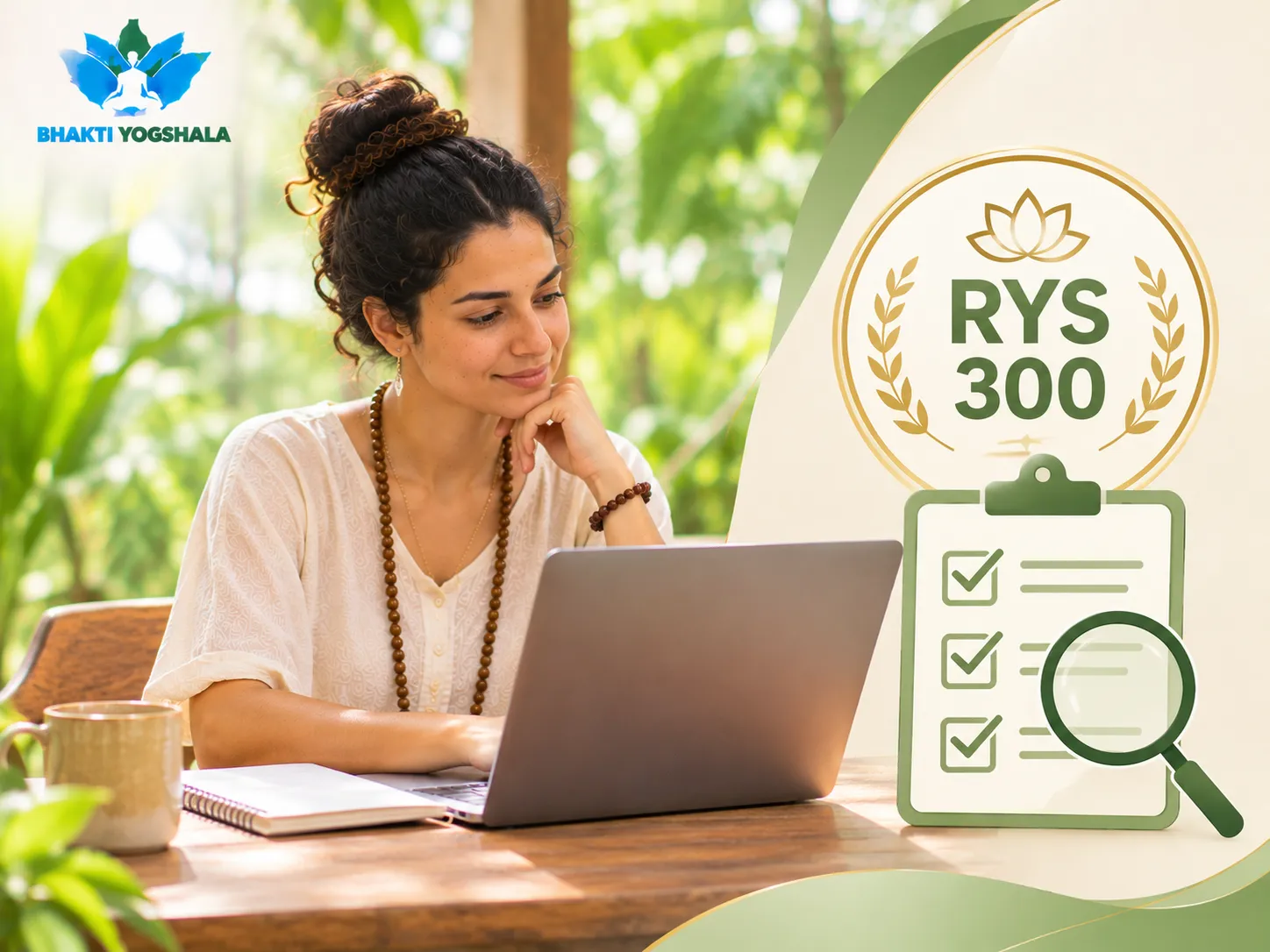
Use this checklist when speaking with a school:
Ask for written answers. Keep a copy of the course details and payment terms.
If you prefer an in-person learning environment and are considering advanced yoga teacher training in Goa, you can explore the residential programme at Bhakti Yogshala.
The school is located on Main Agonda Beach Road, Agonda, Canacona, Goa 403702.
Before confirming your place, contact the team to check current course dates, eligibility, fees, accommodation, curriculum and certification details.
Contact Bhakti Yogshala
Explore the 300-Hour Yoga Teacher Training in Goa
It depends on the programme and your learning preferences. Online courses can work well for theory and independent study when they include live interaction and meaningful feedback. Residential training offers direct observation and face-to-face practice.
Some Yoga Alliance Registered Yoga Schools offer distance-learning programmes. Yoga Alliance’s published RYS 300 distance-learning requirement includes at least 45 synchronous hours. Confirm the school’s current registration and course structure before enrolling.
Yoga Alliance
It may suit students who want a fixed learning schedule, direct teacher interaction and regular in-person practice. Consider travel, accommodation, course fees and the time commitment before deciding.
The website pages reviewed list a residential 300-hour course in Goa and an online 200-hour programme. They do not confirm an online 300-hour programme. Contact the school to ask about current availability.
Bhakti Yogshala+1
Bhakti Yogshala’s 300-hour course page lists a duration of 28 days. Confirm the current batch dates and schedule with the school before making travel arrangements.
Bhakti Yogshala
Check the school’s registration, course designation, live learning hours, practical assessment, trainer involvement, feedback process and certificate details. Ask for the complete course structure in writing.
A hybrid programme may suit students who want online theory lessons alongside in-person practice. Its value depends on the amount of live interaction, practical training and assessment included.
A 300-hour programme is an advanced training course. RYT 500 is an individual Yoga Alliance credential with its own eligibility requirements. Completing a 300-hour course does not, by itself, mean every graduate automatically receives RYT 500 status. Check the current requirements with Yoga Alliance.
Bhakti means “devotion, worship, attachment” in Sanskrit. In our Yogshala you will find teachers who are extremely devoted to their yoga practice and will fully support and guide you in yours. Are you ready to break your inner boundaries and let go of your self-limiting thoughts?

Copyright © 2024 bhakti Yogshala, All rights reserved.