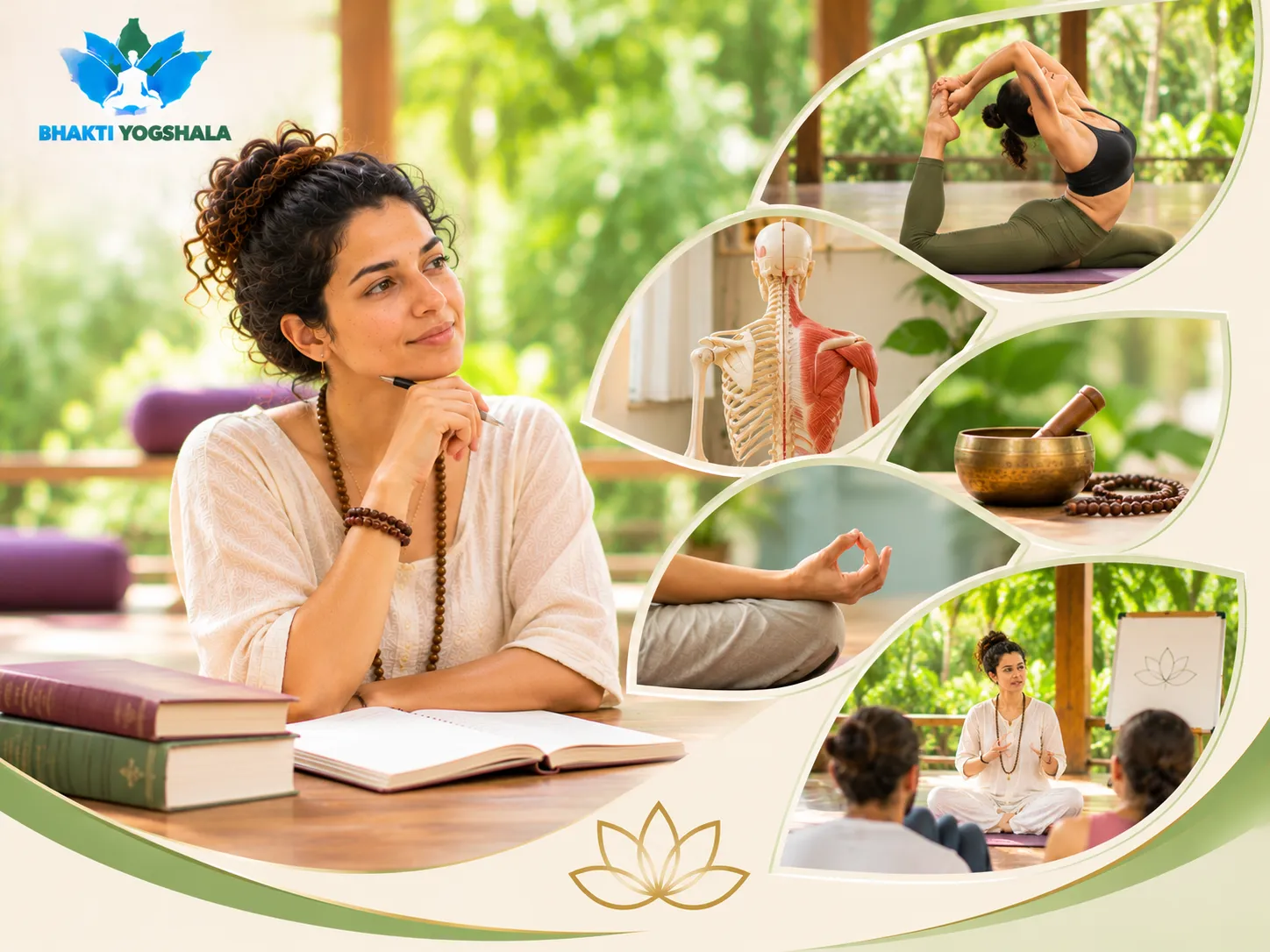

Completing a 200-hour yoga teacher training gives you a foundation in asana, pranayama, meditation, yoga philosophy and teaching methodology. Once you begin teaching regularly, however, you may find that some questions require more than introductory knowledge.
How do you adapt a sequence for students with different physical abilities? How do you understand the relationship between anatomy and movement? Can you explain the purpose behind a practice instead of simply demonstrating it?
These are the kinds of questions an advanced yoga teacher training programme should encourage you to explore.
A well-structured 300-hour programme builds on previous training. It should give experienced practitioners opportunities to study advanced techniques, understand movement in greater detail, develop their teaching approach and examine the philosophical principles behind yoga.
If you are considering further training, understanding the curriculum will help you decide whether a programme offers genuine educational depth.
A 200-hour programme introduces the foundations of yoga practice and teaching. Students generally study fundamental asanas, basic alignment, breathing techniques, meditation, introductory anatomy and class planning.
Advanced training starts with the assumption that these foundations have already been established.
The emphasis shifts towards applying existing knowledge in more demanding teaching situations. Students may explore variations of familiar postures, more complex sequences, advanced breathing practices and the relationship between yoga philosophy and everyday teaching decisions.
For example, a foundational course may introduce Trikonasana (Triangle Pose) and explain its basic alignment. Advanced study can examine different movement patterns, individual limitations, variations and the reasoning behind particular teaching cues.
The same progression applies to sequencing, pranayama and meditation.
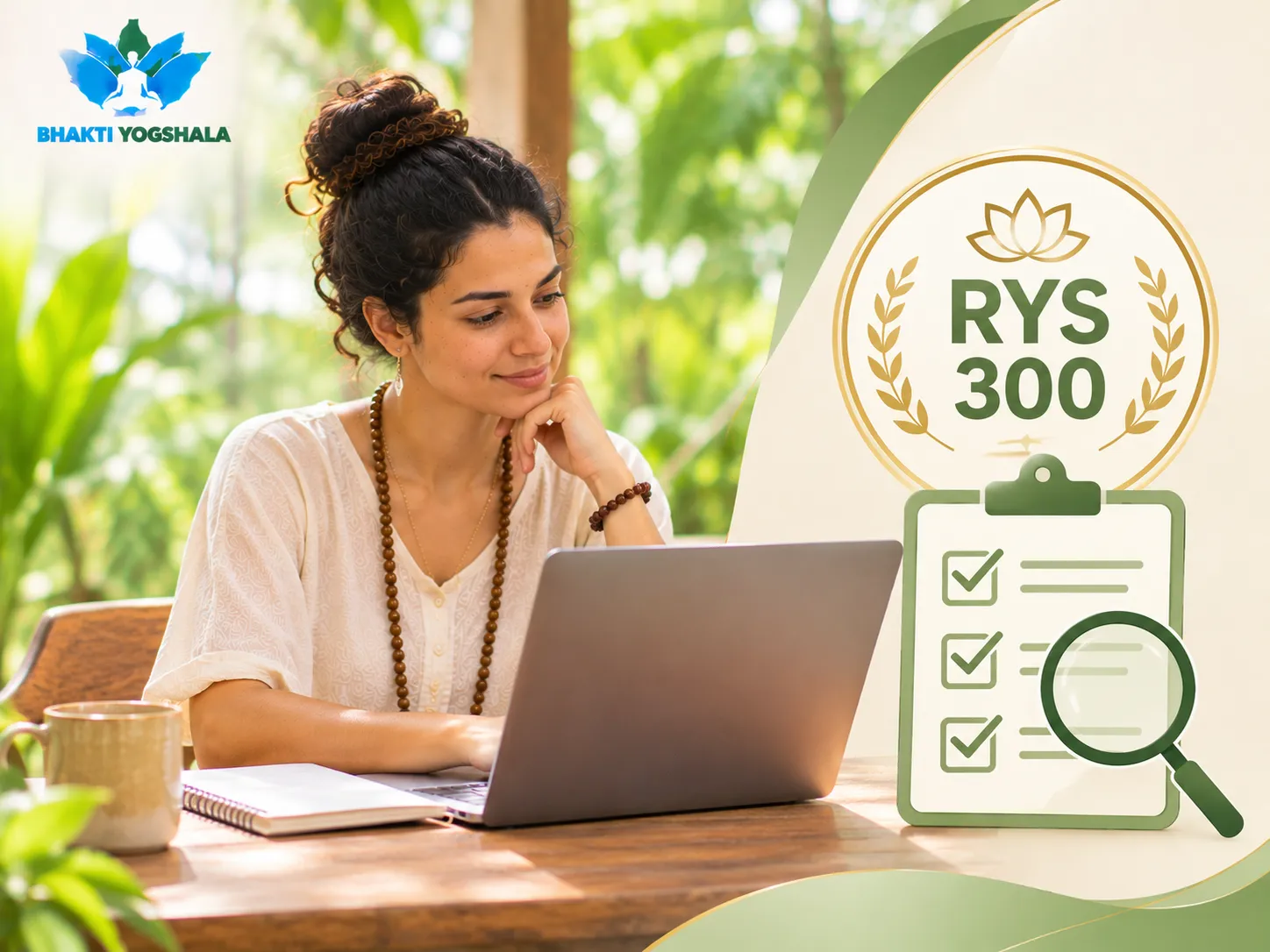
Yoga Alliance describes an RYS 300 programme as advanced training that builds on the concepts generally taught at the 200-hour level. Its standards identify five educational categories for this level of study.
When reviewing a 300-hour yoga teacher training syllabus, examine the subjects being taught and the depth at which students study them.
Advanced practice should develop a deeper understanding of familiar yoga techniques.
Depending on the school’s teaching approach, this may involve:
The objective is to develop awareness of how a practice is performed, taught and adapted.
Students should also understand when a particular posture or breathing technique may be unsuitable. An advanced teacher needs to recognise individual limitations and offer appropriate alternatives within their competence.
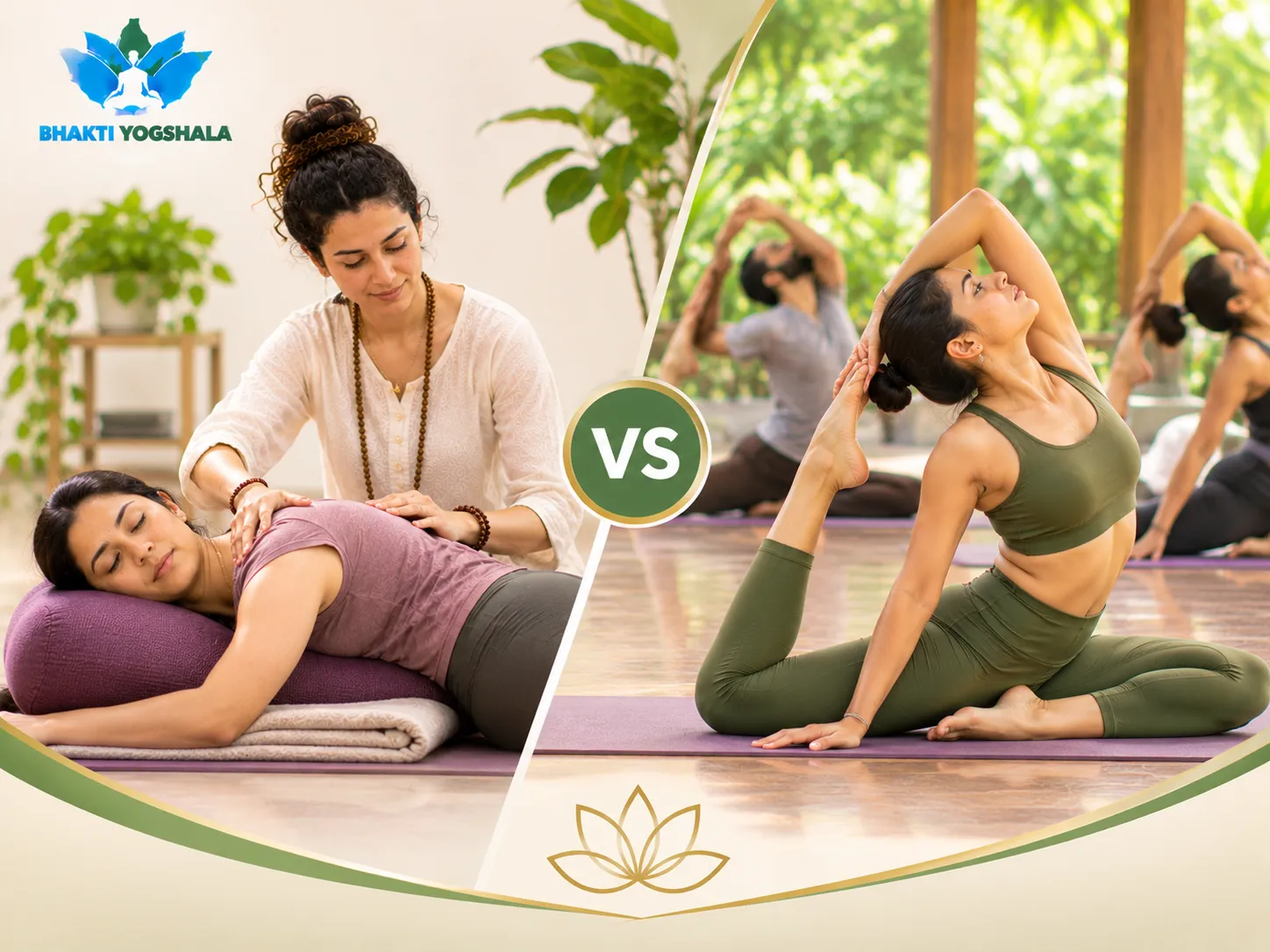
Anatomy becomes increasingly relevant when teachers work with different body types, movement patterns and levels of experience.
A deeper curriculum should connect anatomical concepts with practical yoga instruction.
Important areas may include:
For example, two students performing the same standing posture may have different ranges of motion. Their anatomical differences can affect how they approach the position.
An advanced teacher should learn to observe these differences and avoid treating one visual alignment as suitable for everybody.
Anatomy education should also explain the limits of a yoga teacher’s role. Understanding movement does not qualify someone to diagnose or treat a medical condition.
Knowing how to perform a posture and knowing how to teach it are different skills.
An advanced programme should give students opportunities to improve their classroom communication and teaching decisions.
Topics worth examining include:
Consider a class containing beginners and experienced practitioners. A teacher needs to structure the session so that students can participate at an appropriate level.
This requires observation, clear instructions and the ability to adapt a class when necessary.
Look for programmes that allow students to practise these skills instead of limiting teaching methodology to classroom lectures.
Yoga education extends beyond physical practice.
Advanced study should provide opportunities to examine traditional philosophical ideas and understand how they relate to the responsibilities of a yoga teacher.
Relevant subjects may include:
The purpose of studying these subjects is to understand their meaning and consider how they influence teaching.
For instance, Ahimsa, commonly understood as non-violence, can encourage teachers to consider whether their instructions respect individual limitations.
Students should have opportunities to discuss philosophical ideas, reflect on their meaning and relate them to their own teaching approach.
Practical teaching deserves particular attention when comparing advanced yoga schools.
A student may understand anatomy, philosophy and asana techniques but still need experience managing an actual class.
A useful practicum should provide opportunities to:
Ask the school how students are assessed and whether they receive individual feedback.
Yoga Alliance includes practicum as one of the five educational categories in its RYS 300 standards. Its published standards distinguish actual practice teaching from activities such as observing or assisting another teacher.
This distinction is useful when examining the practical value of a programme.
A good curriculum should help students connect what they learn in different subjects.
Consider an example involving a Vinyasa class.
The teacher needs to understand the movements within the sequence, choose suitable transitions, provide understandable instructions and observe how students respond.
Anatomy helps explain movement. Teaching methodology helps organise the class. Philosophy and ethics inform the teacher’s approach to students.
These subjects become more useful when students have opportunities to apply them together.
When reviewing a programme, look for:
The course should leave students with a clearer understanding of their teaching decisions.
A certificate alone does not demonstrate how well someone can teach.
Assessment should consider whether students understand the subjects covered and can apply their learning.
Depending on the programme, assessment may include written examinations, oral discussions, practical demonstrations, teaching sessions and feedback.
Bhakti Yogshala’s published 300-hour course information lists written tests, oral tests, attendance, performance and behaviour among its assessment considerations.
Before enrolling, ask how these elements are evaluated and whether students receive feedback explaining their performance.
Also find out whether the course includes supervised practice teaching and how much individual attention is available.
These questions can help you distinguish between a programme that primarily delivers lessons and one that gives students opportunities to demonstrate their understanding.
Two schools may advertise the same training duration while offering different learning experiences.
Read the curriculum carefully instead of making a decision based only on the course title.
Here are some useful questions to ask.
Does the curriculum build on 200-hour knowledge?
Advanced classes should develop existing concepts. Ask how the school distinguishes its advanced material from its foundational syllabus.
Who teaches the different subjects?
Review the teachers’ qualifications, relevant experience and subject expertise. Check whether their backgrounds match the subjects they are responsible for teaching.
Is there enough practical teaching?
Find out whether students deliver complete classes, receive feedback and have opportunities to improve their teaching.
How is anatomy connected to practice?
A useful curriculum should relate anatomical concepts to movement, alignment and appropriate adaptations.
How is progress assessed?
Ask about written examinations, practical assessments, attendance requirements and feedback.
What certification is provided?
Check the school’s current registration status, the exact certificate awarded and the eligibility requirements for any individual teaching credential you intend to pursue.
What does the course fee include?
Confirm tuition, accommodation, meals, study materials and other charges directly with the school.
These details make it easier to compare programmes on educational value rather than marketing claims.
Bhakti Yogshala offers a 300-hour yoga teacher training programme in Agonda, South Goa.
Its published course information describes a 28-day intermediate-to-advanced programme covering several areas of yoga education.
The curriculum includes:
The published schedule also includes asana sessions, philosophy and theory classes, anatomy, practicum and group discussions.
Bhakti Yogshala’s website lists a maximum class size of 15 students for the 300-hour programme. Confirm the current batch size and course arrangements before enrolling.
The school is located near Agonda Beach in South Goa. Its published course information describes the programme as an immersive residential training experience.
Prospective students can review the 300-hour yoga teacher training curriculum in Goa to understand the programme’s subjects, schedule and course inclusions.
You can also explore the Bhakti Yogshala teaching team to learn about the instructors listed on the school’s website.
Advanced training may be worth considering if you have completed foundational yoga education and want to develop your understanding further.
It may be relevant if you:
Before enrolling, consider your previous training, current teaching experience and learning objectives.
You should also check the admission requirements of the individual school. A programme’s stated level and certification arrangements can affect whether it is appropriate for your background.
If you are comparing advanced yoga teacher training programmes in India, take time to examine the actual syllabus, teaching approach and assessment process.
Bhakti Yogshala offers a 300-hour programme in Agonda, Goa, with subjects including asana, pranayama, meditation, anatomy, philosophy and teaching methodology.
Visit the Bhakti Yogshala 300-hour course page to review the programme details.
For course dates, current fees, eligibility and accommodation information, contact the school directly.
Contact Bhakti Yogshala
Location: Main, Agonda Beach Road, Agonda, Goa 403702
Phone: +91 9897355995
Email: bhaktiyogshala@gmail.com
A 200-hour programme establishes foundational yoga teaching knowledge. A 300-hour advanced programme builds on that foundation and explores more detailed techniques, teaching methodology, anatomy, philosophy and practicum.
A comprehensive advanced curriculum should address techniques and practice, teaching methodology, anatomy and physiology, yoga philosophy and ethics, and practical teaching. These are the five educational categories identified in Yoga Alliance’s RYS 300 standards.
Generally, a 300-hour advanced programme is intended for people who already have foundational yoga education. Check the individual school’s admission requirements before applying.
Practicum is an educational category in Yoga Alliance’s RYS 300 framework. However, the actual teaching hours and assessment methods vary between programmes. Ask the school for its detailed schedule.
Anatomy helps teachers understand movement, joint function, muscular engagement and physical limitations. This knowledge can inform appropriate posture variations and teaching decisions.
Depending on the school, assessment may involve written examinations, oral discussions, practical demonstrations, teaching sessions and feedback. Confirm the exact assessment structure before enrolling.
Bhakti Yogshala’s published course page lists a duration of 28 days. Confirm upcoming dates and the current schedule with the school.
Bhakti Yogshala is located on Agonda Beach Road, Agonda, South Goa, India. The school lists its location as approximately four minutes from Agonda Beach.
Bhakti means “devotion, worship, attachment” in Sanskrit. In our Yogshala you will find teachers who are extremely devoted to their yoga practice and will fully support and guide you in yours. Are you ready to break your inner boundaries and let go of your self-limiting thoughts?

Copyright © 2024 bhakti Yogshala, All rights reserved.