
A yoga school advertising a 300-hour teacher training programme is not automatically the same as a Yoga Alliance Registered Yoga School with an active RYS 300 designation. If you are planning to enrol in advanced training, understanding this distinction can help you avoid confusion about your qualification and what you will receive after completing the course.
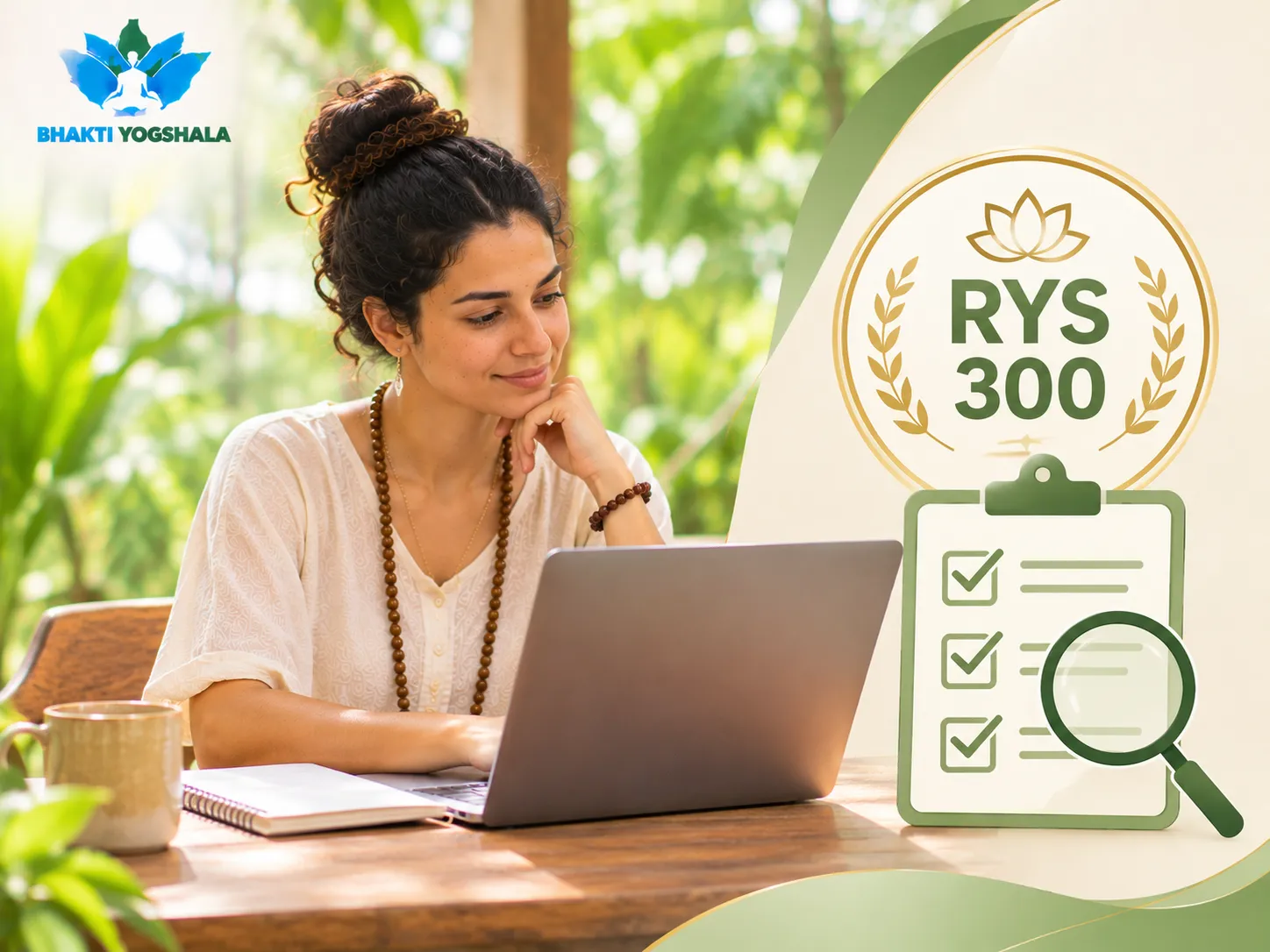
RYS 300 is a Yoga Alliance registration designation for schools offering an advanced 300-hour yoga teacher training programme. Before paying a deposit, check the school’s registration in the official directory, confirm that its 300-hour programme is covered by that designation, review the curriculum and verify the lead trainer’s credentials.
These checks are particularly important if you intend to use the training as part of your future RYT 500 registration pathway.
RYS stands for Registered Yoga School. RYS 300 is a Yoga Alliance school designation for an advanced 300-hour yoga teacher training programme.
The purpose of this training is to build on the foundational knowledge generally introduced at the 200-hour level. It should help trainees develop a deeper understanding of yoga practice, teaching methodology, anatomy, philosophy and practical instruction.
An important distinction: RYS 300 belongs to the school, not the individual student.
A student completes the school’s qualifying training and receives the relevant course-completion documentation. Individual teacher registration is a separate process.
Yoga Alliance describes an RYS 300 programme as advanced training that develops more detailed and refined knowledge of yoga practice and teaching beyond what is generally expected at the RYT 200 level.
The terms RYS 300 and RYT 500 are sometimes used together in course advertisements. They refer to different credentials.
Term | What it means |
RYS 200 | Registered Yoga School designation for a foundational 200-hour programme |
RYS 300 | Registered Yoga School designation for an advanced 300-hour programme |
RYS 500 | Registered Yoga School designation for a 500-hour programme |
RYT 200 | Individual Registered Yoga Teacher credential associated with qualifying 200-hour training |
RYT 500 | Individual Registered Yoga Teacher credential associated with qualifying 500-hour training and teaching requirements |
E-RYT 500 | Experienced Registered Yoga Teacher credential with additional experience requirements |
Completing a 300-hour course does not automatically make someone an RYT 500.
Under Yoga Alliance’s published RYT 500 pathway, a teacher can complete a qualifying 500-hour programme through an RYS 500, or combine a qualifying 200-hour programme with an additional qualifying 300-hour programme at an RYS 300. At least 100 teaching hours are also required after completing the qualifying RYS 200 or RYS 500 training.
This means the school, course and individual registration requirements all matter. Check the current requirements directly with Yoga Alliance before making decisions based on a promised credential.
Do not rely only on a school’s website, promotional poster or social media certification logo. Verify the registration independently.
Visit the Yoga Alliance Registered Yoga School directory.
The directory allows users to search for schools and filter by designation, including RYS 200, RYS 300 and RYS 500.
Enter the school’s name in the school search field.
Check the spelling and compare the listing with the name displayed on the school’s official website.
A similar name is not enough. Make sure the listing belongs to the organisation with which you intend to enrol.
Look specifically for the RYS 300 designation.
A school having an RYS 200 designation does not automatically establish that its separate 300-hour programme is registered as an RYS 300 programme.
If you cannot find the school or the designation, contact Yoga Alliance or request clarification from the school before making a payment.
Ask the school to confirm that the 300-hour programme you are considering is the programme associated with its RYS 300 registration.
Request the relevant registration details and written confirmation.
This is especially important if the school operates multiple locations, offers online and residential courses, or advertises different training formats.
Save the registration details, course information and communication received from the school.
These records can help you resolve questions about the programme, its completion requirements and the certificate you should receive.
A course should be evaluated by its actual curriculum, not just the number of hours in its title.
Yoga Alliance’s published RYS 300 standards identify five educational categories:
Educational category | What to look for |
Techniques, Training and Practice | Advanced asana, pranayama, meditation and traditional yoga techniques |
Teaching Methodology | Communication, demonstration, observation, teaching approaches and working with different students |
Anatomy and Physiology | Understanding the body and applying anatomical knowledge to yoga practice |
Yoga Philosophy, Lifestyle and Ethics | Deeper study of traditional texts, yogic principles and teacher responsibilities |
Practicum | Practice teaching, observation, assistance and feedback |
The standards specify category-hour requirements and distinguish between contact, non-contact and elective hours. Ask the school for its detailed current syllabus and hour breakdown rather than assuming that every programme advertised as 300 hours follows the same structure.
Check whether the programme develops your existing knowledge of asana, pranayama, meditation and other traditional techniques.
Ask how the school balances guided practice with analytical learning about how to practise and teach the techniques.
Advanced teaching methodology should go beyond simply demonstrating poses.
Look for learning related to communication, group dynamics, teaching styles, observation, assisting, correcting and understanding the needs of different students.
Check whether the course explains how anatomy relates to yoga practice.
Ask how the subject covers movement, bodily systems, alignment, healthy movement patterns and relevant contraindications.
Look for deeper study of traditional yoga philosophy and texts such as the Yoga Sutras, Hatha Yoga Pradipika or Bhagavad Gita.
The programme should also explain ethical responsibilities in the teacher-student relationship and the role of yoga in everyday life.
Practicum is a particularly important part of advanced teacher education.
Check whether students have opportunities to practise teaching, observe other teachers, assist in classes and receive feedback.
A course that only provides lectures and personal practice may not give you the same opportunities to demonstrate teaching skills.
The lead trainer is an important part of an RYS 300 programme.
Yoga Alliance’s published requirements state that an RYS 300 must have at least one lead trainer with the E-RYT 500 designation. The standards also specify that lead trainers must be active Yoga Alliance members in good standing.
Before enrolling, ask:
You can also review the school’s published instructor profiles. However, a teacher’s general experience or a biography on a website is not a substitute for checking a credential that is specifically required by Yoga Alliance.
If the school cannot clearly identify its lead trainer, request the information before paying.
A 300-hour programme should explain how students complete the training and demonstrate their learning.
Ask the school to distinguish between:
Contact hours: Training delivered with an instructor or faculty member present.
Non-contact hours: Eligible learning activities completed without an instructor physically present, where allowed under the applicable standards.
Elective hours: Additional relevant study allocated within the programme’s permitted structure.
Do not assume that homework, personal practice, reading or every activity outside the classroom automatically counts towards the required training hours.
Also ask about the assessment process.
A useful programme should explain:
Yoga Alliance’s RYS 300 standards include practicum activities such as practice teaching, receiving and giving feedback, observing other teachers and assisting students during instruction.
Before enrolling, ask to see a sample of the course-completion certificate or request a written explanation of its contents.
For Yoga Alliance teacher registration, certificate documentation is important.
Check that the certificate will clearly identify:
Ask whether the school issues a course participation certificate, a graduation certificate or separate documents for different purposes.
Do not assume that receiving a certificate automatically completes your individual Yoga Alliance registration. You may still need to apply separately and satisfy the applicable teacher registration requirements.
Registration is important, but it is not the only consideration when choosing an advanced yoga teacher training.
Before making a payment, request written information about the following:
Area | What to confirm |
Eligibility | Whether a 200-hour qualification is required and what documents are accepted |
Course dates | Exact starting and completion dates |
Curriculum | Current subject-wise syllabus and hour allocation |
Trainers | Lead trainer identity and relevant credentials |
Teaching practice | Practicum and assessment arrangements |
Fees | Tuition, accommodation, meals and additional charges |
Accommodation | Room type, facilities and sharing arrangements |
Cancellation | Deposit, cancellation and refund conditions |
Certificate | Certificate type and expected issue date |
Registration | Current RYS 300 status and programme coverage |
If you are travelling to India, also confirm the venue, arrival arrangements, transport and accommodation before booking flights.
Avoid making a decision based only on an advertised discount, a certification badge or a statement that the course is internationally recognised.
Bhakti Yogshala publishes a 300-hour yoga teacher training programme based in Agonda, South Goa.
Its course page describes a 28-day intermediate-to-advanced programme and lists subjects including asana practice, pranayama, meditation, yoga philosophy, anatomy, alignment and adjustment methodology, teaching practice and assessment.
The school also publishes a daily training schedule and information about accommodation and meals.
If you are considering Bhakti Yogshala for a 300-hour yoga teacher training in Goa, review its current course information and ask the school to confirm:
The published course page describes the programme as Yoga Alliance certified. Prospective students should independently verify the active school designation in the official Yoga Alliance directory rather than relying solely on the website statement.
Explore the 300-hour yoga teacher training in Goa and contact Bhakti Yogshala for current programme and registration information.
Bhakti Yogshala
Main Agonda Beach Road, Canacona, Agonda, Goa 403702
Phone: +91 9897355995
Email: bhaktiyogshala@gmail.com
RYS 300 stands for Registered Yoga School 300. It is a Yoga Alliance designation for a school offering an advanced 300-hour yoga teacher training programme.
No. RYS 300 is a school designation, while RYT 500 is an individual teacher credential. A qualifying 200-hour and 300-hour training pathway can form the training component for RYT 500, subject to additional requirements.
Visit the official Yoga Alliance directory, search for the exact school name and check whether it has an active RYS 300 designation. Confirm that the specific course you want to attend is covered by that registration.
No. A programme may advertise itself as a 300-hour training without having an active Yoga Alliance RYS 300 designation. Always verify the school’s registration independently.
Yoga Alliance’s RYS 300 standards identify five educational categories: Techniques, Training and Practice; Teaching Methodology; Anatomy and Physiology; Yoga Philosophy, Lifestyle and Ethics; and Practicum.
Yoga Alliance’s published RYS 300 requirements specify that at least one lead trainer must hold the E-RYT 500 designation. Ask the school for the current lead trainer’s registration details.
No. You must meet Yoga Alliance’s individual teacher registration requirements, including the qualifying training pathway and required teaching hours.
Check the school’s registration, programme coverage, syllabus, trainer credentials, assessment process, certificate details, total fee, accommodation and cancellation policy.
Yes. Yoga Alliance’s published RYT 500 pathway allows the qualifying 200-hour and 300-hour programmes to be completed at different schools, provided each school holds the relevant active RYS designation.
Bhakti Yogshala lists a 300-hour yoga teacher training programme in Agonda, Goa. Contact the school to confirm its current RYS 300 registration, course syllabus, trainer information, dates and fees.
Bhakti means “devotion, worship, attachment” in Sanskrit. In our Yogshala you will find teachers who are extremely devoted to their yoga practice and will fully support and guide you in yours. Are you ready to break your inner boundaries and let go of your self-limiting thoughts?

Copyright © 2024 bhakti Yogshala, All rights reserved.