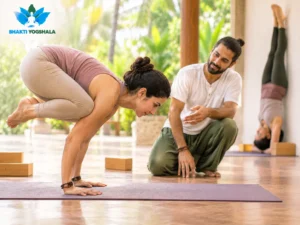
Moving into a Handstand, Headstand or Crow Pose can take months of consistent practice. These postures require more than flexibility. They involve strength, balance, body awareness and an understanding of how to manage weight through the hands, arms and shoulders.
For yoga practitioners and teachers, the better approach is to build the movements gradually. Before attempting a full inversion or arm balance, it helps to understand the physical demands of the posture, develop the necessary control and practise simpler variations.
This is particularly relevant for experienced practitioners considering a 300 hour yoga teacher training in Goa, where advanced asana practice, alignment and teaching methodology can form part of their continued education.
Understanding Yoga Inversions and Arm Balances
Yoga inversions and arm balances are advanced asana categories, but they involve different movement demands.
An inversion generally places the head below the heart. Examples include:
- Sirsasana: Headstand
- Adho Mukha Vrksasana: Handstand
- Pincha Mayurasana: Forearm Stand
- Sarvangasana: Shoulderstand
Arm balances involve supporting some or all of the body’s weight through the hands and arms. Examples include:
- Bakasana: Crow Pose
- Kakasana: Crane Pose
- Lolasana: Pendant Pose
- Astavakrasana: Eight-Angle Pose
Some postures belong to both categories. The important distinction is the way the practitioner manages balance, support and body positioning.
A student does not need to master every advanced posture. The purpose of learning progressions is to develop the skills needed for a particular movement without rushing towards its final expression.
What Should You Develop Before Attempting Advanced Poses?
Before introducing an advanced asana, teachers should consider the movement requirements of that posture. Four areas deserve particular attention.
1. Shoulder strength and control
The shoulders and shoulder girdle play an important role in many inversions and arm balances.
Practitioners need to develop the ability to control the shoulder blades and maintain an appropriate position while the arms support weight.
Preparatory practices may include:
- Plank Pose
- Dolphin Pose
- Downward-Facing Dog
- Controlled scapular movements
- Supported shoulder-strengthening exercises
The purpose is not to hold a posture for as long as possible. It is to practise controlled movement and understand how the shoulders respond when the arms bear weight.
2. Wrist preparation
In many arm balances and Handstand variations, the wrists support a considerable amount of body weight.
A gradual approach can include:
- Gentle wrist circles
- Finger and palm activation
- Tabletop weight shifts
- Controlled forward and backward movements over the hands
- Short, manageable plank variations
Students should increase weight-bearing gradually. Anyone experiencing wrist pain should stop the movement rather than attempting to push through it.
3. Core strength and body awareness
Core control helps practitioners organise the trunk and manage changes in body position.
In an inversion, the ability to coordinate the pelvis, ribs and legs can influence balance. During an arm balance, controlled weight transfer helps the practitioner move without relying entirely on momentum.
Useful preparatory practices include:
- Plank variations
- Boat Pose
- Dead Bug variations
- Hollow-body holds
- Controlled leg lifts
These exercises are examples of general conditioning, not a requirement that every student must complete before attempting a particular pose.
4. Balance and coordination
Inversions and arm balances involve constant adjustments. Practitioners need to understand where their weight is moving and how to respond.
Balance work can begin with familiar standing postures before progressing towards supported inversions or arm balances.
Teachers can also help students become more aware of breathing, hand placement and controlled transitions.
How to Progress Towards Yoga Inversions
Inversions should be approached according to the demands of each posture. A student who can hold Downward-Facing Dog comfortably is not automatically ready for a Headstand or Handstand.
A progression should give the practitioner time to understand the movement before adding more complexity.
1. Prepare for Handstand (Adho Mukha Vrksasana)
Handstand requires upper-body strength, shoulder control, balance and coordination.
A teaching progression can include:
Stage 1: Downward-Facing Dog
Practise pressing through the hands and developing awareness of shoulder positioning. Maintain a comfortable position without forcing the shoulders.
Stage 2: Dolphin Pose
Move onto the forearms and practise supporting the upper body. This introduces a different weight-bearing position and helps develop shoulder endurance.
Stage 3: Standing split variations
Practise lifting one leg while keeping the hands grounded. This allows students to explore weight distribution and hip movement without attempting a full inversion.
Stage 4: Wall-supported Handstand preparation
With appropriate supervision and sufficient preparation, students can explore supported variations at a wall. The wall provides an external reference point while they develop awareness of alignment and balance.
Stage 5: Further Handstand practice
Progression towards unsupported balance should depend on demonstrated control, suitable preparation and the ability to enter and exit the position safely.
A student should not be encouraged to kick up repeatedly when they cannot control the movement or exit.
2. Prepare for Forearm Stand (Pincha Mayurasana)
Forearm Stand involves supporting the body through the forearms while maintaining control through the shoulders and trunk.
Dolphin Pose is a useful preparatory movement because it introduces forearm weight-bearing and shoulder engagement.
A teacher may structure practice around:
- Forearm placement and spacing.
- Shoulder control in Dolphin Pose.
- Controlled leg lifts.
- Wall-supported preparation where appropriate.
- Understanding how to exit the position.
Students should learn the foundation of the posture before attempting to lift both legs.
3. Understand Headstand (Sirsasana)
Headstand requires particular care because of the involvement of the cervical spine.
Teachers should understand the loading demands of the posture and should not assume that every student is suitable for it.
Before considering Headstand practice, evaluate the student’s experience, preparation, ability to follow instructions and relevant health concerns. Supported alternatives may be more appropriate for some students.
Dolphin Pose and other forearm-supported movements can help students explore some of the upper-body demands without placing the same loading through the head and neck.
Never force a student into Headstand or encourage them to bear uncontrolled weight through the cervical spine.
How to Build Towards Arm Balances
Arm balances can appear intimidating because the practitioner must move their weight over the hands while maintaining control of the body.
Breaking the movement into smaller tasks makes the learning process easier to understand.
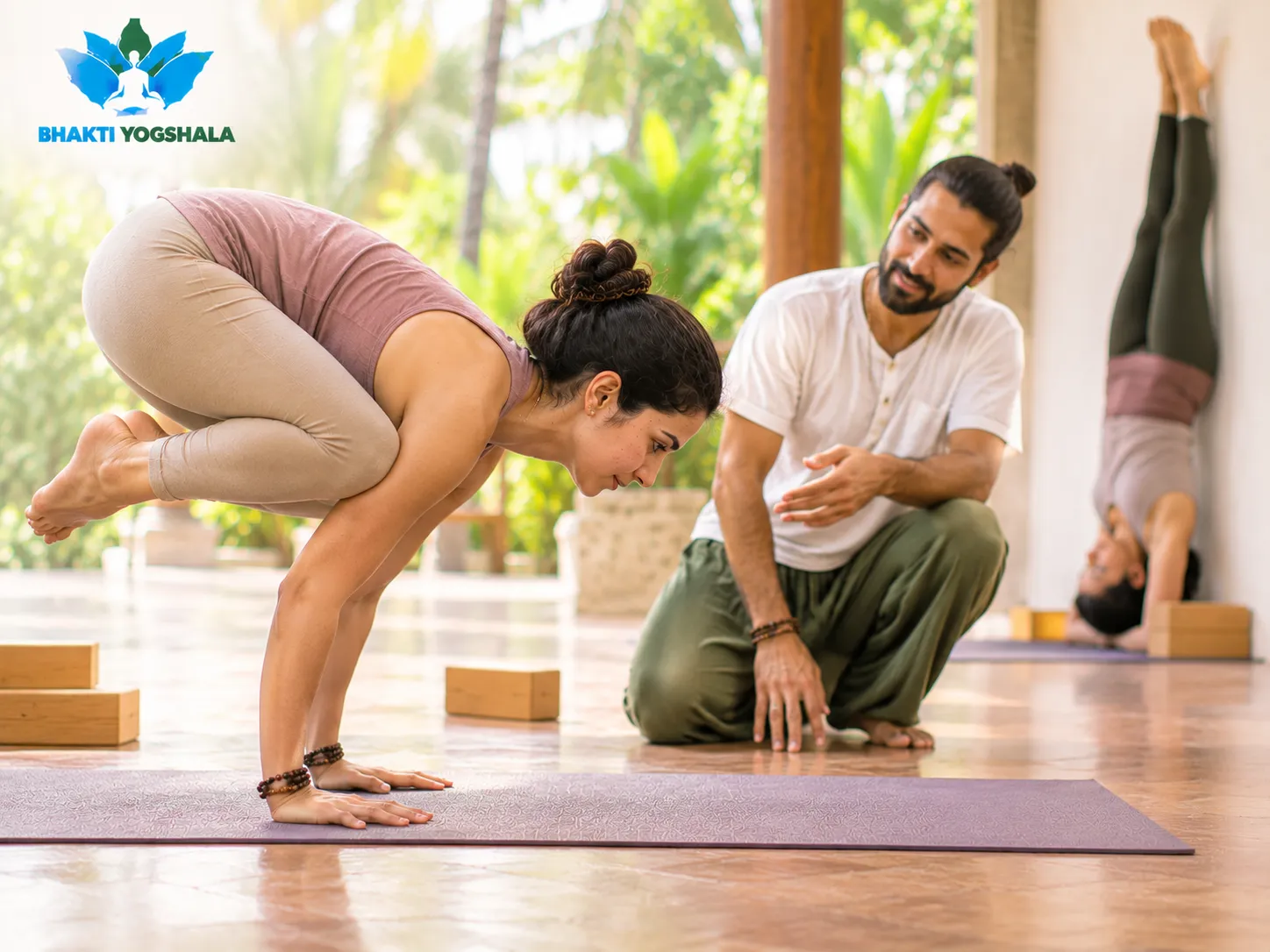
1. Crow Pose (Bakasana)
Crow Pose is often introduced as an early arm balance because it provides an opportunity to practise weight transfer and balance through the hands.
A gradual teaching approach may include:
Stage 1: Establish hand placement
Practise placing the palms firmly on the mat. Spread the fingers and become aware of how pressure moves through the hands.
Stage 2: Explore a forward weight shift
From a supported squat, place the hands on the floor and gradually shift the shoulders forward. Students can explore the movement without lifting their feet.
Stage 3: Practise one-foot lifts
Lift one foot at a time while maintaining control. This allows students to understand the balance point without immediately attempting the full posture.
Stage 4: Explore the complete variation
Students who demonstrate suitable control can explore lifting both feet, provided they can enter and exit the posture without force.
A teacher should provide a suitable space and supervision. Students should not be encouraged to place their knees in positions that cause discomfort.
2. Lolasana (Pendant Pose)
Lolasana involves lifting the body from the floor using the hands while maintaining a compact position.
Preparatory practice can focus on:
- Hand placement.
- Shoulder positioning.
- Trunk control.
- Hip and knee positioning.
- Gradual weight transfer through the hands.
Blocks can be used to change the starting position and help students explore the movement. They should not be used to force a lift beyond the student’s current control.
3. Developing Towards More Complex Arm Balances
Postures such as Astavakrasana involve additional coordination, strength and body positioning.
A student should first understand the basic weight-bearing demands of simpler arm balances. Teachers can then introduce the movement components of more complex postures through separate preparatory exercises.
The ability to perform Crow Pose does not automatically mean a student is ready for every other arm balance.
How Yoga Teachers Can Introduce Advanced Poses
Teaching an advanced posture involves more than demonstrating the final position. Teachers need to decide whether the posture is appropriate for the class and how to introduce it in manageable stages.
Assess the preparation first
Consider the students’ experience, movement control, comfort with weight-bearing and ability to follow instructions.
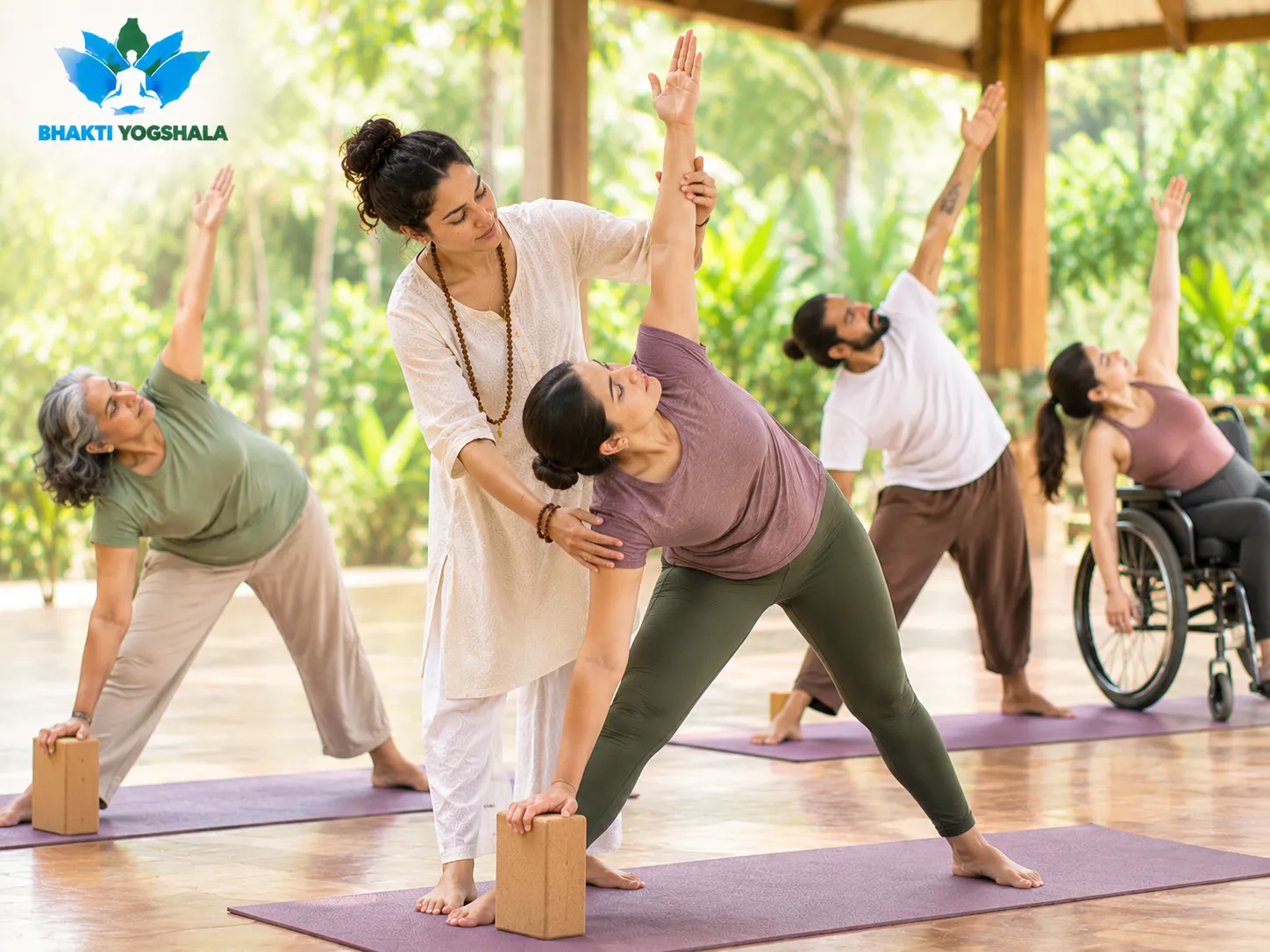
A mixed-level class may include students with very different physical capacities. The teacher should not assume that everyone is ready for the same progression.
Explain the purpose of the preparation
Students are more likely to understand a progression when they know what each preparatory movement is developing.
For example, Dolphin Pose can introduce forearm support and shoulder control before a teacher introduces more demanding inversion preparation.
Give clear instructions
When students are upside down or supporting weight through their hands, complicated verbal explanations can be difficult to follow.
Use short instructions that communicate one movement at a time. Demonstrate the entry and exit before asking students to practise.
Teach the exit, not just the entry
Students should understand how to come out of a posture with control. A class should not focus exclusively on getting into an advanced pose.
Teachers should provide enough space, appropriate support and a clear alternative for students who do not want to attempt the full posture.
Respect individual limitations
Students may have different movement capacities, previous injuries, health considerations and levels of experience.
Teachers should offer alternatives without pressuring students to perform the most advanced version.
Common Mistakes During Inversion and Arm Balance Practice
Rushing towards the final posture
Attempting a full Handstand or arm balance before understanding its movement requirements can lead to poor control.
Spend time developing the relevant preparation and learning how to exit the posture.
Using momentum instead of control
Repeatedly kicking into an inversion does not necessarily improve balance. Practitioners should understand the movement and use appropriate support rather than relying on uncontrolled momentum.
Ignoring wrist or shoulder discomfort
Discomfort should not be treated as something that must be overcome to achieve an advanced pose.
If a movement causes pain, stop and reassess. Persistent or concerning symptoms should be discussed with an appropriately qualified healthcare professional.
Overlooking the importance of shoulder positioning
The position and control of the shoulder girdle influence how the upper body manages weight-bearing movements.
Teachers should explain the relevant actions and observe how students respond rather than relying on a single visual cue.
Comparing progress with other students
A student who reaches Handstand quickly may have a different movement history from someone who needs more preparation.
Progress should be based on individual control and readiness, not comparison.
How to Make Advanced Asana Practice More Appropriate for Different Students
A useful yoga class gives students options. The full expression of an advanced posture should not be the only meaningful way to participate.
Student concern | Teaching consideration |
Difficulty bearing weight through the wrists | Offer a non-weight-bearing alternative or a different preparation |
Limited shoulder control | Return to an appropriate supported shoulder-strengthening movement |
Difficulty maintaining balance | Use a suitable support and simplify the movement |
Fear of going upside down | Allow the student to practise preparatory movements without inversion |
Discomfort during an advanced posture | Stop the movement and offer an alternative |
Limited experience with arm balances | Teach weight transfer and hand placement separately |
Teachers should also be aware of their professional boundaries. Yoga instruction is not a substitute for medical assessment, physiotherapy or rehabilitation. A student with a medical condition, recent injury, persistent pain or uncertainty about inversion practice should seek advice from an appropriately qualified healthcare professional.
Developing Advanced Asana Skills Through Further Training
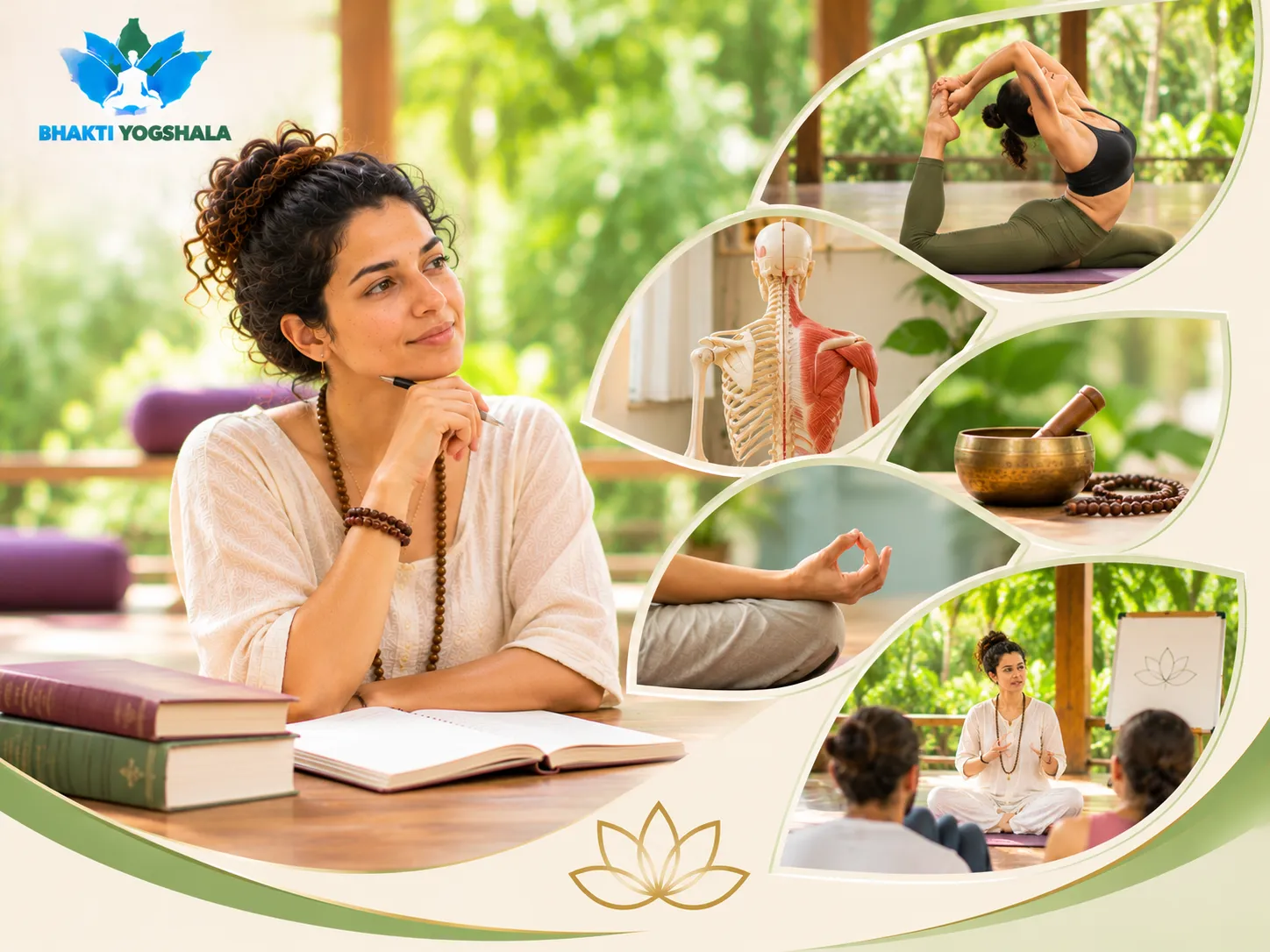
Experienced yoga teachers may want to develop a deeper understanding of advanced postures, anatomy, alignment and teaching methodology.
A 300-hour advanced yoga teacher training programme can provide a structured opportunity to continue studying these areas after foundational training.
Yoga Alliance’s RYS 300 standards identify five educational categories, including Techniques, Training and Practice; Teaching Methodology; Anatomy and Physiology; Yoga Philosophy, Lifestyle and Ethics for Yoga Teachers; and Practicum.
These categories are relevant when evaluating an advanced programme because learning an asana and teaching it effectively are different skills.
When comparing schools, ask:
- Does the programme include advanced asana practice?
- How are alignment and adjustments taught?
- Is anatomy connected to practical yoga movements?
- Are students given opportunities to practise teaching?
- How does the school assess student understanding?
- What are the eligibility requirements?
These questions help prospective students understand what they will actually study instead of choosing a programme based only on its advertised duration.
Explore 300-Hour Yoga Teacher Training in Goa
Bhakti Yogshala offers a 300-hour yoga teacher training programme in Agonda, Goa, for practitioners with foundational yoga knowledge who want to continue their studies.
The published programme information describes a 28-day intermediate-to-advanced training course. Its curriculum includes asana practice, yoga anatomy, alignment, adjustments, teaching methodology, meditation and pranayama.
The school also describes practical teaching activities involving demonstration, alignment and instruction. Prospective students should review the current curriculum and confirm how advanced inversions and arm balances are covered before enrolling.
If you are comparing options for a 300 hour yoga teacher training in Goa, explore the course details and contact Bhakti Yogshala about eligibility, upcoming dates, fees and availability.
Explore the course: 300-Hour Yoga Teacher Training in Goa
Location: Main, Agonda Beach Road, Canacona, Agonda, Goa 403702.
Contact: +91 9897355995
Email: bhaktiyogshala@gmail.com
FAQS
1. How should beginners start learning yoga inversions?
Start by developing familiarity with basic asanas, shoulder control, balance and appropriate weight-bearing movements. Learn preparatory variations before attempting a complete inversion.
2. What should I practise before attempting Handstand?
Downward-Facing Dog, Dolphin Pose, plank variations and controlled standing split variations can help practitioners explore some of the movement requirements of Handstand.
3. Is Crow Pose easier than Handstand?
Crow Pose is often introduced as an early arm balance because it involves a different balance position and movement demand from Handstand. However, difficulty varies between individuals.
4. How long does it take to learn a yoga inversion?
There is no fixed timeline. Progress depends on experience, strength, coordination, movement control, practice consistency and individual circumstances.
5. Can everyone practise Headstand?
No. Headstand may not be appropriate for every person. Individual health considerations, experience and cervical spine loading need to be considered. Seek qualified guidance before attempting it if you have relevant health concerns.
6. What muscles are involved in arm balances?
Arm balances involve coordinated activity across the shoulders, arms, trunk and other parts of the body. The exact muscular demands depend on the posture.
7. Why are wrist exercises important for arm balances?
The wrists and hands support body weight in many arm balances. Gradual preparation helps practitioners become familiar with weight-bearing positions and movement control.
8. Should yoga teachers teach inversions to every student?
No. Teachers should consider the student’s experience, physical readiness, health concerns and comfort. Appropriate alternatives should always be available.
9. Does a 300-hour yoga teacher training include advanced asanas?
Advanced training programmes may include more detailed asana practice, teaching methodology and anatomy. The actual content depends on the school’s published curriculum. Prospective students should confirm specific posture coverage before enrolling.
10. Where can I study advanced yoga in Goa?
Bhakti Yogshala offers a published 300-hour yoga teacher training programme in Agonda, Goa. Visit its course page to review the programme and confirm current details.