You do not need to be extremely flexible, athletic or capable of advanced yoga poses to join a Yoga Teacher Training (YTT) course.
However, you should be prepared for regular physical practice and an intensive daily schedule.
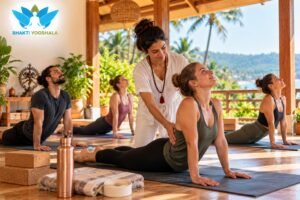
Bhakti Yogshala’s own FAQ says participants should feel physically fit and prepared for basic asana practice. At the same time, the school states that students do not need to be flexible enough to perform every posture and that modifications are taught for different levels of asana practice.
So the realistic answer is:
You need enough physical readiness to participate consistently, but you do not need to arrive already looking or moving like an experienced yoga teacher.
How Fit Do You Actually Need to Be for YTT?
Yoga teacher training is different from attending one yoga class a few times a week.
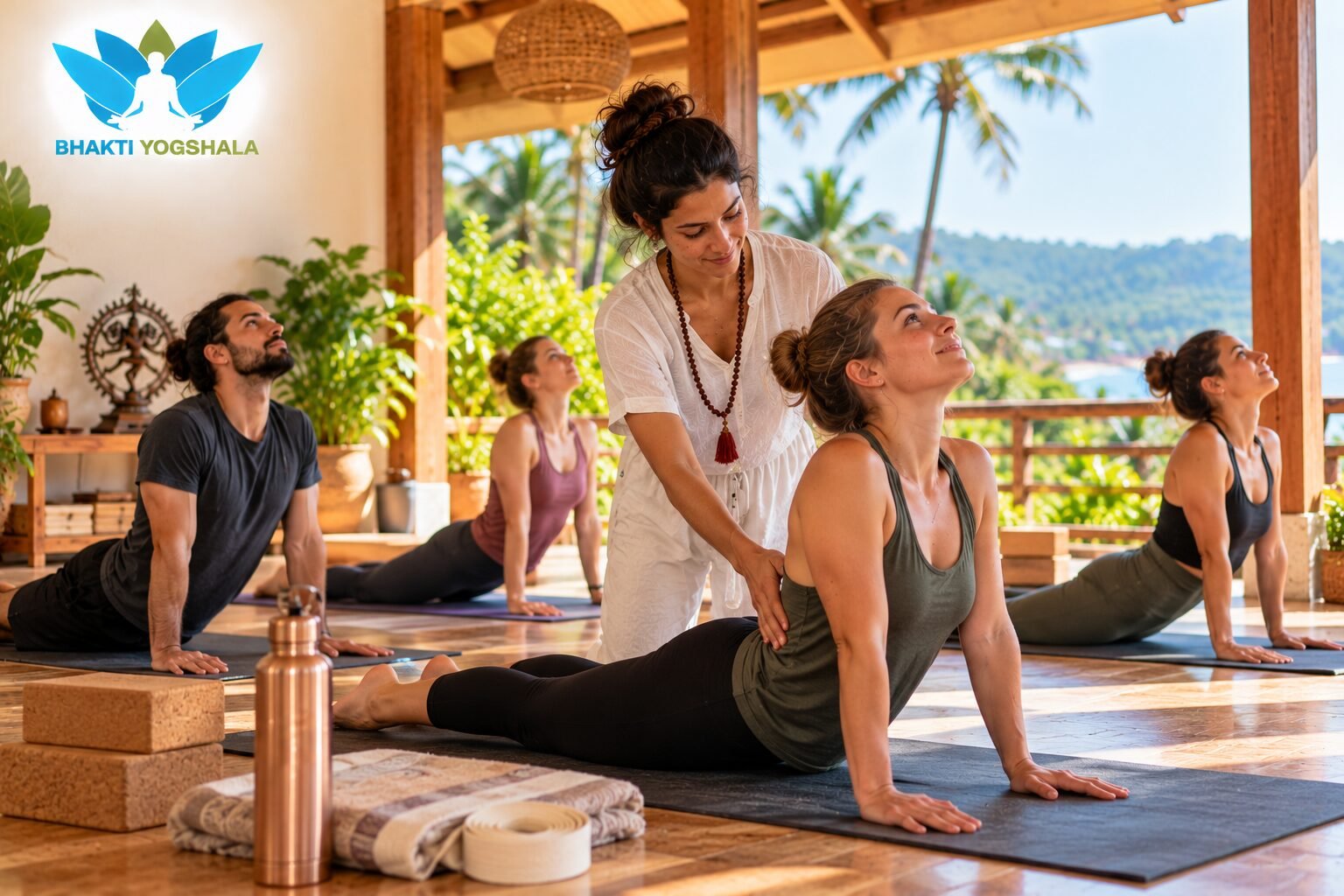
An intensive residential course can involve morning practice, additional asana sessions, pranayama, meditation, anatomy or philosophy classes and practical teaching work throughout the day.
For example, Bhakti Yogshala’s published 200-hour Goa schedule starts with self-practice in the morning and includes two asana sessions, anatomy, philosophy, meditation and other training activities across the day.
That means physical readiness matters—but it is only one part of being prepared.
You also need the ability to:
- Participate consistently in scheduled practices
- Follow instructions
- Move through basic yoga practices safely
- Manage an intensive routine
- Take appropriate rest
- Communicate when something does not feel right
- Stay patient with your own progress
You are not expected to perform every advanced posture on your first day.
Do You Need to Be Flexible for Yoga Teacher Training?
No. You do not need to be highly flexible before starting YTT.
This is one of the most common concerns among prospective students.
Yoga practice includes people with very different body structures, movement histories and levels of flexibility. Being unable to touch your toes or perform advanced poses does not automatically mean that teacher training is unsuitable for you.
Bhakti Yogshala specifically states that students who are not flexible can still join and that modifications are taught for different levels of asana practice.
A better goal than trying to become extremely flexible before your course is to develop:
- Comfortable basic movement
- Awareness of your body
- Patience
- Consistency
- Willingness to modify practices when needed
Flexibility can develop as part of continued practice, but it should not be treated as a test you must pass before joining.
Do You Need Previous Yoga Experience?
Previous experience can be useful, but Bhakti Yogshala states that previous experience is not necessary for its teacher training programs and that courses can start from the basics.
Its 100-hour Goa program, for example, identifies beginner and intermediate practitioners among its skill levels.
Its 200-hour Goa program also states that people can join to deepen their personal practice or become certified teachers and that the course starts from the basics.
However, “beginner-friendly” does not mean “physically effortless.”
An intensive YTT requires regular participation, so someone who has never exercised or practised yoga regularly may benefit from gradually building a routine before the course begins.
How Physically Demanding Is Yoga Teacher Training?
The physical demands depend on the course, schedule, teaching style and your own starting point.
A residential YTT can feel demanding because the day combines physical practice with theory and practical learning.
At Bhakti Yogshala’s 200-hour Goa program, a published daily schedule includes:
- Morning self-practice
- Pranayama and meditation
- Asana practice
- Philosophy and theory
- Asana clinic and practicum
- Anatomy
- A second asana session
- Evening meditation, kirtan or group discussion
This is a substantial learning day rather than a conventional fitness class.
The challenge may therefore come from the combination of physical practice and a full structured schedule, rather than from performing advanced poses continuously.
What Physical Abilities Are Helpful?
You do not need exceptional athletic ability, but some basic physical qualities can make an intensive course easier to manage.
Flexibility
Basic mobility can help you move comfortably through common yoga positions.
You do not need to be able to perform advanced flexibility poses.
Mobility
Being reasonably comfortable moving between standing, seated and floor-based positions can be useful during repeated practice.
Strength
Yoga includes weight-bearing and stabilising movements. Basic strength can help you participate more comfortably, although the required level varies between practices and individuals.
Stamina
A teacher training day can be much longer than a normal yoga class.
Being accustomed to regular physical activity can make the transition easier.
Body Awareness
This may be more important than trying to achieve impressive poses.
You should learn to notice when a movement feels appropriate, when you need to modify it and when you need to stop rather than pushing through discomfort.
What If You Are a Beginner or Out of Practice?
You do not necessarily need to postpone YTT until you feel “fit enough.”
Instead, consider what your current routine looks like.
If you already practise yoga or exercise regularly, you may simply need to become accustomed to the longer daily schedule.
If you have been inactive for a long period, starting gradually before an intensive residential course may be sensible.
You can begin with a manageable routine that includes:
- Basic yoga postures
- Gentle mobility work
- Walking or another comfortable form of physical activity
- Breathing practice
- Short meditation sessions
- Consistent sleep and recovery
The objective is not to train yourself to perform advanced poses before arrival.
The objective is to make regular movement and practice feel familiar.
How to Prepare Your Body Before YTT
- Build Consistency Before Intensity
If you currently practise once a week, suddenly doing several hours of activity every day can feel like a major change.
Gradually increasing consistency can help your body adjust.
- Practise Basic Asanas
Spend time becoming comfortable with foundational movements rather than chasing difficult poses.
You can focus on learning how your body responds to common standing, seated and floor-based positions.
- Work on Mobility
Gentle mobility practice can help you become more familiar with your range of movement.
Avoid forcing your body into deeper positions simply because you think you need to become flexible quickly.
- Develop Breath Awareness
Pranayama is an important component of Bhakti Yogshala’s published YTT curriculum.
Becoming comfortable with mindful breathing before your course can make the transition into structured practice easier.
- Prepare for Early Mornings
The physical challenge is not always the yoga itself.
An intensive residential schedule may begin early and continue into the evening.
Getting used to a consistent sleep and wake schedule before the course can help.
- Leave Room for Recovery
More practice is not always better.
Your preparation should include adequate rest so that you arrive ready to learn rather than exhausted from trying to “get fit” as quickly as possible.
What to Expect During the First Few Days
The first few days of YTT can involve an adjustment period.
Bhakti Yogshala’s own guide to the first week explains that early mornings and a full daily schedule can be challenging for students who are not accustomed to such a structured routine. It also notes that unfamiliar asana practice can result in temporary soreness during the adjustment period.
This is why it is useful to arrive with realistic expectations.
You may feel tired.
You may discover that some movements are more difficult than expected.
You may need modifications.
You may also find that your body adapts as you become familiar with the routine.
The goal should not be to compete with another student.
Your starting point is your own.
What If You Cannot Do Certain Yoga Poses?
Not being able to perform a particular posture does not automatically mean you cannot participate in teacher training.
Yoga practices can often be modified according to the student’s current ability and the instruction provided by the teacher.
Bhakti Yogshala specifically states that modifications are taught for different levels of asana practice.
This is especially important for beginners.
You should not force yourself into a posture simply because another student can perform it.
A useful teacher-training mindset is to learn how to understand your own practice rather than compare your body with someone else’s.
When Should You Get Professional Medical Advice?
Yoga teacher training can involve sustained physical activity.
If you have a known medical condition, a significant injury, unexplained pain, major mobility limitations or another concern that could affect your ability to participate in physical activity, speak with an appropriately qualified healthcare professional before undertaking an intensive course.
Do not assume that a yoga modification can make every physical condition safe.
Your training school can explain its course schedule and expectations, but personal medical suitability is something that may require individual professional assessment.
During training, communicate with your instructor if a movement causes pain or you are unsure whether a practice is appropriate for you.
Choosing a Yoga Teacher Training That Matches Your Level
Physical readiness is only one factor when selecting a YTT.
Look at:
- Course duration
- Daily schedule
- Types of yoga included
- Amount of physical practice
- Teaching methodology
- Philosophy and theory
- Anatomy
- Meditation and pranayama
- Accommodation and food if residential
- Class size
- Location
- Your previous experience
- Your personal goals
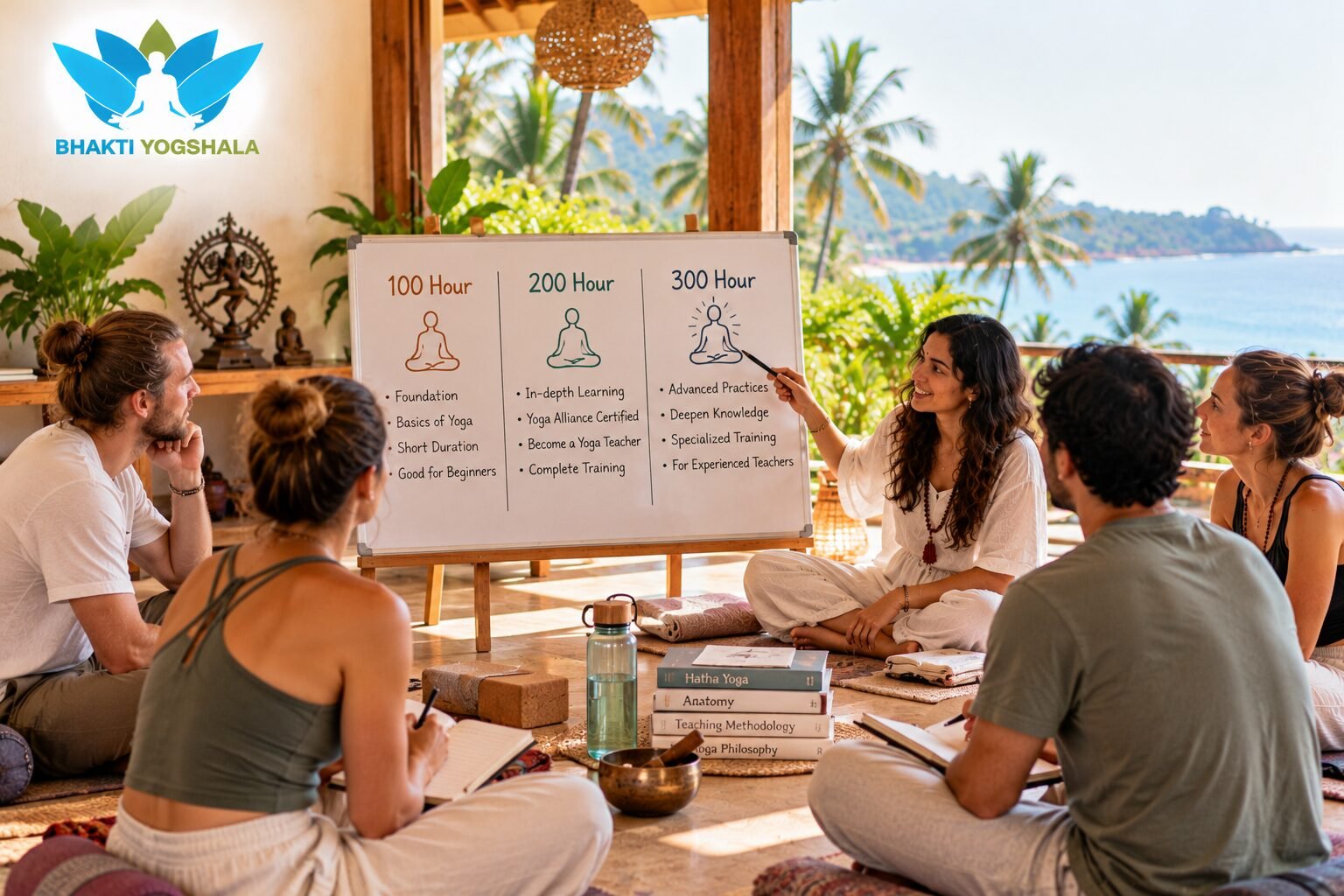
Bhakti Yogshala offers 100-, 200- and 300-hour teacher training formats, along with online training. Its main site describes the 200-hour program as foundational and the 300-hour program as advanced training for practitioners building on prior training.
If you are new to intensive yoga study, compare the course requirements rather than choosing solely based on the number of hours.
So, How Physically Fit Do You Need to Be?
You do not need to be an athlete.
You do not need to be able to perform advanced yoga poses.
You do not need exceptional flexibility.
You do need to be prepared for regular practice, a structured schedule and an active learning environment.
A useful starting checklist is:
Can I participate in basic physical activity?
Can I practise basic yoga movements without forcing myself?
Am I willing to practise consistently?
Can I manage an intensive daily schedule?
Am I prepared to listen to my body and use modifications when necessary?
If the answer is yes, you may already have the foundation you need to investigate a suitable YTT program.
The goal of teacher training is not to arrive as a finished yoga practitioner.
It is to learn.
Explore Yoga Teacher Training at Bhakti Yogshala
Bhakti Yogshala offers multi-style Yoga Teacher Training programs in Goa, Rishikesh and online formats.
If you are concerned that you are not flexible or physically advanced enough, review the specific course curriculum and schedule before enrolling. You can also contact Bhakti Yogshala to clarify the physical expectations of the program you are considering.
Explore the available Yoga Teacher Training programs and choose a course that matches your current level, goals and commitment.
FAQS
1. Do I need to be physically fit for yoga teacher training?
You should be prepared for regular yoga practice and an intensive schedule, but you do not need to be an athlete. Bhakti Yogshala recommends that participants be physically fit and prepared for basic asana practice.
2. Do I need to be flexible to join yoga teacher training?
No. Bhakti Yogshala specifically states that students who are not flexible can still join and that modifications are taught for different levels.
3. Can beginners join yoga teacher training?
Bhakti Yogshala states that previous experience is not necessary and that its training starts from the basics.
4. Is yoga teacher training physically demanding?
It can be, particularly in an intensive residential format. Training may combine multiple physical practices with theory, anatomy, philosophy, meditation and teaching methodology throughout the day.
5. What should I practise before yoga teacher training?
Focus on consistency rather than advanced poses. Basic asanas, comfortable mobility work, regular physical activity, breath awareness and a consistent sleep schedule can help you prepare.
6. What if I cannot perform advanced yoga poses?
You do not necessarily need to perform advanced poses before joining. Bhakti Yogshala states that modifications are provided for different levels of asana practice.
7. Can I do YTT if I have not exercised recently?
You may be able to join depending on the program and your individual circumstances, but an intensive course can be physically demanding. If you have been inactive for a long period or have a health concern, consider discussing your readiness with an appropriate healthcare professional before enrolling.
8. Will I be sore during yoga teacher training?
Some students may experience temporary soreness when adapting to a new physical routine. Bhakti Yogshala’s first-week guide specifically notes that unfamiliar asana practice can cause soreness during the initial adjustment period.
9. Does Bhakti Yogshala offer beginner-friendly yoga teacher training?
Bhakti Yogshala states that its training can accommodate beginners and that prior experience is not necessary. Its 100-hour and 200-hour programs provide foundational learning in areas including asana, pranayama, meditation and yoga philosophy.