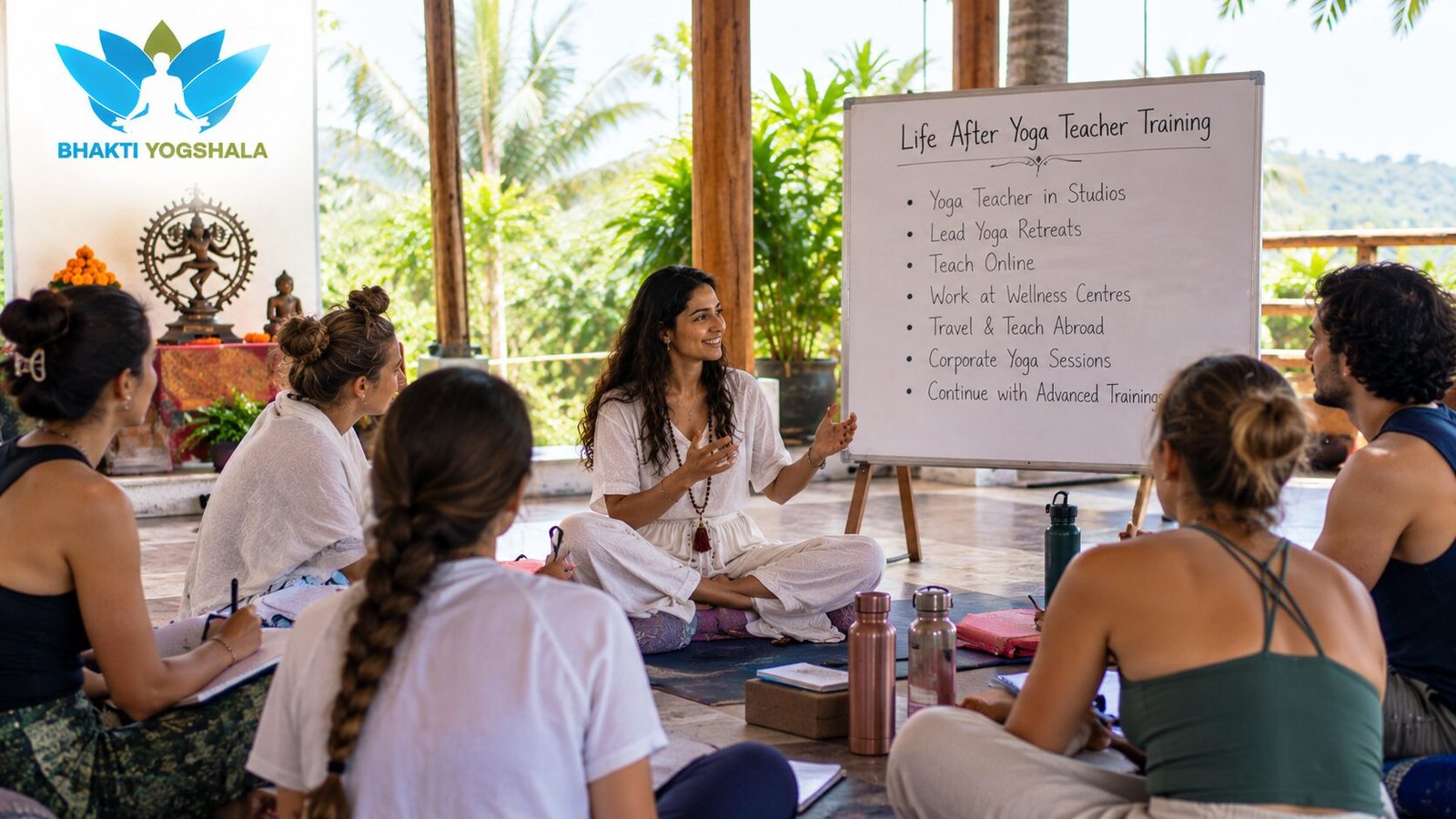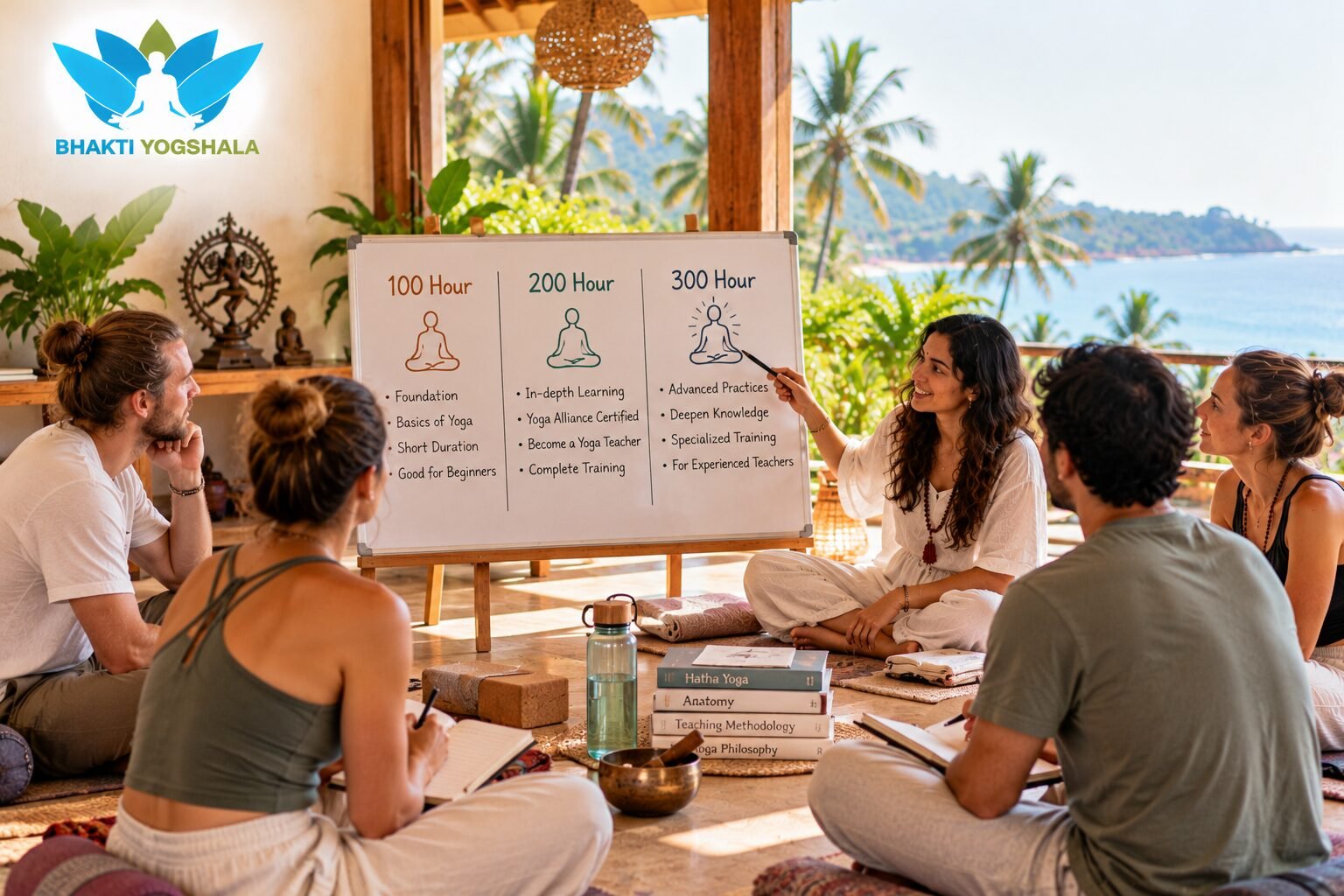
Want to become a certified yoga teacher while continuing your career?
For many working professionals, the main challenge is finding enough time for classes, self-practice, study, assignments and personal responsibilities. A full-time job can make a residential course difficult, while an online programme may require more self-discipline.
The right Yoga Teacher Training format depends on your work schedule, learning goals and how much time you can consistently give to training.
Bhakti Yogshala offers 100-hour, 200-hour and 300-hour Yoga Teacher Training programmes in Rishikesh and Goa, along with online training options. Its online 200-hour programme combines pre-recorded lessons, live teacher sessions, self-study and self-practice, allowing students to work through the programme around their schedules.
Can Working Professionals Do Yoga Teacher Training?
Yes. Working professionals can pursue Yoga Teacher Training, but the course format needs to fit their existing responsibilities.
A person working standard office hours may have different requirements from a freelancer, business owner, healthcare professional, teacher, remote employee or shift worker.
Before enrolling, consider:
- How many hours can you study each week?
- Can you attend live classes at fixed times?
- Can you take leave from work?
- How much personal practice is expected?
- Do you have family responsibilities?
- Do you prefer online or face-to-face learning?
The most suitable programme is the one whose schedule you can realistically maintain.
Why YTT Can Be Difficult With a Full-Time Job
Working professionals already have work hours, meetings, deadlines, commuting, family responsibilities and personal commitments.
Yoga Teacher Training adds another set of tasks. Depending on the course, you may need time for:
- Watching lessons
- Live sessions
- Reading
- Note-taking
- Yoga practice
- Meditation
- Assignments
- Revision
- Teaching practice
Trying to complete these activities without adjusting your schedule can become difficult. This is why course structure matters when you are comparing YTT programmes.
Online vs Residential Yoga Teacher Training
The biggest decision for many working professionals is whether to study online or attend residential training.
Neither format is suitable for everyone. Your work situation and learning preferences should guide the decision.
Online Yoga Teacher Training
Online training can be useful when you need to continue working while studying.
Depending on the programme, you may be able to:
- Study from home
- Review recorded lessons
- Schedule practice around work
- Complete self-study at suitable times
- Avoid taking several weeks away from work
- Continue your normal professional routine
Bhakti Yogshala’s online 200-hour YTT combines pre-recorded lessons, live teacher sessions, self-study and self-practice.
Online learning still requires regular effort. Flexible access does not remove the need to complete the course requirements.
Residential Yoga Teacher Training
Residential YTT requires a different type of commitment. Instead of fitting training around your job, you temporarily make the training programme the main focus of your schedule.
Bhakti Yogshala’s in-person programmes include structured daily activities such as yoga practice, pranayama, meditation, theory and practical learning.
Residential training may suit professionals who can take leave, want face-to-face instruction or prefer an immersive learning environment.
The main consideration is whether you can genuinely step away from your professional responsibilities for the duration of the course.
How to Choose the Right YTT Format
Before enrolling, answer these questions honestly.
Can you take time away from work?
If you can take several weeks of leave, residential training may be possible. If your job does not allow this, an online or flexible programme may be easier to manage.
How much time can you study each week?
Look at your normal working week rather than your quietest week. Consider commuting, meetings, family responsibilities and existing commitments.
How do you learn best?
Some students are comfortable with independent study. Others prefer regular interaction with teachers and classmates.
Do you want an immersive experience?
If you want to spend several weeks focusing primarily on yoga, residential training may suit your goals.
What do you want from YTT?
Your reason for joining matters. You may be interested in personal development, teaching part-time, changing careers, deepening your practice or adding yoga knowledge to your existing profession.
How to Create a YTT Schedule Around Your Job
Once you choose an online or flexible course, create fixed study periods.
Instead of waiting until you happen to have free time, decide when you will study each week.
A possible routine could look like this:
Before work:
30 to 60 minutes for yoga practice or lesson review.
Lunch break:
A short period for reading or reviewing notes when your work schedule allows.
Evening:
A fixed block for lessons, assignments or revision.
Weekend:
Longer periods for practice, assignments, teaching practice and deeper study.
Your actual schedule should follow the course requirements and your professional workload.
How Much Time Should You Set Aside for YTT?
There is no universal weekly requirement because courses differ.
As a planning example, you might divide your available time between:
Activity | Example weekly allocation |
Yoga practice | 3 to 5 hours |
Course lessons | 3 to 5 hours |
Reading and revision | 1 to 3 hours |
Assignments | 1 to 3 hours |
Meditation and pranayama | 1 to 3 hours |
Teaching practice | 1 to 2 hours |
These figures are planning examples, not requirements for every YTT programme. Always follow the workload specified by your training provider.
The important step is to understand the expected workload before enrolling.
Build a Regular Yoga Practice
Working professionals can easily focus on coursework and leave personal practice until later.
Yoga Teacher Training usually involves practical learning as well as theory. Depending on the programme, your routine may include asana, pranayama, meditation, reflection and study.
If you do not currently have a regular yoga routine, start with a manageable amount of practice.
For example, 20 to 30 minutes of consistent practice may be easier to maintain than planning long sessions that frequently get skipped.
As your course progresses, you can adjust your routine according to its requirements.
Protect Your Study Time
A professional environment often requires constant responses to emails, messages and meetings. YTT study needs uninterrupted attention.
When possible:
- Silence unnecessary notifications
- Put your phone away
- Use a consistent study space
- Tell family members when you need uninterrupted time
- Keep course materials organised
- Schedule study sessions in your calendar
Even a short, focused study session can be useful when it is part of a regular routine.
Plan YTT Around Your Work Calendar
Your work calendar can help you decide when training is realistic.
Look ahead for periods when your workload is normally higher. Depending on your profession, these could include tax periods, examination periods, product launches, sales targets or seasonal business activity.
For online training, you may have more flexibility to study during quieter weeks.
For residential training, choose dates when you can take sufficient leave and properly disconnect from work.
Do Not Ignore Rest
Adding YTT to a demanding career can create an overloaded schedule.
Your weekly plan should leave room for:
- Sleep
- Meals
- Breaks
- Personal time
- Recovery
- Non-study activities
If you are constantly exhausted, maintaining your work responsibilities and completing your course may become harder.
A sustainable schedule is more realistic than trying to use every available hour for training.
What If Your Work Schedule Changes?
Professional schedules are not always predictable.
Meetings, business travel, deadlines, overtime and family responsibilities can interrupt your original YTT plan.
This is one area where flexible learning can help. If you miss a planned study session, move it to another available period rather than abandoning the week’s work.
For example, if you normally study for one hour each evening but have an unusually busy week, you could reduce the weekday sessions and use a longer weekend session.
The goal is to adjust your schedule while continuing to make progress.
Balancing YTT With Family Responsibilities
Work may not be your only responsibility.
You may also have children, parents, a partner, household responsibilities or other commitments.
Before enrolling, discuss the expected course workload with people who depend on you. Knowing when you need study and practice time can make it easier to organise household responsibilities around the course.
This is especially important for residential programmes, where you may need to be away from home for an extended period.
Can You Complete a 200-Hour YTT While Working Full-Time?
It may be possible, but the workload depends on the programme.
Before enrolling in a 200-hour course, check:
- Course duration
- Lesson requirements
- Personal practice
- Assignments
- Live sessions
- Attendance requirements
- Assessments
- Certification conditions
Do not assume that an online 200-hour programme requires only a small amount of time each day.
Bhakti Yogshala’s online 200-hour programme combines pre-recorded learning, live teacher sessions, self-study and self-practice. Ask the training provider about the current structure and expected workload before enrolling.
Residential YTT in Rishikesh or Goa
Some working professionals may prefer an immersive residential course.
Bhakti Yogshala offers Yoga Teacher Training programmes in Rishikesh and Goa in addition to online options.
The important question is whether you can genuinely step away from work and other responsibilities for the course duration.
If you can arrange the necessary leave and want a structured environment, residential training may fit your plans.
If you need to continue working during your training, an online format may be more practical.
Questions to Ask Before Enrolling
Before choosing a YTT programme, ask the training provider about the actual course requirements.
Course Format
- Is it online, residential or hybrid?
- Are lessons live or recorded?
- Is the course self-paced?
- Are there fixed attendance requirements?
Time Commitment
- How many hours of study are expected each week?
- How much personal practice is required?
- Are assignments included?
- Are live sessions held at fixed times?
Certification
- What are the certification requirements?
- Is attendance mandatory?
- Are assessments required?
Flexibility
- Can missed sessions be watched later?
- How long do you have to complete the programme?
- Can study hours be adjusted?
Residential Training
- How long is the residential stay?
- What does the package include?
- How intensive is the daily schedule?
Getting clear answers before enrolling can help you compare the programme with your professional schedule.
Common Mistakes Working Professionals Make
Underestimating the workload
A certification course requires regular study and practice.
Choosing only by price
A lower-cost course may not be suitable if its schedule conflicts with your job.
Creating an unrealistic routine
Planning several hours of study every day may not work alongside a demanding career.
Ignoring practical training
Yoga Teacher Training includes practical learning as well as theory.
Taking on too much at once
If your job is already extremely demanding, adding an intensive programme without adjusting your schedule can create unnecessary pressure.
Not checking live-session timings
Fixed live classes may conflict with office hours or meetings.
Waiting for the perfect time
Your career may always have busy periods. Instead of waiting for a completely free period, identify a realistic time when you can commit consistently.
A Sample Weekly YTT Schedule
Here is one possible structure for a professional completing an online course:
Day | Example plan |
Monday | 30-minute practice + 45-minute lesson |
Tuesday | 30-minute practice + reading |
Wednesday | Practice + live class or lesson |
Thursday | Course study |
Friday | Meditation or pranayama + notes |
Saturday | Longer practice + lessons + assignment |
Sunday | Revision + planning + rest |
This is only an example. Your actual schedule should follow your course requirements and work commitments.
How Do You Know If You Are Ready?
Before enrolling, consider whether you can:
- Dedicate consistent time each week
- Practise regularly
- Study yoga theory
- Manage the financial commitment
- Choose a course format that fits your work
- Meet certification requirements
- Get support from people who depend on you
If several answers are no, you may need a different course format or a later start date.
Why Flexible YTT May Suit Professionals
Flexible training can make it easier to combine professional responsibilities with yoga education.
The important factors are the course’s delivery format, expected workload, live-session requirements and your own availability.
For a professional who cannot take several weeks away from work, online training may provide greater scheduling flexibility.
For someone who can take leave and wants concentrated learning, residential training can provide a dedicated period for study and practice.
Why Consider Bhakti Yogshala?
Bhakti Yogshala offers 100-hour, 200-hour and 300-hour Yoga Teacher Training programmes in Rishikesh and Goa, along with online options.
Its online 200-hour programme combines:
- Pre-recorded lessons
- Live teacher sessions
- Self-study
- Self-practice
For professionals who can take time away from work, the residential programmes in Rishikesh or Goa provide a structured training environment.
The suitable option depends on your work schedule, learning preferences, available time and goals.
Final Thoughts
Yoga Teacher Training for working professionals is possible when the course structure fits your actual schedule.
Start by calculating how much time you can consistently give to lessons, practice and assignments. Then compare online and residential programmes based on your work commitments.
If you need to continue working throughout your training, an online programme with recorded lessons and live sessions may be worth considering. If you can take sufficient leave, residential training in Rishikesh or Goa may provide the concentrated learning environment you want.
Before enrolling, confirm the current course structure, weekly workload, live-session timings, attendance requirements and certification conditions directly with the training provider.
The aim is to create a routine that allows your professional responsibilities and yoga education to fit into your life.
Frequently Asked Questions
1. Can working professionals do Yoga Teacher Training?
Yes. Working professionals can consider online, flexible or residential YTT depending on their work schedule, available time and learning goals.
2. Is online Yoga Teacher Training suitable for working professionals?
Online YTT can be useful when you need to continue working because recorded lessons and self-study can be scheduled around professional commitments. The level of flexibility depends on the programme.
3. How many hours per week should a working professional spend on YTT?
There is no universal number. Ask the training provider about lessons, practice, assignments, live classes and certification requirements before enrolling.
4. Can I complete a 200-hour Yoga Teacher Training while working full-time?
It may be possible with a suitable course structure and consistent time management. Bhakti Yogshala’s online 200-hour programme combines recorded lessons, live teacher sessions, self-study and self-practice.
5. Is residential Yoga Teacher Training possible for someone with a full-time job?
Yes, if you can arrange enough leave to attend the programme. Residential YTT provides a structured learning environment but requires you to step away from normal professional responsibilities.
6. Does Bhakti Yogshala offer Yoga Teacher Training for working professionals?
Bhakti Yogshala offers online YTT as well as residential programmes in Rishikesh and Goa. Its online 200-hour programme may be relevant to professionals looking for a flexible learning format.
7. How can I balance yoga practice with a demanding job?
Create fixed weekly blocks for practice, lessons, reading and assignments. Keep the schedule realistic and adjust it during unusually busy work periods.
8. Should I choose online or residential YTT as a working professional?
Online training may suit professionals who need to continue their normal work schedule. Residential training may suit those who can take leave and want an immersive experience in Rishikesh or Goa.