Starting a Yoga Teacher Training (YTT) course is a bigger commitment than simply attending more yoga classes. You may spend several hours a day practising, studying, observing, discussing and learning how to teach.
Before enrolling, it helps to understand what the course involves, what you want from the experience and whether the programme matches your current goals.
At Bhakti Yogshala, Yoga Teacher Training includes more than asana practice. Depending on the programme, students study areas such as yoga philosophy, anatomy, pranayama, meditation and teaching methodology alongside practical yoga sessions.
Here are the key things to know before you begin.
Know Why You Want to Do Yoga Teacher Training
Start with your own reason for joining.
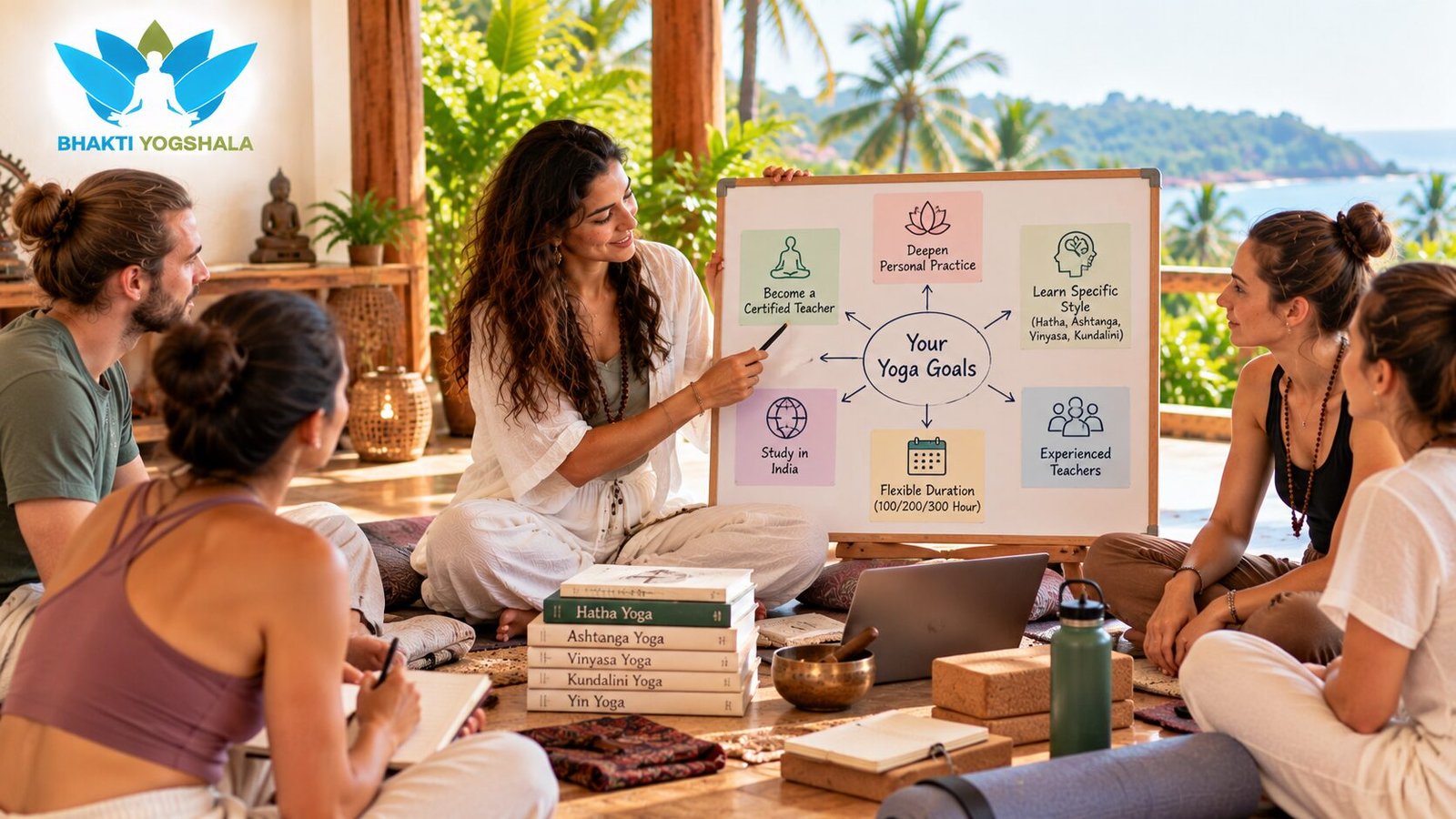
Some students want to become yoga teachers. Others want to deepen their personal practice, understand yoga philosophy or experience an immersive learning environment.
You do not necessarily have to make teaching your only goal. Bhakti Yogshala’s 200-hour programme, for example, is presented for people who want either to deepen their personal practice or become certified yoga teachers.
Before enrolling, ask yourself:
- Do I want to teach yoga professionally?
- Do I want to deepen my personal practice?
- Am I interested in yoga beyond physical postures?
- Do I want to study yoga philosophy and meditation?
- Am I looking for an intensive residential experience?
- Do I want to continue studying after my first qualification?
Having a clear intention can help you choose a course that actually fits what you want.
Understand That YTT Is More Than Physical Yoga
One of the biggest misconceptions about Yoga Teacher Training is that it is simply an extended yoga class.
It is not.
A teacher-training programme can involve physical practice as well as theory, anatomy, philosophy, breathing practices, meditation, teaching methodology and practical teaching.
Bhakti Yogshala’s 200-hour Goa programme includes Hatha, Ashtanga Vinyasa, Vinyasa Flow and Yin Yoga alongside Ayurveda, pranayama, meditation, philosophy, anatomy and teaching methods.
This means you should be prepared to learn both on and off the mat.
You may spend part of the day practising asana and another part listening to lectures, studying anatomy, discussing philosophy or practising how to teach.
Check Whether You Meet the Course Requirements
Before paying for a course, check its eligibility requirements rather than assuming every YTT has the same expectations.
For example, Bhakti Yogshala states that its 200-hour programme starts from the basics and is open to people who want to deepen their personal practice or become certified yoga teachers.
Previous teaching experience is therefore not automatically a requirement for this programme.
However, being eligible and being prepared are two different things.
If you have never practised yoga before, becoming familiar with basic yoga terminology, simple postures, breathing and class etiquette before an intensive programme may make the experience easier.
You also do not need to compare your body with other students. Yoga teacher training can include people with different levels of flexibility, strength and previous experience.
Be Realistic About the Daily Commitment
Before enrolling, look at the actual schedule.
An intensive residential YTT may require you to start early in the morning and continue with classes, study and practice throughout the day.
Bhakti Yogshala’s published 200-hour Goa schedule begins with self-practice, pranayama and meditation at 6:30 AM. It then includes asana practice, philosophy or theory, an asana clinic and practicum, anatomy, another asana session, and evening meditation, kirtan or group discussion.
That is very different from attending a one-hour yoga class a few times a week.
Before enrolling, consider whether you can realistically commit to:
- Early mornings
- Daily yoga practice
- Theory classes
- Teaching practice
- Independent study
- Group activities
- A structured daily routine
- Limited personal time during an intensive programme
Understanding the schedule beforehand can prevent unpleasant surprises after the course begins.
Understand What You Will Study
Do not choose a YTT only because the location looks attractive or the course has a particular number of hours.
Look at the curriculum.
A well-structured programme should clearly explain what students will learn and how much practical and theoretical learning is included.
Depending on the programme, areas may include:
Asana and Alignment
You learn how postures are performed, observed, adapted and taught.
Pranayama
Breathing practices form an important part of traditional yoga education and may be included in the curriculum.
Meditation
Training may include different meditation approaches and practices designed to develop concentration and awareness.
Yoga Philosophy
You may study the history, principles and philosophical foundations of yoga.
Anatomy
Anatomy helps students understand the body and movement more clearly.
Teaching Methodology
This focuses on how to structure classes, communicate instructions, observe students and develop teaching skills.
Bhakti Yogshala’s published 200-hour curriculum includes these broader areas alongside multiple yoga styles.
Know the Difference Between 100, 200 and 300 Hours
Course duration matters because different programmes can serve different stages of learning.
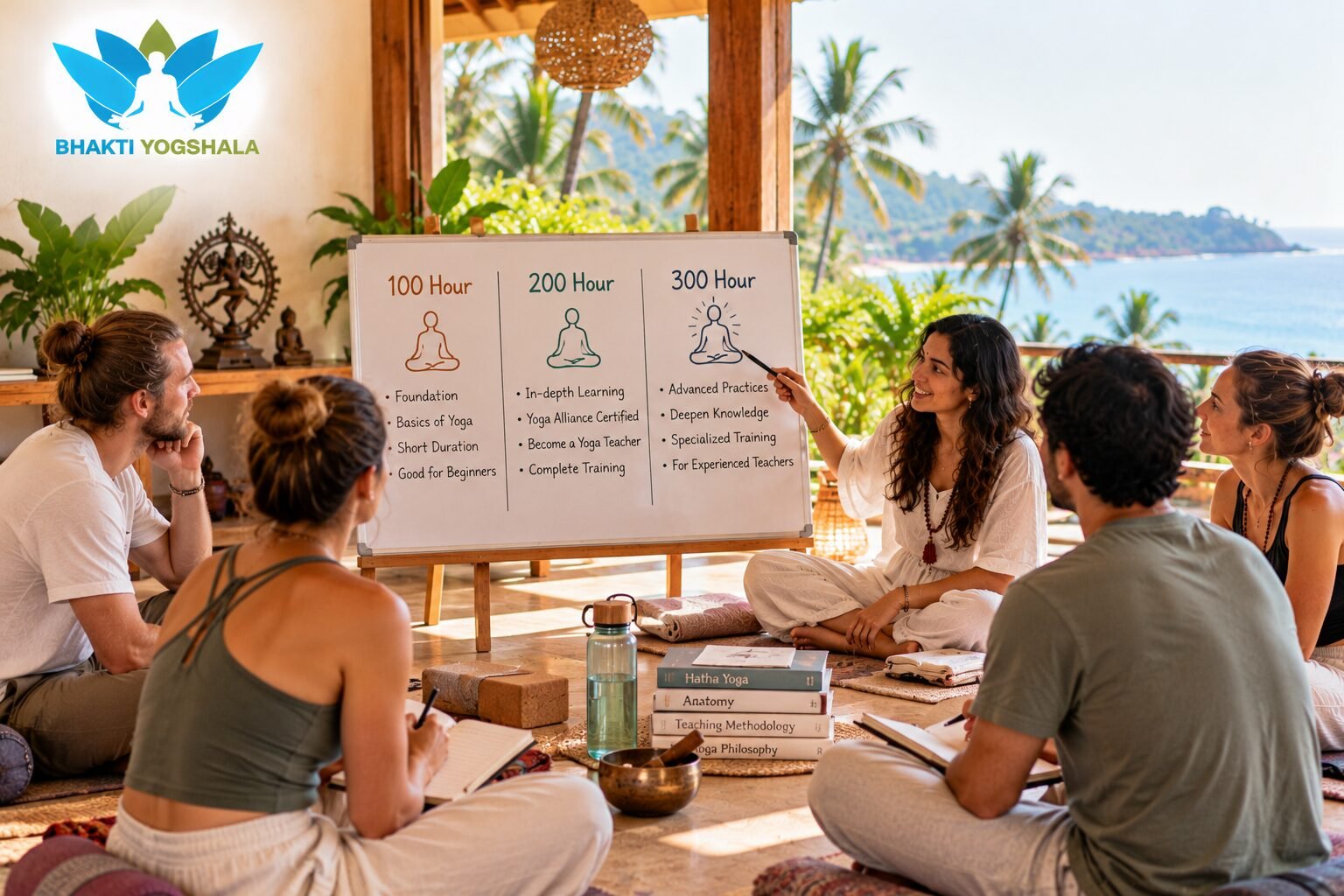
Bhakti Yogshala currently offers multiple YTT formats, including 100-, 200- and 300-hour programmes.
A simple way to think about them is:
Training | General Purpose |
100-hour | Shorter foundational or further-learning experience |
200-hour | Foundational teacher-training pathway |
300-hour | More advanced study for practitioners with an existing foundation |
Do not automatically assume that the longest course is the right course.
Your experience, goals, available time and previous training should influence the decision.
For someone considering their first substantial teacher-training programme, understanding what a 200-hour course covers may be particularly useful.
Understand Teaching Practice and Assessment
If your goal is teaching, make sure the course gives you opportunities to practise teaching rather than only listening to instructors.
Ask:
- Will I practise teaching other students?
- Will instructors provide feedback?
- Will I learn class sequencing?
- Will I study alignment and modifications?
- Will I learn how to communicate instructions?
- How is my progress assessed?
Bhakti Yogshala’s published curriculum includes teaching methodology, observation, demonstrations, assisting, alignment and practicum.
Teaching yoga requires more than being able to perform a posture yourself.
You also need to learn how to explain, observe, adapt and communicate.
Check the Certification and School Credentials
Certification is an important part of comparing teacher-training programmes.
Do not simply look for the word “certified.” Find out:
- What organisation is associated with the programme?
- What credential or certificate will you receive?
- What does the certification allow you to do?
- Is the school or programme currently registered or accredited as stated?
- Does the programme’s certification meet your intended professional requirements?
Bhakti Yogshala describes its 100-, 200- and 300-hour teacher-training programmes as Yoga Alliance certified/accredited on its website.
Because registration and certification requirements can change, prospective students should confirm the current status and exact credential directly with the school before enrolling.
Think About the Training Format and Location
YTT is available in different formats, including residential, in-person and online programmes.
The right choice depends on how you learn best and what kind of experience you want.
Residential Training
A residential programme gives you an immersive schedule where training becomes a major part of your daily routine.
In-Person Training
Being physically present allows direct interaction with teachers and fellow students during practical sessions.
Online Training
Online programmes can provide greater flexibility for students who cannot relocate for an intensive residential course.
Bhakti Yogshala offers training in Goa, Rishikesh and online.
If you are considering Goa, also think about the practical side of travelling for training: accommodation, meals, local climate, personal belongings, travel arrangements and the amount of time you will be away from your normal routine.
Prepare Physically and Mentally
You do not need to become an advanced yoga practitioner before starting YTT.
You also should not treat preparation as a race to achieve difficult postures.
A better approach is to build familiarity with regular practice.
Before your course, you can gradually become comfortable with:
- Basic yoga postures
- Simple transitions
- Breath awareness
- Meditation
- Sitting for longer periods
- Following a structured class
- Listening and taking notes
- Maintaining a regular practice routine
Mental preparation matters too.
An intensive YTT can require concentration, discipline and openness to learning. You may encounter unfamiliar terminology, challenging practices or subjects that require additional study.
You are there to learn, not to prove that you already know everything.
Know What to Bring and Organize Before Arrival
Practical preparation can make your first few days easier.
Depending on the school and programme, you may want to organize:
- Comfortable yoga clothing
- Personal toiletries
- A refillable water bottle
- Notebook and writing materials
- Appropriate footwear
- Personal medication if required
- Travel documents
- Course-related documents
- Any personal items needed for an extended stay
Bhakti Yogshala’s first-week guidance recommends comfortable yoga attire, a notebook and a refillable water bottle among useful items for training.
Check the current packing information from the school before travelling because requirements can vary by programme.
Questions to Ask Before Enrolling
Before making your payment, ask the school questions that affect your actual experience.
About the course
- What is the complete curriculum?
- How long is the training?
- What is the daily schedule?
- How much practical training is included?
- How much theory is included?
About eligibility
- Can beginners join?
- Is previous yoga experience required?
- Are there any specific prerequisites?
About teaching
- How much teaching practice will I receive?
- Will instructors provide feedback?
- Are alignment and modifications included?
About certification
- What certificate will I receive?
- Which organisation is associated with the certification?
- What is the current registration or accreditation status?
About practical arrangements
- What accommodation is included?
- What meals are provided?
- What should I bring?
- What is the cancellation or refund policy?
- What additional costs should I expect?
Getting clear answers before enrolling is better than discovering important details after the course has started.
What to Know Before Starting YTT at Bhakti Yogshala
Bhakti Yogshala provides multi-style Yoga Teacher Training in Goa and Rishikesh, along with online training options. Its website currently presents 100-, 200- and 300-hour programmes.
The 200-hour Goa programme combines multiple yoga styles with areas such as philosophy, anatomy, pranayama, meditation and teaching methodology. The published schedule shows that students should expect a structured and intensive day rather than a single daily yoga class.
Bhakti Yogshala’s main location is on Agonda Beach Road in Agonda, Goa.
If you are considering training there, review the specific course page for the programme you are interested in and confirm the current dates, fees, inclusions and availability before making travel arrangements.
Final Checklist Before You Enrol
Before starting a Yoga Teacher Training Course, make sure you can answer these questions:
- Why am I joining YTT?
- Do I want to teach, deepen my practice, or both?
- Am I comfortable with the physical demands?
- Can I commit to the daily schedule?
- Have I reviewed the complete curriculum?
- Do I understand the teaching-practice component?
- Have I checked the certification details?
- Have I selected the right course duration?
- Do I know what is included in the programme?
- Have I checked the accommodation and practical arrangements?
- Do I understand the total cost and payment terms?
- Have I confirmed the current course dates?
- Have I asked questions about anything that is unclear?
The best time to ask these questions is before you enrol.
Yoga Teacher Training can be a demanding and rewarding learning experience, but the right programme is the one that matches your goals, experience, availability and expectations.
Explore Yoga Teacher Training with Bhakti Yogshala
If you are ready to explore Yoga Teacher Training in Goa, Rishikesh or online, review the available programmes at Bhakti Yogshala and choose the format that best matches your goals.
For current course dates, availability, fees and enrolment information, contact Bhakti Yogshala directly before making your arrangements.
FAQS
- Do I need previous yoga experience before starting Yoga Teacher Training?
Requirements vary by school and programme. Bhakti Yogshala states that its 200-hour Goa programme starts from the basics and welcomes people who want to deepen their practice or become certified yoga teachers.
- Do I need to be flexible before joining YTT?
No specific level of advanced flexibility should be assumed. What matters is choosing a programme appropriate to your experience and being prepared to learn progressively.
- Is Yoga Teacher Training physically demanding?
It can be intensive, particularly for residential programmes. Bhakti Yogshala’s published 200-hour Goa schedule includes multiple asana sessions plus theory, anatomy, practicum and evening activities.
- What do you study in Yoga Teacher Training?
Depending on the programme, subjects can include asana, alignment, pranayama, meditation, yoga philosophy, anatomy and teaching methodology. Bhakti Yogshala’s 200-hour programme includes these areas alongside multiple yoga styles.
- Which Yoga Teacher Training duration should I choose?
It depends on your existing experience, goals and available time. Bhakti Yogshala offers 100-, 200- and 300-hour programmes, with different levels and purposes.
- Does Yoga Teacher Training include teaching practice?
Bhakti Yogshala’s published 200-hour curriculum includes teaching methodology and practicum, including observation, demonstration, assisting and alignment.
- What should I bring to Yoga Teacher Training?
Useful items can include comfortable yoga clothing, a notebook and refillable water bottle. Check the specific programme’s current packing instructions before travelling.
- Can I join YTT only for personal development?
Yes. Bhakti Yogshala explicitly presents its 200-hour programme as suitable for people who want to deepen their personal practice as well as those who want to become certified teachers.
- Should I check certification before enrolling?
Yes. Ask exactly what certificate you will receive, which organisation is associated with the programme and what the current registration or accreditation status is.