Completing a yoga teacher training course can be the beginning of your yoga teaching journey, not necessarily the end of your education.
Depending on your training, experience and goals, you may choose to teach yoga at a studio, offer private classes, teach online, explore corporate wellness, lead workshops or retreats, continue with advanced training, or simply use your education to deepen your personal practice.
Your options also depend on the level of training you complete. A foundational 200-hour program can provide a starting point for people who want to teach, while advanced training can help experienced practitioners continue developing their knowledge and teaching skills.
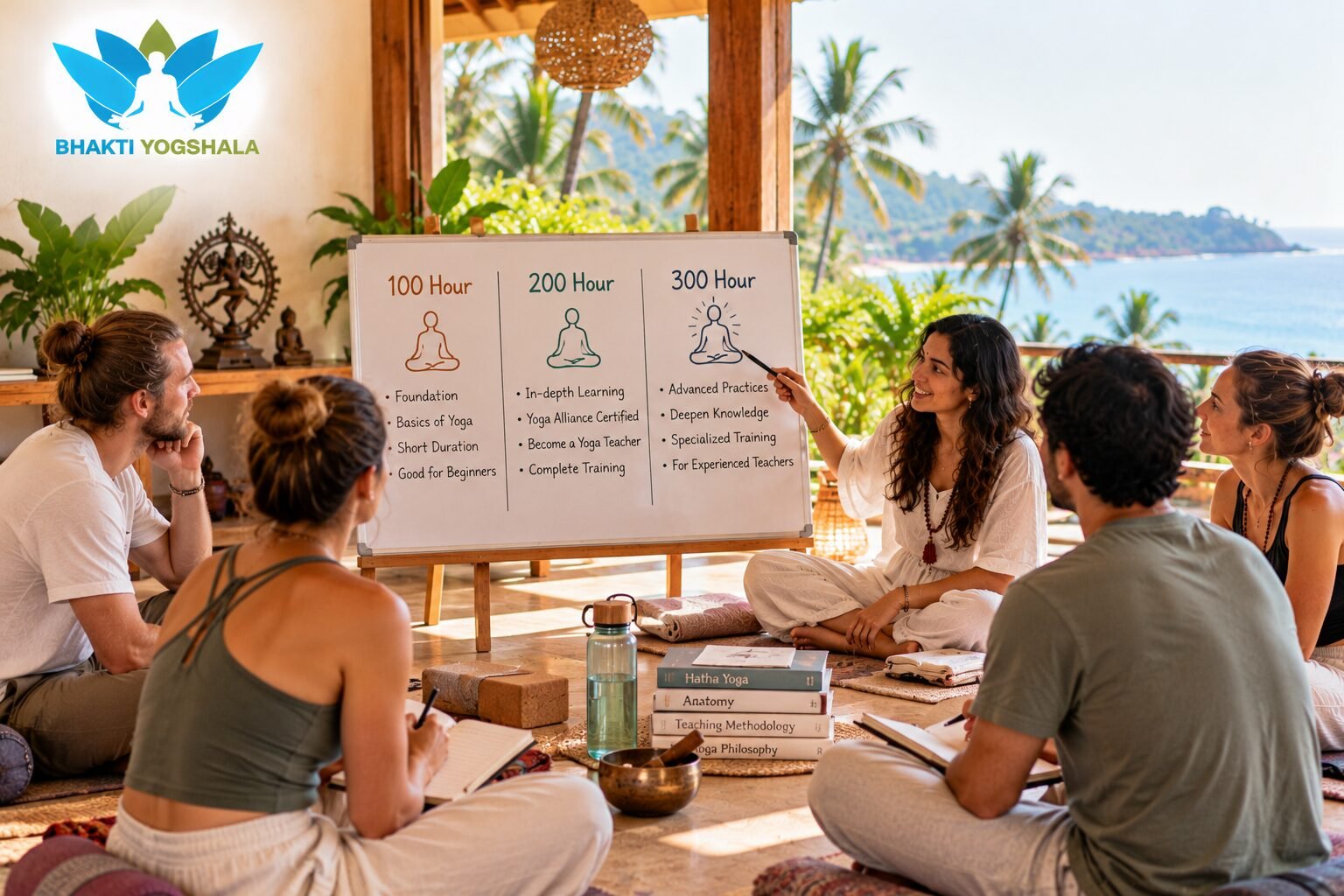
Bhakti Yogshala offers yoga teacher training programs in locations including Goa and Rishikesh, with 100-hour, 200-hour and 300-hour options listed on its website. It also lists online training options.
What Can You Do After Yoga Teacher Training?
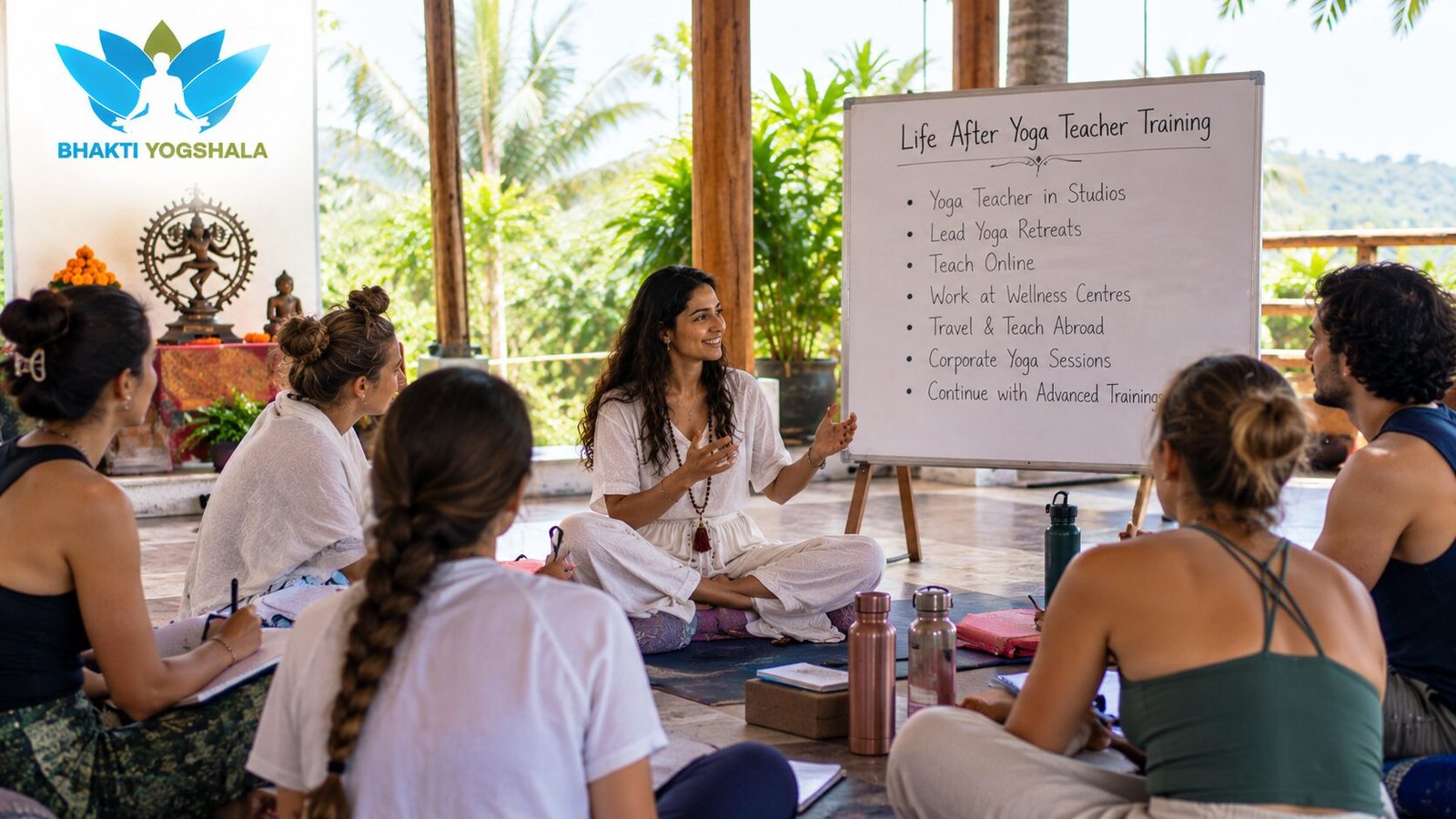
After completing yoga teacher training, some of the paths you can explore include:
- Teaching at a yoga studio
- Offering private yoga sessions
- Teaching online
- Exploring corporate yoga programs
- Conducting community classes
- Leading workshops or retreats
- Developing a specialized area of study
- Continuing with advanced yoga teacher training
- Building a yoga-focused business
- Deepening your own personal practice
Not every option will be appropriate immediately after every type of YTT. Your training level, practical experience, additional qualifications and the requirements of the organization you want to work with all matter.
- Teach Yoga at a Studio or Wellness Centre
One of the most direct options after completing a foundational yoga teacher training is to explore teaching opportunities.
Yoga studios, wellness centres and community organizations may have opportunities for instructors, although their requirements can vary.
Your first teaching role may involve beginner classes or general yoga sessions rather than highly specialized instruction.
Before applying, consider whether you are comfortable with:
- Demonstrating asanas
- Giving clear verbal instructions
- Sequencing a class
- Guiding breathing practices
- Managing different experience levels
- Offering appropriate modifications
- Creating a supportive class environment
Completing training gives you a foundation, but teaching confidence develops through practice.
Bhakti Yogshala’s existing content also emphasizes that completing a 200-hour program is a starting point and that practical teaching experience and continued learning remain important.
- Offer Private Yoga Classes
Some yoga teachers choose to work with individuals rather than teaching large group classes.
Private instruction can allow you to work more closely with a student’s goals, experience level and preferred style of practice.
A private teacher may work with:
- Beginners
- Regular practitioners
- Individuals looking for structured practice
- Small groups
- Students seeking a more personalized learning environment
However, teachers should stay within their training and professional scope.
For example, yoga instruction should not be presented as a substitute for medical diagnosis or treatment. If a student has a medical concern outside your expertise, referring them to an appropriate healthcare professional is part of responsible practice.
- Teach Yoga Online
Online yoga teaching can be another option for instructors who want to work with students beyond their local area.
Depending on your setup, you could offer:
- Live online classes
- One-to-one sessions
- Small-group classes
- Recorded classes
- Online workshops
Online teaching also requires skills beyond yoga knowledge.
You need to communicate clearly without always being able to physically adjust or closely observe a student’s movement. Camera positioning, verbal instruction, class planning and student communication become especially important.
If online teaching is one of your goals, consider developing these skills alongside your yoga education.
- Explore Corporate Yoga and Wellness Programs
Some teachers choose to work with organizations that provide wellness activities for employees.
Corporate yoga sessions may be structured differently from a traditional studio class. Sessions may need to fit around working hours and accommodate people with different levels of experience.
A corporate instructor may need to be particularly comfortable with:
- Clear and simple instructions
- Shorter class formats
- Beginner-friendly practices
- Professional communication
- Group management
- Adapting sessions to the available environment
Corporate teaching can therefore require you to apply your foundational training in a different setting.
- Lead Yoga Retreats and Workshops
After gaining teaching experience, some yoga instructors expand into workshops, retreats or specialized learning sessions.
A workshop might focus on a particular aspect of yoga, while a retreat can combine yoga practice with meditation, philosophy, breathwork or other activities depending on the program.
Bhakti Yogshala itself offers yoga retreat programs alongside its teacher-training courses, so retreats are part of the wider learning environment presented by the school.
If you eventually want to lead retreats, practical teaching experience, planning skills and the ability to manage groups can be just as important as your initial teacher-training certificate.
- Build Your Own Yoga Practice or Business
Yoga teacher training does not mean you must immediately apply for a teaching job.
Some graduates choose to build an independent yoga practice or business.
Depending on your skills and local requirements, this could involve:
- Private instruction
- Small group classes
- Online classes
- Workshops
- Retreats
- Yoga-related educational content
- Partnerships with wellness organizations
Building an independent practice also involves non-yoga skills such as communication, scheduling, marketing, client management and basic business planning.
A strong yoga practice and a sustainable business are related but different skill sets.
- Specialize in a Specific Area of Yoga
A foundational teacher-training course cannot cover every possible area of yoga in depth.
After completing your initial training, you may decide to study a particular area further.
Examples can include:
- Meditation
- Pranayama
- Yin yoga
- Children’s yoga
- Prenatal yoga
- Senior yoga
- Mobility-focused practices
- Yoga philosophy
- Anatomy
- Specialized teaching methodologies
Additional education may be particularly important when working with specific populations.
For example, teaching prenatal yoga or children’s yoga involves considerations beyond general yoga instruction. Appropriate specialized training should be obtained rather than assuming that a general YTT automatically prepares you for every population.
Yoga Alliance also maintains specialized teacher credentials, including Registered Children’s Yoga Teacher (RCYT) and Registered Prenatal Yoga Teacher (RPYT).
- Continue With Advanced Yoga Teacher Training
Another option after foundational teacher training is to continue studying.
Yoga Alliance identifies the 300-hour level as advanced training that builds upon foundational teaching knowledge.
Advanced training may be appropriate for teachers who want to deepen their understanding of areas such as:
- Teaching methodology
- Sequencing
- Yoga philosophy
- Anatomy
- Advanced practices
- Specialized instruction
A 300-hour program should therefore be viewed as a continuation of education rather than simply “more hours.”
For someone who has completed a qualifying 200-hour program, an additional qualifying 300-hour program can also form part of the training pathway toward the RYT 500 credential.
Yoga Alliance currently states that the RYT 500 training requirement can be met through a 500-hour RYS 500 program or by combining a qualifying 200-hour training with a separate qualifying 300-hour advanced training. It also requires at least 100 teaching hours for the RYT 500 credential.
- Use Yoga Training for Personal Development
Not everyone joins yoga teacher training because they want a full-time yoga career.
Some people complete YTT to deepen their own understanding of yoga.
Teacher training can provide a more structured opportunity to study areas such as:
- Asana
- Pranayama
- Meditation
- Yoga philosophy
- Anatomy
- Teaching methodology
- Traditional yoga practices
Even if you do not immediately teach professionally, the knowledge gained through training can influence the way you approach your own practice.
This can also be a useful reason to choose a course carefully. If personal development is your main goal, you may prioritize the curriculum, teaching approach and areas of study rather than focusing only on career outcomes.
What Can You Do After a 200-Hour Yoga Teacher Training?
A 200-hour yoga teacher training is generally considered the foundational level for people beginning formal yoga teacher education.
Yoga Alliance states that the RYT 200 credential can be obtained after completing a 200-hour yoga teacher training registered with Yoga Alliance.
After completing a qualifying foundational program, possible next steps can include:
- Begin gaining supervised or practical teaching experience.
- Explore beginner or general-level teaching opportunities.
- Build confidence through regular practice and teaching.
- Consider private or online instruction.
- Attend workshops or continuing education.
- Develop a specialization if you have a particular area of interest.
- Consider advanced 300-hour training when appropriate.
- Develop a professional network within the yoga community.
Completing the certificate is therefore better viewed as the beginning of professional development rather than the point at which learning stops.
Bhakti Yogshala currently lists 200-hour teacher training programs in Goa, Rishikesh and Kerala, as well as online options.
Does Completing Yoga Teacher Training Guarantee a Yoga Teaching Job?
No.
A yoga teacher training certificate can provide education and, depending on the program and credential, may support eligibility for certain professional pathways. But it does not guarantee employment, students or income.
Teaching opportunities can depend on:
- Your training
- Practical teaching experience
- Communication skills
- Location
- Yoga style
- Specialization
- Studio requirements
- Professional network
- Ability to attract and retain students
Your first opportunity may therefore be different from what you initially imagined.
Some teachers begin with small group sessions or beginner classes before moving toward private teaching, workshops, retreats or specialized instruction.
What Should You Do Immediately After Completing YTT?
You do not need to build an entire yoga career overnight.
A practical next-step plan could be:
Step 1: Review what you learned
Identify the areas where you feel confident and the areas where you need more practice.
Step 2: Start teaching in a manageable setting
If you want to teach professionally, begin with an environment that matches your experience level.
Step 3: Ask for feedback
Feedback from experienced teachers can help you improve sequencing, communication and class management.
Step 4: Continue your personal practice
Teaching and personal practice support different aspects of your development.
Step 5: Choose your direction
After gaining some experience, decide whether you prefer:
- Studio teaching
- Private instruction
- Online teaching
- Corporate wellness
- Retreats
- Workshops
- Specialization
- Advanced teacher training
Step 6: Build skills beyond teaching
If you plan to work independently, learn basic business, communication and marketing skills alongside your yoga education.
What If You Want to Continue Studying?
You have several possible directions.
You could deepen one aspect of yoga through workshops or specialist education, or progress to advanced teacher training.
Yoga Alliance’s current framework recognizes RYS 200 as foundational training and RYS 300 as advanced training.
For teachers pursuing the RYT 500 pathway, the organization currently allows the required 500 training hours to be completed through a qualifying 200-hour training plus a separate qualifying 300-hour advanced training, subject to its requirements.
The important point is to choose your next course because it matches your development goals—not simply because it has a larger number of hours.
Why Your First Teacher Training Choice Matters
Your options after YTT are influenced by the quality and scope of your foundational education.
When comparing yoga teacher training programs, look at:
- Curriculum
- Teaching methodology
- Practical teaching opportunities
- Anatomy and physiology education
- Yoga philosophy
- Meditation and pranayama
- Certification details
- School registration status where applicable
- Course duration
- Location
- Accommodation, if applicable
- Student support
- Further-learning opportunities
Bhakti Yogshala currently offers several YTT levels and locations, including Goa and Rishikesh, with additional training options listed on its website.
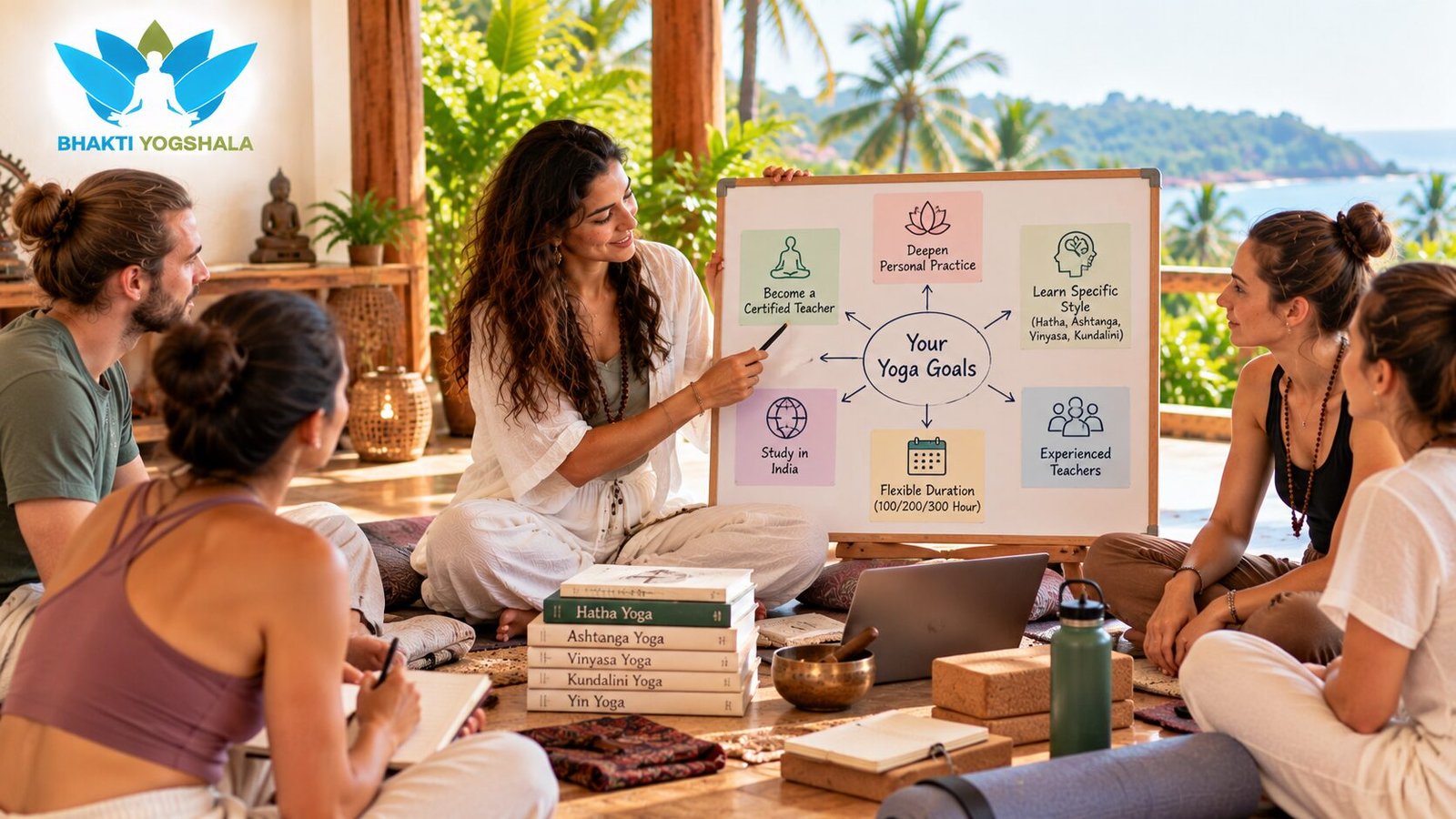
Start With the Goal, Not Just the Certificate
The question is not only, “What certificate will I receive?”
A better question is:
“What do I want to be able to do after I finish?”
If you want to teach beginners, look for strong foundational teaching practice.
If you want to teach privately, focus on communication, observation and adaptation.
If you want to teach online, consider how the program prepares you to communicate effectively.
If you want to specialize, investigate additional training requirements.
If you want to continue toward advanced credentials, understand the relationship between your foundational and advanced training.
And if your main goal is personal growth, choose a curriculum that genuinely interests you rather than selecting a course based only on its career claims.
Explore Your Next Step With Bhakti Yogshala
Bhakti Yogshala offers yoga teacher training programs across multiple levels and locations. Its current website lists 100-hour and 200-hour options as well as 300-hour programs in Goa and Rishikesh, alongside other training formats and retreat programs.
If you are still deciding which training level is appropriate for your goals, review the individual program details and compare the curriculum, duration, prerequisites and certification information before enrolling.
For Bhakti Yogshala, the listed main location is Agonda Beach Road, Agonda, Goa 403702, with contact details provided on the website.
The most useful next step is to choose a training program based on the kind of yoga practice and teaching journey you want to build—not simply the number of hours printed on the certificate.
FAQS
1. Can I teach yoga after completing yoga teacher training?
A qualifying foundational teacher-training program can provide the foundation to begin exploring teaching opportunities, but a certificate does not guarantee employment or professional success. Practical teaching experience and continued development are also important.
2. What jobs can I get after yoga teacher training?
Potential opportunities can include yoga studio teaching, private instruction, online yoga classes, community classes, workshops, retreats and some corporate wellness programs. Actual opportunities depend on your training, experience, specialization and the requirements of the organization.
3. Can I teach yoga online after YTT?
Online teaching is one potential pathway after teacher training. You should develop strong verbal communication, sequencing and online-class delivery skills in addition to your yoga knowledge.
4. Can I teach private yoga classes after YTT?
Private teaching can be an option after appropriate foundational training and sufficient practical experience. Your instruction should remain within your training and professional scope.
5. Can I start my own yoga business after teacher training?
You can explore independent teaching or a yoga-focused business, but running a business requires skills beyond yoga teaching, including marketing, administration, communication and client management.
6. Should I do a 300-hour yoga teacher training after 200 hours?
A 300-hour program can be a logical next educational step for someone who has completed foundational training and wants advanced study. Yoga Alliance describes RYS 300 as advanced training that builds upon foundational teaching knowledge.
7. Does a 200-hour yoga teacher training make me an RYT 200?
Completing a 200-hour training alone does not automatically mean you are an RYT 200. Yoga Alliance states that the RYT 200 credential requires completion of a 200-hour yoga teacher training registered with Yoga Alliance.
8. Can 200 and 300 hours lead to RYT 500?
Yoga Alliance currently allows the 500 training-hour requirement to be completed through a qualifying 200-hour training plus a separate qualifying 300-hour advanced training, subject to its requirements. At least 100 teaching hours are also required for RYT 500.
9. Do I need additional training to teach specialized yoga?
It depends on the population and specialization. Specialized areas may require additional education beyond foundational YTT. Yoga Alliance, for example, has separate credentials for children’s and prenatal yoga teachers.
10. Does Bhakti Yogshala offer advanced yoga teacher training?
Yes. Bhakti Yogshala’s current website lists 300-hour yoga teacher training programs in Goa and Rishikesh.