Yes, beginners can join some yoga teacher training programmes. You do not necessarily need years of practice, advanced flexibility or previous teaching experience to begin a foundational 200-hour course. However, eligibility depends on the school’s requirements and the structure of its training.
At Bhakti Yogshala, the published 200-hour yoga teacher training programme in Goa states that it starts from the basics and welcomes people who want to deepen their personal practice or become yoga teachers.
Before enrolling, it helps to understand what beginner-friendly actually means. A foundational course still involves regular physical practice, theory classes, meditation and practical learning. Knowing what to expect can help you decide whether the programme matches your current experience and goals.
Can beginners join yoga teacher training?
Yes, a beginner may be able to join a 200-hour yoga teacher training course, provided the school accepts beginners and the student is prepared for the programme’s daily schedule.
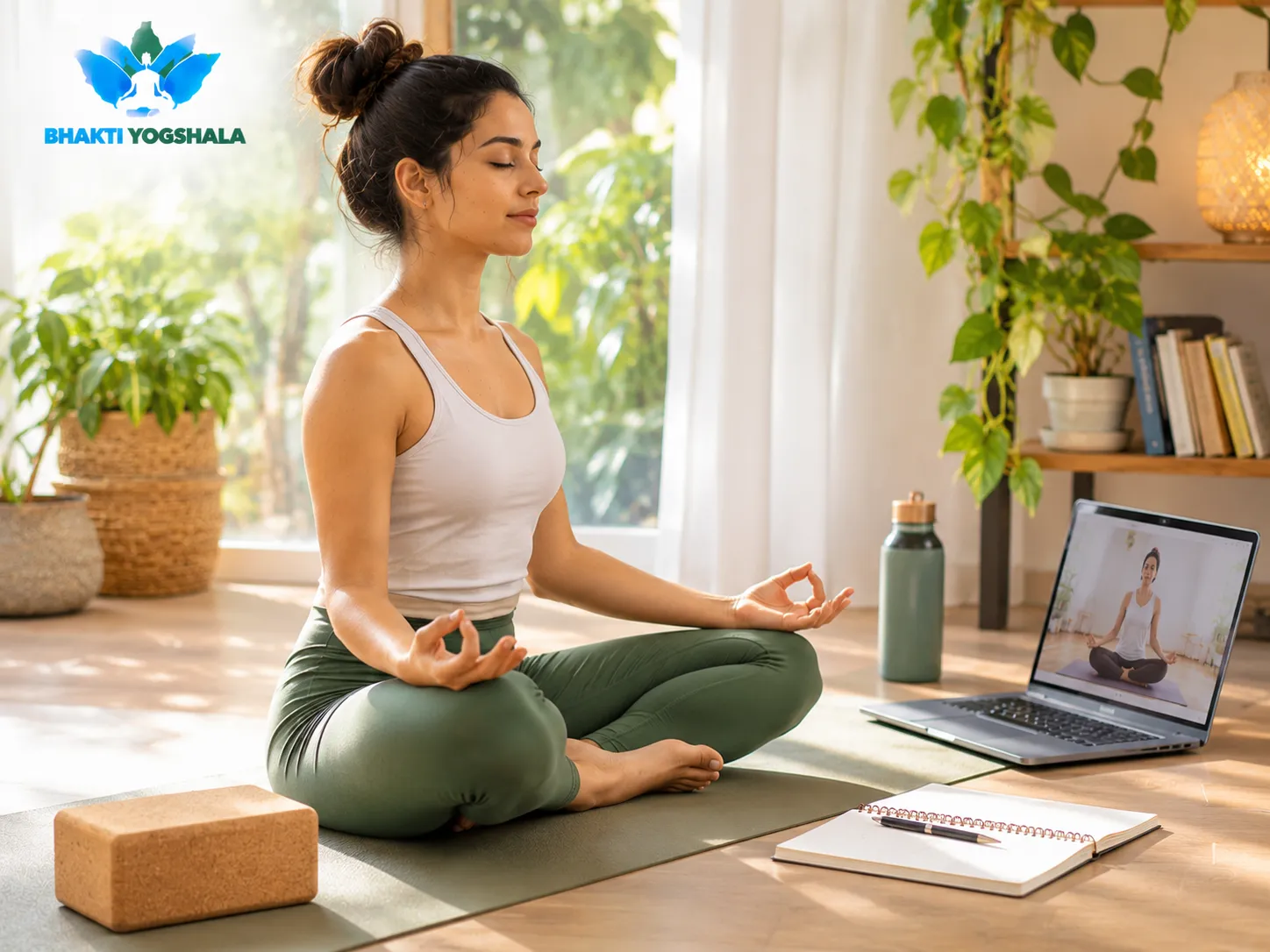
You do not need to be an experienced yoga instructor before starting teacher training. In fact, a foundational course introduces the subjects and skills that aspiring teachers need to study.
At Bhakti Yogshala, the 200-hour course page states that the programme starts from the basics. It is intended for people who want to develop their personal yoga practice as well as those interested in becoming yoga teachers.
There is an important difference between being new to teaching and being completely new to yoga. A person may have practised yoga for some time without ever teaching a class. Another person may be new to both practice and teaching. Their preparation needs may be different.
If you have never attended a yoga class, contact the school before making a booking. Explain your current experience and ask whether the course schedule and practice level are suitable for you.
What level of yoga practice do you need before joining?
There is no single practice level that applies to every yoga teacher training school. Some programmes welcome beginners, while others recommend a period of regular practice before enrolment.
For a foundational course, it is useful to understand basic yoga movements and be willing to learn progressively. You should also be ready to follow instructions, practise regularly and ask questions when you are unsure about a posture or technique.
A few areas worth becoming familiar with include:
Basic yoga asanas
Asanas are the physical postures practised in yoga. You may have encountered standing poses, seated postures, forward bends, backbends, twists and simple balancing poses in regular classes.
You do not need to master every posture before joining. A teacher training course introduces students to postures, alignment and variations as part of the learning process.
Comfortable movement and body awareness
Pay attention to how your body responds during practice. Notice whether you can follow instructions, move at a manageable pace and recognise when a posture feels uncomfortable.
You will study alignment and modifications during training. Being able to communicate your needs and respect your current limits is useful from the beginning.
Familiarity with breathing
Pranayama refers to yogic breathing practices. Basic awareness of your breath can help you follow breathing instructions during asana practice and meditation.
You do not need to know every pranayama technique before enrolling. These subjects form part of the learning process.
Willingness to practise consistently
A teacher training programme requires a different level of commitment from attending an occasional yoga class. Students should be prepared for a structured routine that includes practice, study and practical sessions.
Consistency and a willingness to learn are more useful starting points than trying to perform advanced postures before the course begins.
Do you need to be flexible or perform advanced yoga poses?
No. You should not assume that you need advanced flexibility or the ability to perform difficult yoga poses before joining a foundational teacher training programme.
Flexibility varies from person to person. It can also change with practice, rest, age and individual physical differences. Your ability to perform a particular posture does not, by itself, determine whether you can become a yoga teacher.
Bhakti Yogshala’s published 200-hour curriculum includes different asana categories, alignment, modifications and the potential risks associated with yoga postures.
The focus of learning should include understanding how a posture is approached and adapted, rather than comparing your performance with another student’s.
If a movement causes pain or feels unsuitable, communicate with your instructor. Do not force a posture to keep up with the group. If you have an injury, health condition or specific physical limitation, seek appropriate professional advice and discuss your requirements with the school before enrolling.
What should beginners know before enrolling?
A beginner-friendly course can still be demanding. Before paying a deposit, look beyond the phrase “all levels welcome” and understand how the training is organised.
Consider the following points.
Check the actual eligibility requirements
Ask whether the school accepts students with limited or no previous yoga experience. Also check whether there are any recommendations about regular practice before arrival.
Do not assume that every 200-hour programme follows the same admission policy.
Understand the daily schedule
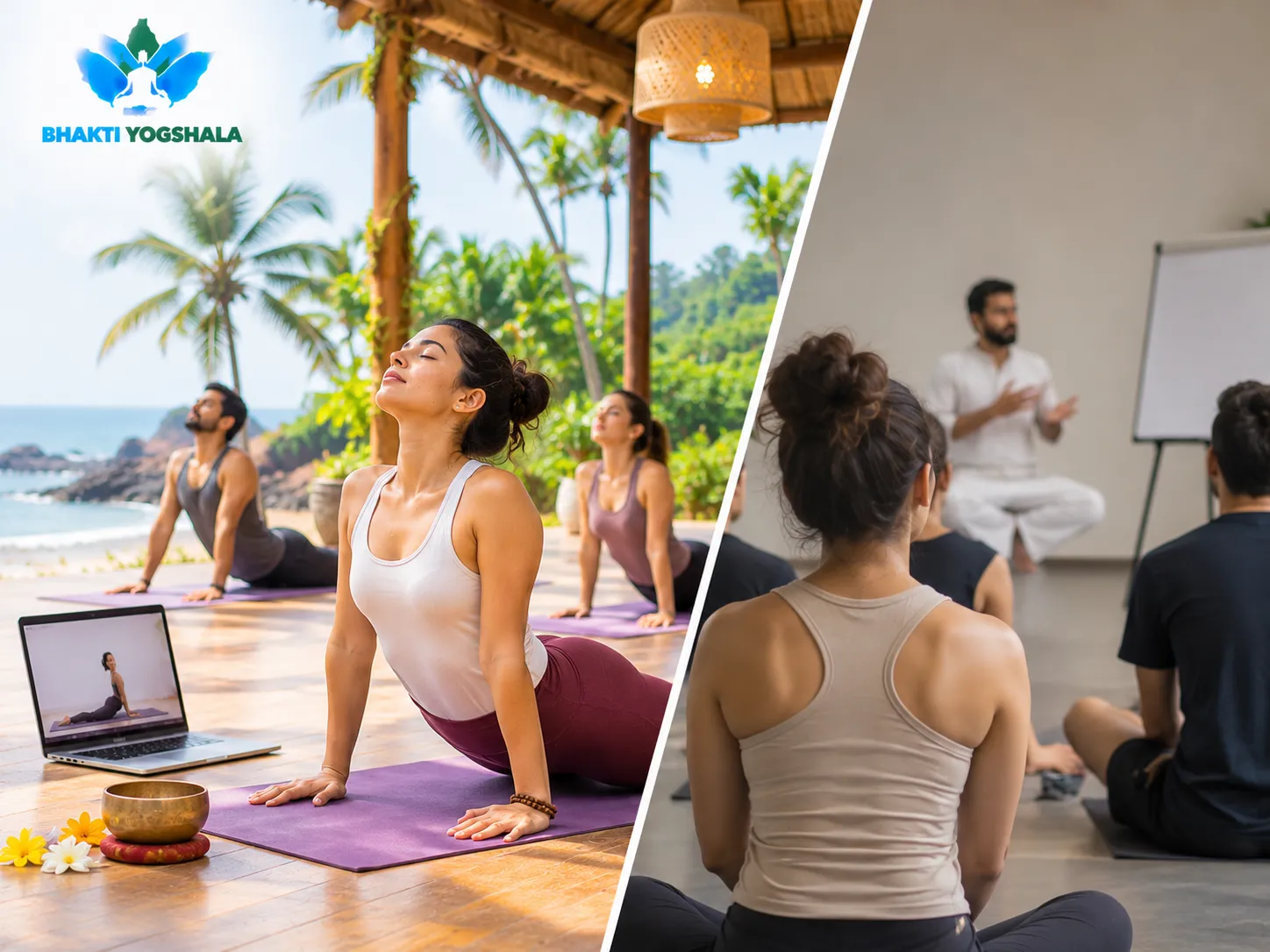
An intensive residential programme can involve several activities throughout the day. Bhakti Yogshala’s published 200-hour Goa schedule includes morning self-practice, asana classes, philosophy and theory, an asana clinic and practicum, anatomy, and evening meditation or group activities.
This is a substantial commitment compared with attending a single weekly yoga class.
Review the current schedule and decide whether you can manage the routine.
Ask how students receive guidance
Find out how instructors handle different experience levels during practice. Ask whether students learn modifications, alignment and safe approaches to postures.
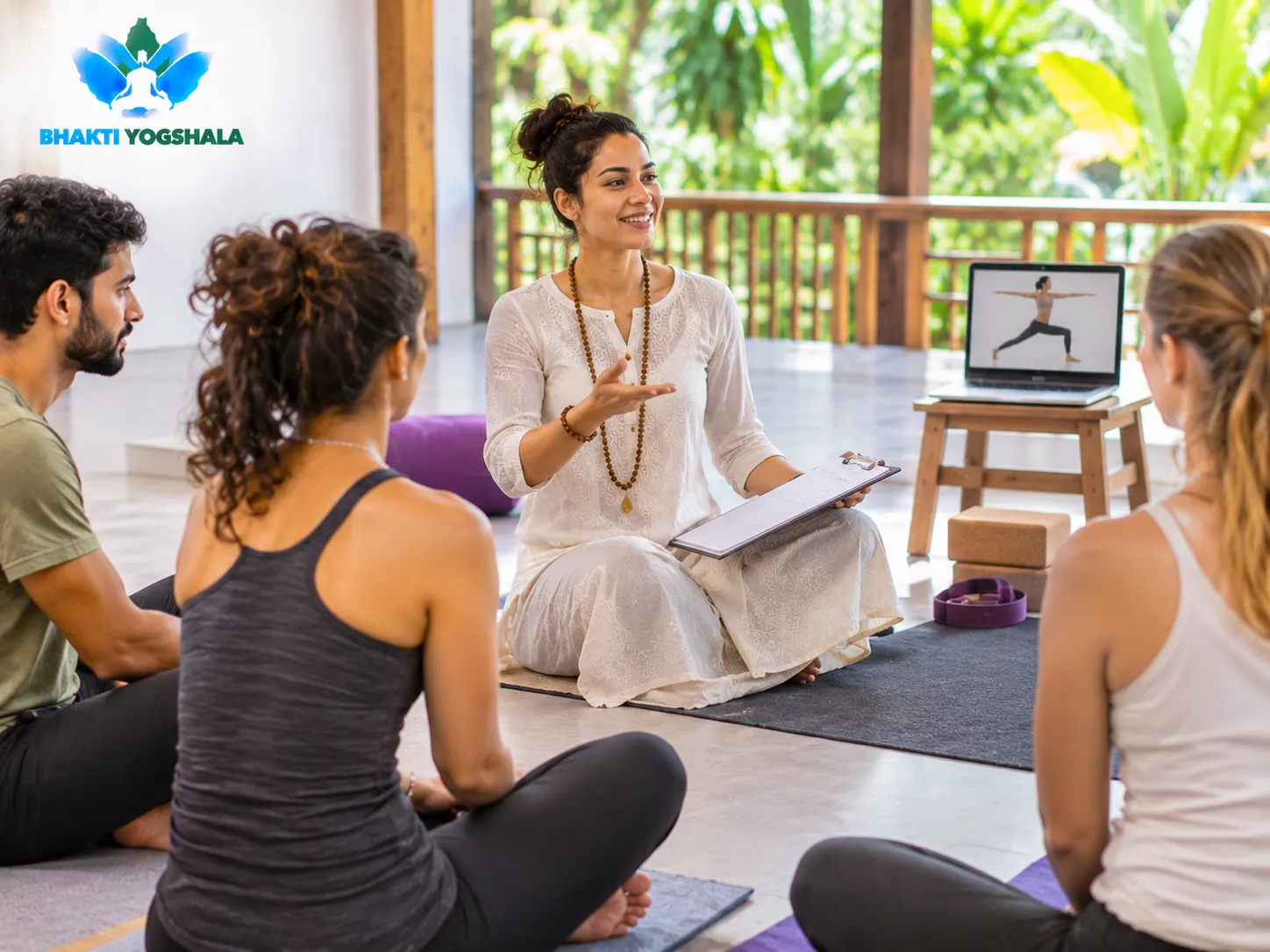
Bhakti Yogshala’s published curriculum includes teaching methodology, observation, demonstrations, assisting, alignment and practicum classes.
Understand what the course teaches
A 200-hour programme generally covers several parts of yoga education. Bhakti Yogshala lists Hatha, Ashtanga Vinyasa, Vinyasa Flow and Yin Yoga, alongside pranayama, meditation, anatomy, philosophy and teaching methodology.
Read the curriculum carefully. Choose a programme based on the subjects you want to study and the training format you can manage.
What does a 200-hour yoga teacher training involve?
A 200-hour yoga teacher training is a foundational programme that introduces students to yoga practice, theory and teaching methods.
At Bhakti Yogshala, the published course information describes a multi-style curriculum. Its subjects include:
- Asana practice: Hatha, Ashtanga Vinyasa, Vinyasa Flow and Yin Yoga.
- Pranayama: Traditional yogic breathing practices.
- Meditation: Different approaches to meditation and concentration.
- Yoga anatomy: Understanding the body in relation to yoga practice.
- Yoga philosophy: Study of yoga principles, history and texts.
- Teaching methodology: Observation, demonstrations, classroom management, alignment and practicum.
For someone new to formal yoga education, these subjects provide an introduction to the different areas involved in learning and teaching yoga.
The course is not only about performing postures. Students also study how to explain practices, observe others and understand the principles behind a class.
How can beginners prepare for yoga teacher training?
You do not need to rush into advanced postures before the course. A gradual routine can help you become more familiar with regular practice.
If you have time before enrolment, consider these steps:
- Attend regular beginner classes. Become familiar with common yoga instructions and basic postures.
- Practise at a manageable pace. Build consistency instead of suddenly increasing the duration or intensity of your sessions.
- Learn basic yoga terminology. Familiarity with words such as asana, pranayama and meditation can make classroom discussions easier to follow.
- Pay attention to your body. Learn to recognise discomfort and communicate when you need an adjustment or modification.
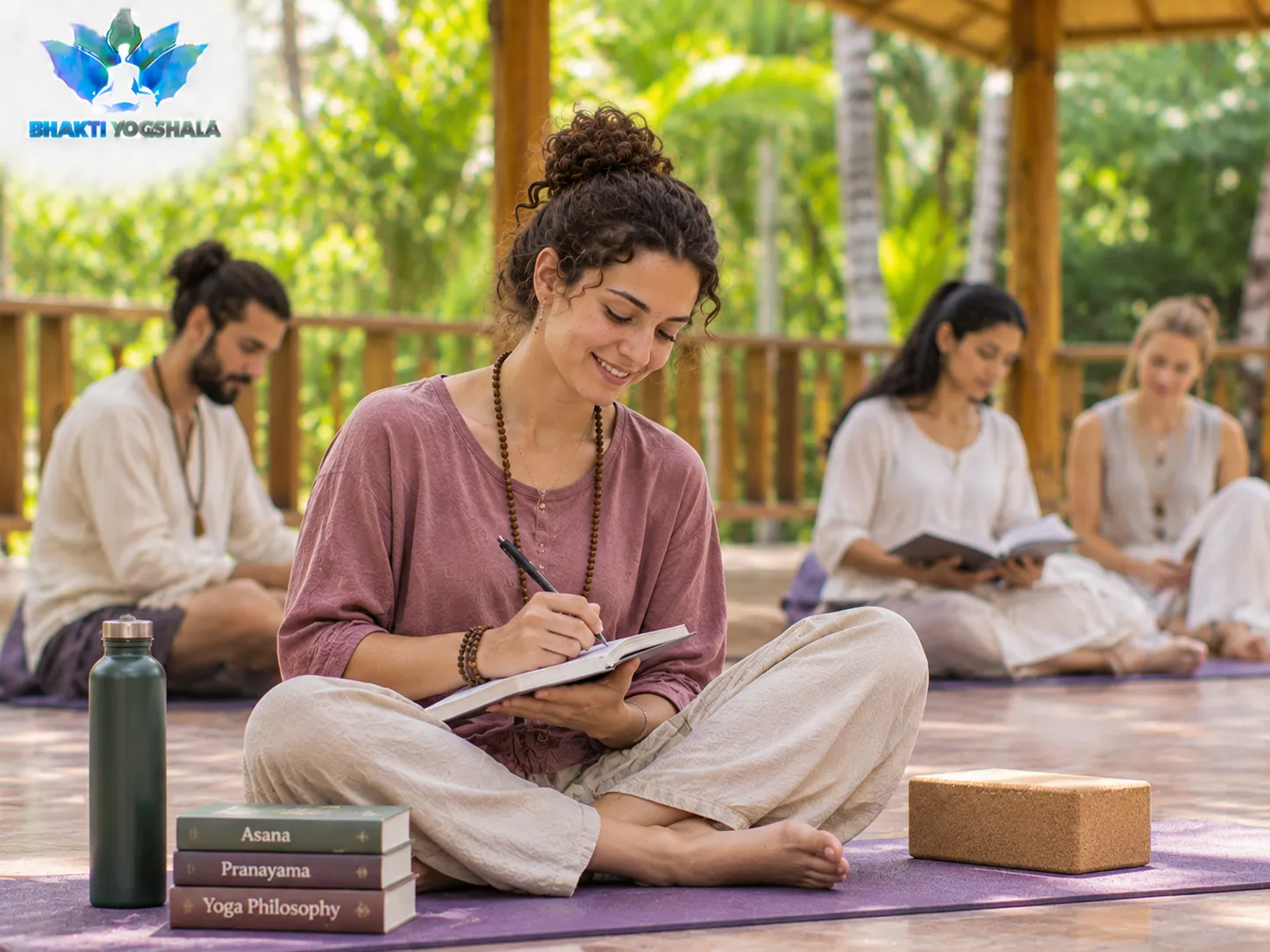
- Make time for study and rest. Teacher training involves theory and practical work as well as physical practice.
- Ask the school about preparation. Confirm whether the programme has any specific requirements for beginners.
The aim is to arrive ready to learn. You do not need to prove your ability by performing difficult poses before the training begins.
How do you know whether you are ready?
Before making a decision, consider your current practice, your reason for joining and the time you can commit.
You may be ready to explore a foundational course if:
- You have a genuine interest in learning yoga.
- You are willing to practise regularly.
- You understand that the programme includes theory as well as physical practice.
- You are comfortable asking questions and learning at your own pace.
- You can manage the published daily schedule.
- You have checked the school’s eligibility requirements.
If you are completely new to yoga, have been away from physical activity for a long time or have a health concern, discuss your situation with the school before booking. A qualified healthcare professional can advise you about physical activity when a medical concern is involved.
There is no benefit in choosing a course simply because it has a particular number of training hours. The programme should suit your goals, experience and ability to commit.
Join the 200-hour yoga teacher training at Bhakti Yogshala
Bhakti Yogshala offers a multi-style 200-hour yoga teacher training programme in Goa. The published curriculum includes Hatha, Ashtanga Vinyasa, Vinyasa Flow, Yin Yoga, pranayama, meditation, anatomy, philosophy and teaching methodology.
The school states that its programme starts from the basics and welcomes students who want to deepen their practice or pursue yoga teaching.
The training location is listed at:
Bhakti Yogshala
Main Agonda Beach Road, Agonda, Goa 403702, India
Phone/WhatsApp: +91 9897355995
Email: bhaktiyogshala@gmail.com
If you are a beginner, contact the school before booking. Share how long you have practised, whether you have attended classes before and what you hope to gain from the training. Ask for the latest course dates, eligibility details and daily schedule.
Interested in the 200-hour programme? View Bhakti Yogshala’s 200-hour yoga teacher training in Goa or contact the school to discuss your experience and course suitability.
FAQs
These questions are suitable for the updated article. Avoid repeating all of them word-for-word in the physical-fitness article.
- Can a complete beginner join a 200-hour yoga teacher training?
Some schools accept complete beginners. Bhakti Yogshala states that its 200-hour programme starts from the basics. Contact the school to discuss your experience and confirm the current requirements.
- How much yoga experience do I need before joining YTT?
There is no universal requirement. Eligibility depends on the school and programme. Check whether previous practice is required or recommended before booking.
- Do I need to be flexible to become a yoga teacher?
No specific level of advanced flexibility should be assumed. Students learn postures, alignment and modifications during training. Choose a programme that can accommodate your current practice level.
- Can I join yoga teacher training if I cannot do advanced poses?
Yes, some foundational programmes welcome students who are still learning basic postures. Advanced poses are not a universal entry requirement. Confirm the school’s expectations before enrolling.
- Is a 200-hour yoga teacher training physically demanding?
It can be intensive. Bhakti Yogshala’s published schedule includes multiple asana sessions, self-practice, theory, anatomy, practicum and evening activities. Review the latest schedule before making a commitment.
- Can I join yoga teacher training without teaching experience?
Previous teaching experience is not necessarily required for a foundational course. Teaching methodology and practicum are part of the subjects listed in Bhakti Yogshala’s published curriculum.
- How should I prepare for yoga teacher training as a beginner?
Start with manageable, regular practice. Become familiar with basic postures and yoga terminology, and ask the school whether it recommends any preparation before arrival.
- Where is Bhakti Yogshala’s 200-hour yoga teacher training held?
Bhakti Yogshala lists its Goa address as Main Agonda Beach Road, Agonda, Goa 403702. Contact the school to confirm the current course venue and arrangements.