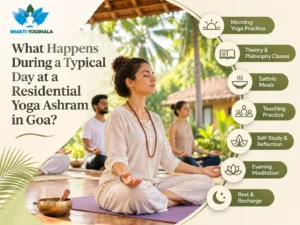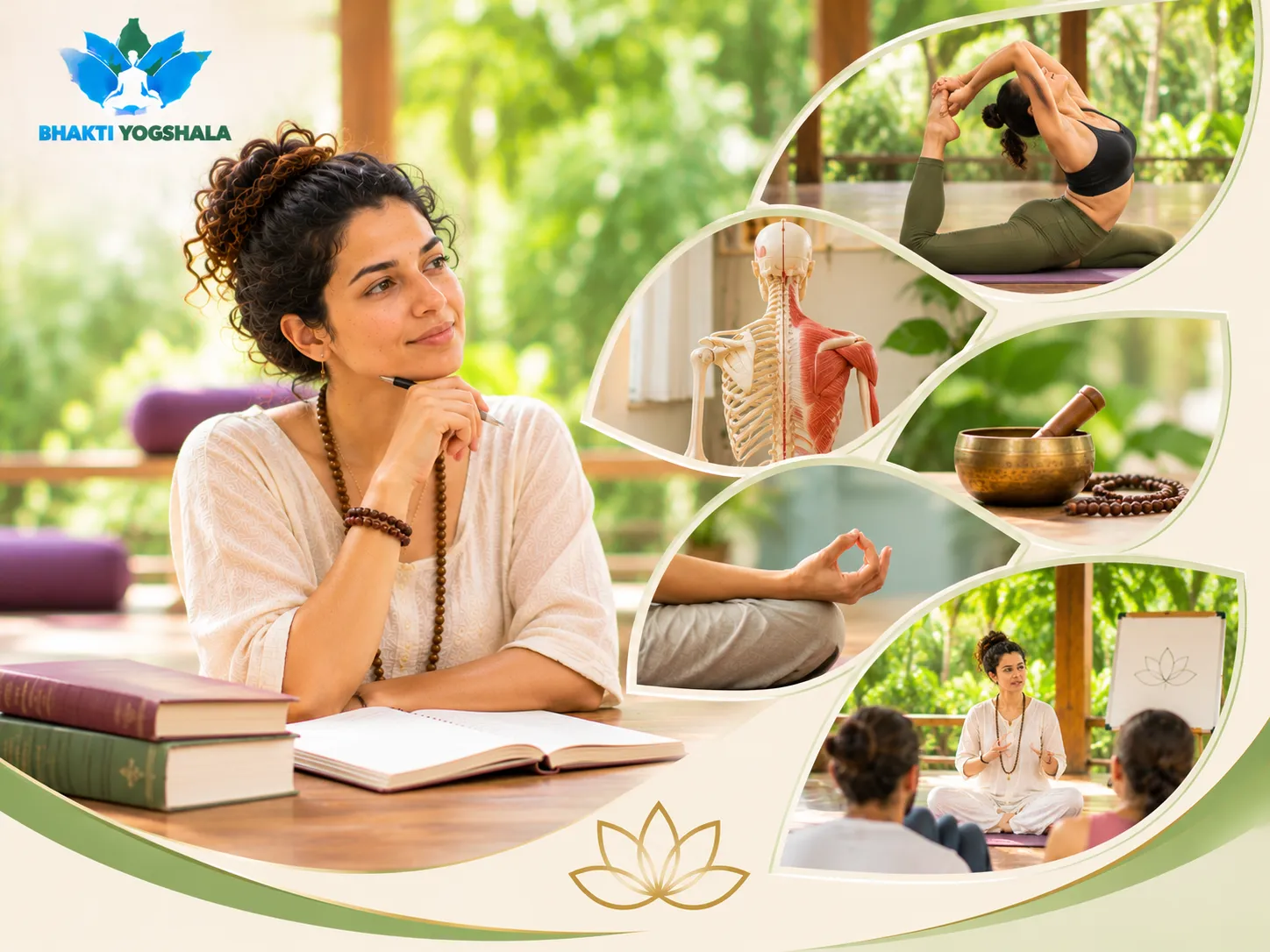
A residential yoga teacher training programme follows a structured daily routine. Students usually spend their day moving between yoga practice, meditation, theory classes, meals, practical learning and personal study.
At Bhakti Yogshala in Agonda, Goa, the published 200-hour yoga teacher training schedule begins at 6:30 AM and continues into the evening. It includes morning self-practice, two asana classes, yoga philosophy, an asana clinic, anatomy, practicum and evening activities.
If you are considering residential yoga teacher training in Goa, understanding the daily schedule can help you decide whether this type of learning environment suits your expectations.
Here is what a typical training day looks like at Bhakti Yogshala.
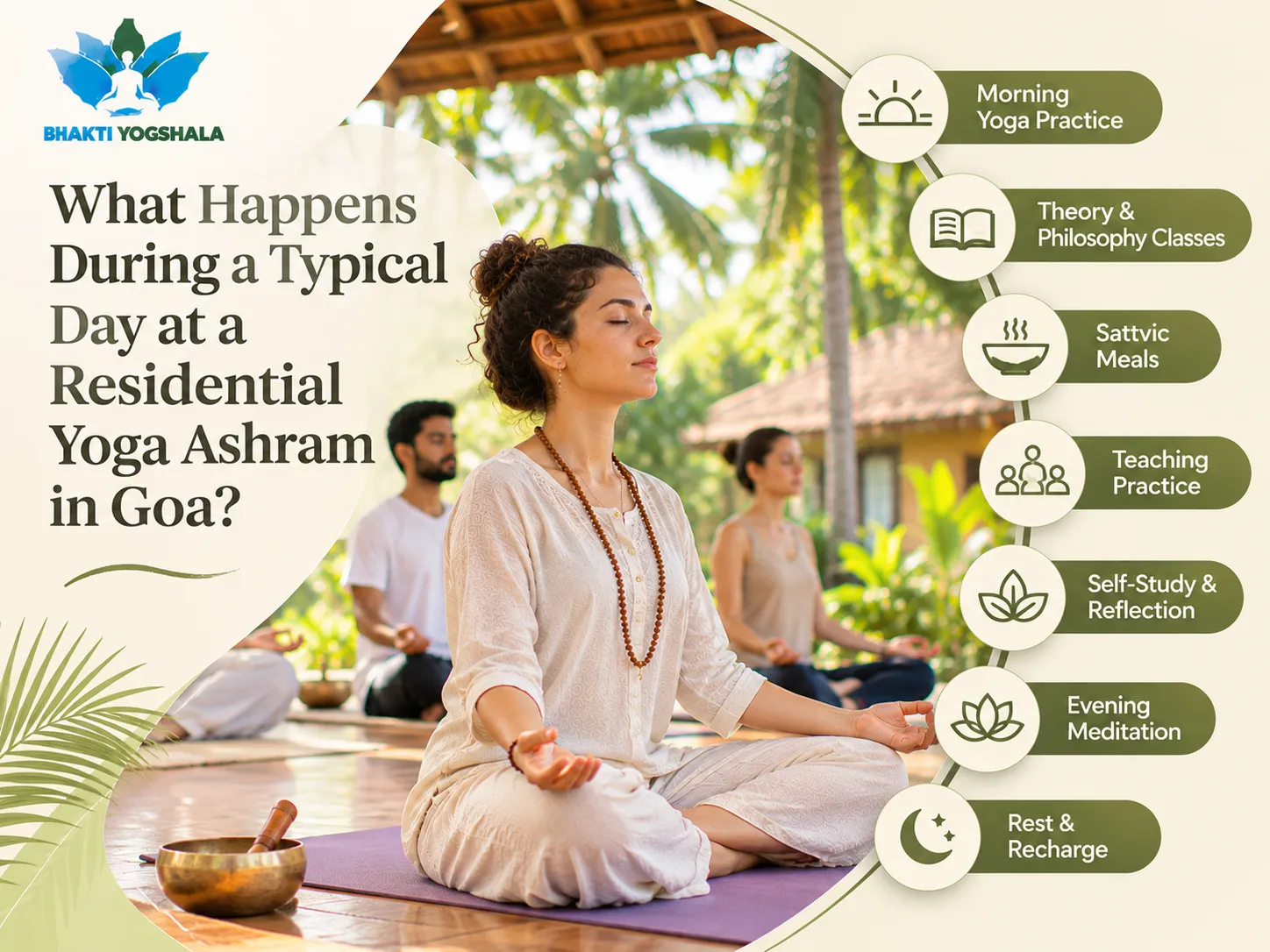
What is daily life like at a residential yoga training in Goa?
Residential yoga training combines accommodation and structured learning during the course period. Students follow a timetable that includes physical practice, theoretical lessons and practical sessions.
The exact routine depends on the school and programme. Some courses begin before sunrise, while others start slightly later. The number of practice sessions, meal breaks and evening activities also varies.
At Bhakti Yogshala, the published 200-hour course timetable begins at 6:30 AM. Students have morning practice, breakfast, philosophy and theory, an asana clinic, anatomy, another asana session and evening meditation or group activities.
This gives students a full day of scheduled learning. There are also periods allocated for meals, rest, leisure and study.
A typical daily schedule at Bhakti Yogshala
The following timetable is published on Bhakti Yogshala’s 200-hour yoga teacher training course page.
Time | Activity |
6:30–7:00 AM | Self-practice, warm-up, pranayama, meditation and jala-neti |
7:00–8:30 AM | First asana class: Hatha, Vinyasa, Ashtanga or Yin |
8:30–10:15 AM | Breakfast and leisure |
10:15–11:15 AM | Philosophy, theory or Ayurveda |
11:30 AM–1:15 PM | Asana clinic, adjustment and practicum |
1:30–3:20 PM | Lunch, rest and leisure |
3:20–4:20 PM | Anatomy and theory |
4:30–6:00 PM | Second asana class |
6:00–6:30 PM | Refreshment and tea |
6:30–7:30 PM | Meditation, kirtan or group discussion |
7:30 PM onwards | Dinner, study or free time |
The schedule may change according to the course intake. Confirm the latest timetable with the school before making travel arrangements.
What happens during each part of the day?
6:30–7:00 AM: Early morning self-practice
The day begins with a short self-practice session. According to the published timetable, this period may include warm-up, pranayama, meditation, jala-neti and work on individual postures.
Pranayama refers to yogic breathing practices. Meditation gives students time to settle their attention before the main physical practice begins.
Jala-neti is a traditional nasal cleansing practice listed in the school’s schedule. Students should follow the instructor’s guidance and the school’s hygiene instructions before attempting it.
This first session helps students prepare for the longer asana class that follows.
7:00–8:30 AM: Morning asana class
The morning session focuses on physical yoga practice. Bhakti Yogshala’s published timetable lists Hatha, Vinyasa, Ashtanga and Yin Yoga as possible class styles.
Each style approaches movement differently.
- Hatha Yoga: Students work with postures, breathing and alignment at a structured pace.
- Ashtanga Vinyasa: Practice follows a more structured sequence connecting movement and breath.
- Vinyasa Flow: Postures are linked through flowing movement.
- Yin Yoga: Longer-held postures are used as part of a slower practice.
The specific style taught may vary according to the timetable and teaching session.
8:30–10:15 AM: Breakfast and leisure
After the first asana class, students have a scheduled breakfast and leisure period.
This is an opportunity to eat, rest and prepare for the next academic session. Students may also use some of this time to organise their notes or review what they practised in the morning.
Bhakti Yogshala lists vegetarian meals among the inclusions on its 200-hour course page. Confirm the current meal arrangements and any dietary requirements directly with the school.
10:15–11:15 AM: Yoga philosophy, theory and Ayurveda
The next session moves from physical practice to theoretical learning.
Yoga philosophy helps students understand the ideas and principles associated with yoga. The published curriculum at Bhakti Yogshala includes the history of yoga, an introduction to the Yoga Sutras, the eight limbs of yoga and the study of traditional texts.
Ayurveda is also listed in the timetable as a subject covered during the course.
Students may need to take notes, participate in discussions and review concepts outside class hours.
11:30 AM–1:15 PM: Asana clinic, adjustment and practicum
This session focuses on understanding postures and learning how to work with them in a teaching context.
The course page lists asana clinics, adjustments and practicum as part of the timetable. Its teaching methodology curriculum also includes observation, demonstrations, assisting, alignment and potential risks associated with yoga postures.
Students can study how instructions are given, how postures are approached and how variations may be introduced.
A practicum provides an opportunity to apply classroom learning in a practical setting. The exact activities and assessment arrangements should be confirmed with the school.
1:30–3:20 PM: Lunch, rest and leisure
The afternoon break provides time for lunch and recovery after the morning’s physical and academic sessions.
Students can use this period to rest, have a meal, read or review their class notes.
A residential programme can have a demanding timetable. Breaks are an important part of the day, so students should use this time according to their needs rather than feeling pressured to practise continuously.
3:20–4:20 PM: Anatomy and theory
The next academic session covers anatomy and theory.
Yoga anatomy helps students understand the body’s structure and movement in relation to yoga postures. It is relevant to learning alignment, observing movement and understanding why different students may need different modifications.
Bhakti Yogshala lists anatomy and theory as part of its 200-hour training timetable.
4:30–6:00 PM: Afternoon asana class
Students return to physical practice for the second asana session of the day.
The published course timetable lists Hatha, Vinyasa, Ashtanga and Yin Yoga as part of its multi-style training. The afternoon class provides another opportunity to work with postures and the principles introduced during the day’s earlier sessions.
The content of the class may differ depending on the style being taught and the course schedule.
6:00–6:30 PM: Refreshment and tea
After the afternoon practice, students have a short refreshment break.
This period allows them to recover before the evening activity. The school’s published timetable lists tea during this interval.
6:30–7:30 PM: Meditation, kirtan and group discussion
The evening session may include meditation, kirtan or group discussion.
Meditation gives students time to practise attention and awareness. Kirtan involves devotional singing and chanting, while group discussions can provide an opportunity to revisit ideas from the day’s classes.
The activity depends on the published course schedule and the day’s programme.
7:30 PM onwards: Dinner, study and free time
The formal timetable lists dinner, study or free time from 7:30 PM onwards.
Students may use the evening to eat, organise notes, read course materials or prepare for the next day.
It is also important to get sufficient rest. With an early start the following morning, managing personal time and sleep can make the routine easier to follow.
What do students learn beyond asana practice?
A residential 200-hour yoga teacher training programme covers more than physical postures.
Bhakti Yogshala’s published curriculum includes several subjects:
Pranayama: Students study yogic breathing practices, including Nadi Shodhana, Bhramari, Sheetali and other listed techniques.
Meditation: The curriculum lists Yoga Nidra, breathing meditation, Trataka and other meditation approaches.
Yoga philosophy: Students are introduced to yoga history, the Yoga Sutras and the eight limbs of yoga.
Anatomy: Theory sessions introduce the relationship between the body and yoga practice.
Teaching methodology: The course includes observation, demonstrations, classroom management, assisting, alignment and practicum.
These subjects help students understand the different areas involved in learning and teaching yoga. The depth of each subject depends on the curriculum and the time allocated to it.
Is there free time during residential yoga training?
Yes. Bhakti Yogshala’s published schedule includes specific periods for breakfast, lunch, leisure, rest and evening free time.
However, students should expect much of the day to be structured around classes and practice.
The available personal time may be used for:
- Resting after asana sessions
- Eating meals
- Reviewing class notes
- Reading course materials
- Personal activities
- Preparing for the next day’s sessions
The exact amount of free time depends on the course timetable and any additional activities scheduled during the programme.
If you are comparing residential schools, ask for a complete timetable rather than relying only on the advertised course duration.
What should you expect from residential life in Agonda?
Bhakti Yogshala lists its training location at Main Agonda Beach Road, Agonda, Goa 403702.
The 200-hour course page describes accommodation and vegetarian meals among the programme inclusions. It also lists Wi-Fi and weekend sightseeing trips. Students should confirm the current availability and exact inclusions for their selected intake.
Before travelling, ask the school about:
- Accommodation arrangements and room options
- Meal timings and dietary requirements
- What equipment is supplied
- Arrival and departure arrangements
- Current course dates
- Additional costs, if any
- The latest daily timetable
Agonda is the area where Bhakti Yogshala lists its Goa training location. Make sure you have the confirmed address and arrival instructions before travelling.
Is a residential yoga teacher training programme right for you?
Residential training may suit people who want to follow a structured learning routine and spend an extended period studying yoga.
Before enrolling, consider whether you are comfortable with:
- Early morning practice
- More than one asana session in a day
- Theory and philosophy classes
- Practical teaching sessions
- Scheduled meals and breaks
- Group learning
- Personal study outside class hours
You should also consider your current practice level and any physical requirements. If you have an injury or health concern, seek appropriate professional advice and discuss your needs with the school before joining.
Ask the school to explain its eligibility requirements, teaching practicum, assessment process and course arrangements before making a payment.
Experience residential yoga teacher training at Bhakti Yogshala
Bhakti Yogshala conducts a multi-style 200-hour yoga teacher training programme in Agonda, Goa. Its published timetable combines morning self-practice, asana classes, yoga philosophy, anatomy, teaching practicum and evening activities.
The course curriculum lists Hatha, Ashtanga Vinyasa, Vinyasa Flow and Yin Yoga, alongside pranayama, meditation and teaching methodology.
If you want to understand the programme in more detail, visit the 200-hour yoga teacher training in Goa page.
Bhakti Yogshala
Main Agonda Beach Road, Canacona, Agonda, Goa 403702
Phone/WhatsApp: +91 9897355995
Email: bhaktiyogshala@gmail.com
For current course dates, accommodation details, fees and availability, contact Bhakti Yogshala before booking.
Frequently Asked Questions
1. What happens during a typical day at a residential yoga ashram in Goa?
A typical residential yoga training day may include morning meditation, pranayama, asana practice, philosophy, anatomy, teaching methodology, meals and evening activities. At Bhakti Yogshala, the published 200-hour schedule begins at 6:30 AM and continues with classes and activities until the evening.
2. What time does yoga teacher training start at Bhakti Yogshala?
The published 200-hour timetable begins at 6:30 AM with self-practice, warm-up, pranayama, meditation and jala-neti. Confirm the schedule for your selected intake before travelling.
3. How many yoga classes are held each day?
Bhakti Yogshala’s published timetable includes two main asana classes, one in the morning and another in the afternoon. It also lists a morning self-practice session and an asana clinic or practicum.
4. Do students study yoga philosophy during residential training?
Yes. Yoga philosophy is part of Bhakti Yogshala’s published 200-hour curriculum. The course information lists yoga history, the Yoga Sutras, the eight limbs of yoga and the study of traditional scriptures.
5. Is anatomy included in the 200-hour yoga teacher training?
Yes. Anatomy and theory are included in the published daily schedule and curriculum.
6. Do students get free time during yoga teacher training?
Yes. The published schedule includes breakfast and leisure, lunch and rest, a refreshment break and dinner, study or free time in the evening. The amount of personal time depends on the day’s schedule.
7. Are meals included in residential yoga teacher training at Bhakti Yogshala?
Bhakti Yogshala lists vegetarian meals among the inclusions on its 200-hour course page. Confirm the current meal arrangements, dietary options and inclusions for your chosen intake directly with the school.
8. Where is Bhakti Yogshala located in Goa?
Bhakti Yogshala lists its address as Main Agonda Beach Road, Canacona, Agonda, Goa 403702, India.
9. Is the daily routine the same at every yoga ashram in Goa?
No. Each school follows its own curriculum and timetable. Start times, practice sessions, theory classes, meals and rest periods can differ. Always request the latest schedule from the school you are considering.
10. Can I join Bhakti Yogshala’s residential 200-hour yoga teacher training?
Bhakti Yogshala states that its programme starts from the basics and welcomes people who want to deepen their personal practice or pursue yoga teaching. Contact the school to confirm current eligibility and course arrangements.