Food becomes part of your routine when you join a residential Yoga Teacher Training programme. Along with yoga practice, pranayama, meditation and theory classes, you need regular meals that fit around the course schedule.
For students considering Yoga Teacher Training in India, it is useful to know what type of food is served, whether meals are included and whether dietary requirements can be accommodated.
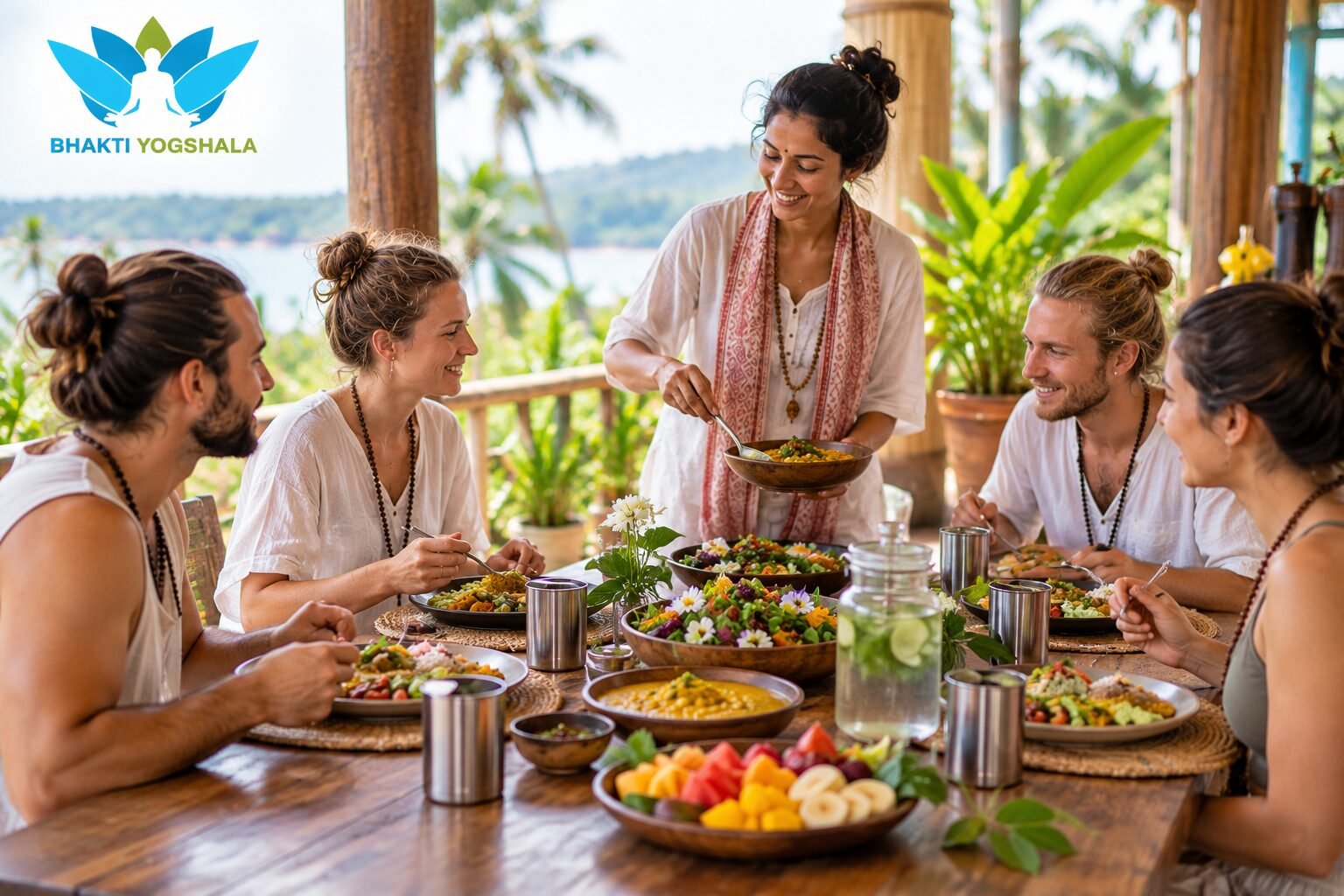
At Bhakti Yogshala, published programme information describes vegetarian meals that may include Indian curry vegetables, rice, flavoured rice, pulses, lentils, khichri, fresh fruits, fresh vegetables, herbal tea and Indian masala chai. Some programme information also mentions vegan and gluten-free options.
The exact menu and meal arrangements can vary by course, location and package, so students should confirm the details for their chosen programme.
What Is a Yogic Diet?
A yogic diet is generally associated with the wider philosophy of yoga and mindful living. It can involve paying attention to food choices, eating habits and how meals fit into daily practice.
Residential yoga schools may serve simple vegetarian meals as part of the course routine. However, there is no single menu followed by every Yoga Teacher Training school.
The food available depends on the school, location and programme. It is therefore better to check the actual meal plan rather than assume that every YTT follows the same diet.
What Food Is Served During Yoga Teacher Training in India?
Food varies between yoga schools and programmes.
Bhakti Yogshala’s published programme information lists:
- Vegetarian curry vegetables
- Rice
- Flavoured rice
- Pulses
- Lentils
- Khichri
- Fresh fruits
- Fresh vegetables
- Herbal tea
- Indian masala chai
The Rishikesh 100-hour programme describes three vegetarian meals along with herbal tea and Indian masala chai twice a day. It also states that fresh fruits, vegetables and other ingredients are sourced from organic vendors.
The Goa 200-hour programme describes pure vegetarian meals and includes dishes such as curry vegetables, khichri, flavoured rice, pulses and lentils.
These details provide an indication of the food students may receive, but the menu should be confirmed for the specific course.
Vegetarian Food During Yoga Teacher Training
Vegetarian food forms a major part of the meal offering described by Bhakti Yogshala.
Meals may include combinations of cooked vegetables, rice, lentils, pulses, Indian curry preparations, khichri, fruits and fresh vegetables.
For students already following a vegetarian diet, this can make meal planning during a residential course simpler.
Students who are not used to Indian vegetarian food may encounter different spices, cooking methods and ingredients during their stay. If you have allergies or specific dietary requirements, discuss them with the school before travelling.
Fresh Fruits and Vegetables
Fresh produce is included in the food information published for Bhakti Yogshala.
The Rishikesh programme information states that fresh fruits and vegetables are sourced from organic vendors.
Fresh produce can be served alongside cooked meals or included in the daily food arrangements. The exact selection will depend on the programme and available ingredients.
Indian Curries, Rice and Lentils
Indian vegetarian meals often combine vegetables, grains and pulses.
Vegetables
Vegetable curries can include seasonal vegetables prepared with Indian spices.
Rice
Rice is commonly served as a staple and may be prepared plain or with additional ingredients and flavours.
Pulses and Lentils
Pulses and lentils are commonly used in Indian cooking and may be served as dal or in other preparations.
The exact recipes depend on the school’s kitchen and menu.
Khichri During Yoga Teacher Training
Khichri is a traditional Indian dish commonly prepared with rice and lentils or pulses, along with spices and sometimes vegetables.
Bhakti Yogshala specifically lists khichri among the foods served in its published Rishikesh and Goa programme information.
For students unfamiliar with Indian food, khichri can be a relatively simple meal because the main ingredients are cooked together.
Herbal Tea and Masala Chai
Bhakti Yogshala’s programme information mentions both herbal tea and Indian masala chai.
The Rishikesh 100-hour programme states that herbal tea and masala chai are provided twice a day.
Students with dietary restrictions should check the ingredients and preparation of beverages if this is important for their diet.
Vegan and Gluten-Free Food Options
Dietary requirements are particularly important for students travelling from other countries.
Bhakti Yogshala’s published Goa 200-hour programme information states that vegan and gluten-free meals are available.
If you require vegan or gluten-free meals, confirm the arrangements before booking. Ask:
- Can the requirement be accommodated?
- Which meals can be modified?
- Are substitutions available?
- Are there any cross-contact concerns?
- Do you need to bring specific ingredients?
Students with medically diagnosed allergies or strict dietary requirements should discuss their needs with the school before travelling.
Does Food Differ Between Rishikesh and Goa?
It can.
Bhakti Yogshala offers Yoga Teacher Training programmes in both Rishikesh and Goa, and published information for both locations describes vegetarian meals.
The listed food includes vegetables, rice, pulses, lentils and khichri. However, the exact menu, meal timings and dietary options may differ according to the course and package.
For this reason, check the food arrangements for the specific programme you intend to attend.
How Does Food Fit Into the YTT Schedule?
Meals are scheduled around the daily training routine.
Bhakti Yogshala’s published Rishikesh 100-hour schedule includes morning self-practice and asana practice followed by breakfast. Lunch is followed by afternoon theory and practice, while dinner follows evening activities such as meditation, kirtan or group discussion.
The Goa 200-hour programme follows a similarly structured routine, with meals arranged around morning practice, afternoon rest and evening activities.
When comparing residential programmes, look at both the food and the meal timings.
What Should You Check Before Booking?
Food may be one of several practical details to consider before enrolling in a residential Yoga Teacher Training.
Ask the school:
- Are meals included in the course fee?
- What type of food is served?
- How many meals are provided each day?
- Are vegan or gluten-free options available?
- Can allergies or dietary restrictions be accommodated?
- What are the meal timings?
- Does the menu change during a longer course?
- Are beverages such as tea included?
Getting these details before booking can help you choose a programme that fits your dietary needs.
What Food Can You Expect at Bhakti Yogshala?
Bhakti Yogshala offers 100-hour, 200-hour and 300-hour Yoga Teacher Training programmes in India, including options in Rishikesh and Goa. Its programmes cover areas such as yoga practice, meditation, pranayama, philosophy, Ayurveda and teaching methodology.
The published food information for its residential programmes includes vegetarian meals.
For example, the Rishikesh 100-hour programme describes an in-house kitchen serving Indian curry vegetables, khichri, flavoured rice, pulses or lentils, fresh fruits and vegetables, herbal tea and masala chai.
The Goa 200-hour programme describes pure vegetarian meals and states that vegan and gluten-free meals are available.
Students should confirm the current food arrangements for their chosen course before enrolling.
Is a Yogic Diet Suitable for Everyone?
Not necessarily.
People have different nutritional needs, allergies, medical requirements and food preferences. A vegetarian or yogic-style menu may suit some students but may need modification for others.
If you have a medical condition, food allergy or medically prescribed diet, discuss your requirements with an appropriate healthcare professional and the yoga school before travelling.
Why Food Matters During Residential Yoga Training
Food becomes part of everyday life when you stay at a yoga school for several weeks.
Meals need to fit around:
- Early morning practice
- Asana classes
- Pranayama
- Meditation
- Philosophy classes
- Anatomy and theory
- Teaching practice
- Independent study
- Rest
For international students, meals can also be part of the experience of living and studying in India.
Final Thoughts
Understanding the food provided during Yoga Teacher Training in India can help you compare residential programmes.
Bhakti Yogshala’s published information describes vegetarian meals that may include curry vegetables, rice, pulses, lentils, khichri, fresh fruits and vegetables, herbal tea and masala chai. Some programme information also lists vegan and gluten-free options.
Because menus, timings and dietary arrangements can vary, confirm the details of your chosen course before enrolling.
Frequently Asked Questions
1. What food is served during Yoga Teacher Training in India?
Food varies by school, but Bhakti Yogshala’s published information includes vegetarian curry vegetables, rice, pulses, lentils, khichri, fresh fruits, vegetables, herbal tea and masala chai.
2. Is food included in Yoga Teacher Training at Bhakti Yogshala?
Food is included in the residential arrangements described on relevant programme pages. The exact meals and inclusions vary by course, location and package.
3. Is the food vegetarian at Bhakti Yogshala?
Yes. Published programme information for Rishikesh and Goa describes vegetarian meals as part of the residential experience.
4. Does Bhakti Yogshala provide vegan food?
The published Goa 200-hour programme states that vegan meals are available. Students should confirm availability for their specific course before enrolling.
5. Is gluten-free food available during Yoga Teacher Training?
Bhakti Yogshala’s Goa 200-hour programme information states that gluten-free meals are available. Students with strict dietary requirements should confirm preparation arrangements before travelling.
6. What is a typical yogic meal during Yoga Teacher Training?
A yogic-style meal may include simple vegetarian foods such as cooked vegetables, rice, lentils, pulses, fruits or khichri. Menus vary between schools and programmes.
7. Are fruits and vegetables provided during YTT?
Bhakti Yogshala’s published programme information includes fresh fruits and vegetables. Its Rishikesh 100-hour programme states that fresh produce and other ingredients are sourced from organic vendors.
8. Does food differ between Rishikesh and Goa?
It can. Vegetarian food is described for both locations, but the menu, timings and dietary options may vary by programme and package.