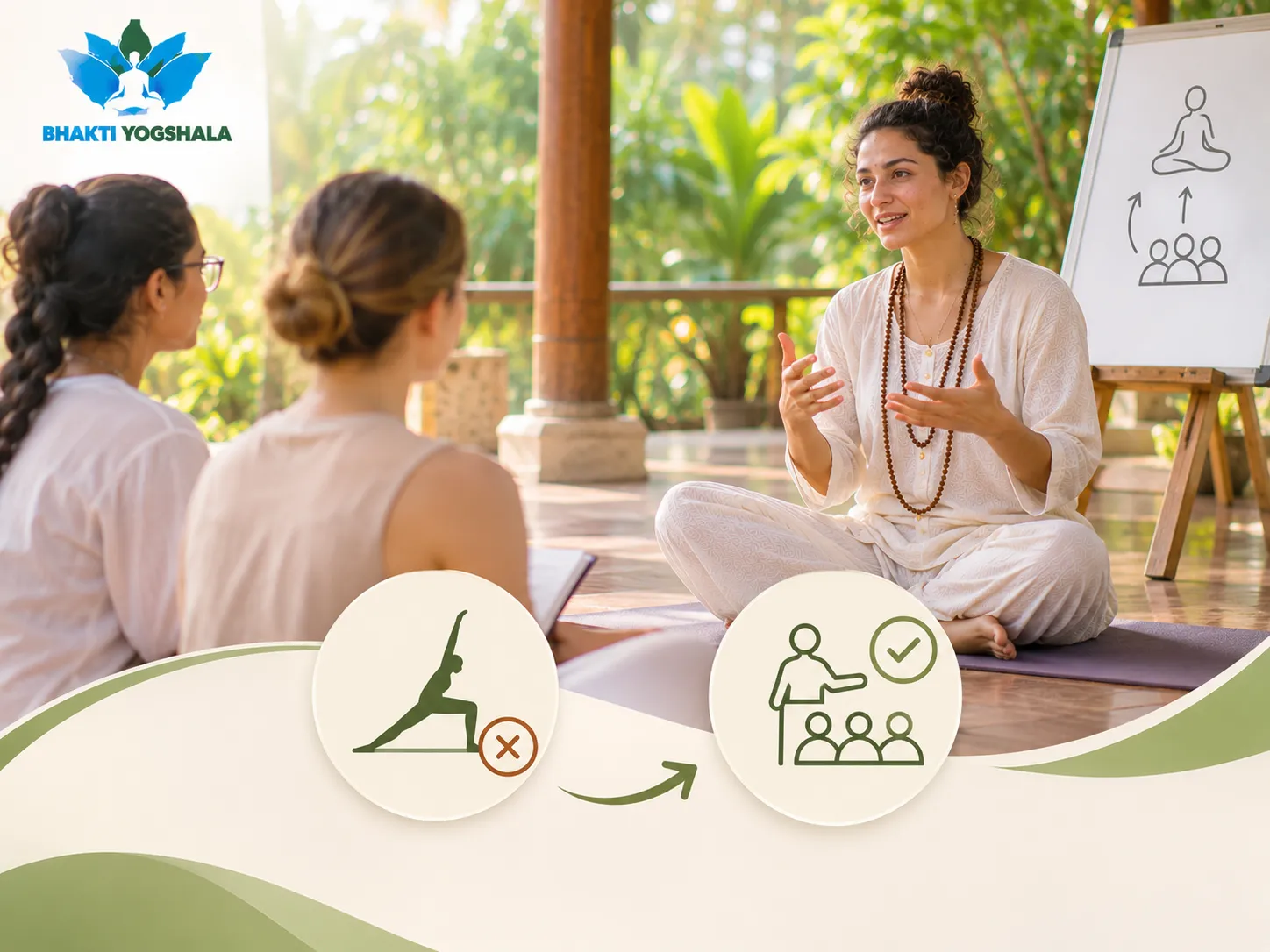
Being able to perform a difficult yoga posture does not automatically make someone a good yoga teacher.
A teacher needs to explain movements, demonstrate appropriate variations, observe students and guide a class at a suitable pace. These skills develop through practice, not simply by repeating advanced asanas.
That is why teaching practice is an important part of a 200-hour yoga teacher training in Goa. Trainees need time to move from practising yoga themselves to understanding how to guide someone else through a session.
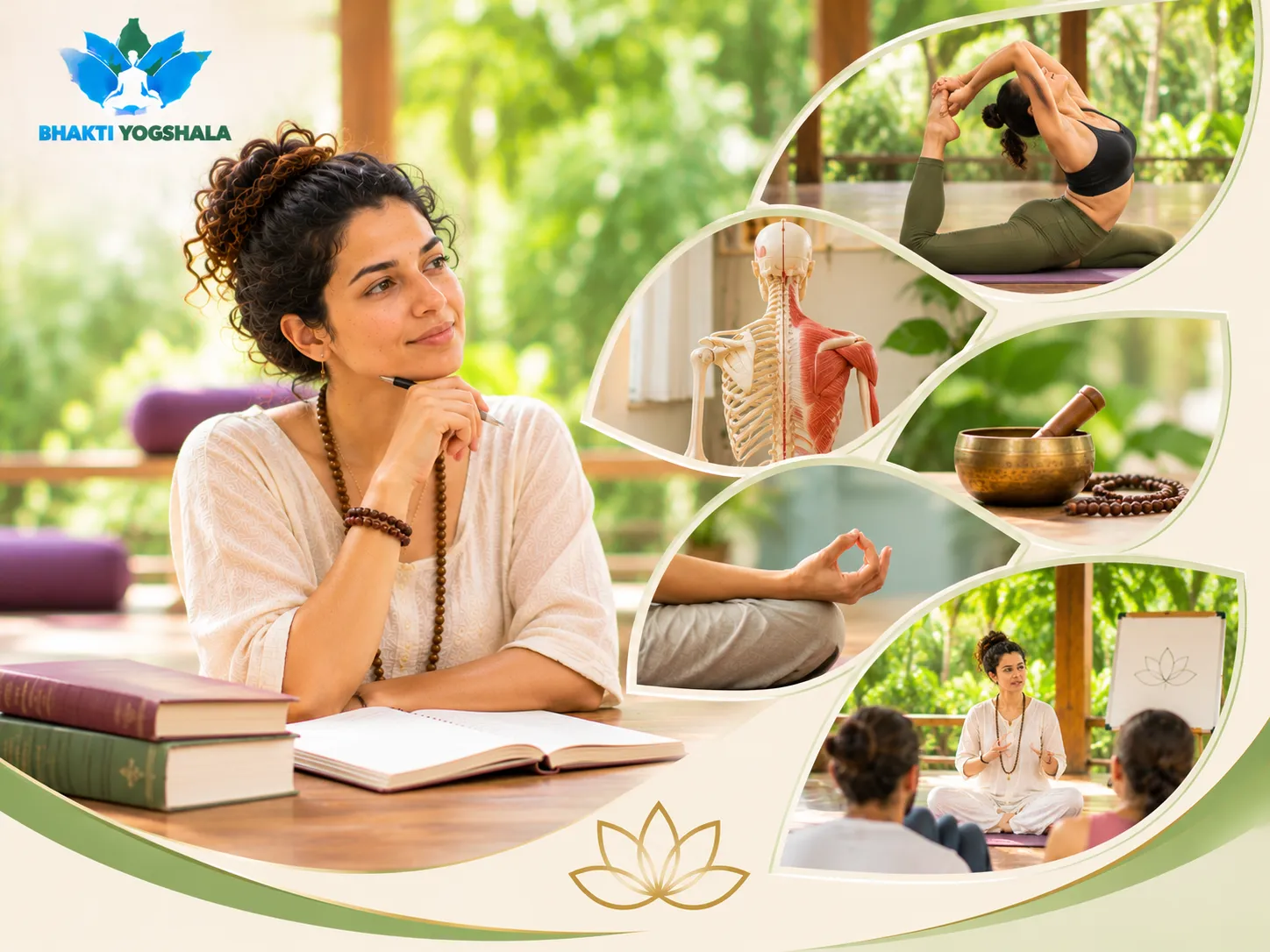
At Bhakti Yogshala, the published 200-hour curriculum includes teaching methodology, classroom management, observation, demonstrations, assisting, alignment and practicum classes. These subjects help students explore the practical responsibilities involved in teaching yoga.
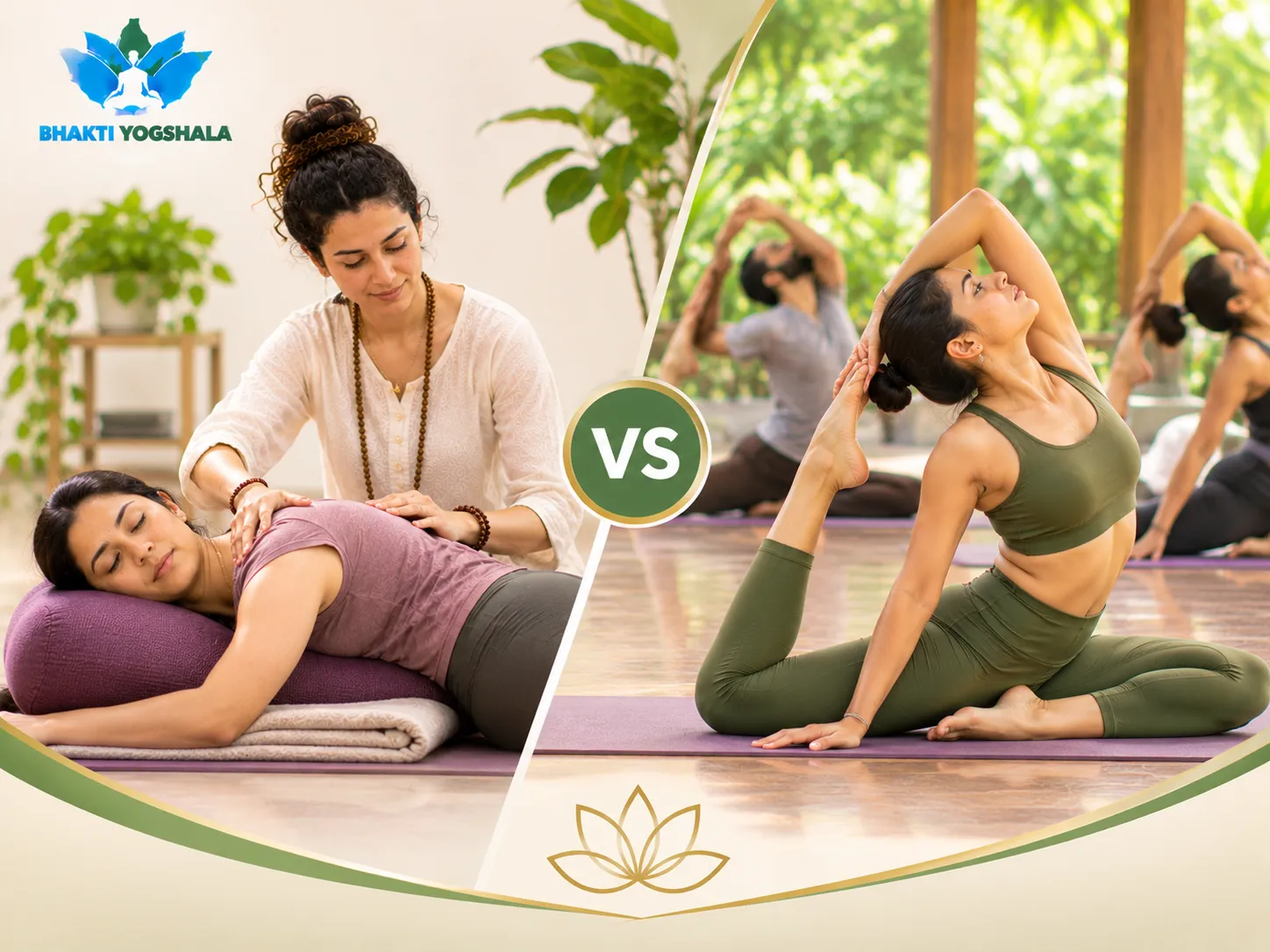
Performing yoga and teaching yoga are two different skills
During personal practice, you mainly focus on your own breathing, alignment, movements and concentration. You can repeat a posture until you understand how it feels in your body.
Teaching requires a different kind of attention.
You need to communicate with several people, notice how they respond to instructions and adjust the class when something is not working. Students may have different levels of experience, flexibility, strength and confidence.
For example, a teacher may be comfortable performing a deep forward bend. But when guiding a beginner through the same posture, the teacher needs to explain how to approach the movement, offer an appropriate variation and avoid encouraging someone to force their body into a position.
The ability to perform the posture and the ability to teach it are related, but they are not interchangeable.
Why teaching practice matters in yoga teacher training
Teaching practice gives trainees an opportunity to apply what they learn during theory and practical sessions.
Reading about alignment or listening to an explanation of class sequencing is useful. However, standing in front of a group and explaining a sequence introduces challenges that cannot be fully understood through observation alone.
Here are some reasons practical teaching deserves attention during teacher training.
1. It helps you communicate instructions clearly
A yoga teacher needs to explain movements in language that students can understand.
An instruction should tell students what to do without making the process unnecessarily complicated. The teacher must also decide when to explain a movement, when to demonstrate it and when to allow students time to practise.
For example, instead of using several technical terms to explain a standing posture, a teacher might break the movement into simple steps: position the feet, lengthen the spine, bend the knees if needed and maintain comfortable breathing.
During teaching practice, trainees can work on giving instructions at the right pace and noticing whether students understand them.
2. It develops observation skills
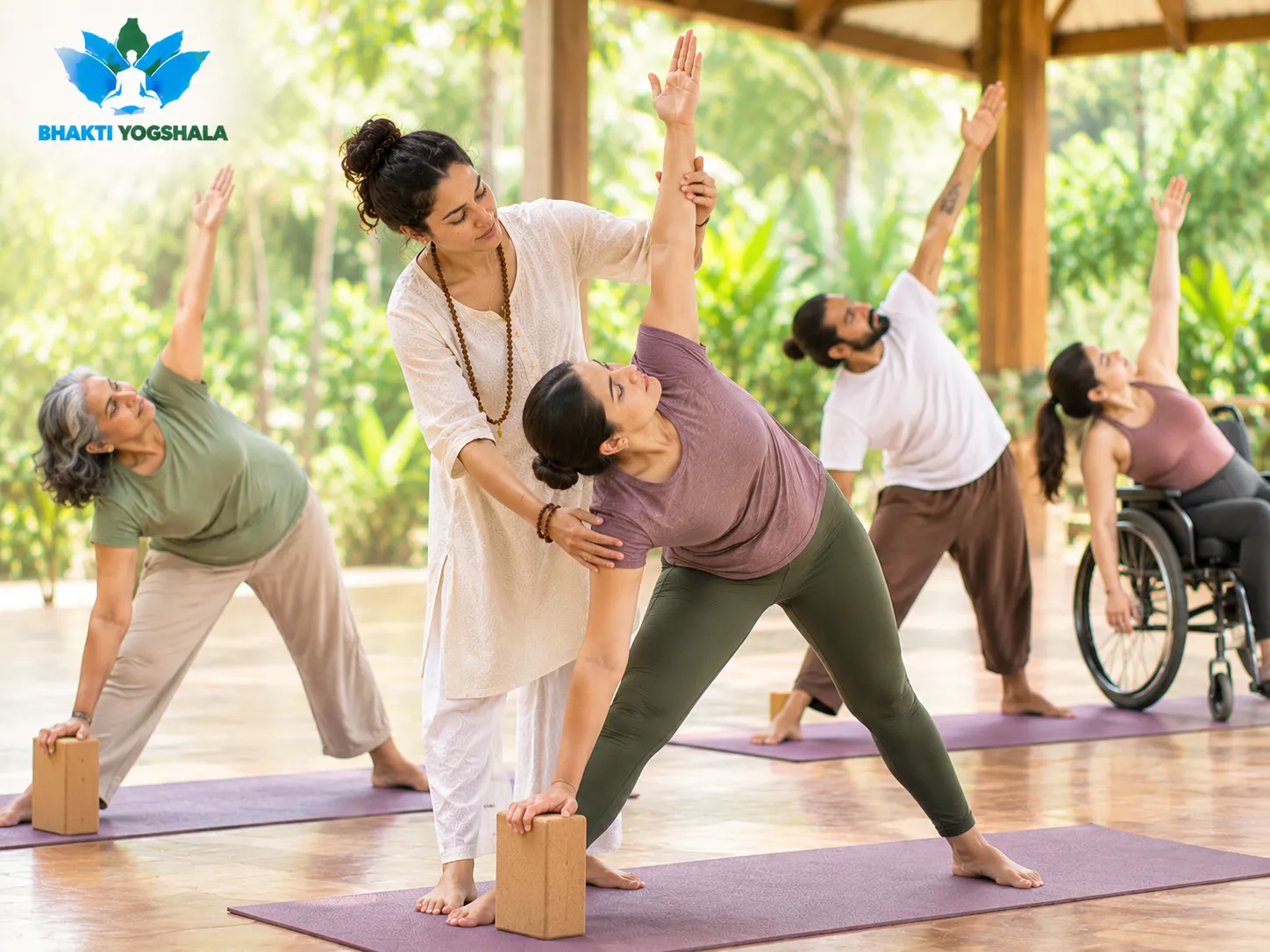
A teacher cannot rely only on what they demonstrate. They also need to observe the people following the instructions.
Students may misunderstand a cue, lose balance, move too quickly or find a posture uncomfortable. Observation helps a teacher recognise when the class needs a clearer explanation or a simpler variation.
This skill is particularly useful when teaching a mixed-level group.
A teacher should not assume that every student will perform a posture in the same way. Teaching practice provides opportunities to develop awareness of different movement patterns and student responses.
3. It improves class sequencing
A yoga class should have a logical structure.
The teacher needs to consider the purpose of the session, the order of postures, transitions, pacing and the time available. A sequence should not simply be a collection of impressive asanas.
For example, a beginner class may need a gradual progression from simple movements to more demanding postures, followed by an appropriate closing practice.
During training, students can practise organising a sequence and explaining why one movement follows another.
4. It teaches you to offer appropriate modifications
Not every student will be comfortable with the same version of a posture.
A teacher should understand how to offer suitable variations without making students feel that they have failed to achieve the full expression of an asana.
Modifications may involve changing the position, reducing the range of movement or using a simpler variation. The choice depends on the posture, the student’s experience and the purpose of the class.
This is one reason anatomy, alignment and observation belong alongside physical practice in teacher education.
5. It builds classroom management skills
Teaching a class involves more than demonstrating movements.
The instructor needs to manage time, explain transitions, maintain a clear structure and respond to questions. They also need to create an environment in which students can follow instructions without feeling rushed or pressured.
Classroom management is a skill that improves through preparation and experience.
6. It develops confidence through preparation
Many trainees feel uncertain when they first guide a group.
They may forget instructions, speak too quickly or struggle to manage the sequence. This is a normal part of learning a new skill.
Repeated practice gives students opportunities to identify these difficulties and improve their teaching approach.
Confidence should come from preparation and understanding, rather than from trying to appear like an advanced practitioner.
The teaching skills every yoga trainee needs to develop
A useful yoga teacher training programme should give students opportunities to understand both the subject and the process of teaching it.
Some important skills include:
Verbal instruction: Explaining movements and breathing practices in clear, understandable language.
Demonstration: Showing a posture or movement when a demonstration will help students understand the instruction.
Observation: Paying attention to how students respond and recognising when further guidance may be needed.
Alignment: Understanding relevant alignment principles and explaining them without forcing every student into an identical position.
Modifications: Offering suitable variations within the teacher’s knowledge and training.
Sequencing: Organising postures and practices into a structured class.
Classroom management: Managing timing, transitions and communication with students.
Teaching ethics: Respecting student boundaries, communicating responsibly and recognising the limits of one’s training.
These skills work together. A teacher may understand the theory of a posture but still need practice explaining it to a group.
What happens during a yoga teaching practicum?
A practicum is a practical learning session in which trainees apply their knowledge by taking part in teaching activities.
The exact format varies between schools. It may involve preparing a sequence, demonstrating postures, giving instructions, observing classmates or practising how to guide part of a class.
A useful teaching-practice session may involve the following stages:
- Prepare the class: Decide the purpose, sequence and approximate timing.
- Introduce the practice: Explain what students will be doing and provide clear starting instructions.
- Guide the movements: Demonstrate or verbally explain the relevant postures.
- Observe the group: Notice whether students are following the instructions and whether they need another explanation.
- Offer appropriate variations: Explain alternatives when a posture is not suitable for a student’s current ability.
- Review the session: Identify what worked, what was unclear and what needs further practice.
At Bhakti Yogshala, the published 200-hour course timetable includes an asana clinic, adjustment and practicum session from 11:30 AM to 1:15 PM.
Its teaching methodology curriculum also lists classroom management, observation, demonstrations, assisting, hands-on adjustment techniques, alignment and potential posture risks, and practicum classes.
These are specific elements prospective students can review when comparing teacher training programmes.
Why alignment and modifications matter more than advanced poses
Advanced postures can be part of yoga practice, but they are not the only measure of a teacher’s ability.
A teacher who can perform an advanced arm balance may still need to develop skills in explaining a basic standing posture to a beginner.
Likewise, a trainee who cannot yet perform every advanced variation can still work towards becoming a capable teacher by understanding the principles behind the practices they teach.
The important distinction is between demonstrating a posture and guiding another person through it.
Good teaching requires the instructor to understand the purpose of the movement, communicate relevant instructions and recognise when a student needs a different approach.
Alignment should also be taught with appropriate context. Bodies differ, and not every student needs to look exactly like the teacher in a demonstration.
A responsible instructor works within their training and does not attempt to diagnose injuries or provide medical treatment outside their qualifications.
How teaching methodology is covered at Bhakti Yogshala
Bhakti Yogshala’s published 200-hour yoga teacher training in Goa includes a multi-style curriculum covering Hatha, Ashtanga Vinyasa, Vinyasa Flow and Yin Yoga.
The course page also lists yoga philosophy, anatomy, pranayama, meditation and teaching methodology.
Its published teaching methodology topics include:
- Lifestyle and ethics of a yoga teacher
- Classroom management
- Principles of observation
- Demonstrations
- Assisting and hands-on adjustment techniques
- Correct alignment and potential risks of yoga postures
- Practicum classes
The daily schedule includes a dedicated asana clinic, adjustment and practicum period, alongside asana classes and anatomy and theory sessions.
This combination is relevant for students who want to understand how personal practice connects with teaching skills.
Before enrolling, ask the school how practicum sessions are conducted, whether trainees receive feedback, how teaching competency is assessed and what certificate is issued after successful completion.
You can review the 200-hour yoga teacher training in Goa to explore the published curriculum.
How to evaluate teaching practice before choosing a yoga school
If you are comparing yoga teacher training programmes, look beyond photographs of advanced postures and the number of styles mentioned in the course description.
Ask practical questions about how the school prepares students to teach.
Consider checking:
- Does the curriculum include teaching methodology and practicum?
- Will students have opportunities to demonstrate and explain postures?
- Is classroom management included?
- Are observation and alignment covered?
- Are modifications discussed?
- How are students assessed?
- Is feedback provided during practical teaching sessions?
- What are the qualifications and experience of the trainers?
- What certificate will students receive after completing the programme?
These questions can help you understand whether the course includes opportunities to develop teaching skills, rather than focusing only on personal asana practice.
Choose a teacher training programme that develops your teaching skills
Your personal yoga practice is an important part of becoming a teacher. However, the ability to guide others requires additional learning.
Teaching methodology, observation, sequencing, communication and practicum all contribute to that development. They help trainees understand what happens when yoga moves from individual practice to a shared classroom.
If you are considering a 200-hour yoga teacher training in Goa, review the syllabus carefully and ask how the school approaches practical teaching.
Bhakti Yogshala is located on Main Agonda Beach Road, Agonda, Goa 403702. Its website provides details of the 200-hour multi-style programme and its teaching methodology curriculum.
Explore the 200-hour yoga teacher training course or contact Bhakti Yogshala to ask about the current programme, teaching practice and course requirements.
The aim of teacher training is not simply to perform more difficult postures. It is to develop the understanding and practical skills needed to guide a yoga class responsibly.
Frequently asked questions
Is teaching practice important in a 200-hour yoga teacher training?
Yes. Teaching practice gives trainees opportunities to apply their knowledge, practise instructions, observe students and understand class structure. It is an important part of developing the skills needed to guide a yoga session.
Do I need to perform advanced yoga poses to become a yoga teacher?
No. Advanced postures are not the only measure of teaching ability. A teacher also needs to understand the practices they teach, communicate clearly, observe students and offer appropriate variations within their training.
What is a practicum in yoga teacher training?
A practicum is a practical learning session where trainees apply teaching methods. Depending on the school, activities may include demonstrating postures, guiding classmates, preparing sequences and practising verbal instructions.
What is the difference between yoga practice and yoga teaching?
Personal yoga practice focuses on your own learning and development. Teaching involves guiding other people, explaining movements, observing their responses, managing class time and adapting instructions to the group.
Does Bhakti Yogshala include teaching practice in its 200-hour course?
Yes. Bhakti Yogshala’s published 200-hour curriculum lists practicum classes under teaching methodology. Its daily timetable also includes an asana clinic, adjustment and practicum session.
Will yoga teacher training teach me how to correct students?
Bhakti Yogshala’s published curriculum includes observation, assisting, hands-on adjustment techniques, alignment and potential risks of yoga postures. Ask the school how these subjects are taught in practice and what boundaries apply to physical adjustments.
How can I know whether a yoga teacher training course offers enough practical teaching?
Review the syllabus and ask how many opportunities trainees have to practise teaching, how their progress is assessed and whether they receive feedback. A course description should explain the practical learning process rather than simply list yoga styles.
Is a 200-hour yoga teacher training suitable for someone who wants to teach yoga?
A 200-hour programme is commonly used as foundational yoga teacher training. Whether it suits your professional goals depends on the curriculum, school credentials, your readiness and any additional requirements that apply to the teaching work you intend to pursue.