Choosing the right yoga teacher training program can shape your teaching skills, knowledge, and future opportunities. While a 200-hour course is often considered the foundation for becoming a yoga teacher, a 300-hour program is designed for practitioners who want to deepen their expertise. If you are considering 300 hours yoga teacher training Kerala, understanding how it differs from a 200-hour course can help you choose a program that matches your experience and career goals.
Both programs cover important areas such as asanas, pranayama, meditation, yoga philosophy, anatomy, teaching methodology, and practical training. However, they differ considerably in depth, learning expectations, and the level of teaching expertise they develop. Let’s explore the key differences between these two popular training pathways.
What Is a 200-Hour Yoga Teacher Training?
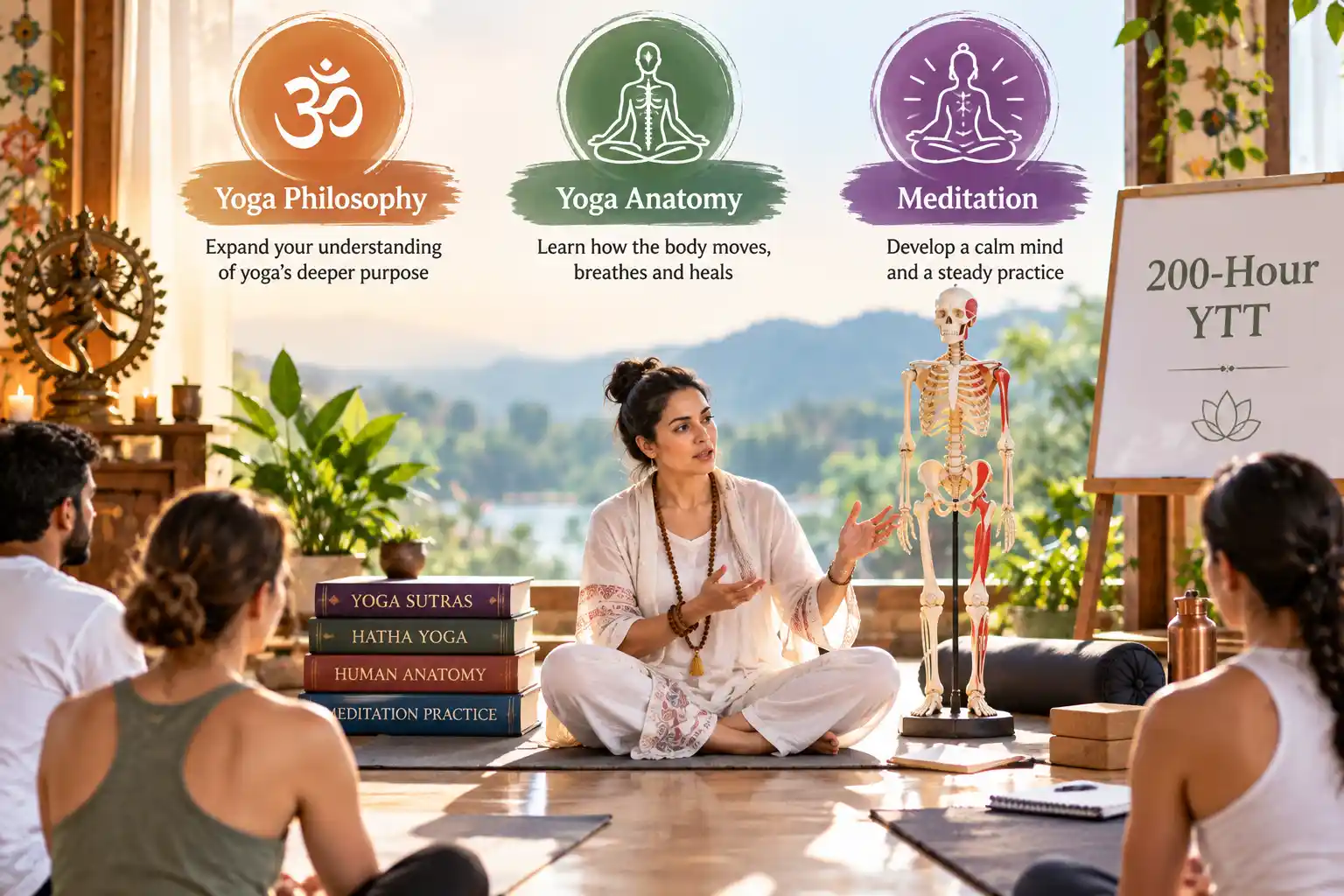
A 200-hour yoga teacher training course generally serves as an entry point into professional yoga teaching. It is suitable for beginners, regular practitioners, and aspiring teachers who want to build a strong foundation in traditional and modern yoga practices.
The curriculum usually introduces students to fundamental yoga postures, alignment principles, breathing techniques, meditation, anatomy, teaching methodology, and the history and philosophy of yoga. Students also learn how to structure classes, communicate instructions clearly, demonstrate postures, and make basic adjustments.
A 200-hour program can therefore be viewed as a comprehensive introduction to the responsibilities of a yoga teacher. It combines theoretical learning with practical teaching sessions so that students can gradually develop confidence in leading individual and group classes.
For someone who has completed a foundational course and wants to continue learning, the next step may be a more advanced program that expands on these concepts rather than simply repeating them.
What Is a 300-Hour Yoga Teacher Training?
A 300-hour yoga teacher training course is generally designed for practitioners who already have foundational teacher-training knowledge. Instead of starting from the basics, it allows students to explore yoga practices and teaching concepts at a greater level of detail.
A 300-hour program may include deeper studies of advanced asanas, sequencing, therapeutic applications, subtle anatomy, meditation, pranayama, yoga philosophy, teaching methodology, and specialized approaches to different student needs. The exact curriculum varies between schools and traditions.
The emphasis is often on refining an existing teaching style and developing a more thoughtful approach to class planning. Students may spend more time analyzing posture mechanics, adapting practices, observing other teachers, and handling different levels of practitioners.
For experienced teachers, 300 hours yoga teacher training Kerala can provide an opportunity to expand their knowledge while experiencing an environment where yoga has a strong cultural and traditional connection.
300 Hours Yoga Teacher Training Kerala: Key Differences from 200 Hours
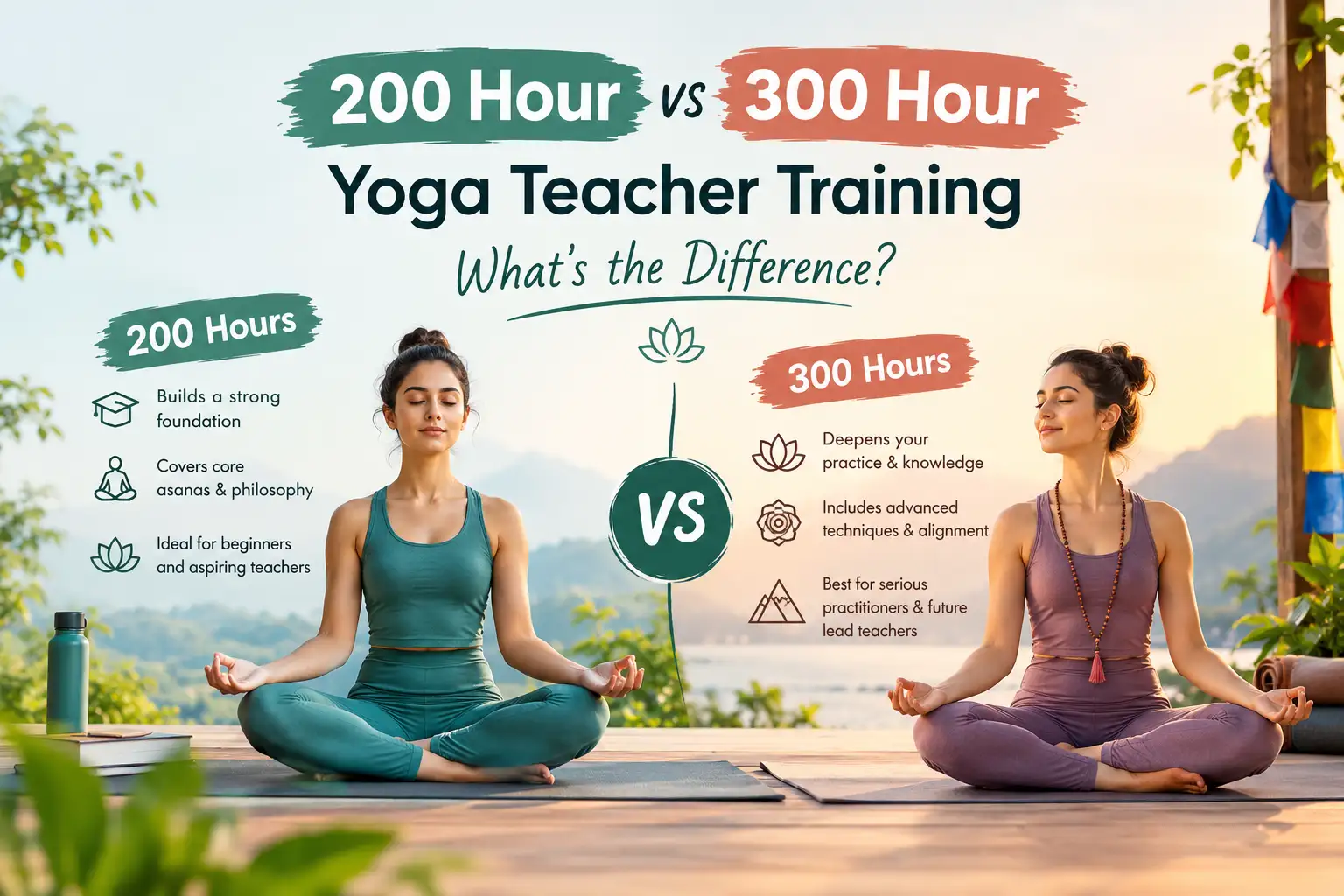
The biggest difference between the two programs is the level and purpose of study. A 200-hour course builds the foundation, while a 300-hour course generally develops more specialized and advanced knowledge.
Here are the main areas where they differ:
- Learning level: A 200-hour course focuses on foundational concepts, whereas a 300-hour course explores existing knowledge in greater depth.
- Prior experience: A 200-hour program may be suitable for new teachers, while a 300-hour course is typically intended for practitioners or teachers with previous training.
- Teaching skills: Basic class planning and instruction are emphasized in 200-hour training, while advanced sequencing, modifications, observation, and specialized teaching methods may receive more attention in 300-hour programs.
- Curriculum depth: The 300-hour curriculum generally provides additional opportunities to study philosophy, anatomy, meditation, pranayama, and advanced practices.
- Professional development: The longer program can help experienced teachers refine their teaching approach and develop areas of specialization.
If you are researching the best 300 hour yoga teacher training Kerala, it is important to look beyond the number of training hours. Check the curriculum, instructors, teaching methodology, practical sessions, accommodation if applicable, and the recognition or certification provided by the school.
Curriculum: 200 Hour vs 300 Hour Training
Although there can be some overlap between the two programs, the depth of study is usually different.
A 200-hour course may introduce anatomy through basic concepts such as the musculoskeletal system, posture alignment, movement patterns, and common precautions. Students learn enough to teach safely while understanding the physical principles behind major yoga postures.
In a 300-hour course, these subjects may be explored more deeply. Teachers can study movement analysis, functional anatomy, sequencing principles, modifications, and ways of adapting practices for different practitioners. This deeper understanding can support more individualized instruction.
The same progression can be seen in yoga philosophy and meditation. A foundational program may introduce major philosophical texts and concepts, while advanced study can encourage students to examine these teachings more critically and connect them with their personal practice and teaching.
This is why advanced yoga teacher training Kerala programs can be useful for teachers who want to move beyond introductory knowledge and develop a more comprehensive understanding of yoga.
Who Should Choose a 200-Hour Course?
A 200-hour program may be a suitable choice if you are relatively new to structured yoga teacher education or want to establish a professional foundation.
It can be appropriate for practitioners who want to:
- Learn how to teach yoga safely and confidently.
- Understand fundamental yoga philosophy and practices.
- Develop basic class sequencing and teaching skills.
- Build a consistent personal practice.
- Begin working toward teaching yoga professionally.
The goal is not necessarily to become an expert in every aspect of yoga after one course. Instead, the training provides the knowledge and practical foundation needed for continued learning.
Who Should Choose a 300-Hour Course?
A 300-hour program is generally more appropriate for someone who has already completed foundational teacher training and wants to deepen their knowledge.
Experienced teachers may choose it to improve their teaching methodology, explore specialized subjects, develop stronger observation skills, or gain greater confidence working with different types of students.
A well-structured advanced yoga teacher training Kerala course can also encourage teachers to examine their own practice more closely. Instead of simply learning additional postures, students may explore why a particular technique is taught, how it can be modified, and how different practices influence the overall experience of a class.
Why Kerala Is Considered for Advanced Yoga Education
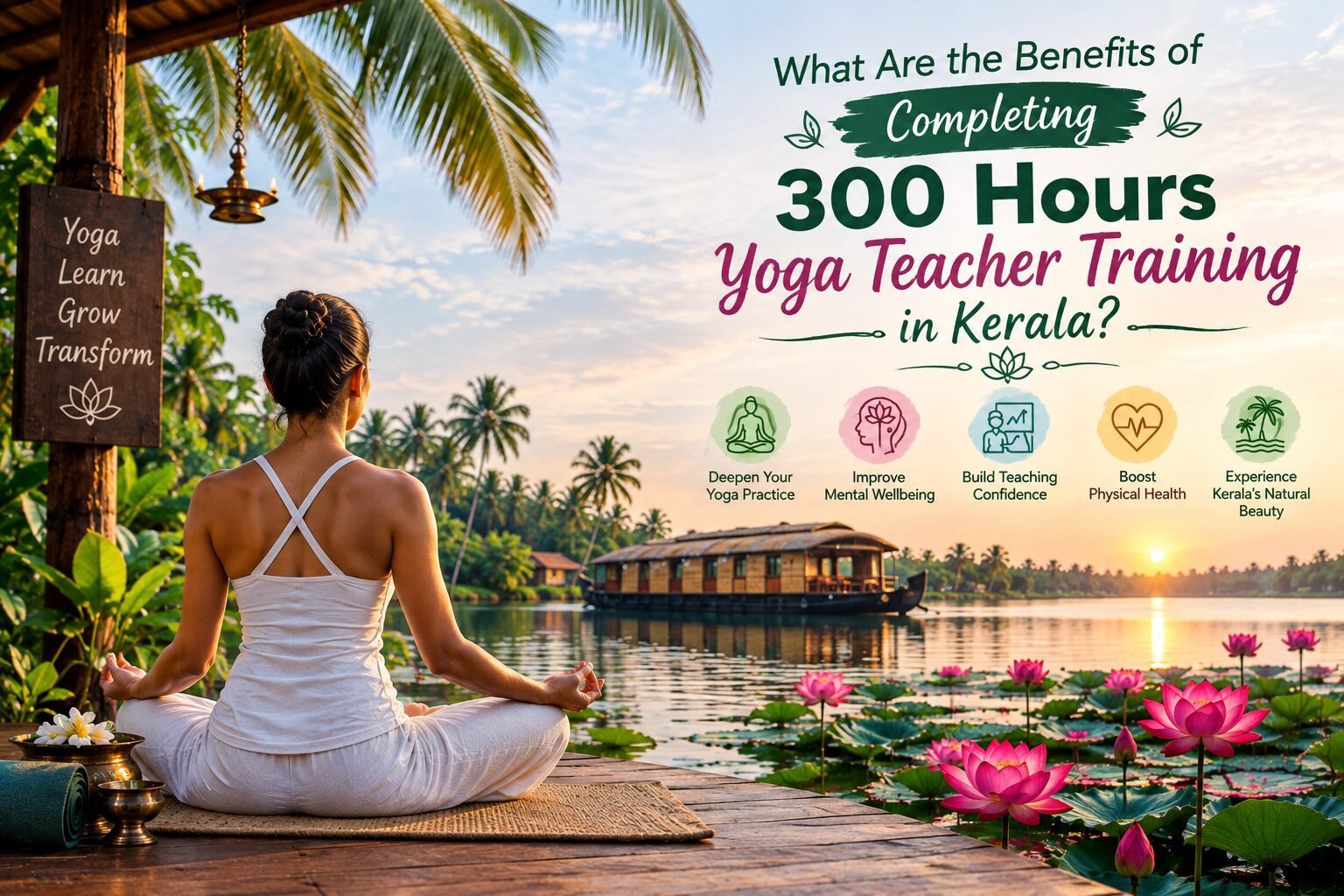
Kerala has a strong connection with Ayurveda, traditional wellness practices, meditation, and yoga. Its natural surroundings and established wellness culture have made the region an appealing destination for students interested in immersive yoga education.
When comparing programs, however, the location should not be the only consideration. A good training experience depends on factors such as the quality of instructors, course structure, practical teaching opportunities, student support, accommodation, and the overall learning environment.
Students looking for certified yoga teacher training Kerala should also check what certification the school provides and whether the course meets the requirements or standards relevant to their intended teaching pathway.
A reputable school should clearly explain its curriculum, training hours, assessment process, teaching faculty, and certification details before enrollment. For students seeking certified yoga teacher training Kerala, understanding these details beforehand can prevent confusion later.
How to Choose Between 200 and 300 Hours
Your current experience should be the starting point when deciding between the two programs. If you have little or no formal teacher training, jumping directly into an advanced program may make the learning process unnecessarily difficult. A foundational course can give you the terminology, teaching principles, and practical experience needed for further study.
If you already hold a 200-hour qualification and have gained teaching or personal practice experience, a 300-hour course may provide a logical opportunity for deeper education.
Also consider your long-term goals. Think about whether you want to teach general group classes, specialize in a particular approach, develop private sessions, explore therapeutic applications, or simply deepen your personal understanding of yoga.
Most importantly, compare the actual curriculum instead of choosing a program based solely on its title. Different yoga schools can organize their training differently, so reading the syllabus and understanding the learning outcomes is essential.
Building a Long-Term Path in Yoga Teaching
Yoga education does not necessarily end after completing one teacher-training course. Teaching experience, continued study, workshops, personal practice, mentorship, and specialized education can all contribute to professional development.
A 200-hour course can establish the foundation, while a 300-hour program can offer additional depth for those ready to continue. Neither option needs to be viewed as universally better; the appropriate choice depends on your existing knowledge and what you want to achieve.
For students exploring training in India, Bhakti Yogshala provides an example of how a yoga school can structure education around traditional practices alongside teacher-development skills.
Ultimately, the value of a teacher-training program comes from the quality of learning, practical experience, experienced guidance, and your commitment to applying what you learn. Choosing a course that matches your current level can make the training more meaningful and useful for your future as a yoga practitioner or teacher.
Conclusion
The difference between a 200-hour and 300-hour program largely comes down to foundation versus deeper specialization. A 200-hour course can introduce aspiring teachers to essential yoga knowledge and teaching skills, while a 300-hour course can help experienced practitioners refine and expand that foundation. If you are considering 300 hours yoga teacher training Kerala, review your current experience, career goals, preferred yoga tradition, curriculum, faculty, and certification before making a decision.
The right training is ultimately the one that aligns with your learning stage and helps you progress toward your personal and professional goals in yoga.
Frequently Asked Questions
1. Is a 300-hour yoga course better than a 200-hour course?
Not necessarily. A 200-hour course provides foundational education, while a 300-hour course generally offers deeper study for experienced practitioners or teachers.
2. Can beginners join a 300-hour yoga teacher training?
Eligibility varies by school, but many 300-hour programs expect students to have completed foundational teacher training first.
3. What is usually covered in a 300-hour course?
Subjects may include advanced asanas, anatomy, sequencing, pranayama, meditation, philosophy, teaching methodology, and specialized yoga practices.
4. How do I choose a yoga teacher training in Kerala?
Compare the curriculum, faculty, practical teaching sessions, certification, course structure, student support, and eligibility requirements before enrolling.
5. Should I complete 200 hours before 300 hours?
In many training pathways, yes. A 200-hour program generally establishes the foundation needed to understand more advanced teacher-training material.