A 200-hour yoga teacher training course introduces students to the practical, theoretical and teaching foundations of yoga. By the end of the programme, you should have a clearer understanding of yoga postures, breathing techniques, meditation, anatomy, philosophy and the principles involved in guiding a class.
The exact learning outcomes depend on the school’s curriculum and how its instructors deliver the programme. A course certificate does not mean you have mastered every yoga style or are ready to teach every type of student. It marks a foundation from which you can continue practising and developing your skills.
At Bhakti Yogshala, the 200-hour yoga teacher training in Goa covers Hatha Yoga, Ashtanga Vinyasa, Vinyasa Flow, Yin Yoga, pranayama, meditation, yoga philosophy, anatomy and teaching methodology. Understanding what these subjects involve can help you decide whether the course matches your learning goals.
What should you be able to learn during a 200-hour yoga teacher training?
A foundational programme should help you connect personal yoga practice with a basic understanding of how yoga is taught. You study different techniques, learn the principles behind them and begin applying that knowledge in practical sessions.
Here are the main areas of learning to consider when evaluating a course.
1. Build a stronger foundation in yoga asanas
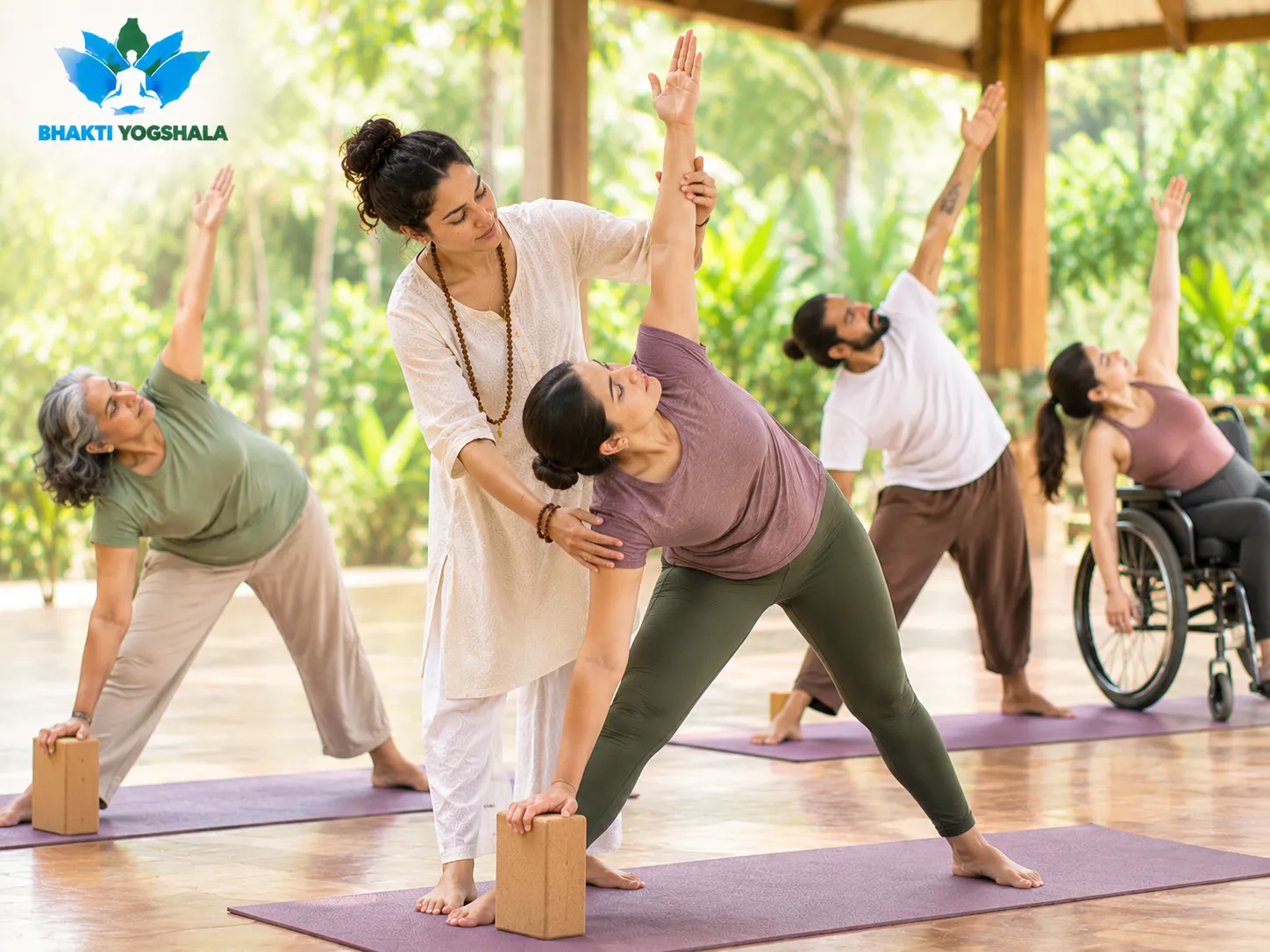
Asana practice is a major part of many 200-hour yoga teacher training programmes. Students explore postures, movement patterns, alignment principles and ways to approach different levels of practice.
At Bhakti Yogshala, the published curriculum includes standing poses, sitting poses, forward bends, backbends, spinal rotations, inversions and balancing postures.
Through this part of the course, students can work towards:
- Recognising and practising foundational yoga postures.
- Understanding the basic actions involved in different asanas.
- Developing awareness of posture and alignment.
- Learning that postures may need modifications.
- Understanding how to approach a sequence with suitable preparation and transitions.
The aim is to develop a more informed practice. Students should not feel that they must perform every advanced posture to benefit from the training.
2. Understand different yoga styles and their approaches
A multi-style course introduces students to more than one method of yoga practice. This helps them understand that different styles may have different structures, rhythms and teaching approaches.
Bhakti Yogshala lists four main styles in its 200-hour programme.
Hatha Yoga
Students explore traditional asana practice, including standing, seated and other foundational postures. The learning focus includes understanding posture, movement and alignment.
Ashtanga Vinyasa Yoga
The curriculum includes practice of the Ashtanga Vinyasa Primary Series. It also mentions Mysore-style self-practice, adjustments, modifications and the key concepts of Ujjayi breath, Drishti and Bandhas.
Vinyasa Flow
Students are introduced to the relationship between movement and breath. The course page also mentions creating a personal Vinyasa sequence.
Yin Yoga
The programme introduces Yin Yoga practice and concepts such as meridians, fascia and yin-yang theory.
By studying these styles, students can begin to recognise how yoga classes differ in pace, structure and emphasis. The goal is to develop familiarity with the methods included in the syllabus, rather than claim mastery of every style.
3. Develop an understanding of pranayama and breathing techniques
Pranayama is the study and practice of yogic breathing techniques. It forms part of the curriculum at Bhakti Yogshala.
The published course page lists practices such as:
- Nadi Shodhana
- Surya Bheda
- Sheetali
- Sheetkari
- Bhramari
- Bhastrika
- Kapalbhati
Students can work towards understanding how these techniques are practised, learning their basic methods and recognising the importance of appropriate instruction.
A useful learning outcome is being able to distinguish between different breathing practices and explain their basic procedures. Students should also learn to respect individual limitations and avoid treating every technique as suitable for everyone.
4. Explore meditation and concentration practices
Meditation introduces students to practices involving attention, awareness and mental focus. A yoga teacher training programme may include different approaches, giving students an opportunity to experience and understand their structure.
Bhakti Yogshala’s published curriculum includes:
- Yoga Nidra
- Breathing meditation
- Sufi meditation
- Trataka, or candlelight meditation
- Cyclic meditation
- Active meditation practices
Through these sessions, students can develop familiarity with different meditation approaches and understand how guided practice is structured.
The learning outcome is not a promise of constant mental calm or a particular personal transformation. It is an introduction to techniques that students can continue exploring through regular practice.
5. Understand yoga anatomy and body alignment
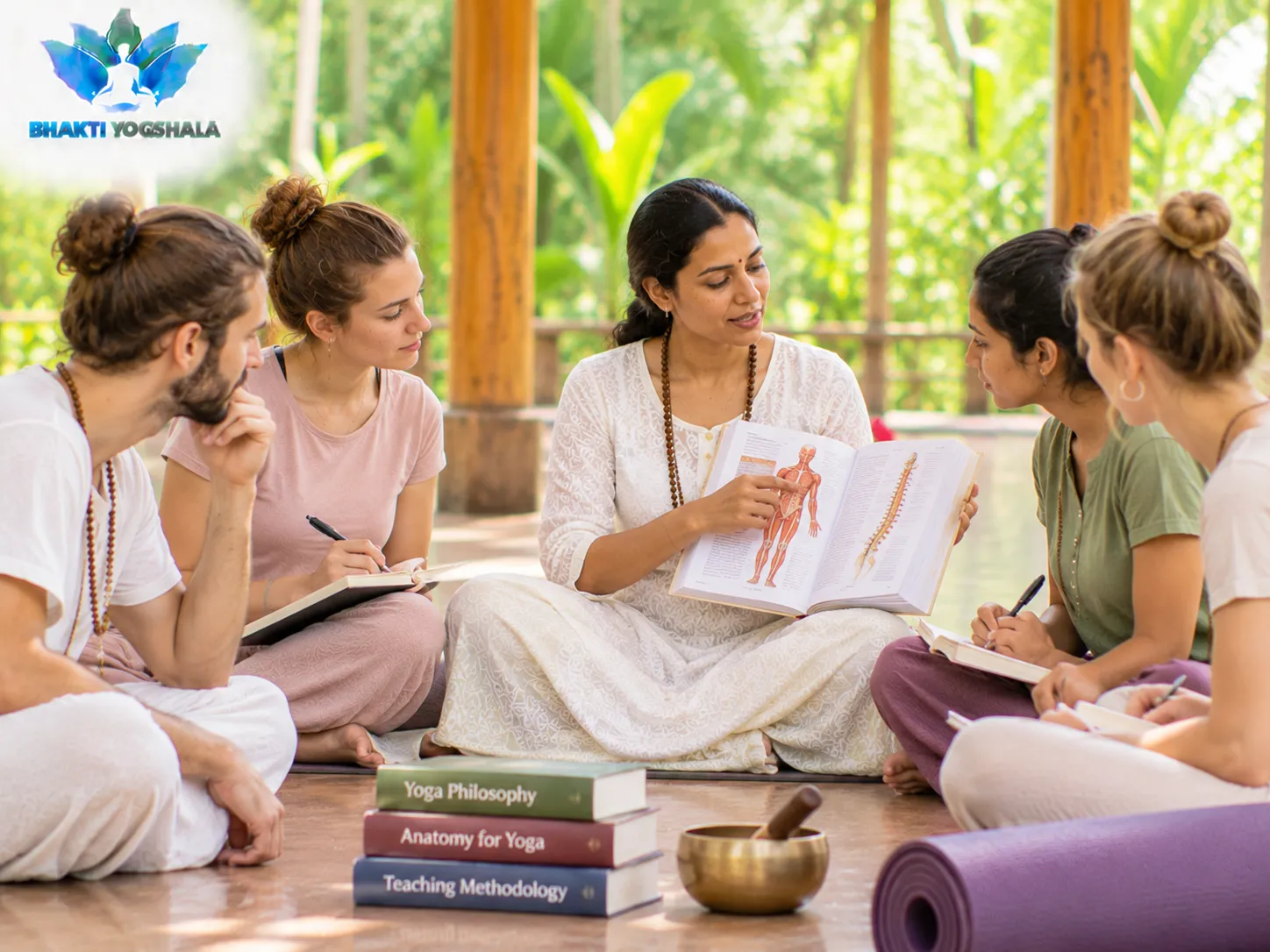
Anatomy helps yoga students understand the body in relation to movement and posture. It gives future teachers a foundation for observing alignment and understanding why different students may need different approaches.
Bhakti Yogshala’s published daily schedule includes anatomy and theory sessions. Its teaching methodology section also refers to correct alignment and potential risks of yoga postures.
Students should aim to develop a basic understanding of:
- How major body structures relate to movement.
- Why alignment matters during asana practice.
- How posture variations can affect individual students.
- Why forcing a posture is not an appropriate teaching approach.
- When a student may need to modify or avoid a movement.
This knowledge supports more considered practice and instruction. A foundational yoga anatomy module is not a substitute for medical or physiotherapy education.
6. Learn the foundations of yoga philosophy
Yoga philosophy gives students a wider context for understanding yoga beyond physical postures.
Bhakti Yogshala’s curriculum includes the history of yoga, an introduction to the Yoga Sutras, their in-depth study, the eight limbs of yoga and traditional scriptures.
Students can work towards:
- Understanding introductory concepts in yoga philosophy.
- Becoming familiar with Patanjali’s Yoga Sutras.
- Identifying the eight limbs of yoga.
- Understanding how philosophical ideas relate to yoga practice.
- Exploring the ethical responsibilities associated with teaching yoga.
These subjects can help students understand the principles and traditions behind their physical practice. Their understanding will continue to develop through reading, discussion and study beyond the training period.
7. Develop basic yoga teaching and sequencing skills
Learning to practise yoga and learning to guide other people are different tasks. Teaching methodology introduces students to the communication and organisational skills involved in leading a class.
Bhakti Yogshala’s published syllabus lists:
- Lifestyle and ethics of a yoga teacher
- Classroom management
- Principles of observation
- Demonstrations
- Assisting and hands-on adjustment techniques
- Correct alignment and potential risks of yoga postures
- Practicum classes
The course page also mentions creating a Vinyasa sequence and learning to modify difficult postures.
These subjects can help students begin developing the ability to:
- Organise a basic yoga class.
- Understand the purpose of a sequence.
- Give clear instructions and demonstrations.
- Observe students during practice.
- Recognise when modifications may be appropriate.
- Understand the responsibilities involved in guiding a group.
Teaching competence takes continued practice. Students should ask the school how much supervised teaching and feedback are included in the current programme.
8. Understand yoga practice beyond the classroom
A residential yoga teacher training course involves more than scheduled asana sessions. Students also spend time studying, reflecting and participating in other parts of the programme.
Bhakti Yogshala’s published daily schedule includes theory, anatomy, asana practice, an asana clinic and practicum, meditation, kirtan and group discussion.
These activities provide different ways to engage with the course material. Students can use theory sessions to clarify concepts, practical classes to explore techniques and group discussions to exchange questions and perspectives.
The broader outcome is a clearer understanding of how different parts of yoga education connect. Personal learning will vary according to each student’s participation and continued practice.
What a 200-hour yoga teacher training does not guarantee
It is equally important to understand the limits of a foundational course before enrolling.
Completing 200 hours does not automatically mean that you:
- Have mastered every yoga posture.
- Can teach every yoga style or experience level.
- Have extensive experience managing a class independently.
- Have completed advanced yoga or anatomy education.
- Will immediately secure a teaching job.
- Will stop needing guidance or further study.
Bhakti Yogshala’s own FAQ explains that becoming a developed yoga teacher takes continued practice and commitment after the training. This is an important point for prospective students: the course is a starting point, not the end of your education.
Learning outcomes at Bhakti Yogshala in Goa
Bhakti Yogshala’s 200-hour yoga teacher training programme brings together practical yoga styles, pranayama, meditation, philosophy, anatomy and teaching methodology.
The published schedule includes morning and afternoon asana sessions, theory classes, an asana clinic and practicum, and evening meditation, kirtan or group discussion.
The course page also states that classes have a maximum of 15 students. If individual guidance is important to you, ask the school how instructors provide feedback and support during the current batch.
Before enrolling, review the syllabus and clarify the number of practical teaching sessions, assessment arrangements, current course dates and certification details.
You can explore the 200-hour yoga teacher training in Goa at Bhakti Yogshala to review the published curriculum and enquire about the programme.
Bhakti Yogshala
Main Agonda Beach Road, Canacona, Agonda, Goa 403702
Phone: +91 9897355995
Email: bhaktiyogshala@gmail.com
A good course should give you a clear foundation, help you understand what you are learning and show you where further practice is needed. Use the curriculum and teaching structure to decide whether the programme fits your goals.
FAQs
1. What are the main learning outcomes of a 200-hour yoga teacher training?
Students generally work towards understanding foundational asanas, pranayama, meditation, yoga philosophy, anatomy, alignment and teaching methodology. The exact subjects depend on the school’s syllabus.
2. Can I learn different yoga styles during a 200-hour course?
Yes, if the programme includes multiple styles. Bhakti Yogshala lists Hatha Yoga, Ashtanga Vinyasa, Vinyasa Flow and Yin Yoga in its published curriculum.
3. Will I learn how to teach yoga after completing 200 hours?
A 200-hour programme introduces teaching methodology and practical teaching concepts. Your ability to lead classes develops through practice, feedback and continued learning.
4. Does a 200-hour yoga teacher training include anatomy?
Bhakti Yogshala’s published daily schedule includes anatomy and theory sessions. Students should check the detailed syllabus for the current batch.
5. Will I learn pranayama and meditation?
Yes. Bhakti Yogshala lists several pranayama techniques and meditation practices, including Nadi Shodhana, Bhramari, Yoga Nidra and Trataka.
6. Is a 200-hour yoga teacher training enough to become an experienced yoga teacher?
No single foundational course can guarantee teaching experience or mastery. A 200-hour programme provides a starting point. Teaching skills continue to develop through regular practice and further study.
7. Can beginners join a 200-hour yoga teacher training in Goa?
Bhakti Yogshala’s FAQ states that previous advanced yoga experience is not necessary and that the programme starts with foundational learning. Prospective students should still check the current course’s physical practice expectations and eligibility requirements.
8. How can I check whether a yoga teacher training course has a suitable curriculum?
Review the syllabus, teaching methodology, practical sessions, instructor information, assessment arrangements and current certification details. Ask the school to explain any areas that are unclear.