Meditation and Mindfulness in 200-Hour YTT
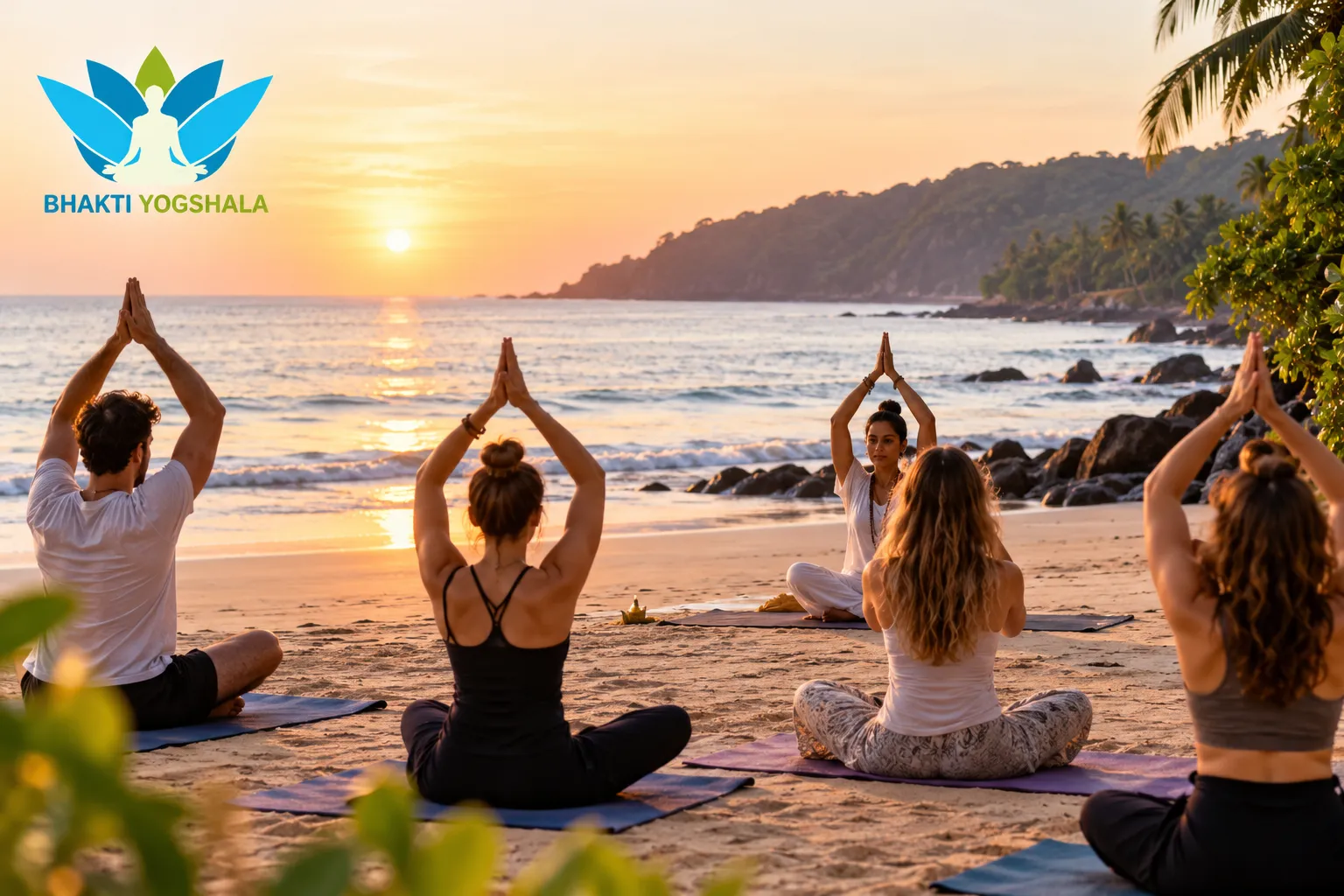
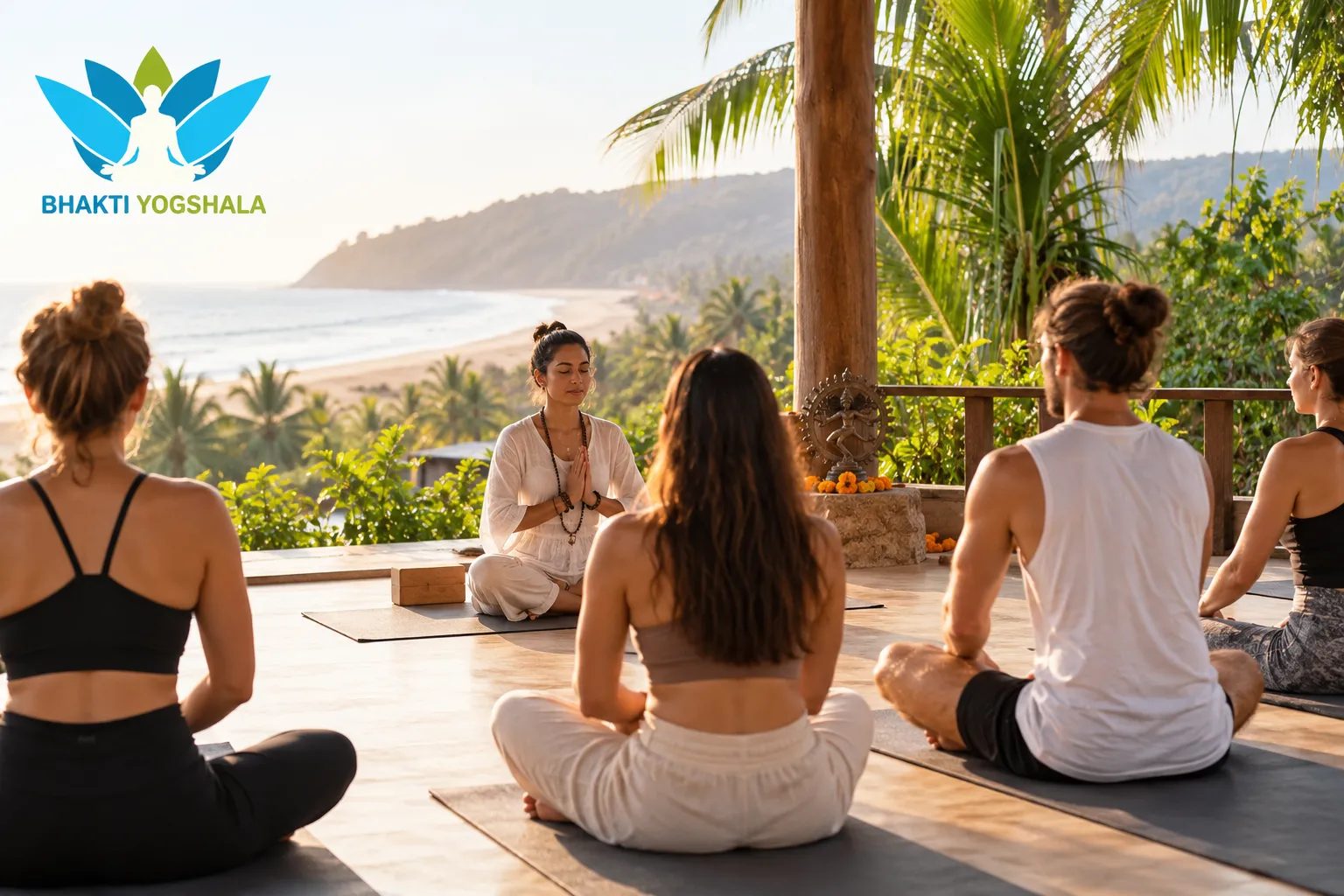
Meditation is an essential component of many traditional yoga systems. During a teacher training course, students are generally introduced to different approaches to meditation and concentration.
Practices may include breath awareness, mindfulness, mantra meditation, guided meditation, visualization, and other contemplative techniques. Students learn how posture, breathing, attention, and environment can influence meditation practice.
The purpose is not simply to learn how to sit quietly. Meditation encourages students to develop concentration and self-awareness. Regular practice may also help future teachers understand the experiences that students encounter when beginning their own meditation journey.
Meditation education can complement pranayama, or yogic breathing practices. Students learn how controlled breathing and mindful awareness can become tools for preparing the body and mind for meditation.
What Makes the best 200 hour yoga teacher training Goa Curriculum Comprehensive?
When evaluating a training program, it is useful to look beyond the number of hours. A comprehensive course should connect theory with practical experience and provide sufficient time for students to absorb the material.
The best 200 hour yoga teacher training Goa options may differ depending on individual goals, teaching style, schedule, and preferred learning environment. Instead of focusing only on labels, prospective students should examine the curriculum, instructor experience, practical teaching opportunities, accommodation, class structure, and approach to traditional yoga education.
A strong curriculum typically creates a progression from personal practice to teaching practice. Students first develop their own understanding before learning how to guide others.
Pranayama, Subtle Body and Energy Awareness
Pranayama introduces students to controlled breathing techniques and their relationship with concentration and awareness. Depending on the school, the curriculum may cover practices such as Nadi Shodhana, Kapalabhati, Bhramari, and other traditional techniques.
Students may also encounter introductory concepts related to chakras, nadis, koshas, and subtle energy. These subjects are generally presented within the philosophical and traditional frameworks of yoga rather than as replacements for medical or scientific knowledge.
Learning these concepts can help students understand why breathwork and meditation are traditionally considered important parts of yoga practice.
Ethics and the Role of a Yoga Teacher
Teacher training also involves understanding the responsibilities associated with teaching yoga. The yamas and niyamas provide a traditional ethical framework, while modern programs may discuss professional boundaries, respectful communication, inclusivity, consent, and responsible teaching.
A yoga teacher works with people who have different bodies, backgrounds, expectations, and levels of experience. Ethical awareness therefore becomes an important part of developing a professional teaching approach.
For students searching for an affordable 200 hour yoga teacher training Goa, cost is naturally an important consideration. However, affordability should be evaluated alongside curriculum depth, teaching hours, instructor qualifications, accommodation, study materials, and practical training rather than price alone.
What Is the Learning Experience Like?
A 200-hour program can be physically and mentally demanding because students often follow a structured daily schedule. Days may combine early morning practices with philosophy lessons, anatomy sessions, meditation, workshops, and teaching practice.
Students should expect a combination of listening, reading, practicing, observing, discussing, and teaching. The immersive environment can also encourage participants to build discipline and become more aware of their own habits.
Goa is particularly associated with yoga retreats and wellness learning, making it a destination where students can experience yoga in a setting removed from their usual routines. However, the quality of the learning experience ultimately depends on the curriculum, instructors, teaching methods, and the student’s own commitment.
Choosing a Program That Matches Your Goals
Before enrolling, consider what you want to gain from the training. Some students primarily want to deepen their personal practice, while others intend to teach professionally after completing the course.
Consider these factors before making a decision:
- Review the complete syllabus and number of practical teaching hours.
- Check which yoga styles, philosophy subjects, anatomy topics, and meditation methods are included.
- Understand accommodation, meals, course materials, assessments, and certification details.
- Ask about instructor experience and the balance between theory and practice.
- Consider whether the schedule and learning environment suit your physical and educational needs.
A thoughtfully structured program should leave students with more than a certificate. It should provide a foundation they can continue developing through personal practice, further education, observation, and teaching experience.
For students exploring yoga teacher training in GOA, programs such as those offered by Bhakti Yogshala can be considered by reviewing their curriculum, teaching approach, and overall course structure before enrollment.
Preparing for a 200-Hour Yoga Teacher Training
You do not necessarily need to be able to perform advanced yoga poses before starting teacher training. A consistent personal practice, openness to learning, and willingness to participate are generally more important.
It can be useful to begin practicing basic asanas, breathing exercises, and meditation before the course. Reading introductory material about yoga philosophy and becoming familiar with basic Sanskrit terminology can also make the learning process easier.
Most importantly, approach the course with curiosity. Teacher training involves learning from instructors, practicing with classmates, receiving feedback, and reflecting on your own experiences.
Conclusion
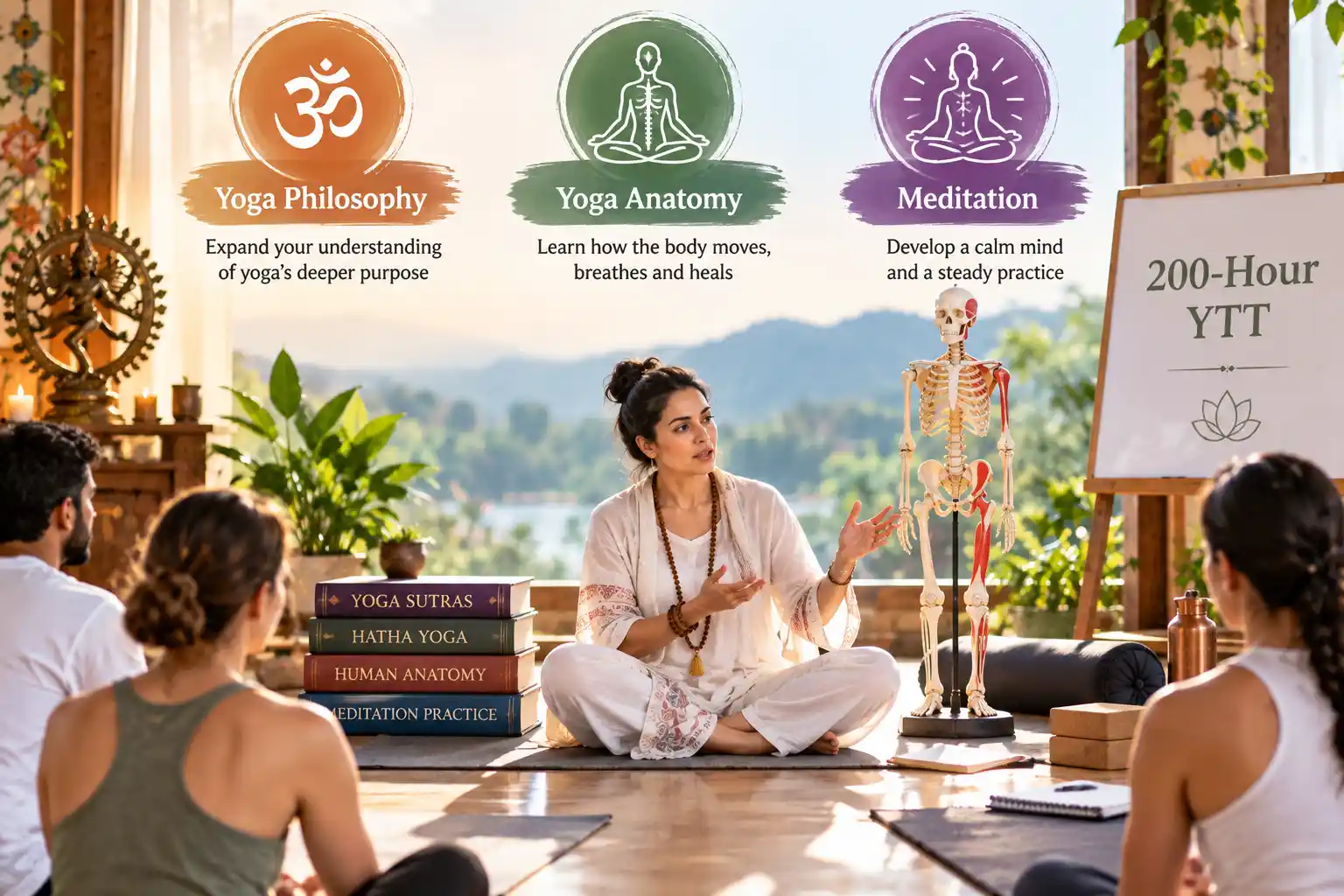
A 200-hour YTT provides a broad introduction to yoga as a discipline involving the body, breath, mind, philosophy, and teaching practice. From anatomy and alignment to meditation, pranayama, ethics, and sequencing, each subject contributes to a more complete understanding of yoga.
For anyone considering 200 hours yoga teacher training in GOA, the right program should offer a balanced curriculum that combines traditional knowledge with practical teaching experience. Taking time to understand the syllabus and learning environment can help you select a course that supports your personal and professional goals.
Frequently Asked Questions
- What is included in a 200-hour yoga teacher training?
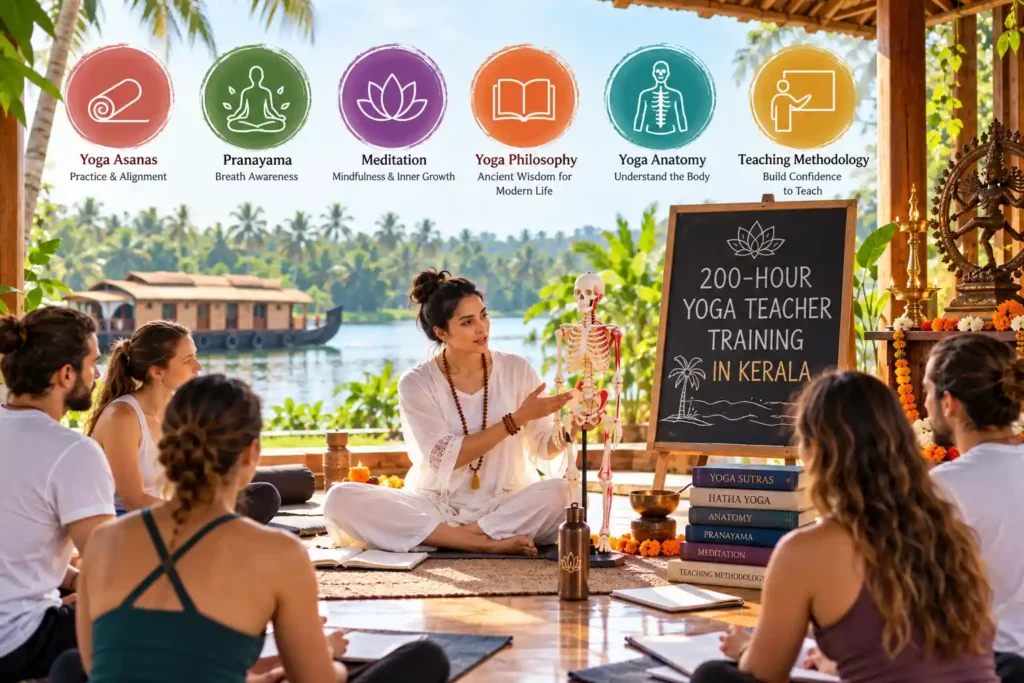
It commonly includes asana, pranayama, meditation, anatomy, philosophy, teaching methodology, sequencing, and practical teaching. - Do I need advanced yoga experience for a 200-hour YTT?
No. Many programs welcome students with a consistent basic practice and a genuine interest in learning. - Is anatomy important in yoga teacher training?
Yes. Anatomy helps future teachers understand movement, alignment, modifications, and responsible instruction. - Does a 200-hour YTT teach meditation?
Yes. Many programs introduce mindfulness, concentration, breath awareness, mantra, and guided meditation practices. - How should I choose a 200-hour YTT in Goa?
Compare the curriculum, practical teaching hours, instructors, schedule, facilities, course structure, and overall learning approach.
Meditation and Mindfulness in 200-Hour YTT
Meditation is an essential component of many traditional yoga systems. During a teacher training course, students are generally introduced to different approaches to meditation and concentration.
Practices may include breath awareness, mindfulness, mantra meditation, guided meditation, visualization, and other contemplative techniques. Students learn how posture, breathing, attention, and environment can influence meditation practice.
The purpose is not simply to learn how to sit quietly. Meditation encourages students to develop concentration and self-awareness. Regular practice may also help future teachers understand the experiences that students encounter when beginning their own meditation journey.
Meditation education can complement pranayama, or yogic breathing practices. Students learn how controlled breathing and mindful awareness can become tools for preparing the body and mind for meditation.
What Makes the best 200 hour yoga teacher training Goa Curriculum Comprehensive?
When evaluating a training program, it is useful to look beyond the number of hours. A comprehensive course should connect theory with practical experience and provide sufficient time for students to absorb the material.
The best 200 hour yoga teacher training Goa options may differ depending on individual goals, teaching style, schedule, and preferred learning environment. Instead of focusing only on labels, prospective students should examine the curriculum, instructor experience, practical teaching opportunities, accommodation, class structure, and approach to traditional yoga education.
A strong curriculum typically creates a progression from personal practice to teaching practice. Students first develop their own understanding before learning how to guide others.
Pranayama, Subtle Body and Energy Awareness
Pranayama introduces students to controlled breathing techniques and their relationship with concentration and awareness. Depending on the school, the curriculum may cover practices such as Nadi Shodhana, Kapalabhati, Bhramari, and other traditional techniques.
Students may also encounter introductory concepts related to chakras, nadis, koshas, and subtle energy. These subjects are generally presented within the philosophical and traditional frameworks of yoga rather than as replacements for medical or scientific knowledge.
Learning these concepts can help students understand why breathwork and meditation are traditionally considered important parts of yoga practice.
Ethics and the Role of a Yoga Teacher
Teacher training also involves understanding the responsibilities associated with teaching yoga. The yamas and niyamas provide a traditional ethical framework, while modern programs may discuss professional boundaries, respectful communication, inclusivity, consent, and responsible teaching.
A yoga teacher works with people who have different bodies, backgrounds, expectations, and levels of experience. Ethical awareness therefore becomes an important part of developing a professional teaching approach.
For students searching for an affordable 200 hour yoga teacher training Goa, cost is naturally an important consideration. However, affordability should be evaluated alongside curriculum depth, teaching hours, instructor qualifications, accommodation, study materials, and practical training rather than price alone.
What Is the Learning Experience Like?
A 200-hour program can be physically and mentally demanding because students often follow a structured daily schedule. Days may combine early morning practices with philosophy lessons, anatomy sessions, meditation, workshops, and teaching practice.
Students should expect a combination of listening, reading, practicing, observing, discussing, and teaching. The immersive environment can also encourage participants to build discipline and become more aware of their own habits.
Goa is particularly associated with yoga retreats and wellness learning, making it a destination where students can experience yoga in a setting removed from their usual routines. However, the quality of the learning experience ultimately depends on the curriculum, instructors, teaching methods, and the student’s own commitment.
Choosing a Program That Matches Your Goals
Before enrolling, consider what you want to gain from the training. Some students primarily want to deepen their personal practice, while others intend to teach professionally after completing the course.
Consider these factors before making a decision:
- Review the complete syllabus and number of practical teaching hours.
- Check which yoga styles, philosophy subjects, anatomy topics, and meditation methods are included.
- Understand accommodation, meals, course materials, assessments, and certification details.
- Ask about instructor experience and the balance between theory and practice.
- Consider whether the schedule and learning environment suit your physical and educational needs.
A thoughtfully structured program should leave students with more than a certificate. It should provide a foundation they can continue developing through personal practice, further education, observation, and teaching experience.
For students exploring yoga teacher training in GOA, programs such as those offered by Bhakti Yogshala can be considered by reviewing their curriculum, teaching approach, and overall course structure before enrollment.
Preparing for a 200-Hour Yoga Teacher Training
You do not necessarily need to be able to perform advanced yoga poses before starting teacher training. A consistent personal practice, openness to learning, and willingness to participate are generally more important.
It can be useful to begin practicing basic asanas, breathing exercises, and meditation before the course. Reading introductory material about yoga philosophy and becoming familiar with basic Sanskrit terminology can also make the learning process easier.
Most importantly, approach the course with curiosity. Teacher training involves learning from instructors, practicing with classmates, receiving feedback, and reflecting on your own experiences.
Conclusion
A 200-hour YTT provides a broad introduction to yoga as a discipline involving the body, breath, mind, philosophy, and teaching practice. From anatomy and alignment to meditation, pranayama, ethics, and sequencing, each subject contributes to a more complete understanding of yoga.
For anyone considering 200 hours yoga teacher training in GOA, the right program should offer a balanced curriculum that combines traditional knowledge with practical teaching experience. Taking time to understand the syllabus and learning environment can help you select a course that supports your personal and professional goals.
Frequently Asked Questions
- What is included in a 200-hour yoga teacher training?
It commonly includes asana, pranayama, meditation, anatomy, philosophy, teaching methodology, sequencing, and practical teaching. - Do I need advanced yoga experience for a 200-hour YTT?
No. Many programs welcome students with a consistent basic practice and a genuine interest in learning. - Is anatomy important in yoga teacher training?
Yes. Anatomy helps future teachers understand movement, alignment, modifications, and responsible instruction. - Does a 200-hour YTT teach meditation?
Yes. Many programs introduce mindfulness, concentration, breath awareness, mantra, and guided meditation practices. - How should I choose a 200-hour YTT in Goa?
Compare the curriculum, practical teaching hours, instructors, schedule, facilities, course structure, and overall learning approach.