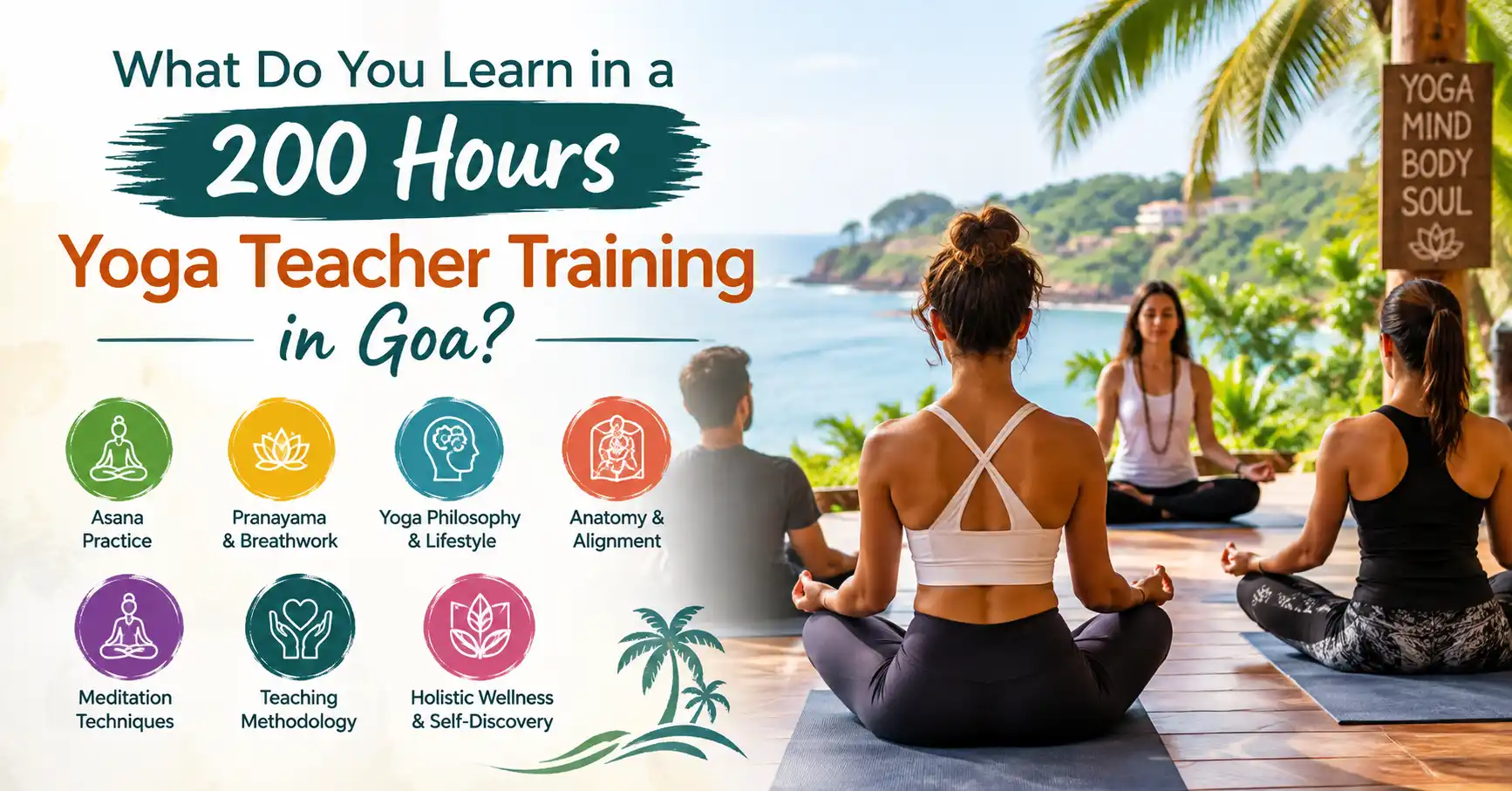
Wondering what you actually learn during a 200 hours yoga teacher training in GOA? A 200-hour course is much more than a series of yoga classes. It is a structured educational program that introduces students to yoga philosophy, asanas, pranayama, meditation, anatomy, teaching methodology, sequencing, and professional teaching skills. For aspiring yoga teachers, it can provide the foundation needed to develop a consistent personal practice and confidently guide others.
Goa is also a popular destination for yoga education because its peaceful surroundings, coastal atmosphere, and established wellness culture can create a supportive environment for immersive learning. However, the quality of the curriculum and instructors should remain the primary considerations when selecting a course. Bhakti Yogshala provides a learning environment where students can explore these foundational aspects of yoga through structured training.
What Is a 200 Hours Yoga Teacher Training in GOA?
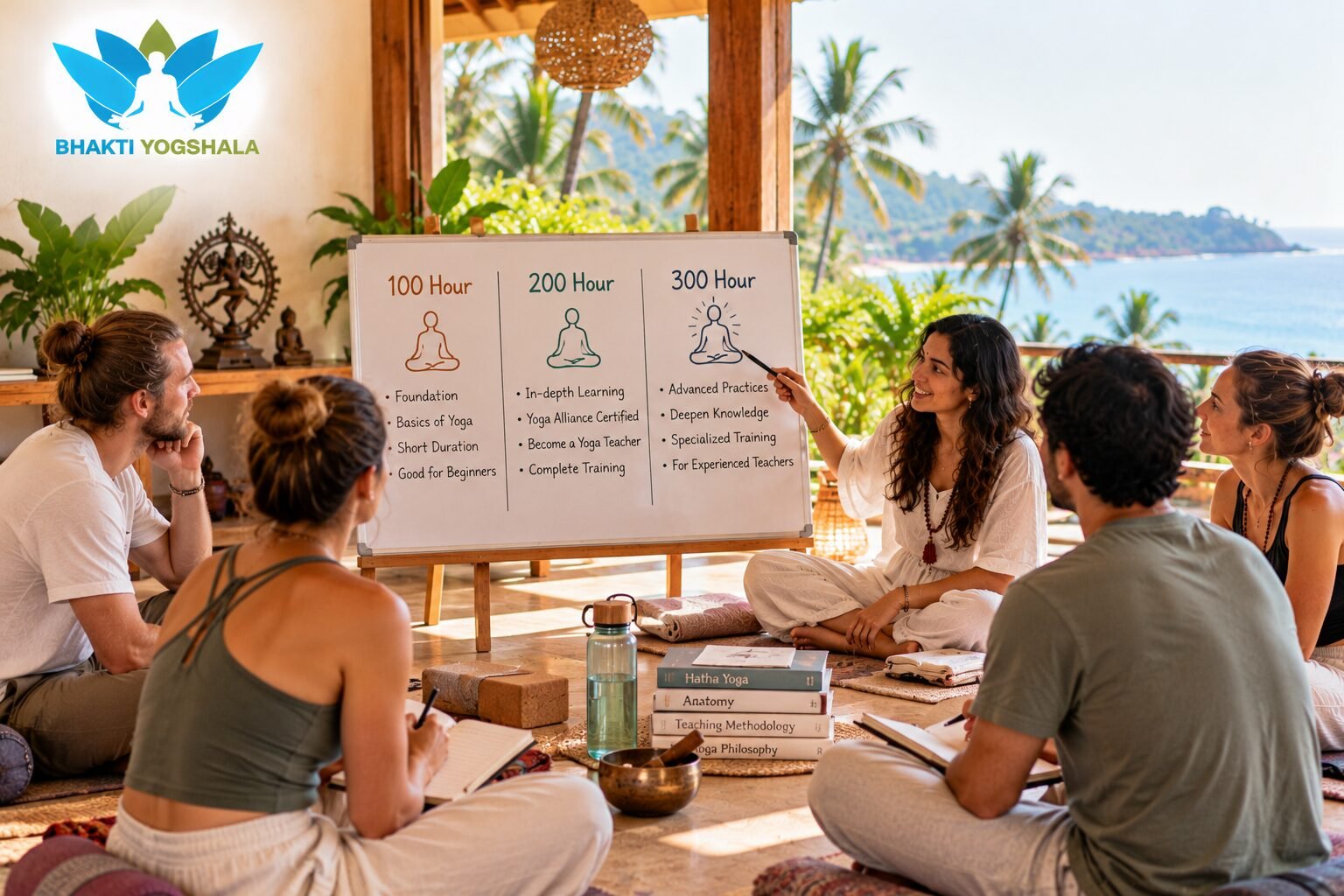
A 200-hour yoga teacher training is generally considered a foundational level of yoga teacher education. The program combines practical sessions with theoretical learning so students understand not only how to perform yoga techniques but also why they are practiced and how to teach them appropriately.
A typical course may cover Hatha Yoga, Vinyasa Yoga, Ashtanga-inspired practices, restorative techniques, pranayama, meditation, yoga anatomy, philosophy, and teaching methodology. The exact curriculum differs between schools, so prospective students should carefully review what is included before enrolling.
The goal is to help participants move from simply practicing yoga to understanding how to structure and lead a safe, purposeful class.
What Do You Learn in a 200 Hours Yoga Teacher Training in GOA?
A comprehensive program usually covers several interconnected areas. Rather than learning each subject independently, students gradually discover how yoga philosophy, movement, breath, concentration, and teaching skills fit together.
1. Yoga Asanas and Alignment
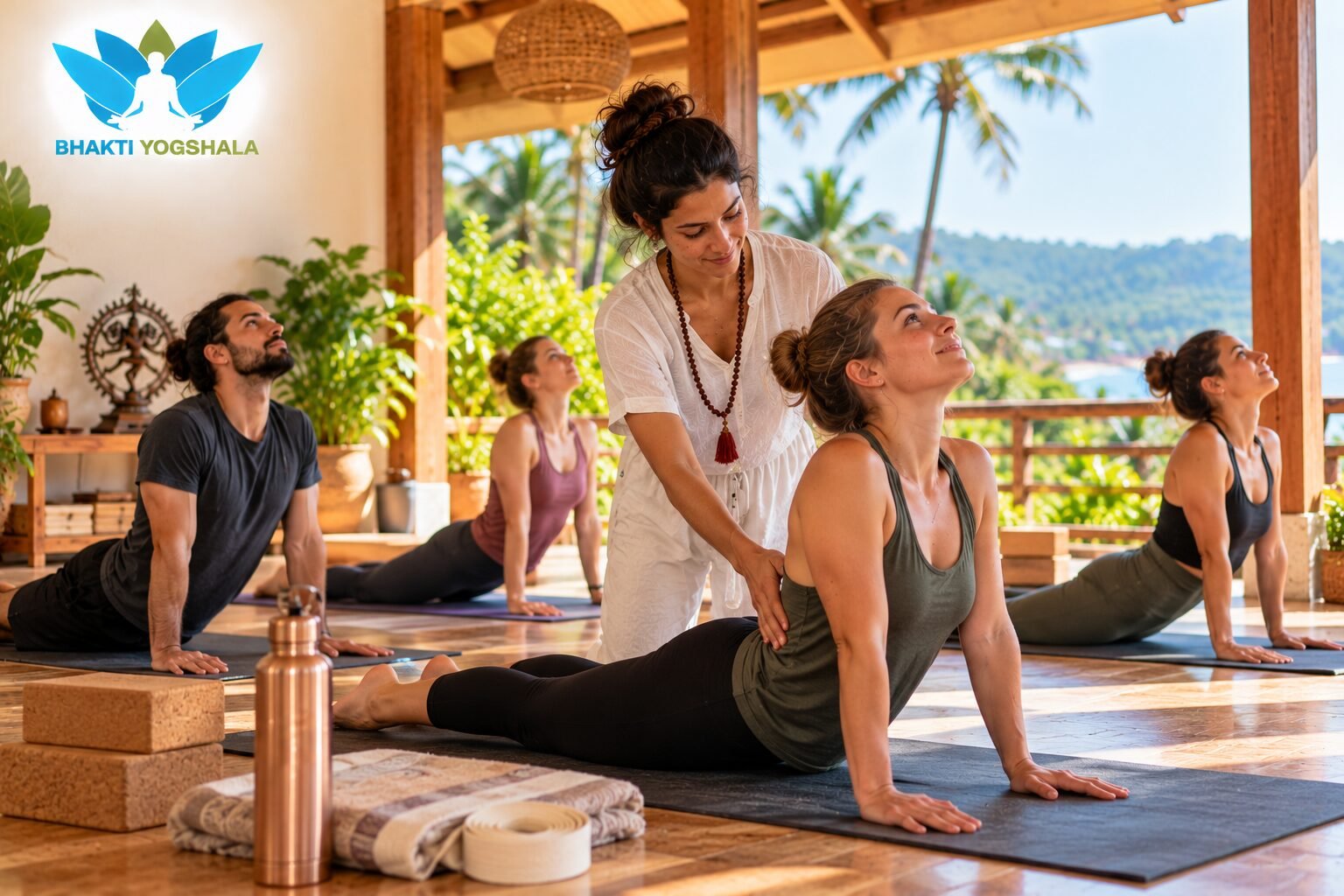
Asana practice is one of the central components of teacher training. Students study foundational and intermediate postures while learning correct alignment, breathing coordination, modifications, contraindications, and common mistakes.
Classes may include standing poses, seated postures, forward folds, backbends, twists, balancing poses, inversions, and restorative positions. Students also learn how different bodies may require different approaches to the same posture.
The focus is not simply on achieving advanced poses. Instead, training encourages body awareness, mindful movement, stability, mobility, and safe progression.
2. Pranayama and Breath Awareness
Pranayama refers to yogic breathing practices designed to cultivate awareness and regulate the breath. During teacher training, students may explore techniques such as alternate nostril breathing, ujjayi breathing, diaphragmatic breathing, and other traditional methods.
Understanding breath is important because breathing influences the pace and quality of a yoga practice. Trainees learn when a particular breathing technique may be appropriate and how to provide clear instructions without overwhelming beginners.
3. Meditation and Mindfulness
Meditation is another important part of a 200-hour curriculum. Students may experience different approaches to concentration, mindfulness, breath awareness, mantra, visualization, and guided meditation.
These practices can help trainees develop greater awareness of thoughts, sensations, and breathing patterns. From a teaching perspective, students also learn how to create a calm environment and guide basic meditation sessions for different groups.
4. Yoga Philosophy
Yoga is traditionally viewed as more than physical exercise. Teacher training introduces students to philosophical concepts that provide context for the practice.
Depending on the program, students may study the Yoga Sutras, Bhagavad Gita, Eight Limbs of Yoga, yamas and niyamas, karma, dharana, dhyana, and other traditional concepts.
The purpose is not necessarily to memorize philosophical terminology. Instead, students learn how these principles can relate to discipline, self-awareness, ethical conduct, mindfulness, and everyday life.
5. Anatomy and Physiology
Basic anatomy and physiology help future teachers understand how movement affects the human body. Students may study muscles, joints, skeletal structures, posture, movement patterns, breathing mechanics, and common physical limitations.
This knowledge helps teachers give more appropriate cues and recognize when a posture may need modification. It also encourages students to avoid forcing their bodies into shapes simply because a pose looks advanced.
Anatomy education is particularly valuable when teaching mixed-level classes where participants have different mobility, experience, and physical needs.
6. Teaching Methodology
Knowing yoga personally does not automatically make someone an effective teacher. Teaching methodology helps students learn how to communicate techniques clearly and confidently.
Trainees may practice verbal instructions, demonstrations, class management, observation skills, corrections, transitions, voice projection, and student engagement.
They also learn how to explain poses without using unnecessarily complicated language. The objective is to make instructions accessible to beginners while still providing meaningful guidance to experienced practitioners.
7. Yoga Sequencing and Class Planning
Sequencing teaches students how to organize individual techniques into a coherent class. A well-designed sequence should have a clear purpose, logical transitions, appropriate pacing, and a suitable warm-up and cool-down.
Students may learn how to plan beginner, intermediate, morning, evening, flexibility-focused, strength-focused, or relaxation-oriented sessions.
They also learn that sequencing should consider the experience level and needs of the people attending the class rather than following a rigid formula.
Practical Teaching Experience
One of the most valuable elements of yoga teacher training in GOA is supervised teaching practice. Students generally get opportunities to teach sections of a class or complete sessions while instructors observe their performance.
Feedback can help trainees improve their voice, instructions, timing, sequencing, demonstrations, and ability to respond to students.
This practical component is important because teaching is a skill developed through repetition. A student may understand a pose perfectly but still need practice explaining it clearly to someone experiencing it for the first time.
How to Choose the Best 200 Hour Yoga Teacher Training Goa
When comparing programs, do not choose a course based solely on location or promotional claims. The best 200 hour yoga teacher training Goa option should have a well-structured curriculum, experienced instructors, practical teaching opportunities, appropriate student support, and transparent information about certification.
Consider the teaching schedule, class size, accommodation, meals, assessment process, course duration, and overall learning environment. It is also useful to understand how much time is dedicated to practical yoga compared with theory.
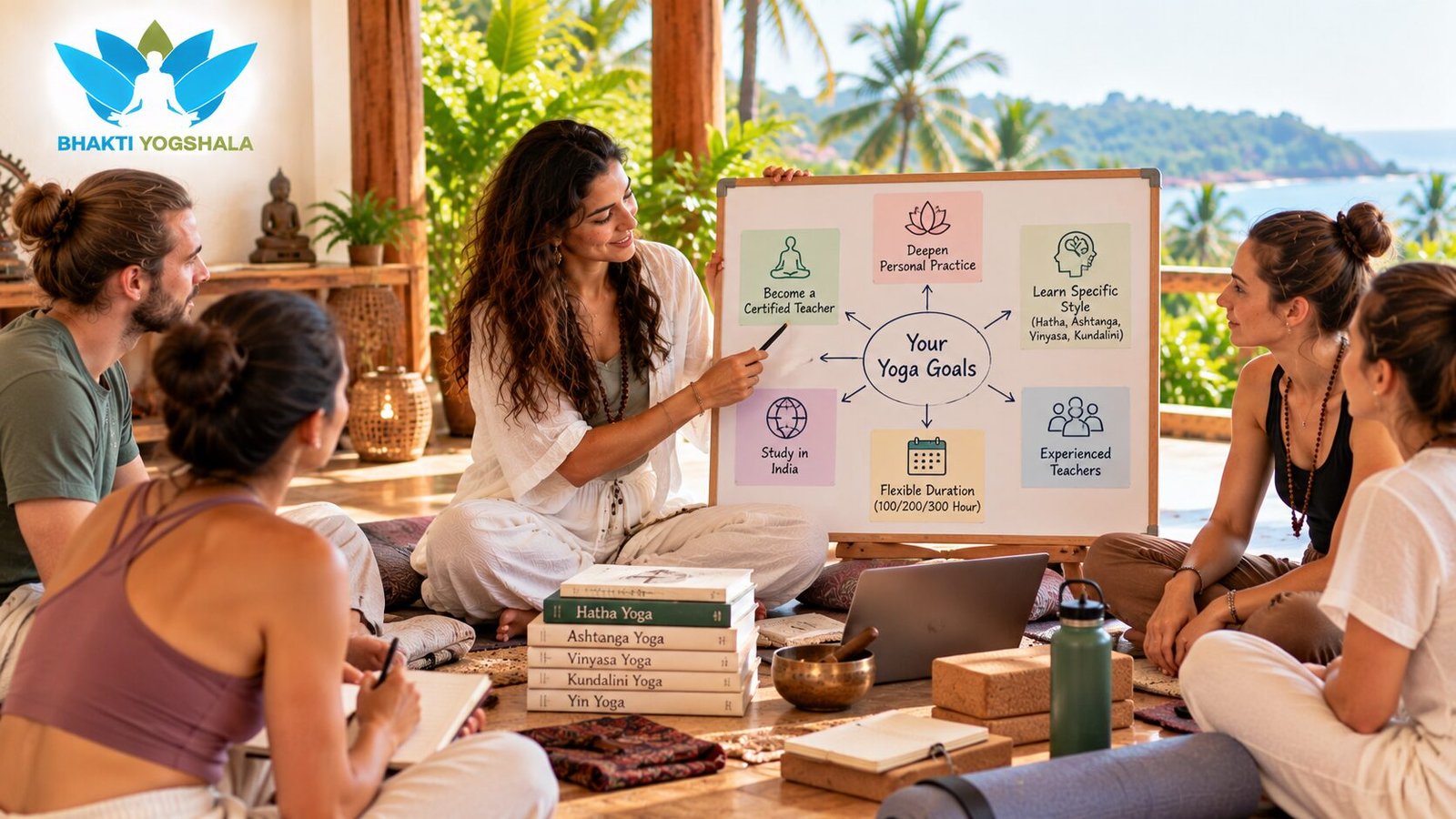
Before enrolling, check whether the program matches your preferred yoga tradition and long-term goals. Someone interested in teaching dynamic Vinyasa classes may have different priorities from a student focused on traditional Hatha Yoga, meditation, or holistic wellness.
Is a 200-Hour Course Suitable for Beginners?
In many cases, yes. Foundational teacher-training programs are designed to introduce students to the essential concepts required for further study and teaching development. You do not necessarily need exceptional flexibility or years of yoga experience.
However, the physical schedule can be intensive. Students should be prepared for regular practice, theoretical classes, self-study, assignments, and teaching exercises.
A willingness to learn is more important than being able to perform advanced postures. Teacher training is an educational journey, not a flexibility competition.
What About an Affordable 200 Hour Yoga Teacher Training Goa?
Cost is an important consideration, especially for students traveling to Goa from another city or country. An affordable 200 hour yoga teacher training Goa program can be attractive, but price should not be the only deciding factor.
Compare what the course fee actually includes. Accommodation, meals, study materials, certification, excursions, and additional workshops may or may not be part of the package.
A lower price does not automatically mean poor quality, just as a higher price does not guarantee better education. Look for transparent pricing and compare the curriculum, instructors, facilities, practical training, and student reviews before making a decision.
A genuinely affordable course should provide reasonable value while maintaining appropriate standards of instruction and student care.
Skills You Can Develop During the Course
A 200-hour training can help students develop both personal and professional skills. By the end of the program, participants may have a stronger understanding of yoga techniques and greater confidence in communicating with students.
Key areas of development commonly include:
- Understanding asana, pranayama, meditation, philosophy, anatomy, and yogic lifestyle principles.
- Building classes, demonstrating techniques, giving verbal cues, adapting practices, managing groups, and teaching with greater confidence.
The learning process can also encourage discipline, self-observation, patience, concentration, and consistency. These qualities can become useful both inside and outside the yoga classroom.
Career Opportunities After 200-Hour Training
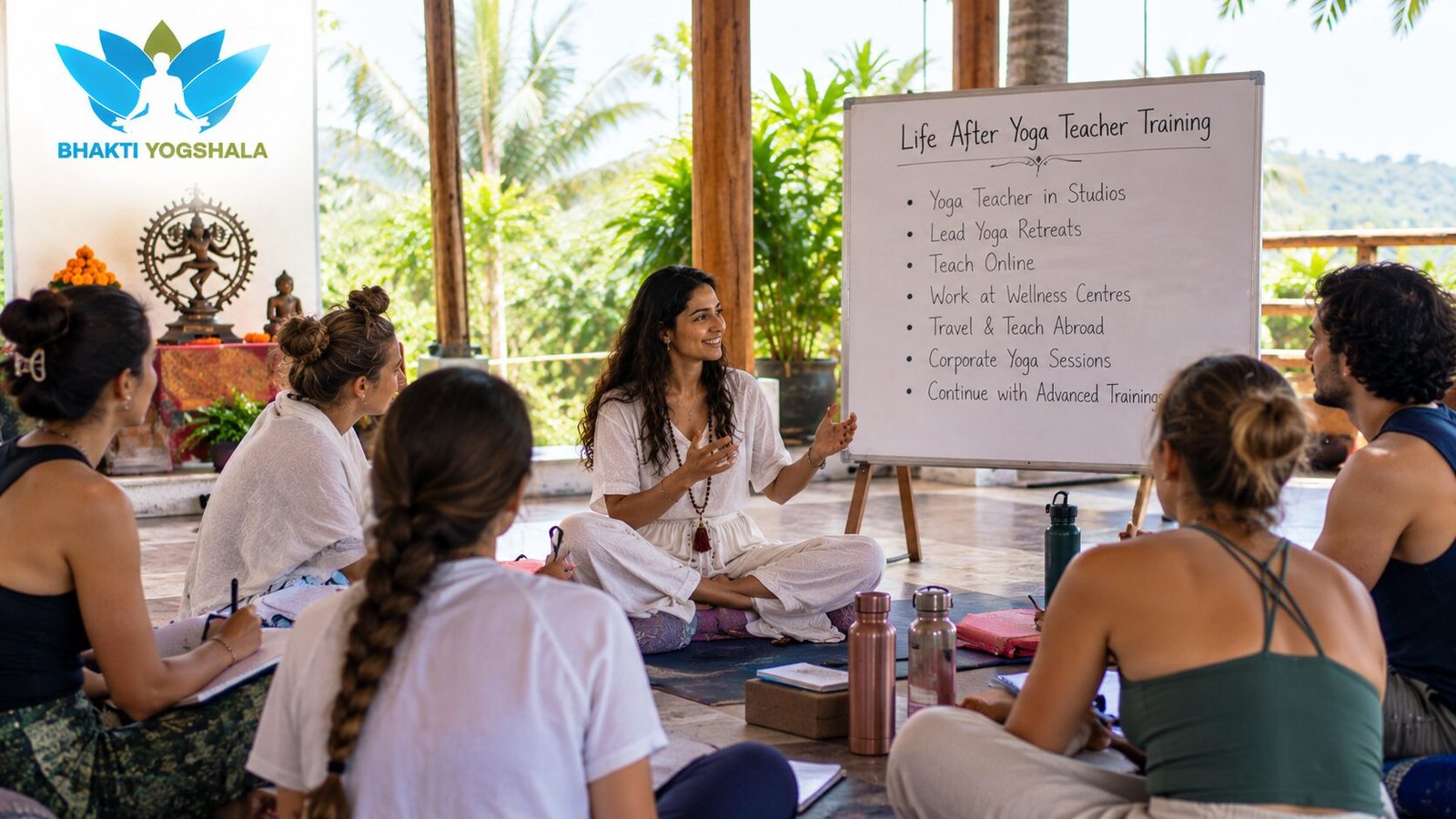
After completing foundational teacher education, graduates may explore different teaching environments depending on their certification, skills, and local requirements. Opportunities can include yoga studios, wellness centers, private sessions, retreats, community programs, and online classes.
Some graduates continue their education with advanced teacher training or specialized programs such as prenatal yoga, meditation, restorative yoga, yoga therapy, or other focused disciplines.
The 200-hour course should therefore be viewed as a foundation rather than the end of a yoga education journey.
Why Goa Can Be a Valuable Learning Environment
Studying yoga in Goa can provide an immersive experience where daily practice becomes part of a broader routine. Students may have opportunities to connect with fellow practitioners, experience different teaching styles, and spend time in a wellness-oriented environment.
The surroundings can certainly enhance the experience, but the educational quality matters most. Look for a school where experienced teachers, structured lessons, practical training, and student safety are given priority.
Whether your goal is professional teaching or deeper personal development, the right environment can make intensive study more meaningful.
Conclusion
A 200 hours yoga teacher training in GOA can introduce students to the foundations of yoga teaching while helping them deepen their own practice. From asana alignment and pranayama to anatomy, meditation, philosophy, sequencing, and supervised teaching, the curriculum is designed to develop a broad understanding of yoga.
When choosing a course, compare the curriculum, instructors, teaching practice, certification, schedule, facilities, and total cost rather than focusing only on location or price. With the right program, a 200-hour training can become a strong starting point for continued learning and a rewarding journey into yoga teaching.
Frequently Asked Questions
1. What is included in a 200-hour yoga teacher training?
It commonly includes asanas, pranayama, meditation, anatomy, yoga philosophy, sequencing, teaching methodology, and practical teaching sessions.
2. Can beginners join a 200-hour yoga course?
Yes, many foundational programs accept beginners, although individual schools may have different eligibility requirements.
3. How long does 200-hour yoga teacher training take?
The duration varies. Intensive residential programs can often be completed within several weeks, while part-time courses may take longer.
4. Is yoga teacher training in Goa worth it?
It can be worthwhile for students seeking structured education in a dedicated learning environment, provided they select a reputable and suitable program.
5. Can I teach yoga after completing 200 hours?
A 200-hour course provides foundational teacher training, but certification standards and professional requirements vary. Check the specific credentials and requirements associated with your chosen program.