If you want to deepen your personal yoga practice and learn how to guide others, a 200 hours kundalini yoga teacher training GOA program can offer a structured path into the traditional and transformative side of yoga. These programs generally combine asana, pranayama, meditation, mantra, yogic philosophy, anatomy, teaching methodology, and the subtle-energy practices associated with Kundalini Yoga. Goa’s relaxed coastal setting can also provide an inspiring environment for focused study, self-reflection, and daily practice.
What Is a 200-Hour Kundalini Yoga Teacher Training?
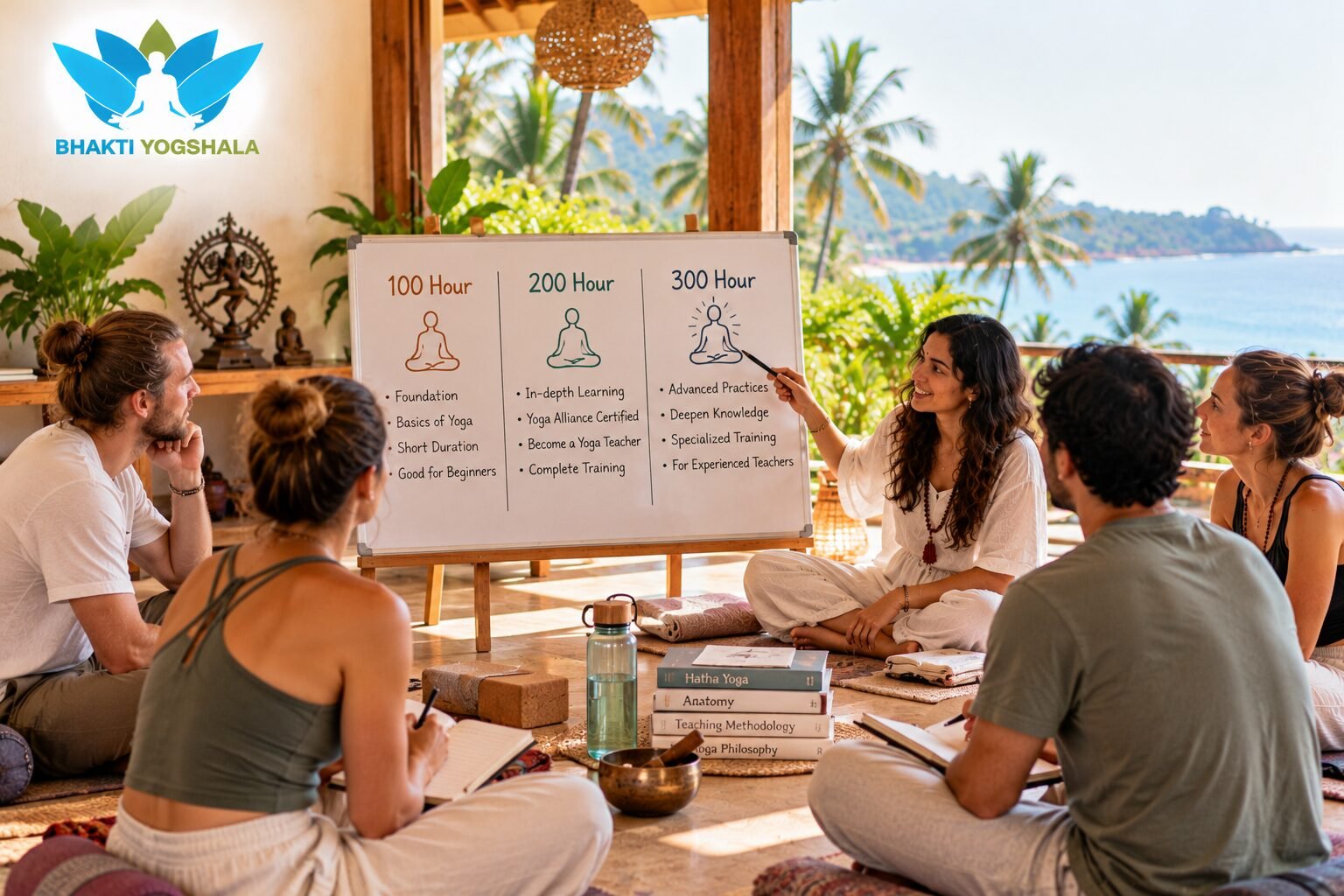
A 200-hour teacher training is generally an entry-level professional yoga education program designed to build a strong foundation in yoga theory, practice, and instruction. When the training is centered on Kundalini Yoga, the curriculum may place additional emphasis on breath, meditation, mantra, concentration, chakras, energy awareness, and practices intended to cultivate inner awareness.
The “200 hours” refers to the total training requirement rather than 200 hours of physical postures alone. A well-rounded course balances practical sessions with classroom learning. Students typically learn how to perform and adapt yoga techniques, understand their purpose, observe alignment and breathing, communicate clearly, and create safe, purposeful classes.
Why Choose Goa for Kundalini Yoga Teacher Training?
Goa has become a popular destination for yoga education because it combines established wellness communities with a peaceful natural environment. Students may find it easier to maintain a consistent routine when their training, meals, practice, and rest are organized around a dedicated learning schedule.
The quality of teachers, curriculum, safety standards, teaching practice, student support, and course structure should remain the main considerations when selecting a school. A beautiful location can enhance the experience, while strong academic and practical instruction determines what you actually take away from the training.
What Does 200 hours kundalini yoga teacher training GOA Include?
For many students, choosing a 200 hours kundalini yoga teacher training GOA course is the beginning of a more disciplined approach to practice. A comprehensive course usually introduces students to several interconnected areas. Instead of treating Kundalini Yoga as a collection of techniques, good training explains how movement, breath, attention, sound, philosophy, and meditation can work together.
Common curriculum areas include:
- Kundalini-focused asana and movement practices, pranayama, meditation, mantra, mudra, bandha, kriya-based practices, and relaxation.
- Yoga philosophy, subtle-body concepts, chakras, teaching methodology, anatomy and physiology, sequencing, class planning, ethics, observation, and practical teaching.
Students may also participate in guided teaching sessions where they practice explaining techniques, demonstrating appropriately, giving verbal cues, managing a group, and adapting practices for different levels. These sessions are important because knowing a technique personally is different from teaching it responsibly.
Kundalini Yoga Practices You May Study
Kundalini Yoga often uses a combination of physical, respiratory, meditative, and contemplative methods. Depending on the school, students may explore kriyas, pranayama, mantra repetition, meditation, mudras, bandhas, relaxation, and concentration practices.
A teacher training should explain both the traditional context and practical application of these methods. Students should learn to approach energetic practices with patience rather than treating them as shortcuts to dramatic experiences. Consistent practice, self-awareness, appropriate guidance, and respect for individual differences are central to a responsible learning process.
Concepts such as the yamas and niyamas, self-discipline, awareness, compassion, and mindful living can help students understand yoga beyond physical exercise. This broader perspective can shape how future teachers communicate with students and approach their own development.
Who Can Join a 200-Hour Kundalini Yoga Course?
Most foundational programs are designed for adults who are genuinely interested in yoga and willing to maintain a regular practice. You do not necessarily need years of advanced experience or exceptional flexibility. However, a basic familiarity with yoga can make the learning process more comfortable.
Before enrolling, check the school’s eligibility requirements, health and safety guidance, accommodation arrangements, daily schedule, and expectations around attendance. If you have a health concern or are returning to exercise after a long break, obtaining appropriate professional advice before intensive training is sensible.
How to Choose the Best Kundalini Yoga Teacher Training in Goa
Finding the best Kundalini Yoga teacher training in Goa is less about choosing the course with the most impressive advertising and more about evaluating the learning experience. Look closely at who teaches the program, how experienced the instructors are, what the curriculum covers, and how much supervised teaching practice is included.
Also examine the course schedule. A program that packs long practice sessions and lectures into every day may be demanding, so understand the balance between training, rest, meals, personal practice, and free time. Ask whether assessment is included and how students receive feedback.
A strong school should clearly explain what students will study, what certification they receive, what support is available, and what is expected during the course. Reviews can provide useful clues, but they should be considered alongside the curriculum and instructor credentials rather than used as the only deciding factor.
Certification and Career Opportunities
Completing a 200-hour program can provide foundational preparation for teaching yoga, subject to the certification framework and standards used by the particular school or registering organization. Students should verify exactly what the certificate represents before enrolling.
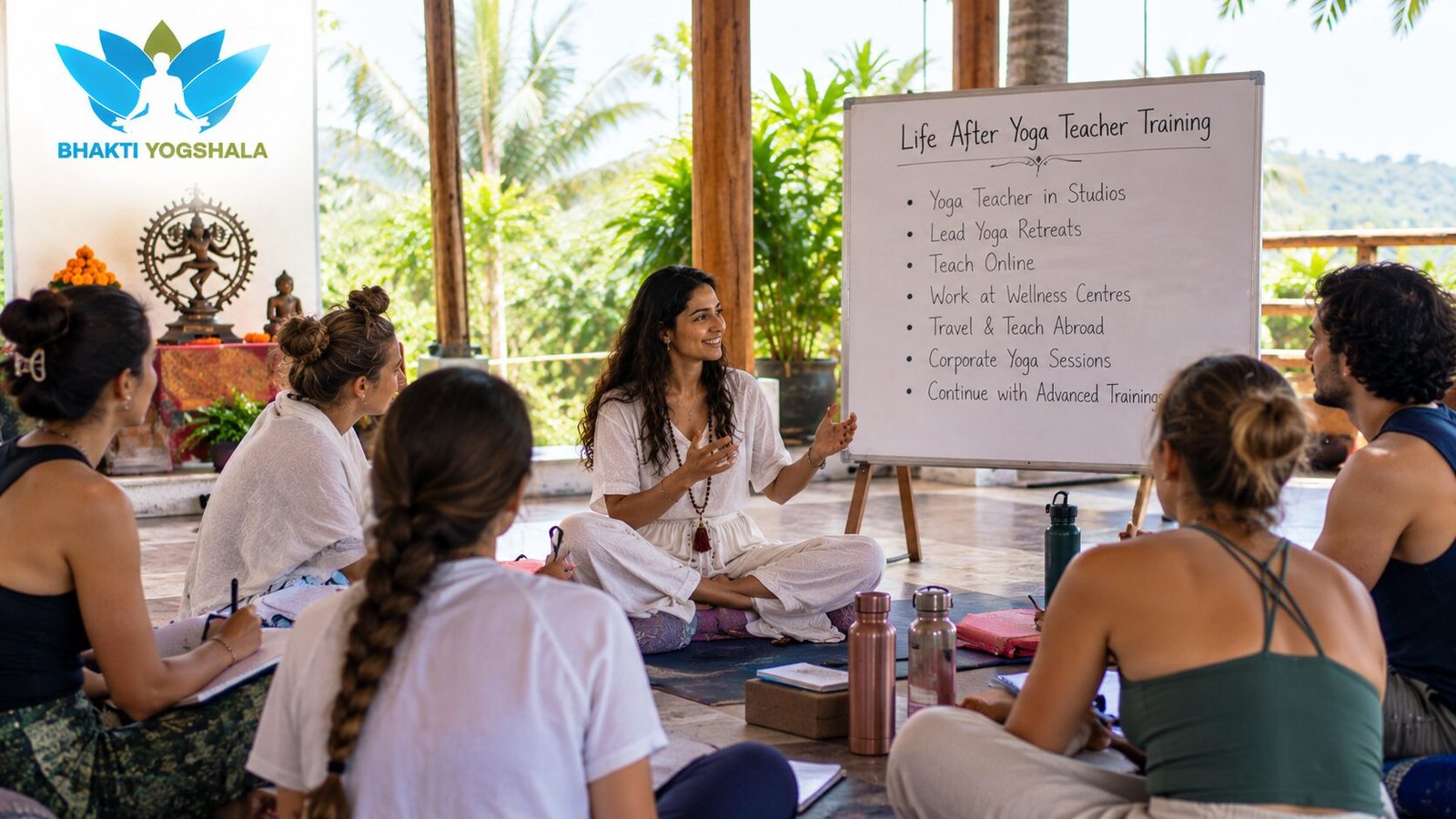
After training, graduates may choose to teach beginner classes, private sessions, group sessions, retreats, or wellness programs, depending on their skills, local requirements, and professional goals. Some continue into advanced yoga education, meditation training, specialized therapeutic study, or further Kundalini-focused learning.
The most valuable outcome is not simply receiving a certificate. A good program should help you develop a disciplined personal practice, clearer communication, sound teaching habits, and a deeper understanding of yoga traditions.
Daily Life During Training in Goa
Residential training can create an immersive routine. A typical day may begin with an early practice followed by meditation or pranayama, breakfast, lectures, practical sessions, teaching practice, and evening reflection. Exact schedules vary significantly between schools.
Living and studying with other practitioners can also create a supportive community. At the same time, intensive training requires physical and mental adjustment. Rest, hydration, nutritious food, quiet time, and listening to your body are important parts of maintaining a sustainable routine.
What Should You Consider Before Enrolling?
Before making a decision, compare programs based on curriculum depth, instructor experience, teaching practice, class size, accommodation, meals, schedule, assessment, certification, and total cost. Confirm what is included in the published fee and whether there are additional charges.
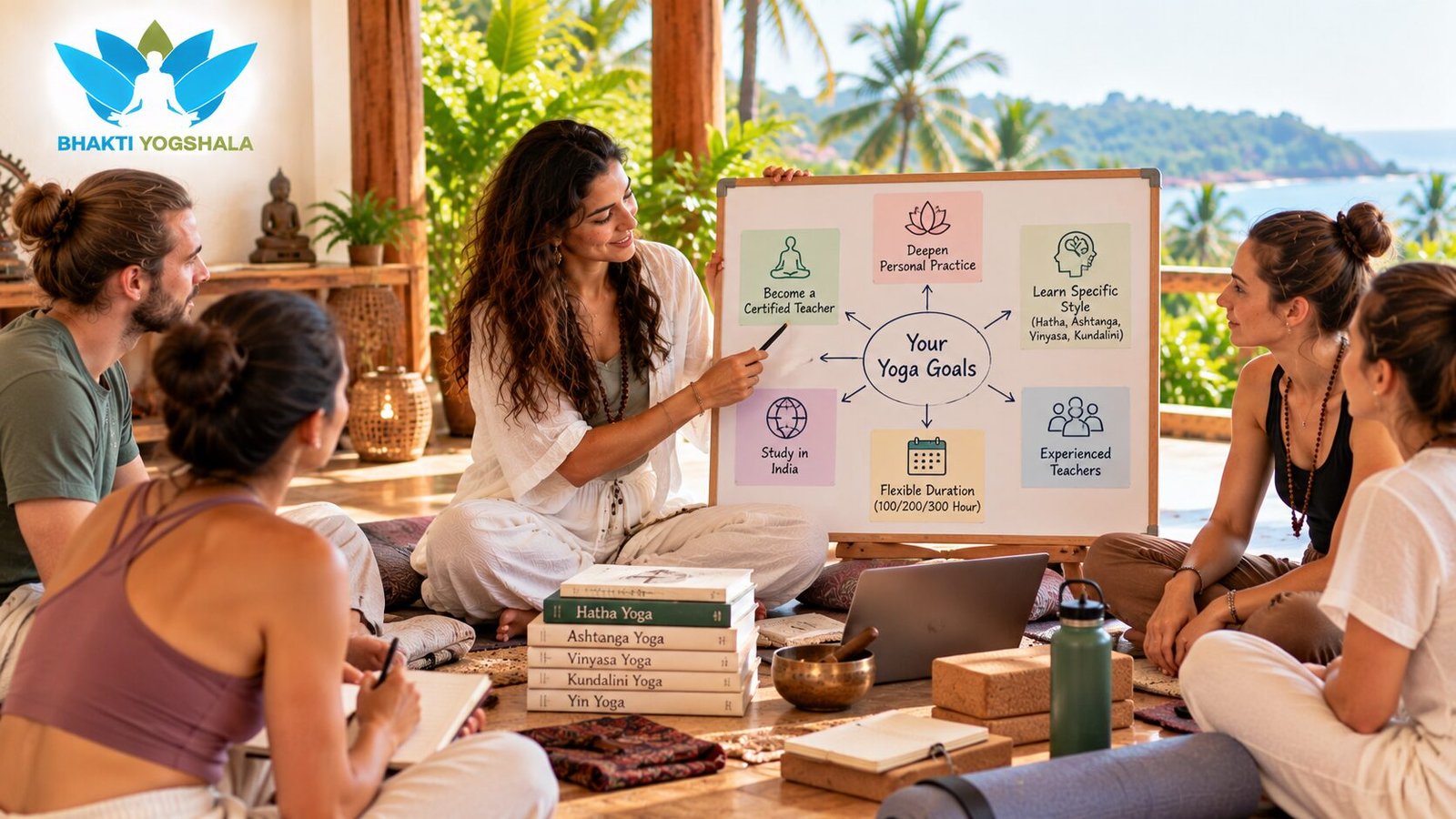
It is also worth considering your personal objective. If your primary goal is to teach professionally, prioritize methodology, anatomy, supervised teaching, feedback, and certification. If your goal is primarily personal growth, look for a program that gives sufficient space to meditation, philosophy, self-practice, and reflection.
Bhakti Yogshala can be one of the names you encounter while researching yoga education in Goa, but the final decision should always be based on how well a particular program matches your learning goals and expectations.
Benefits of Completing the Training
A well-designed 200-hour course can influence both your practice and your approach to teaching. You may become more aware of breath and alignment, develop greater confidence in guiding groups, and gain a clearer understanding of sequencing and communication.
It can also encourage discipline and self-observation. Regular meditation, pranayama, study, and reflective practices can help you build a more consistent relationship with yoga. However, results vary from person to person, and teacher training should not be viewed as a guaranteed solution for physical, emotional, or spiritual challenges.
Conclusion
Choosing a 200 hours kundalini yoga teacher training GOA program is a significant commitment of time, energy, and attention. The right course should offer more than beautiful surroundings or a certificate; it should provide knowledgeable instruction, structured practice, teaching experience, philosophical understanding, and a safe environment for learning. By comparing curricula, teachers, schedules, certification details, and student support, you can choose a program that aligns with your goals and helps you grow into a responsible, confident yoga teacher.
Frequently Asked Questions
- Is Kundalini Yoga suitable for beginners?
Yes. Many foundational programs accept beginners, although course requirements vary. Check the school’s eligibility criteria before enrolling. - What does a 200-hour yoga course teach?
It commonly covers yoga practice, philosophy, anatomy, pranayama, meditation, teaching methodology, sequencing, ethics, and supervised teaching. - How long does a 200-hour training take?
The duration varies by school. Intensive residential courses may be completed in a few weeks, while part-time formats can take longer. - Do I need to be flexible to join?
No. Flexibility is not usually a prerequisite. Consistency, openness to learning, and a willingness to practice are more important. - How do I find the best Kundalini Yoga teacher training?
Compare instructor experience, curriculum, practical teaching opportunities, certification, student reviews, safety guidance, accommodation, schedule, and overall value before deciding.